


The suspension of summer skiing operations on the Horstman Glacier at Whistler Blackcomb marks a definitive turning point for the North American winter sports industry, signaling a transition from theoretical climate concerns to an era of tangible environmental loss. For Mike Douglas, a professional skier and Salomon brand ambassador often referred to as the "Godfather of Freeskiing," the disappearance of this iconic training ground is not merely a logistical hurdle but a profound indicator of a shifting global climate. Douglas, who spent the 1990s honing his craft on the glacier’s permanent snowpack, now finds himself at the forefront of a movement that seeks to reconcile the high-performance demands of professional sports with the urgent necessity of environmental stewardship. As the outdoor industry grapples with shrinking winters and diminishing snowpacks, the partnership between Salomon and the non-profit organization Protect Our Winters (POW) has emerged as a blueprint for how corporate entities and elite athletes can pivot toward systemic advocacy and sustainable manufacturing.
The Decline of the Horstman Glacier: A Chronological Overview
The Horstman Glacier, situated on Blackcomb Mountain in British Columbia, served for decades as the premier summer training destination for freestyle skiers and snowboarders from around the world. During the 1990s, the glacier provided a reliable platform for year-round progression, allowing athletes like Douglas to push the boundaries of the sport regardless of the season. However, the last thirty years have seen a precipitous decline in glacial volume, a trend that mirrors the broader retreat of alpine ice across the Pacific Northwest.
In the early 2000s, glaciologists began noting a significant acceleration in the "negative mass balance" of the Horstman Glacier, meaning it was losing more ice in the summer than it could accumulate during the winter months. By 2015, the thinning ice became a visible concern for resort management, leading to more frequent closures during particularly warm summers. The situation reached a critical threshold in 2020 when Whistler Blackcomb made the decision to remove the Horstman T-bar, a lift that had been operational since 1987. The decision was driven by the fact that the glacier had receded to a point where the lift’s pylons could no longer be safely anchored in the moving and melting ice.
In 2023, the resort officially announced the indefinite suspension of summer skiing operations on the Horstman Glacier. This decision was not based on a single poor season but on a long-term assessment of safety, accessibility, and environmental viability. The closure represents the end of an era for the freestyle community and serves as a stark reminder that the geography of outdoor culture is being rewritten in real-time by rising global temperatures.
Environmental Data and the Regional Snowpack Crisis
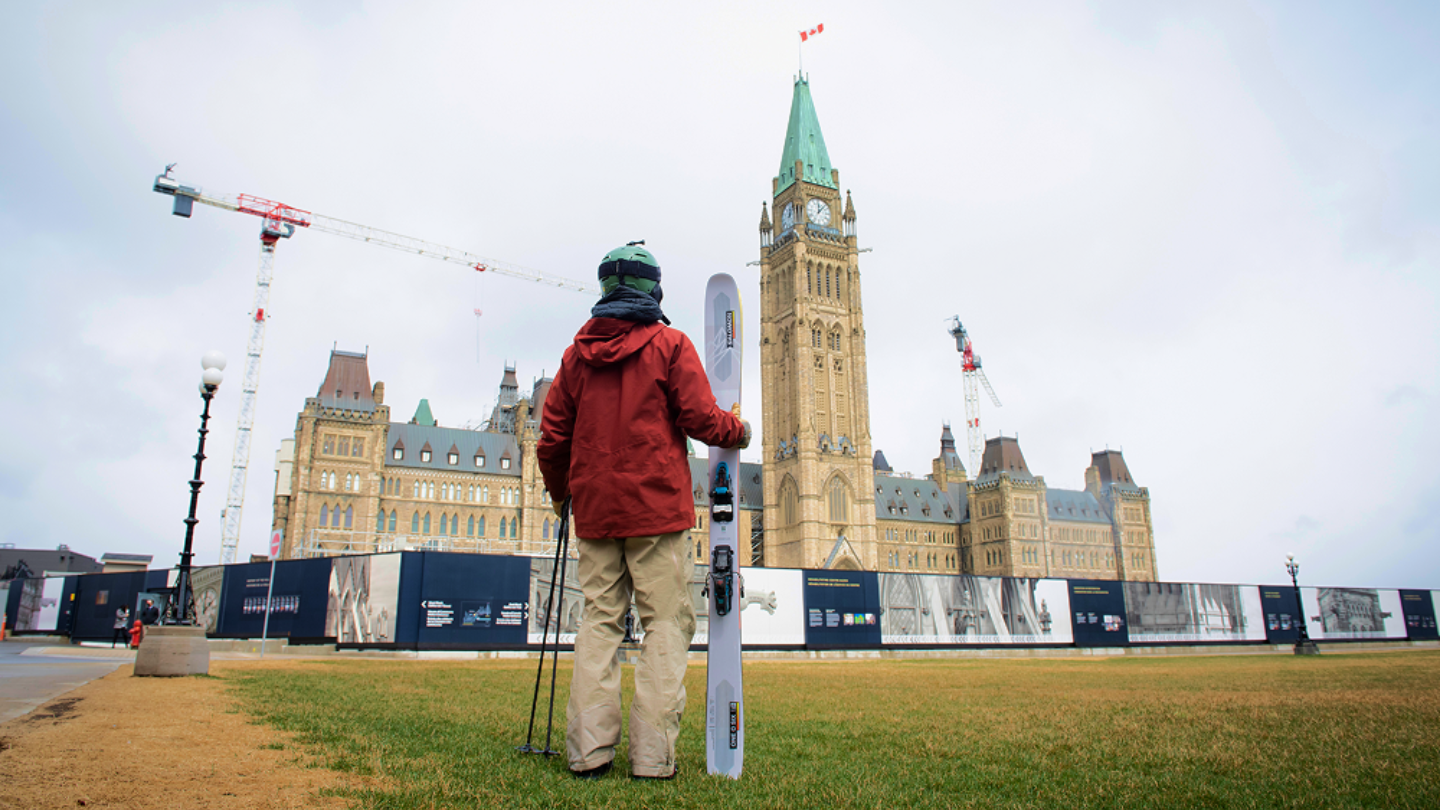
The loss of summer skiing at Whistler is supported by a growing body of scientific data regarding the health of mountain ecosystems. According to reports from Environment and Climate Change Canada, the average temperature in British Columbia has increased by approximately 1.9 degrees Celsius since 1948, a rate nearly double the global average. This warming trend has led to a "snow-to-rain" transition in many low-to-mid elevation alpine zones.
In the Pacific Northwest, the April 1st snowpack—a critical metric for water resources and ski season longevity—has seen a measurable decline over the past half-century. Studies indicate that in some regions of the Cascades and the Coast Mountains, the snowpack has decreased by as much as 20% to 30%. For the ski industry, this translates to shorter seasons, more frequent mid-winter rain events, and the loss of the "perma-snow" buffers that glaciers once provided. The disappearance of the Horstman Glacier is a localized manifestation of a global phenomenon; the World Glacier Monitoring Service reports that glaciers worldwide are currently losing between 0.5 and 1 meter of ice thickness every year, a rate that is three times higher than the averages recorded in the 1980s.
Salomon’s Transition Toward Responsible Manufacturing
As the physical landscape of skiing changes, the manufacturing landscape is undergoing a parallel transformation. Salomon, a global leader in outdoor equipment, has acknowledged that the traditional model of "take-make-waste" is no longer viable in a world with finite resources and a warming climate. Under its "Play-Minded" sustainability program, the brand has committed to reducing its overall carbon footprint by 30% by 2030 and achieving carbon neutrality in its direct operations.
A key component of this strategy is the shift toward a circular economy. Salomon’s development of the Index.01 and Index.02 running shoes—which are designed to be fully disassembled and recycled into ski boot shells—demonstrates a move away from linear production. In the winter sports sector, this involves the use of recycled materials in ski cores and the elimination of perfluorinated chemicals (PFCs) from waterproof membranes and coatings.
Mike Douglas has played a pivotal role in bridging the gap between the design room and the mountain. By providing feedback on the performance of sustainable materials, Douglas ensures that environmental considerations do not compromise the safety or technical capabilities required for high-level backcountry skiing. His involvement highlights a growing trend where athletes are no longer just faces for marketing campaigns but are active consultants in a brand’s environmental evolution.
The Athlete as a Witness: From Performance to Advocacy
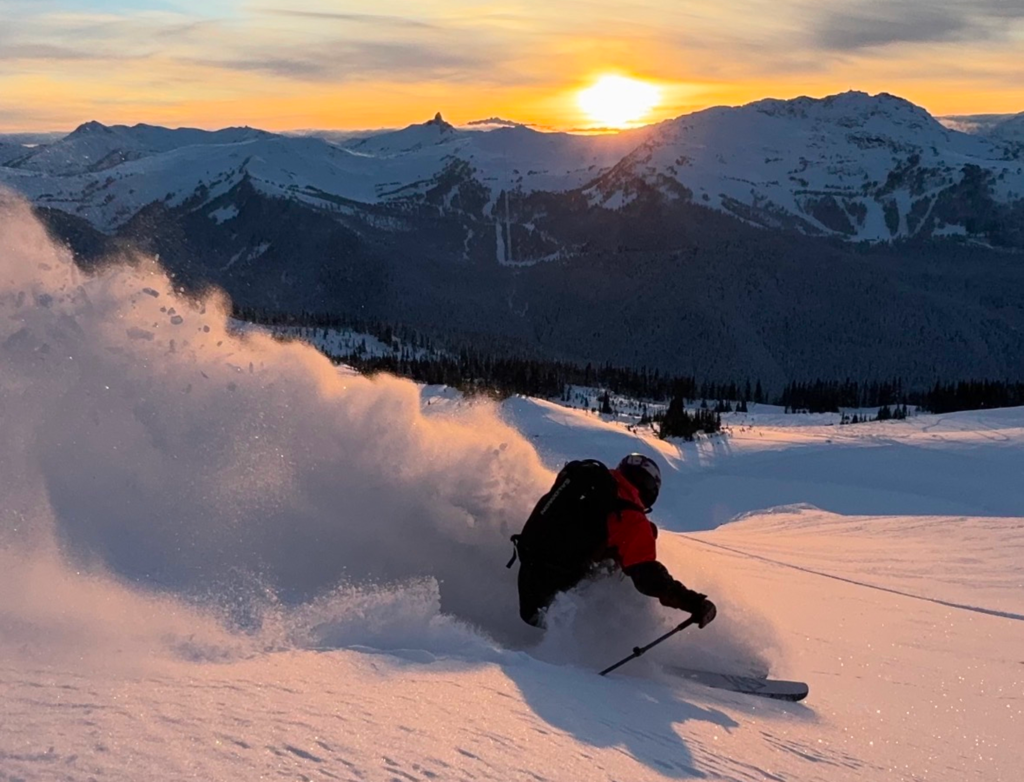
For much of the 20th century, professional athletes were expected to remain neutral on political and social issues, focusing strictly on performance and brand promotion. However, the escalating climate crisis has forced a re-evaluation of this role. Athletes like Mike Douglas are uniquely positioned as "first-hand witnesses" to environmental decay. Having spent decades in the mountains, they possess a longitudinal perspective on how snow lines have moved and how glacial tongues have retreated.
Douglas joined the Protect Our Winters (POW) Canada Alliance in 2018, marking a shift from individual action to collective advocacy. POW, founded by professional snowboarder Jeremy Jones in 2007, focuses on mobilizing the outdoor community to influence climate policy. The organization operates on the premise that while individual lifestyle changes (such as reducing travel or using eco-friendly gear) are important, systemic change can only be achieved through legislative action and corporate accountability.
Through the POW partnership, Salomon and its athletes have engaged in "advocacy training," learning how to communicate the complexities of climate science to a broad audience and how to lobby government officials for clean energy transitions. This work often takes Douglas away from the slopes and into boardrooms and legislative offices, where the influence of the multi-billion dollar outdoor industry is used as leverage for environmental protection.
Industry-Wide Implications and the Economic Reality
The challenges facing Whistler Blackcomb and Salomon are not isolated; they represent an industry-wide reality. The global ski resort industry is valued at over $30 billion annually, supporting hundreds of thousands of jobs in rural mountain communities. The economic impact of shorter winters is profound, affecting everything from real estate values to seasonal employment and equipment sales.
Industry analysts suggest that the ski resorts of the future will need to diversify their offerings to survive. This "four-season" model focuses on mountain biking, hiking, and alpine slides to offset the loss of winter revenue. However, for brands that specifically manufacture winter hardware, the stakes are even higher. If the "playground" for skiing disappears, the market for skis, boots, and bindings follows suit.

The response from the broader industry has been varied. While some resorts have invested heavily in energy-intensive snowmaking technology to "buy time," others are looking toward more sustainable solutions, such as powering lifts with renewable energy and implementing strict land-use policies. The consensus among climate-focused organizations is that snowmaking is a temporary patch, not a long-term solution to a warming planet.
Conclusion: The Closing Window for Action
The closure of the Horstman Glacier serves as a cautionary tale for the global outdoor community. It is a reminder that the environments we rely on for recreation and inspiration are fragile and subject to the laws of thermodynamics. The work being done by Salomon and Mike Douglas, in conjunction with Protect Our Winters, suggests that the path forward requires a combination of technological innovation, corporate transparency, and political engagement.
As Douglas emphasizes, the "window for action is closing." The transition toward a sustainable outdoor industry is no longer an optional PR strategy; it is a fundamental requirement for the industry’s survival. By transforming from passive observers into active advocates, brands and athletes are attempting to restore a balance that was lost during decades of unchecked expansion. The legacy of the Horstman Glacier will likely be its role as a catalyst for this change, forcing the industry to confront the reality that to protect the sports we love, we must first protect the winters that make them possible.
