

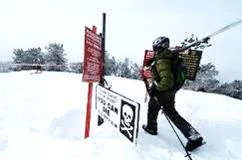
The allure of vast, untamed powder fields and the thrill of unexplored terrain have long drawn skiers and snowboarders beyond the meticulously groomed runs and avalanche-controlled boundaries of ski resorts. This phenomenon, often termed "sidecountry" or "slackcountry," refers to the areas immediately adjacent to, or easily accessible from, ski resort boundaries. While offering an unparalleled recreational experience, these zones present a complex and often underappreciated layer of risk due to their inherent lack of avalanche control and rescue services. As highlighted by Doug, a prominent voice in avalanche safety, a critical question arises: "After a parent waves goodbye in the ski area parking lot do they know what the kids are doing? Are they leaving the ski area for R-rated terrain?" This inquiry underscores a growing concern for safety professionals and resort operators alike, as the line between controlled recreation and uncontrolled backcountry adventure blurs.
The Siren Song of the Uncharted
Many of the United States’ most popular ski areas are strategically situated on or in close proximity to expansive public lands. These lands, a treasure trove for outdoor enthusiasts, are by definition uncontrolled and unpatrician. Unlike the carefully managed slopes within resort boundaries, where dedicated ski patrols meticulously assess snowpack stability, conduct controlled demolitions, and monitor avalanche danger, these adjacent backcountry areas fall outside their purview. This means that in the event of an avalanche or other backcountry incident, rescue operations are not automatically initiated by resort staff. Instead, the responsibility for self-rescue or the mobilization of external rescue resources falls entirely on the individuals venturing into these zones.
The accessibility of these areas is a double-edged sword. Resorts often provide convenient access points, allowing skiers and snowboarders to duck under ropes or traverse short distances to enter the backcountry. This ease of access, coupled with the tantalizing promise of untouched snow, can create a false sense of security or an underestimation of the inherent dangers. The visual appeal of fresh tracks stretching into the distance, visible from resort lifts and trails, can be a powerful draw, particularly for younger, less experienced individuals seeking an adrenaline rush.
A Growing Trend, A Growing Concern
The popularity of sidecountry skiing and snowboarding has seen a significant rise in recent decades, fueled by advancements in backcountry equipment, increased media exposure of extreme skiing and riding, and a general desire for a more authentic wilderness experience. Data from organizations like the National Ski Areas Association (NSAA) and the Colorado Avalanche Information Center (CAIC) suggest a growing number of individuals are venturing into these areas, often with limited formal avalanche education.
While specific statistics on sidecountry usage are challenging to isolate, general trends in backcountry recreation provide a strong indicator. The International Snow Science Workshop (ISSW) has consistently reported an increase in avalanche fatalities and incidents in the United States, with a significant portion occurring in areas accessible from ski resorts. This suggests that the "rated R" terrain, as Doug aptly describes it, is becoming increasingly populated.
The Implicit Contract and its Limits
Ski resorts, by their very nature, operate under an implicit contract with their patrons. This contract involves providing a safe and controlled environment for recreation. This includes, but is not limited to, avalanche mitigation efforts within the designated ski area. When individuals choose to leave these controlled areas, they are effectively opting out of this implicit contract and entering a domain where the rules of engagement are fundamentally different.
The critical distinction lies in the presence or absence of avalanche control. Within resort boundaries, ski patrols employ a variety of techniques to reduce avalanche risk. These can include:
- Avalanche Bombing: Detonating explosives at specific points on avalanche-prone slopes to trigger controlled slides before they become natural, dangerous ones.
- Controlled Skiing/Riding: Sending patrollers down suspect slopes to deliberately trigger smaller avalanches.
- Snowpack Monitoring: Continuously assessing snow depth, temperature, and layering to identify unstable conditions.
- Closure of High-Risk Areas: Temporarily or permanently closing trails or zones deemed too dangerous.
In the sidecountry, none of these measures are in place. The snowpack is subject to the whims of nature, and the responsibility for understanding and mitigating its risks rests solely with the individual.
The Parent’s Dilemma: A Stark Reality Check
Doug’s poignant question, "After a parent waves goodbye in the ski area parking lot do they know what the kids are doing? Are they leaving the ski area for R-rated terrain?" strikes at the heart of a significant safety concern. For many parents, the perceived safety of a ski resort environment can be misleading when their children have the ability and inclination to access adjacent backcountry terrain. The "kids" in question may not be children in the literal sense, but rather young adults or even experienced skiers and riders who may still be underestimating the risks.
This highlights a crucial gap in awareness. The visible markers of a ski resort – the lifts, the groomed trails, the patrollers in their uniforms – create an illusion of safety that can extend, erroneously, to the areas just beyond. Without explicit knowledge of avalanche conditions, safe travel techniques, and proper rescue protocols, venturing into the sidecountry can be akin to playing Russian roulette with nature.
The "Rated R" Terrain: Understanding the Risks
The "R-rated" nature of sidecountry terrain is not merely a catchy phrase; it reflects a heightened level of danger. Avalanches in these uncontrolled areas can be larger, faster, and more unpredictable than those that might occur on resort-managed slopes. The consequences of being caught in such an event are severe:
- Burial: Being completely submerged in snow, leading to suffocation, hypothermia, and trauma.
- Trauma: Being carried by the avalanche, impacting trees, rocks, and other debris.
- Entrapment: Being pinned by debris or snow, making self-rescue impossible.
The critical factor in avalanche survival is the speed of rescue. Every minute that passes significantly reduces the chances of survival for a buried victim. In the sidecountry, where there are no readily available rescue teams, the time it takes to call for help, for rescuers to arrive, and to locate and extricate a victim can be the difference between life and death.
Beyond the Rope Line: The Importance of Education and Preparedness
The article "Sidecountry: Rated R" implicitly advocates for a greater emphasis on education and preparedness for individuals venturing beyond resort boundaries. This includes:
- Avalanche Education Courses: Formal courses, such as those offered by the American Institute for Avalanche Research and Education (AIARE) or the National Avalanche School, are essential for understanding snowpack dynamics, terrain assessment, and safe travel practices.
- Carrying Essential Safety Gear: This includes an avalanche transceiver, a shovel, and a probe – and, crucially, knowing how to use them effectively.
- Checking Avalanche Forecasts: Relying on reputable avalanche centers for daily forecasts and advisories is paramount.
- Companion Rescue Skills: Practicing rescue scenarios with partners to ensure rapid and efficient response in an emergency.
- Understanding Terrain: Learning to identify avalanche terrain and choose safe routes.
The responsibility for safety in the sidecountry is a shared one, but it begins with the individual. Resorts play a role in educating their patrons about the risks associated with adjacent backcountry, often through signage and informational brochures. However, the ultimate decision to enter these areas and the preparedness for such an endeavor rests with the skier or snowboarder.
A Call to Action: Bridging the Gap
The continued accessibility of sidecountry terrain from ski resorts necessitates a proactive approach to safety. This involves a multi-pronged strategy:
- Enhanced Resort Communication: Resorts can further strengthen their communication efforts by providing more prominent and frequent warnings about the dangers of sidecountry terrain, particularly at access points. This could include visual aids, interactive displays, and even brief safety talks at key locations.
- Promoting Avalanche Education: Resorts can partner with avalanche education providers to offer discounted courses or host informational sessions for their guests.
- Public Awareness Campaigns: National and regional organizations can collaborate on public awareness campaigns that highlight the risks of sidecountry recreation and the importance of preparedness.
- Encouraging Responsible Behavior: Fostering a culture of safety within the skiing and snowboarding community, where individuals are encouraged to speak up about unsafe practices and to prioritize education and preparation.
The allure of the sidecountry will likely persist. By acknowledging the "R-rated" nature of these environments and equipping individuals with the knowledge and tools to navigate them safely, the risks can be significantly mitigated, ensuring that the pursuit of untamed powder does not lead to tragic consequences. The question posed by Doug serves as a constant reminder: the adventure beyond the ropes demands a far greater level of respect and preparation than the controlled slopes within.
