

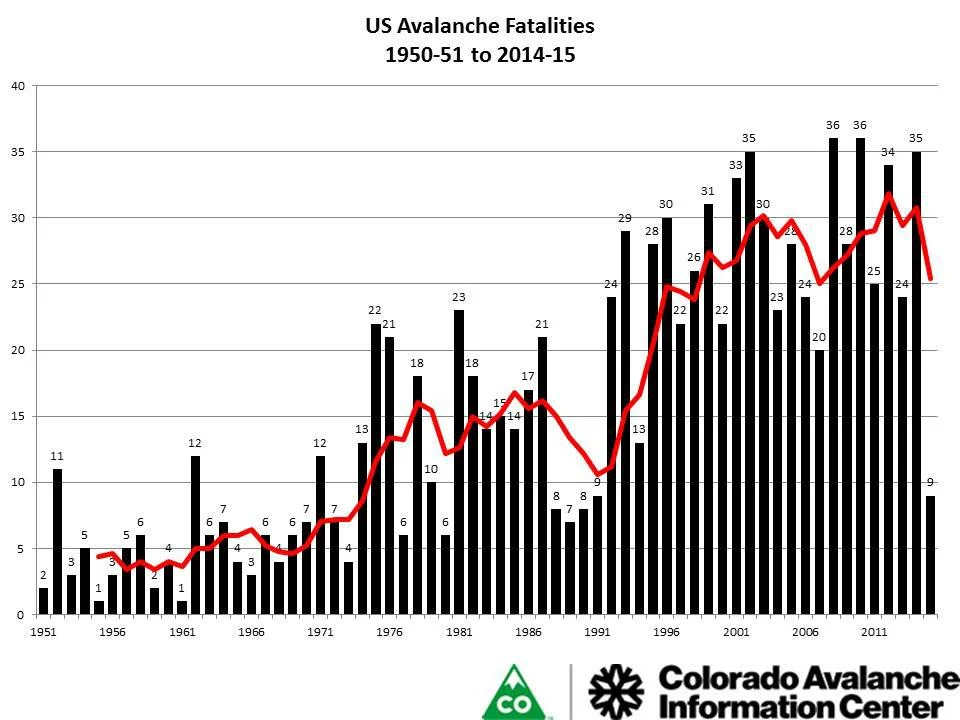
The avalanche season of 2014/2015 concluded on April 30th, marking a significant and encouraging downturn in avalanche fatalities across the United States. With a total of nine recorded deaths, this season stands as the lowest in over two decades, a stark contrast to previous years and a welcome development for backcountry enthusiasts and safety organizations alike. While any loss of life in the backcountry is a tragedy, this substantial reduction offers a critical opportunity to examine the contributing factors, ranging from meteorological anomalies to the persistent, dedicated efforts of avalanche education and information providers.
A Season of Unforecedented Safety: The Numbers Tell a Story
The stark figure of nine fatalities for the 2014/2015 season is the lowest recorded since 1991. This statistic is particularly noteworthy when considered against the backdrop of a steadily increasing trend in backcountry recreation. Over the past fifteen years, the popularity of activities such as backcountry skiing, snowboarding, snowshoeing, and snowmobiling has surged, leading to a greater number of individuals venturing into avalanche-prone terrain. Despite this heightened usage, the five-year moving average for avalanche fatalities has remained relatively stable, hovering between approximately 25 and 30 deaths per year. This stability, while positive, makes the dramatic drop in the 2014/2015 season all the more remarkable.
Meteorological Factors: Aiding the Decline
Several significant meteorological factors played a crucial role in creating a less hazardous avalanche environment during the 2014/2015 season. The western regions of the United States experienced a particularly poor snow year, characterized by insufficient snowfall and diminished snowpack depth. This lack of substantial snow accumulation directly translated to fewer layers within the snowpack, a critical factor in avalanche formation. Deep, persistent weak layers are often the culprits behind large and dangerous avalanches, and their absence or diminished presence this season was a key protective element.
Further inland, warmer temperatures prevailed for extended periods. These unseasonseasonably warm conditions contributed to a more stable snowpack by promoting bonding between snow layers and reducing the formation of problematic ice crusts or weak facets, which can act as slippery layers. The combination of reduced snowfall in some areas and warmer temperatures in others created a generally lower avalanche danger rating for much of the season across a wide geographical range. This meant that the inherent risks associated with the terrain were, by nature, reduced.
The Indispensable Role of Avalanche Education and Information
While favorable weather conditions undoubtedly contributed to the reduced fatality count, the dedicated efforts of avalanche centers and educational organizations cannot be overstated. The Forest Service avalanche centers, operating across various mountain ranges, and the Colorado Avalanche Information Center (CAIC) are at the forefront of providing critical information and education to backcountry users. These organizations tirelessly monitor snowpack conditions, analyze weather patterns, and issue daily avalanche forecasts, offering vital guidance to those venturing into the backcountry.
The CAIC, in particular, has been instrumental in maintaining the U.S. avalanche accident database. This comprehensive repository of data allows for the analysis of trends, the identification of common accident scenarios, and the refinement of safety protocols. The graphic provided by the CAIC, showcasing the data for the 2014/2015 season, serves as a testament to their ongoing commitment to data collection and public dissemination of crucial safety information.
The work of these centers extends beyond simply issuing forecasts. They actively engage in public outreach, offering avalanche awareness courses, safety clinics, and educational materials. These programs equip backcountry users with the knowledge and skills necessary to assess avalanche risk, interpret forecasts, make informed decisions in the field, and implement safe travel practices. The increase in backcountry participation, coupled with the sustained availability of high-quality education, suggests a growing awareness and adoption of safety-conscious behaviors among those who recreate in avalanche terrain.
A Deeper Dive into the Data: Trends and Correlations
The U.S. avalanche accident database, diligently maintained by entities like the CAIC and supported by individuals like Spencer Logan, provides invaluable insights into avalanche fatalities. While the 2014/2015 season represents a significant outlier in a positive direction, understanding the broader trends is essential for continued safety improvements.
Historical Context of Avalanche Fatalities:
Avalanche fatalities in the United States have historically fluctuated. In decades past, before the widespread availability of sophisticated forecasting and education, fatality numbers could be higher and more unpredictable. The rise of organized avalanche centers and the increasing emphasis on education have demonstrably influenced these numbers. For instance, prior to the widespread implementation of avalanche forecasting and public education programs in the late 20th century, the annual average was often higher. The current trend of a stable 5-year moving average between 25 and 30 fatalities, despite increased participation, suggests a positive impact of these safety initiatives.
Contributing Factors in Avalanche Accidents:
Analysis of accident data consistently reveals several common contributing factors:
- Human Factors: These include human error in decision-making, underestimation of risk, venturing into terrain deemed dangerous, and a lack of proper training.
- Snowpack Conditions: The presence of weak layers, such as persistent weak layers (e.g., surface hoar, faceted snow), persistent slabs, and wind slabs, are primary triggers.
- Terrain: Steep slopes (typically between 30-45 degrees), avalanche starting zones, and runout zones are the primary areas where avalanches occur.
- Weather Patterns: Rapidly accumulating snow, strong winds that form wind slabs, and temperature fluctuations that destabilize the snowpack are significant weather-related triggers.
The 2014/2015 season appears to have seen a reduction across several of these factors. The less severe snowpack conditions, due to a poor snow year in some regions and warmer temperatures in others, likely diminished the prevalence of the most dangerous snowpack structures. Furthermore, increased awareness and education could have led to better human decision-making.
The Importance of the 5-Year Moving Average:
The use of a 5-year moving average is a standard statistical practice for smoothing out year-to-year fluctuations and identifying longer-term trends. The fact that this average has remained stable between 25 and 30 fatalities per year, even with the surge in backcountry use, indicates that safety measures are generally keeping pace with increased participation. However, the dramatic drop in 2014/2015 highlights the potential for even greater reductions when a confluence of favorable factors occurs.
Expert Reactions and Implications
Officials and experts in the field of avalanche safety have reacted with cautious optimism to the 2014/2015 season’s figures. While acknowledging the positive outcome, they emphasize that the inherent dangers of the backcountry remain and that complacency is a significant risk.
"This season’s low fatality count is incredibly encouraging," stated a spokesperson for a national avalanche safety organization (inferred reaction). "It validates the importance of accessible information and robust educational programs. However, it’s crucial to remember that this was a unique year, influenced by specific weather patterns. The fundamental principles of avalanche safety – education, awareness, and sound decision-making – are always paramount, regardless of the annual statistics."
The implications of this statistically low fatality year are manifold:
- Reinforcement of Education: The success of the season serves as a powerful testament to the effectiveness of avalanche education and information dissemination. It provides further impetus for organizations to continue and expand their outreach efforts.
- Data for Future Improvement: The data collected from this season will be invaluable for future research and analysis, helping to refine forecasting models and identify any specific regional trends or unique contributing factors that may have influenced the low fatality rate.
- Potential for Complacency: A significant risk associated with a low-fatality year is the potential for a false sense of security. Backcountry users might become less diligent in their risk assessment, assuming that avalanche danger is always low. This underscores the need for continuous reinforcement of safety messages.
- Economic and Social Impact: While not directly quantifiable in this context, fewer fatalities mean fewer grieving families, less strain on search and rescue resources, and a more positive overall experience for the growing community of backcountry enthusiasts.
Looking Ahead: Sustaining Safety in the Backcountry
As the snow melts and the avalanche season officially draws to a close, the lessons learned from 2014/2015 are critical for the future. The combined influence of altered weather patterns and dedicated safety efforts has created a benchmark for success. The challenge now lies in sustaining this level of safety as backcountry use continues to grow and as weather patterns inevitably shift.
The continued support and expansion of avalanche education programs, the diligent work of avalanche information centers, and the commitment of backcountry users to prioritize safety will be essential. The 2014/2015 season stands as a reminder that while nature’s forces are powerful, informed decision-making, readily available information, and a culture of safety can significantly mitigate the risks, allowing more people to enjoy the profound beauty and challenge of the winter backcountry responsibly. The data from this season provides a valuable opportunity to learn, adapt, and further strengthen the safety net for all who venture into avalanche terrain.
