

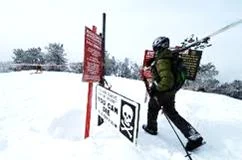
The allure of untouched powder and the thrill of venturing beyond the roped-off boundaries of traditional ski resorts have long captivated skiers and snowboarders. This phenomenon, commonly referred to as "sidecountry" or "gate access" terrain, presents a unique and often perilous recreational opportunity. Many popular ski areas in the United States are strategically situated on or adjacent to vast expanses of public lands, offering immediate access to these untamed winter landscapes. While this accessibility is an undeniable recreational boon, it comes with a critical caveat: these backcountry areas are fundamentally uncontrolled and unpatrolled. Unlike the meticulously managed slopes within resort boundaries, ski patrols do not conduct avalanche control operations in the sidecountry. Consequently, in the unfortunate event of an accident, the onus of rescue falls squarely on the shoulders of the individuals involved, their companions, and potentially, external rescue services, often with significant delays and increased risk. As Doug, an experienced observer of this trend, pointedly questions, "After a parent waves goodbye in the ski area parking lot, do they know what the kids are doing? Are they leaving the ski area for R-rated terrain?" This stark inquiry highlights the critical disconnect between parental perception and the reality of the risks undertaken by some winter enthusiasts.
The Growing Appeal of Uncharted Territory
The concept of sidecountry skiing is not new, but its popularity has surged in recent decades, fueled by several converging factors. The proliferation of specialized backcountry gear, including lighter and more efficient touring bindings, lightweight skis, and advanced avalanche safety equipment like transceivers, probes, and shovels, has lowered the barrier to entry. Furthermore, the rise of social media platforms has amplified the visual allure of deep powder turns and remote mountain vistas, inspiring a new generation of skiers and snowboarders to seek out these experiences. Many resorts, recognizing the demand, have facilitated access to adjacent backcountry areas through strategically placed gates, often at the periphery of their marked trails. These gates serve as a visual demarcation, signaling the transition from managed terrain to wild, uncontrolled environments. While intended to allow controlled access, they also serve as a gateway to potential dangers for those who are not adequately prepared.
The statistics surrounding backcountry incidents underscore the inherent risks. According to the Colorado Avalanche Information Center (CAIC), between the 2000-01 and 2019-20 winter seasons, an average of 26 people were killed annually in avalanches in the United States. A significant portion of these fatalities occurred in the backcountry, often in areas accessible from ski resorts. The CAIC data also indicates that avalanche accidents are more likely to be fatal in the backcountry than in resort-controlled terrain. This disparity is directly attributable to the lack of avalanche mitigation efforts and the extended response times for rescue operations.
A Spectrum of Risk: Understanding "R-Rated" Terrain
The term "R-rated terrain," as used in this context, is a metaphor for areas with a significantly higher level of inherent risk. This classification is not officially defined by ski resorts or avalanche safety organizations but is understood within the skiing community to encompass terrain that is:
- Uncontrolled: Lacking avalanche mitigation efforts such as bombing, cutting, or controlled blasting, which are standard practices within resort boundaries to stabilize snowpack and reduce avalanche danger.
- Unpatrolled: Not regularly monitored by ski patrol for avalanche conditions, hazards, or to assist in rescue operations.
- Potentially Remote: Often requiring a hike or skinning to access, which can increase the time to rescue in the event of an emergency.
- Characterized by Steep Slopes and Complex Snowpack: These factors increase the likelihood of avalanche formation.
The decision to venture into sidecountry terrain is often a conscious one, driven by a desire for a more authentic wilderness experience and the pursuit of fresh snow. However, this pursuit can be fraught with peril if not undertaken with a thorough understanding of avalanche science, proper equipment, and a realistic assessment of current conditions.
The Chronology of Risk and Responsibility
The critical juncture often occurs when a skier or snowboarder passes through a resort’s access gate. This act signifies a voluntary departure from the safety net of the resort. The timeline of potential events can be stark:
- Entry into Sidecountry: A skier or snowboarder, often after completing laps on resort trails, decides to access an adjacent backcountry area through a marked gate.
- Travel and Terrain Selection: The individual or group navigates through the backcountry, selecting slopes based on snow conditions, personal preference, and perceived risk.
- Avalanche Trigger: An avalanche is unintentionally triggered by the group, or by a group ahead of them. This can happen due to weight on the snowpack, changes in temperature, or the natural instability of the snow layers.
- Entrapment or Burial: One or more individuals are caught in the avalanche and are buried by snow. The depth and duration of burial are critical factors in survival.
- Initial Rescue Attempt: If the group has the necessary avalanche safety equipment and training, they will immediately initiate a search and rescue operation using transceivers, probes, and shovels.
- Contacting External Rescue: If the initial rescue is unsuccessful, or if the group lacks the necessary skills or equipment, they must contact external rescue services. This typically involves hiking back to a point with cell service or flagging down resort personnel.
- Response and Extrication: Ski patrol, local search and rescue teams, or other emergency responders are dispatched. The time taken for these services to reach the location can be substantial, depending on weather, terrain, and resource availability.
- Medical Attention: Once extricated, the individual(s) receive immediate medical attention, which may involve transport to a local hospital.
The crucial element here is that the ski resort’s operational timeline and rescue protocols are not extended into these areas. Their primary responsibility ends at the gate.
Voices from the Edge: Inferred Perspectives
While specific named individuals beyond "Doug" are not present in the original text, the context allows for the logical inference of perspectives from various stakeholders.
Resort Operators: Ski resorts, by providing gate access, often acknowledge the demand for backcountry experiences. However, their official stance typically emphasizes that the terrain beyond the gates is inherently dangerous and their liability is limited. Many resorts provide educational materials and signage at gate entrances warning of the risks and recommending appropriate gear and training. A hypothetical statement from a resort spokesperson might read: "We provide access to a magnificent natural playground, but it is imperative that our guests understand that these areas are outside our managed boundaries. Safety is paramount, and we strongly advise all individuals venturing into the sidecountry to be fully equipped with avalanche safety gear and to possess comprehensive avalanche education."
Backcountry Enthusiasts: Experienced backcountry skiers and snowboarders often possess a deep respect for the mountains and a commitment to safety. They typically invest heavily in avalanche education courses, practice their rescue skills regularly, and meticulously check avalanche forecasts before venturing out. However, even the most seasoned individuals can be caught off guard by rapidly changing conditions. A seasoned backcountry skier might articulate: "It’s about calculated risk. We check the [local avalanche center] forecast religiously, talk to people in the know, and make decisions based on the snowpack’s stability. But the mountains are unpredictable, and complacency is your worst enemy."
Parents and Guardians: The concern raised by "Doug" directly addresses the perspective of parents who may not fully grasp the implications of their children’s decisions. The ease of access from a familiar ski area parking lot can create a false sense of security. A parent, upon realizing the extent of the risks their child is taking, might express: "I thought they were just going to ski a few extra runs at the resort. I had no idea they were heading out into that kind of territory. It’s terrifying to think what could have happened if they weren’t prepared."
Search and Rescue Professionals: These individuals are on the front lines of backcountry emergencies. They witness firsthand the consequences of unpreparedness. Their perspective is often one of frustration and urgency. A SAR team leader might comment: "We see it too often. People underestimating the mountain, not having the right gear, or not knowing how to use it. Every minute counts in a burial, and delays caused by a lack of preparation can be tragic."
Data and Analysis: Quantifying the Risk and the Consequences
The decision to enter sidecountry terrain carries statistically significant risks. While precise data differentiating accidents solely within resort-adjacent sidecountry from broader backcountry incidents can be complex to isolate, general trends are illuminating.
- Avalanche Education: Studies consistently show that individuals with avalanche education are less likely to be involved in fatal accidents. The American Institute for Avalanche Research and Education (AIARE) offers courses that cover snowpack assessment, avalanche hazard recognition, and rescue techniques. Participation in these courses is a critical factor in mitigating risk.
- Equipment Usage: The "personal rescue system" – consisting of an avalanche transceiver, probe, and shovel – is the first line of defense in a burial scenario. Without this equipment, or without the knowledge to use it effectively, survival rates plummet dramatically. The chances of surviving a burial decrease significantly with each passing minute.
- Group Dynamics: The composition and decision-making processes of a group play a vital role. Solo travel in avalanche terrain is strongly discouraged. Experienced groups make collective decisions, communicate effectively, and look out for each other’s safety.
The implication of the "Rated R" designation is that the decision to enter these areas is not a trivial one. It is a decision that requires a significant investment in knowledge, skills, and equipment. It necessitates a shift in mindset from recreational skiing to an activity that demands wilderness awareness and a profound respect for natural forces. The ease of access from a resort can mask the true nature of the environment, leading to a dangerous underestimation of the risks involved.
Broader Impact and Implications: A Call for Awareness
The phenomenon of sidecountry access presents a multifaceted challenge for the winter recreation industry, safety organizations, and the public.
- Education and Outreach: There is a continuous need for enhanced public awareness campaigns that clearly articulate the dangers of uncontrolled backcountry terrain. This includes targeting not only seasoned enthusiasts but also those who may be drawn to the sidecountry without adequate preparation. Ski resorts can play a crucial role by reinforcing safety messages at access gates and through their communication channels.
- Liability and Responsibility: The legal and ethical lines of responsibility for incidents in sidecountry terrain are complex. While resorts provide access, they are generally not liable for accidents occurring beyond their managed boundaries. This places a significant emphasis on individual accountability.
- Resource Allocation for Rescue: The increasing popularity of backcountry activities places a strain on search and rescue resources. While volunteer-driven, these operations require significant funding, training, and equipment. Unnecessary rescues due to preventable accidents divert valuable resources from other emergencies.
- The Evolving Nature of Winter Sports: As the line between resort skiing and backcountry exploration blurs, there is a growing need for a shared understanding of the risks and rewards. The "sidecountry" represents a transitional zone, demanding a level of preparedness that transcends traditional resort skiing.
In conclusion, the accessibility of "R-rated" sidecountry terrain from established ski resorts is a double-edged sword. It offers unparalleled recreational opportunities but also presents significant and often underestimated dangers. The question posed by Doug, about parental awareness of their children’s choices, cuts to the heart of a critical safety issue. As winter enthusiasts increasingly seek the untamed beauty of the backcountry, a robust commitment to education, preparedness, and a healthy respect for the power of nature is not merely advisable; it is essential for survival. The allure of fresh tracks must be tempered by the sobering reality of avalanche risk, transforming the pursuit of adventure into a calculated and informed endeavor.
