

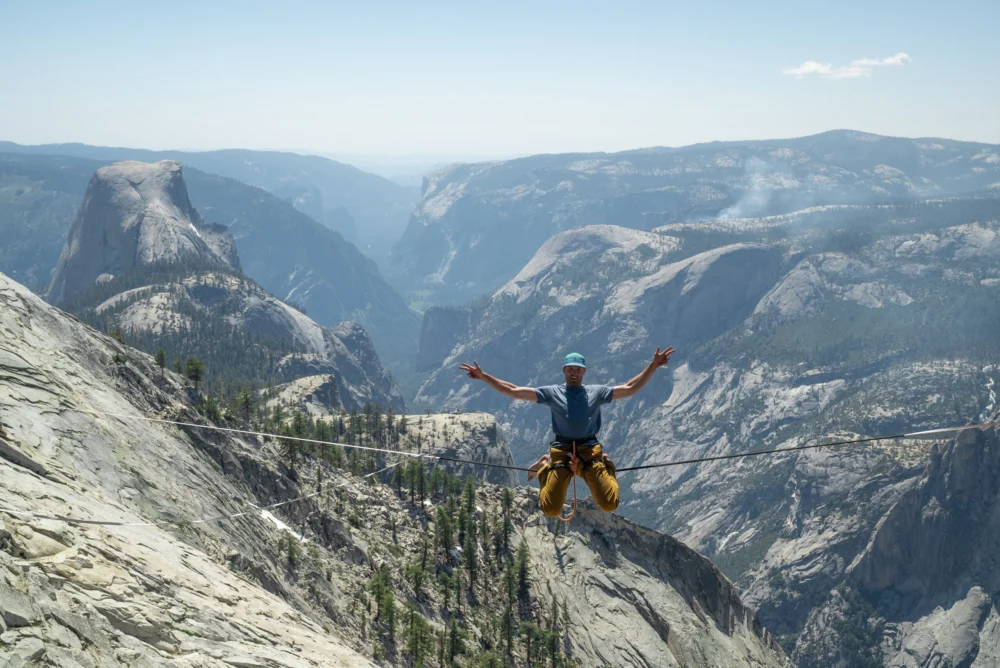
Watching Justin Wagers navigate a slackline, the immediate impression is one of effortless mastery. His performances are punctuated by daring rotations, gravity-defying flips, and maneuvers seldom witnessed in the sport. This fluidity, however, belies a deeply analytical process. Wagers approaches the high-stakes discipline of highlining with the precision of a data scientist dissecting uncertainty. Armed with a background in analytics and probability theory, he reframes risk not as an abstract or emotional deterrent, but as a quantifiable system susceptible to evaluation, reduction, and comprehension. Every venture onto a highline is preceded by a rigorous analysis of environmental conditions, system margins, potential failure points, and their associated likelihoods. These factors are meticulously weighed and considered long before the physical act of stepping onto the line even begins. This article delves into how Wagers’ analytical mindset fuels his ascent as one of the world’s most technically gifted slackliners, and how his calculated integration of probability, meticulous preparation, and accumulated experience informs his decision to step onto a line suspended hundreds of feet above the ground.
The Ascent of a Data-Driven Slackliner
Justin Wagers, a Colorado-based slackliner and data scientist, embodies a unique intersection of athletic prowess and analytical rigor. His journey into extreme sports began in the mountainous terrain of his home state, where activities like skiing and climbing are commonplace. However, it was the taut discipline of slacklining that truly captured his attention. At the age of 15, Wagers took his first steps onto a slackline, a moment that ignited a passion that has persisted ever since.
Over the years, his exploration of slacklining has spanned a diverse range of disciplines, including tricklining, longlining, rodeolining, and waterlining. More recently, Wagers has been at the forefront of "freestyle highlining," an emergent discipline that merges the thrill of highlining with complex acrobatic maneuvers. A significant aspect of his engagement with this discipline lies in the innovative creation of new tricks, pushing the boundaries of what is considered possible on a highline. Beyond his athletic pursuits, Wagers also demonstrates a keen interest in filmmaking, often documenting his experiences and the evolution of the sport.

Decoding the Sensation of Highlining
For those whose perception of slacklining is limited to brief online clips, the visceral experience of highlining can be difficult to grasp. Wagers often encounters comments labeling him an "adrenaline junkie," a perception understandable given the dramatic visuals of complex tricks performed at significant heights. However, he posits that slacklining, in general, cultivates a disposition diametrically opposed to such a label. The act of traversing or performing tricks on a highline necessitates a profound sense of calm and unwavering focus. The initial apprehension associated with heights tends to dissipate over time, replaced by a state that can be described as a form of active meditation.
Physically, walking a highline becomes manageable once the mental jitters are suppressed. However, executing tricks on a highline is a fundamentally different endeavor, demanding considerable physical exertion. Wagers notes that he is typically "toasted" after a prolonged freestyle highlining session. This exertion underscores the demanding nature of the sport, even when approached with a composed mindset.
The Evolution of Risk Perception
The inherent nature of highlining involves immediate and obvious consequences. For Wagers, his relationship with risk underwent a significant transformation from an adrenaline-driven pursuit to a more deliberate and assessed approach. Initially, the allure of highlining was undoubtedly amplified by the thrill of being suspended hundreds of feet in the air on a narrow strip of nylon. For the first one to two years of his highlining career, Wagers admits to a degree of complacency regarding rigging safety.
This perspective shifted dramatically approximately two years into his highlining endeavors following a near-catastrophic incident. During a session, the leash connecting him to the line experienced friction burn, fraying to the point where it appeared on the verge of snapping. Fortunately, he was able to disengage from the line safely. This harrowing close call served as a stark imperative, compelling him to confront the realities of risk and consequence with a newfound seriousness.

"Staying Alive for My Entire Career": A Evolving Philosophy
Wagers’ long-standing personal objective is to "stay alive for my entire career." This phrase has evolved significantly in its meaning for him. Earlier in his progression, he approached risks with a binary "go" or "no-go" mentality. This often involved a pragmatic assessment: "Will I probably survive walking this highline even if the rig is a little sketchy?" If the probability leaned towards survival, it was deemed a "go."
However, following a series of tragic incidents within the slacklining community and his own close calls, Wagers recognized the inadequacy of this approach. He began to re-evaluate his risk assessment methodology. His current guiding question is: "If I did this 1000 times, would it work out every time?" This shift in focus from immediate to long-term risk assessment has profoundly influenced his decision-making. While it hasn’t produced an instantaneous transformation in his cognitive processes, it has led him to decline several opportunities in recent years that did not meet this stringent criterion. This philosophy is instrumental in enabling him to select risk levels that are conducive to a sustained and healthy life in the sport.
Identifying and Mitigating Highlining Risks
In the realm of highlining, the most commonly perceived significant risk is the potential for the line to snap. While acknowledging the importance of vigilance against abrasion and respecting the breaking strength of webbing, Wagers asserts that this risk is ultimately manageable.
He identifies a more pervasive and critical risk: human error. When highline systems are meticulously constructed, they can be demonstrably safer than many everyday activities, such as driving. However, numerous incidents involving experienced highliners have been attributed to simple oversights, such as forgetting to tie a crucial knot. This seemingly minor omission, despite being a fundamental step, can have fatal consequences, as it negates the system’s ability to catch a fall. To ensure long-term safety, Wagers emphasizes the necessity of cultivating robust habits for system verification. He is a strong proponent of checklists and collaborative checks, advocating for a secondary inspection of every knot by another individual. Analogous to the backup systems present in a highline setup, a second pair of eyes on the rigging is an indispensable safety measure whenever feasible.

The Spectrum of Decision-Making in Highlining
Career-ending accidents in highlining can be viewed through the lens of either singular, egregious errors or a gradual erosion of risk tolerance over time. Wagers subscribes to the latter, citing a common adage: "Confidence increases with time and experience. This pattern continues until it falls sharply and suddenly." This phenomenon is particularly relevant in highlining; prolonged periods of success can breed complacency. To counteract this "risk tolerance creep," Wagers advocates for establishing pre-determined rules. Examples include setting a maximum permissible wind speed for a session (e.g., not exceeding 15 mph) or a minimum breaking strength ratio for the rigging (e.g., a 4:1 safety margin). These proactive measures serve as a bulwark against the insidious influence of familiarity and overconfidence.
The Intrinsic Rewards of Highlining
The question of "what’s the upside to highlining? Why take the risk at all?" is fundamental. Wagers firmly believes that the majority of individuals significantly overestimate the inherent risks associated with highlining and similar outdoor pursuits. He cites a social media comment that starkly illustrates this misconception: "This is a death sentence. Just don’t have children with one of them and you’ll be fine." While he could elaborate on the redundant safety protocols embedded within highline systems, he acknowledges the potential futility of such explanations against deeply ingrained perceptions.
What often remains unseen is the profound personal fulfillment derived from slacklining. Freestyle highlining, in particular, is an engaging, creative, and social activity that transports him to some of the planet’s most breathtaking locales. He expresses immense gratitude for the passion and joy this pursuit has brought into his life, underscoring that the rewards extend far beyond the perceived risks.
Probability and Intuition in Risk Assessment
Wagers’ data science background significantly informs his approach to risk assessment. He consciously endeavors to think in terms of probabilities whenever possible, aiming to position himself in situations where he is confident of surviving "1000 out of 1000 times." This probabilistic framing serves to mitigate common cognitive biases, such as the "risk is high" or "risk is low" bias.

He draws parallels to Bayesian statistics, a field that updates beliefs based on new evidence. Wagers applies this concept to his own risk assessment, continually refining his estimations by analyzing accident reports and observing conditions on the ground. However, he recognizes the inherent complexity of real-world scenarios, acknowledging that variance will always exist, even within sophisticated models. Despite the ability to understand probabilities, humans often resort to heuristics—simplistic mental shortcuts—in decision-making. Intuition, while valuable for immediate, unpredictable situations, cannot entirely replace a systematic approach to risk.
Controllable Risks and Inherent Unknowns
Highlining presents a unique scenario where a substantial portion of the risk is controllable. The rigging and athletic components are deliberately decoupled, allowing for ample time to establish a secure system before any physical engagement. While inherent risks associated with manipulating one’s body in space will always exist, the primary risk of falling to one’s death is, according to Wagers, largely controllable through meticulous checklists and robust buddy systems implemented prior to the activity.
Navigating External Variables
Among the various external variables influencing highlining—weather, fatigue, partner decisions, and gear systems—Wagers identifies human decision-making as the most challenging to model or predict. Weather forecasting has advanced considerably, though a specialized slackline wind forecast remains elusive. Highline gear systems are the most predictable due to the calculable nature of their components’ breaking strengths and stretch percentages.
However, the fallibility of human judgment introduces the greatest uncertainty. A rigging partner might overlook a knot on an anchor, or an individual might incorrectly tie their own knot. Because human error defies straightforward statistical modeling, the importance of a trustworthy team cannot be overstated. The principle is simple: if one person makes a mistake, another should be there to catch it.

The Culture of Slacklining: Longevity vs. Spectacle
The slacklining community has witnessed remarkable progress over the past decade. Wagers observes that the culture currently leans towards rewarding spectacle and pushing limits, evidenced by the prevalence of short-form content showcasing novel tricks and record-breaking feats. While this dynamic has undeniably propelled the sport forward, he suggests that there is also a need for longer-form narratives to emerge, particularly as elite slackliners mature in their careers.
Managing Ego in a Competitive Environment
The pressure to constantly innovate and perform, amplified by social media and peer influence, can challenge an athlete’s ego. Wagers humorously notes that slackliners can possess outsized egos despite often leading minimalist lifestyles, due to their ability to perform complex tricks. He acknowledges the competitive drive within himself to remain at the forefront of freestyle highlining. However, he also recognizes that this pursuit can sometimes foster tension among athletes or lead to burnout if the motivation is misaligned.
To maintain perspective, Wagers dedicates occasional "fun-only" sessions, reminding himself of the inherent playfulness of the sport and the importance of enjoying the process. Engaging with older mentors, such as Japanese slackline legend Toru Osugi, provides invaluable wisdom. Osugi’s emphasis on the joy of free movement and connection, rather than solely on invented tricks, offers a profound lesson in sustained engagement with the sport.
Fear as Data: A Nuanced Perspective
Wagers’ experience with highlining has primarily taught him to mitigate irrational fears. When a system is verified as safe and the possibility of falling is acceptable, allowing fear to intrude is counterproductive. However, he emphasizes the importance of heeding well-founded fears. A persistent "gut feeling" that something is amiss often signals a need for reassessment.

Moments of Intuitive Judgment
There have been instances where intuition has superseded purely statistical analysis. A particularly harrowing experience occurred on a rope swing rig in Yosemite. During the setup of a 300-meter highline with an integrated rope swing, the project leader proposed using a lightweight dyneema webbing for the highline. While advantageous for walking, this material is susceptible to shockloading. Calculations indicated that the estimated force ratios exceeded Wagers’ personal threshold of not exceeding 30% of the webbing’s breaking strength. Despite reassurances that the system remained within safe margins, his unease persisted. Tragically, on the seventh jump, the main line snapped, leaving the jumper suspended by a thin backup webbing. A swift and coordinated rescue effort managed to return the jumper safely to the cliff. This incident reinforced critical lessons: the importance of trusting one’s intuition, the limitations of static calculations when dynamic forces are involved, and the absolute necessity of rigorous, multi-layered safety protocols.
The Enduring Appeal of Slacklining
For Wagers, the enduring appeal of slacklining lies in the continuous creative process of devising new tricks. The unique biomechanics of slacklining, distinct from sports like skateboarding or snowboarding, necessitate a highly inventive approach to movement. Even if a trick isn’t exceptionally difficult, the act of creation itself provides immense satisfaction.
His own introduction to slacklining was serendipitous. A slackline received as a Christmas gift from his father as a child unexpectedly set him on a path he could never have foreseen.
Mentors and Inspirations
Wagers identifies several key figures as his heroes, both within and outside the slacklining community. Within the sport, he looks up to pioneers like Andy Lewis, Sam Volery, and Toru "Gappai" Osugi, whose early dedication and willingness to attempt challenging feats paved the way for current generations. Outside of slacklining, he admires athletes like cyclist Lachlan Morton, who integrates charitable endeavors into his expeditions, exemplifying a commitment to positive impact.

Cinematic Reflections of the Sport
When asked about his favorite slacklining films, Wagers immediately recommends "Untethered" for its ability to induce palpable tension in the viewer. He also self-promotes "Tracing Lines" for its depiction of the cutting edge of slacklining and "Foundation," a recent film he produced, which explores the journey of Japanese slackline legend Gappai Osugi as he navigates his passion for the sport in his forties. This film highlights the profound insights gained from Osugi’s philosophy and his influence on younger practitioners.
Evolving Focus in Filmmaking
Wagers’ approach to filmmaking has evolved in parallel with his relationship to the sport. Initially drawn to capturing the most extreme tricks and record-breaking lines, his focus has shifted towards uncovering stories with enduring relevance. While a triple yoda trick might become commonplace in the future, themes of mentorship, learning, and self-discovery hold a timeless appeal. This evolution is also reflected in his technical development, having progressed beyond basic iMovie transitions.
The Enduring Value of Long-Form Content
In an era dominated by short-form media, Wagers champions the lasting impact of long-form content. He poses a hypothetical choice: would he prefer 10 million views on a 15-second clip or 100,000 views on a 30-minute film? His answer is invariably the latter, recognizing that while short clips may capture fleeting attention, longer narratives possess the power to leave a profound and lasting impression. He utilizes short-form content as an effective hook to draw audiences toward his more substantial cinematic works, fostering a deeper connection to slacklining.
The Merging of Risk and Play
Moments on the line where the perceived risk diminishes and the experience transcends into pure play or flow are indeed possible. Once a highline is securely rigged and the practitioner is tethered, a state of mental disengagement from immediate danger can be achieved, allowing for a fluid interaction with the line. During intense freestyle sessions, Wagers finds himself fully immersed in the choreography of his body’s movement with the line, a highly rewarding state of being.

Building a Sustainable Career in Slacklining
For young slackliners aspiring to build a career measured in decades rather than fleeting viral moments, Wagers emphasizes the critical importance of physical well-being. He learned this lesson through personal experience, including a broken jaw sustained during a live televised event. Chasing viral fame often leads to pushing limits beyond what is enjoyable or safe. The most sustainable path, he advises, is one that prioritizes fun, safety, and long-term engagement.
Lessons Beyond the Highline
For individuals outside the realm of extreme sports, Wagers hopes they glean universally applicable insights from his experiences. These include the value of meticulous preparation, the necessity of continuous learning and adaptation, and the profound impact of community and mentorship. He also stresses the importance of understanding that perceived risk often differs significantly from actual, quantifiable risk, and that a disciplined, analytical approach can unlock seemingly inaccessible pursuits.
The Essence of Slacklining: Balance
If slacklining were to be distilled into a single word, Wagers unequivocally chooses "Balance." This word encapsulates not only the physical equilibrium required on the line but also the metaphorical balance between risk and reward, ambition and safety, and the mental and physical demands of the sport.
Wagers’ mastery of highlining, characterized by its breathtaking dynamism and technical complexity, is underpinned by a disciplined, analytical framework. His approach transcends mere physical prowess, embodying a profound understanding of risk management informed by data science principles. By systematically evaluating conditions, potential failure points, and probabilities, he transforms an inherently dangerous activity into a calculated endeavor. This method not only enhances his safety but also refines his performance, allowing him to push boundaries with intention and clarity. The result is a style of highlining that is as intellectually compelling as it is visually spectacular, demonstrating that true mastery lies not just in what one does, but in the thoughtful consideration of how and why one chooses to do it.
