

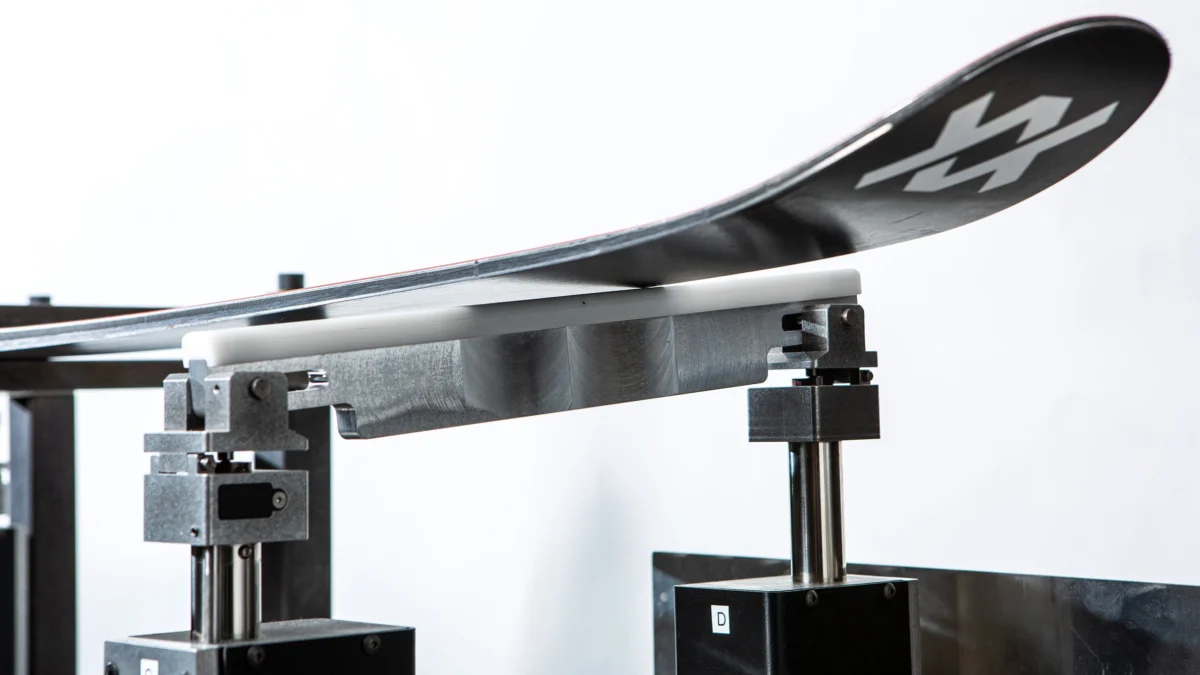
The winter sports industry is witnessing a fundamental shift in how equipment performance is quantified and communicated to the public, moving beyond the traditional reliance on subjective athlete feedback toward a data-driven, empirical model. At the heart of this transformation is the Outside Lab at the University of Colorado Denver, a specialized facility designed to bridge the gap between human sensation and mechanical reality. While expert testers at the annual SKI Test have long provided invaluable insights into how a ski feels underfoot—noting its eagerness to lock into a carve or the physical effort required to bend it into a turn—these impressions are inherently subjective. Discrepancies often arise among professionals regarding a ski’s "stiffness" or "responsiveness," creating a need for a secondary, objective data set. By integrating advanced mechanical engineering with traditional field testing, the Outside Lab is establishing a new industry standard for transparency and precision in ski reviews.
The initiative reached a significant milestone in early 2026 with the introduction of the Ski and Snowboard Tester, a custom-engineered apparatus developed by the CU Denver Department of Mechanical Engineering. Following months of protocol refinement and calibration, the lab has transitioned from a conceptual project to a functional cornerstone of equipment evaluation. The objective is not to replace the human element of testing, but to provide a repeatable baseline that validates or challenges tester impressions. For instance, while a human tester might report that a ski "feels stiff in the tail," the lab’s machinery can now quantify that sensation by measuring the exact number of degrees a tail deflects under a specific, known load. This allows for direct, numerical comparisons across hundreds of different models, effectively removing the "raised voices" and debates that have historically characterized gear selection.
A Chronology of Innovation in Ski Testing
The journey toward objective ski testing has been a multi-year endeavor, accelerated by the partnership between Outside Interactive, Inc. and the University of Colorado Denver. In 2024, the initial designs for a comprehensive testing machine were drafted, focusing on the limitations of current industry "hand-flex" methods. By 2025, a prototype was housed at the CU Denver campus, allowing engineering students and faculty to experiment with contactless scanning and load-cell technology.
By the first quarter of 2026, the Ski and Snowboard Tester was officially unveiled. The subsequent months involved a rigorous "fine-tuning" phase, where Lab Manager Trevor Young and his team ran hundreds of iterations to ensure the data was consistent and repeatable. This period was critical for establishing the test protocol, ensuring that factors such as ambient temperature and clamping pressure did not skew the results. As of July 2026, the lab has moved into full-scale production testing, processing the latest models from major manufacturers including Völkl, Nordica, and Blizzard. This timeline reflects a broader trend in the sports industry toward "sports science" integration, where the physics of the equipment is scrutinized with the same intensity as the physiology of the athlete.
The Technical Framework: Establishing the Digital Twin
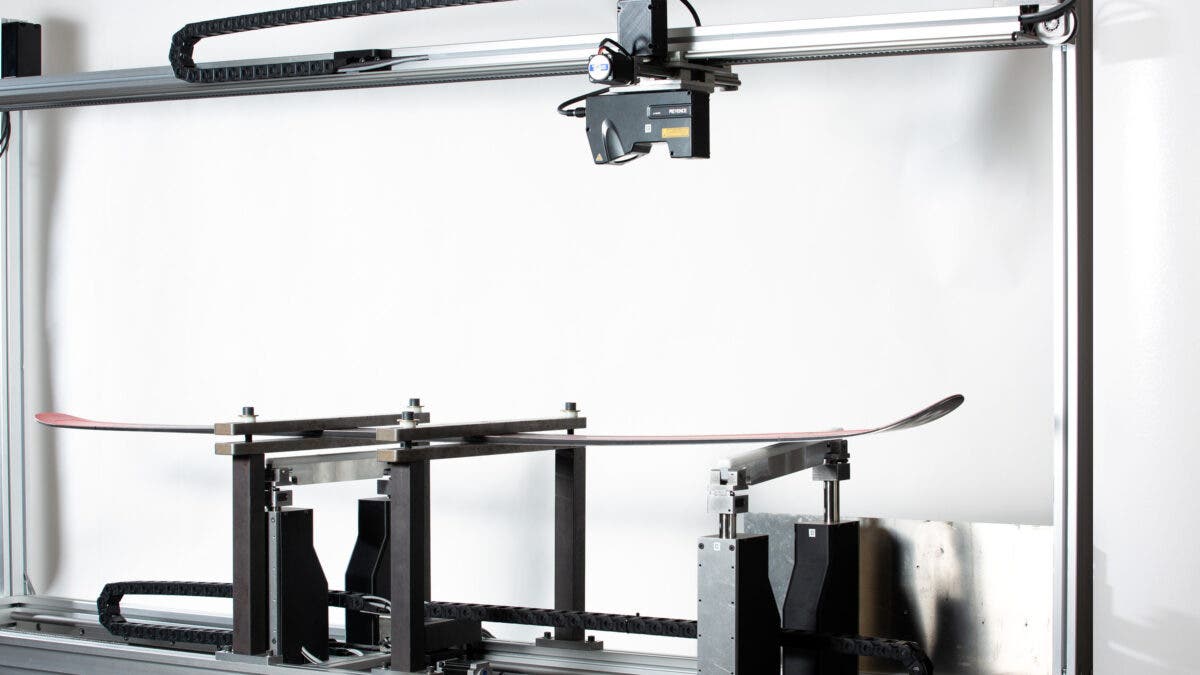
The testing process at the Outside Lab begins with the creation of a "digital twin" of the ski. This starts with a full-length, tip-to-tail contactless scan while the ski sits flat and unconstrained. Unlike traditional measuring tapes or calipers, this scanner takes readings at highly precise intervals, capturing the ski’s geometry with sub-millimeter accuracy. This data is then plotted on a graph to measure key parameters such as actual length, width, sidecut radius, and camber profile.
This initial scan is vital because manufacturer-posted dimensions are often rounded or based on the "developed length" (the length of the materials before they are pressed into a shape), which can differ from the final product. By verifying these metrics, the lab provides consumers with the true physical characteristics of the ski. Furthermore, the scan allows researchers to pinpoint exactly where the sidecut is centered underfoot. In modern skis with multiple sidecut radii, the lab can identify where one curve blends into the next—a detail that significantly influences how a ski initiates a turn. What a tester describes as "sluggish" or "easy to pivot" can now be traced back to the specific geometric transition points captured during the baseline scan.
Quantifying the Invisible: Camber and Rocker Profiles
One of the most influential yet under-reported aspects of ski design is the camber profile. Camber—the upward arch in the middle of a ski—determines the "pop" and edge grip of the equipment. While most skiers can eyeball the height of the camber, the Outside Lab’s scanner captures the entire profile, including "early-rise" or rocker sections in the tip and tail.
For example, a freeride-oriented ski like the Blizzard Rustler 9 is designed with early-rise to provide a looser, more playful feel in soft snow. Historically, a review would simply label the ski as "playful." The Outside Lab, however, can now provide a measurement of exactly where that rise begins and the angle at which the tip leaves the snow. This data allows for a sophisticated analysis of how the ski will behave in various conditions. A ski with a high, short camber peak will offer a different energy return than one with a long, mellow arch. By putting a number to these shapes, the lab explains the engineering behind the "lively" or "locked-in" sensations reported by human testers.
Load Testing: The Physics of Flex and Stiffness
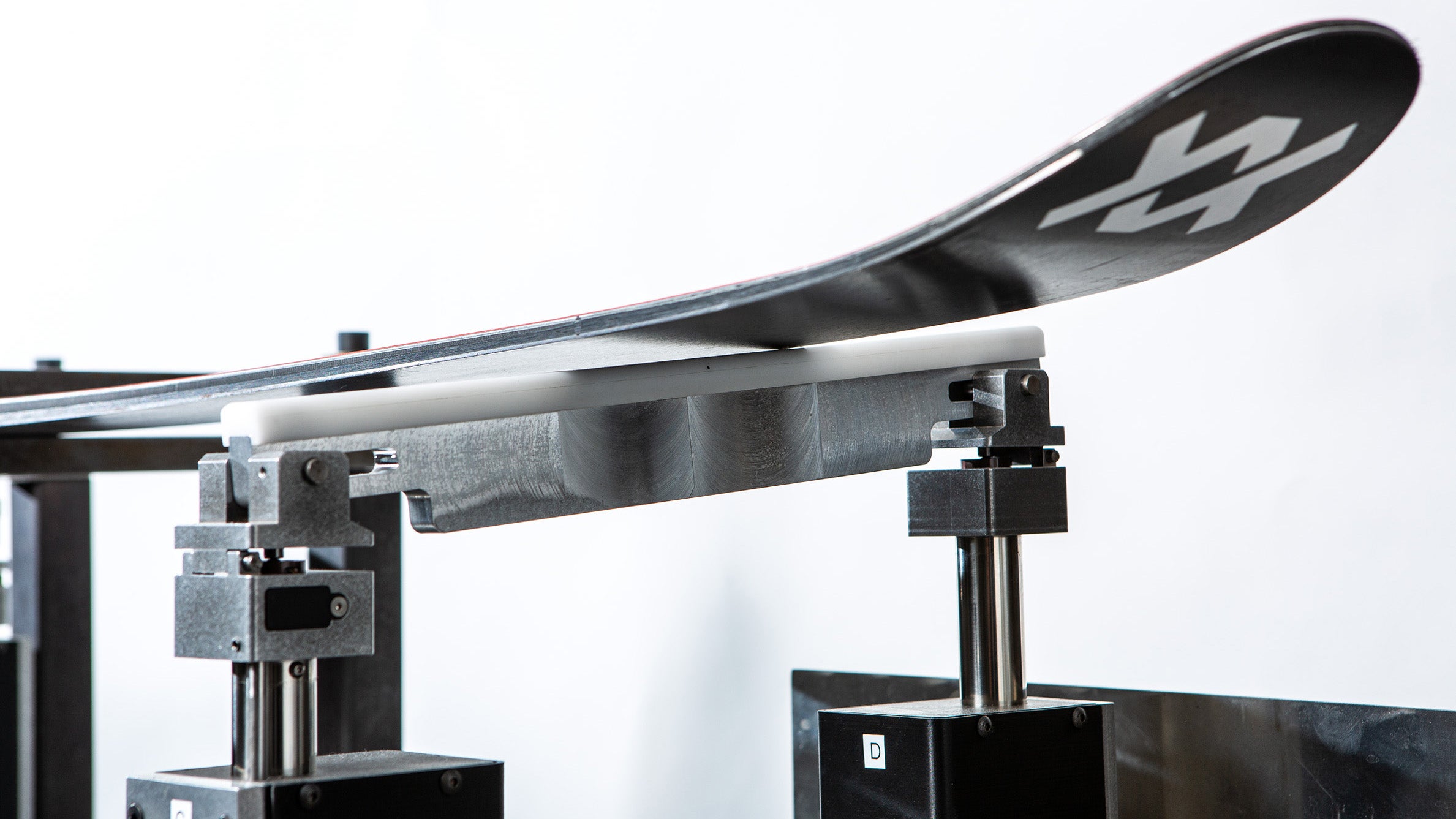
Once the static geometry is recorded, the ski undergoes dynamic load testing. This phase is designed to simulate the forces exerted by a skier on the mountain. To ensure accuracy, the lab clamps the ski at the exact mounting points where a binding would sit, using standard boot-sole lengths for both men (26.5) and women (24.5). This is a critical distinction from traditional "shop flex" tests, where a person pushes on the center of a ski with their hand. On snow, a ski does not flex in the center; it flexes between the boot and the contact points at the tip and tail.
The lab utilizes mechanical actuator arms equipped with load cells to push against the tip and tail with precise force. Because the force is identical for every ski tested, the resulting deflection measurements provide a pure comparison of stiffness. This data is particularly useful for resolving long-standing debates among professionals. For instance, the Völkl Mantra 88 has long been regarded as a "stout" or "beefy" ski. The lab can now confirm this by showing exactly how many millimeters the tip deflects under a 50-pound load compared to its competitors. This provides a "flex profile" that shows whether a ski is stiff throughout or has a softer tip for easier turn entry combined with a rigid tail for a strong finish.
Edge Engagement and Torsional Dynamics
Perhaps the most complex metric measured by the Outside Lab is edge engagement. This is the mechanical reality behind the sensation of "locking into a carve." To measure this, the lab employs a unique setup where force is applied to only one edge of the ski rather than the entire width. While not a pure "torsional stiffness" test in a laboratory sense—which would involve twisting the ski from a fixed point—this method more accurately reflects the "rolling" motion a skier uses to engage an edge.
The testing apparatus uses an angled "bridge" to apply pressure, measuring how much the ski twists and deflects in response. This reveals how much effort is required to get the ski’s edge to bite into the snow. A ski that "fights you into the turn" will show a higher resistance to this angular load, whereas a dedicated carving ski will show a geometry and flex pattern optimized for rapid engagement. By quantifying this resistance, the lab provides an objective version of the tester’s claim that a ski "carves like it’s on rails."
Industry Implications and the Future of Consumer Choice
The integration of the Outside Lab’s data into mainstream ski reviews has significant implications for both manufacturers and consumers. For brands, this objective data serves as a secondary quality-control check. It provides a transparent look at how their engineering translates to measurable performance, potentially influencing future prototyping and design cycles. Some industry insiders suggest that this level of public scrutiny will push manufacturers to be more precise with their marketing claims, as "lively" and "stable" will now be backed by verifiable numbers.
For the consumer, this represents a major step forward in informed purchasing. The modern ski market is saturated with "all-mountain" skis that appear similar on paper but behave differently on snow. By providing a standardized data set, the Outside Lab allows skiers to compare the "DNA" of different models. A skier who knows they prefer a softer-flexing tail for easier turn releases can now look for the specific deflection numbers that match their preference, rather than relying solely on a salesperson’s recommendation.
As the 2026-2027 ski season approaches, the Outside Lab at CU Denver plans to expand its database to include a wider range of equipment, including backcountry-specific skis and snowboards. The ultimate goal is to create a comprehensive library of performance metrics that serves as the "Kelly Blue Book" of winter sports equipment. By combining the nuanced, emotional feedback of world-class athletes with the cold, hard facts of mechanical engineering, the industry is entering an era where the "perfect turn" is no longer just a feeling—it is a measurable reality.
