

The tight-knit mountain communities of Northern British Columbia are grappling with profound grief following a devastating series of events on Sunday, March 22, 2026. Two separate, catastrophic avalanche incidents in the province’s rugged northwest claimed the lives of four individuals and left one critically injured, starkly highlighting the perilous nature of the spring snowpack and the persistent challenges faced by both recreational backcountry enthusiasts and professional guiding operations. These tragedies serve as a somber reminder of the unforgiving power of nature in the high alpine environments that attract adventurers from around the globe.
Chaos on Knauss Mountain: Heli-Skiing Tragedy Strikes
The first fatal incident unfolded just before 1:30 p.m. on Sunday, when emergency services and the Terrace Royal Canadian Mounted Police (RCMP) received a dire distress call. The report originated from White Wilderness Heliskiing, a prominent guiding service operating in the region, detailing a significant avalanche on Knauss Mountain. This mountain, situated approximately 35 kilometers northeast of Terrace, is renowned for its challenging and spectacular alpine descents within the Coast Mountains. The specific location of the avalanche was the Iridium Shoulder ski run, a celebrated line within the heliskiing terrain.
A group of four individuals, all clients of White Wilderness Heliskiing, were engaged in a descent when the avalanche was triggered. Tragically, three members of this group, identified as Swiss nationals visiting the region, lost their lives in the incident. Their presence in British Columbia underscored the international allure of the province’s backcountry skiing opportunities. The fourth member of the group, a professional guide employed by White Wilderness Heliskiing, was also caught in the slide. While initially reported to be in critical condition, the guide was swiftly airlifted to a specialized medical facility in Vancouver, where authorities later reported their condition as stable.
In the wake of this devastating event, WorkSafeBC, the province’s occupational health and safety regulator, has initiated a comprehensive investigation. The incident has been classified as a "serious workplace incident," a designation that underscores the inherent risks associated with guiding in high-alpine environments. This classification signals a thorough review of operational protocols, safety measures, and the conditions present at the time of the avalanche. The investigation will likely focus on identifying any contributing factors and ensuring that rigorous safety standards are consistently upheld by all operators in the backcountry tourism sector. The incident also brings renewed attention to the professional development and training of guides, who bear immense responsibility for the safety of their clients in inherently dangerous terrain.

Deep Instability Unveiled: The Haines Pass Fatality
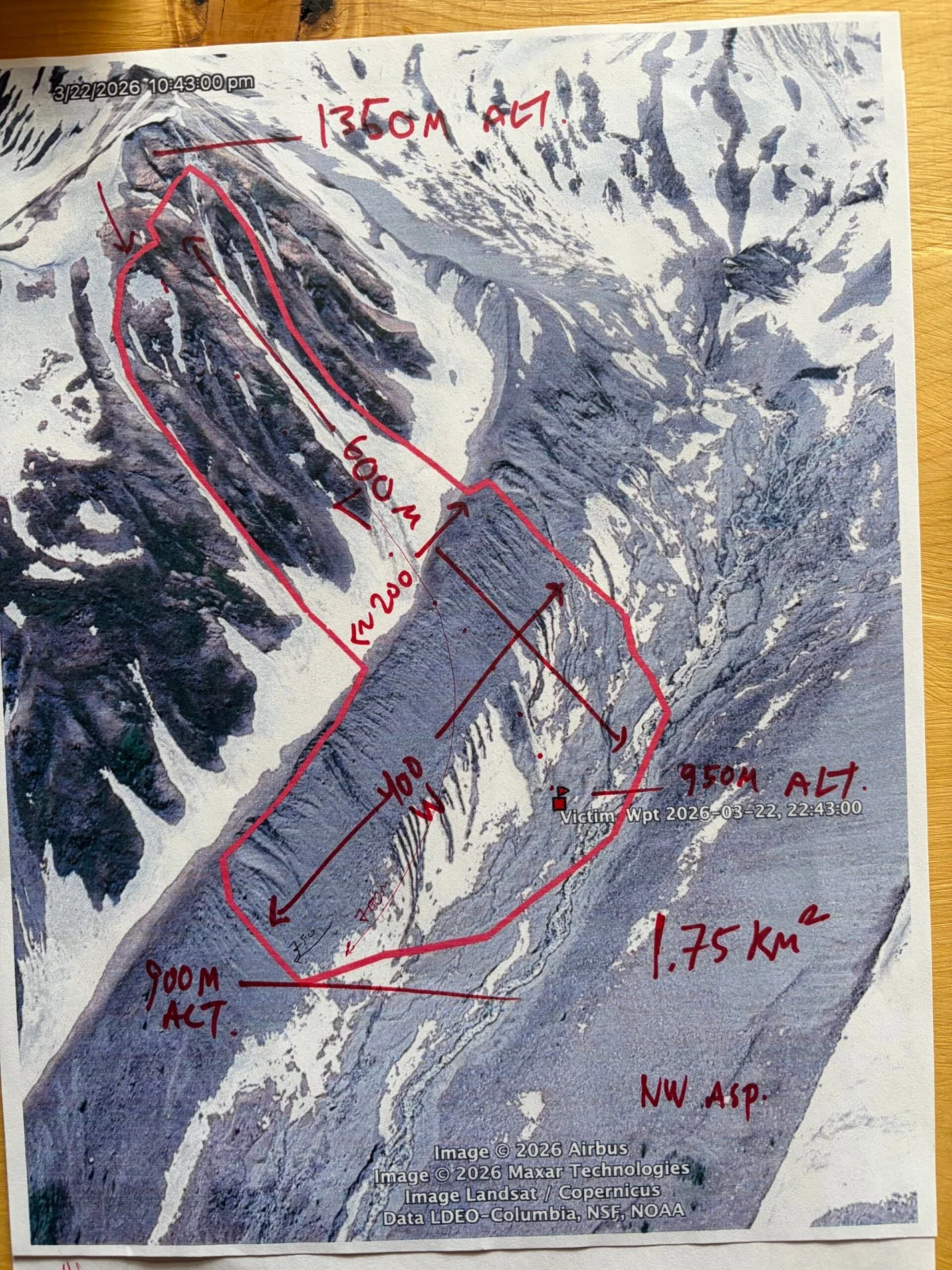
As rescue and recovery efforts were underway near Terrace, a second, equally tragic avalanche incident was unfolding over 500 kilometers to the north. At approximately 3:26 p.m. on the same Sunday, the Atlin RCMP detachment received an automated SOS alert via a Garmin device from the Haines Pass area, a remote region situated near the British Columbia-Alaska border. The alert indicated a life-threatening situation involving a group of five individuals who were ski touring in the backcountry, approximately 4.5 kilometers northwest of Mount McDonell.
According to an initial report from Avalanche Canada, a national avalanche safety organization, the catastrophic slide was triggered by the fourth member of the touring party. The avalanche, classified as a Size 4 persistent slab, occurred on a northwest-facing slope. This was not a superficial wind slab; rather, the avalanche initiated as a wind-loaded feature but subsequently “stepped down” into a deeply buried weak layer, specifically a facet layer from mid-February. This deep-seated instability proved to be a critical factor, leading to a fracture depth of up to 200 centimeters (approximately 6.5 feet) and an impressive runout length of 700 meters. The sheer volume and depth of the snow released highlight the immense power of such slides and the severe burial depths experienced by those caught within them.
One member of the five-person group was fully engulfed by the avalanche, buried under an estimated 1.5 meters of snow. Despite immediate and valiant companion rescue efforts, including prompt CPR administered on-site, the individual could not be resuscitated and tragically succumbed to their injuries. The remaining four members of the party were subsequently extracted from the remote location via helicopter. While one individual sustained minor injuries, the other three were physically unharmed but understandably deeply shaken by the traumatic experience. The swift response of the RCMP and the capabilities of aerial extraction were crucial in mitigating further loss of life in this remote and challenging terrain.
Understanding the "Persistent Slab" Problem and Spring Snowpack Volatility

These twin tragedies underscore a persistent and well-documented danger in the mountainous regions of British Columbia: the volatile nature of spring snowpacks, particularly those containing deeply buried weak layers. Avalanche Canada had issued advisories in the preceding weeks, warning of conditions conducive to significant avalanche activity. A recent atmospheric river event had inundated the Coast Mountains with substantial precipitation and high-velocity winds. This weather pattern is notorious for creating unstable snow layers, often referred to as "persistent slab" problems, which are exceptionally difficult to predict and manage.
In the case of the Haines Pass avalanche, the "Mid-February Facet/Crust Layer" acted as the critical weak point. Faceted crystals, which form in temperature gradients within the snowpack, are less cohesive than rounded grains and can create unstable layers. When these faceted crystals are buried by subsequent snow and then subjected to additional stress, such as from a skier or rider, they can fail catastrophically. The fact that the avalanche stepped down to this mid-February layer indicates a deep-seated structural weakness that had persisted throughout the winter season. These types of avalanches are often described as "low probability, high consequence" events, meaning they may not occur frequently, but when they do, the results are typically severe and often fatal.
The Knauss Mountain incident, while involving a heliskiing operation, also points to the inherent risks of operating in avalanche terrain. While professional guiding services adhere to strict safety protocols, including avalanche forecasting, terrain assessment, and the use of specialized equipment, the unpredictable nature of snow conditions can still lead to devastating outcomes. The classification of the Knauss Mountain incident as a workplace incident by WorkSafeBC will provide valuable insights into the operational aspects of heliskiing and the management of risk in this industry.
Broader Implications and a Call for Continued Vigilance
These two fatal incidents bring the total number of avalanche-related fatalities in British Columbia to eleven for the 2025/2026 winter season. This figure, while tragically high, is not unprecedented for the province, which boasts vast expanses of challenging mountainous terrain that draw both local and international outdoor enthusiasts. However, each loss represents a profound tragedy for families and communities.

As of late March, northern regions of British Columbia are still experiencing winter-like conditions, with avalanche danger ratings remaining at "Considerable" in many alpine zones. This designation indicates that natural avalanches are possible and human-triggered avalanches are likely on steeper slopes. The continued presence of these deeply buried weak layers means that the risk of catastrophic slides persists, even as temperatures begin to rise and days lengthen.
Experts in avalanche safety universally urge backcountry users to exercise extreme caution and to prioritize conservative terrain choices. This includes avoiding steep slopes, convex rollovers, and areas that are prone to wind loading. Understanding current avalanche forecasts, consulting with local avalanche professionals, and possessing the necessary training and equipment are paramount for anyone venturing into the backcountry. The mantra often repeated in the backcountry community, and echoed by TGR, is that "the mountains will be there tomorrow." This sentiment serves as a critical reminder that personal safety and responsible decision-making are the ultimate priorities, ensuring that adventurers can return to enjoy the mountains another day. The ongoing investigations by WorkSafeBC and the detailed reporting by Avalanche Canada will provide crucial data and analysis to inform future safety practices and public awareness campaigns, reinforcing the importance of respect for the power and unpredictability of the alpine environment.
