

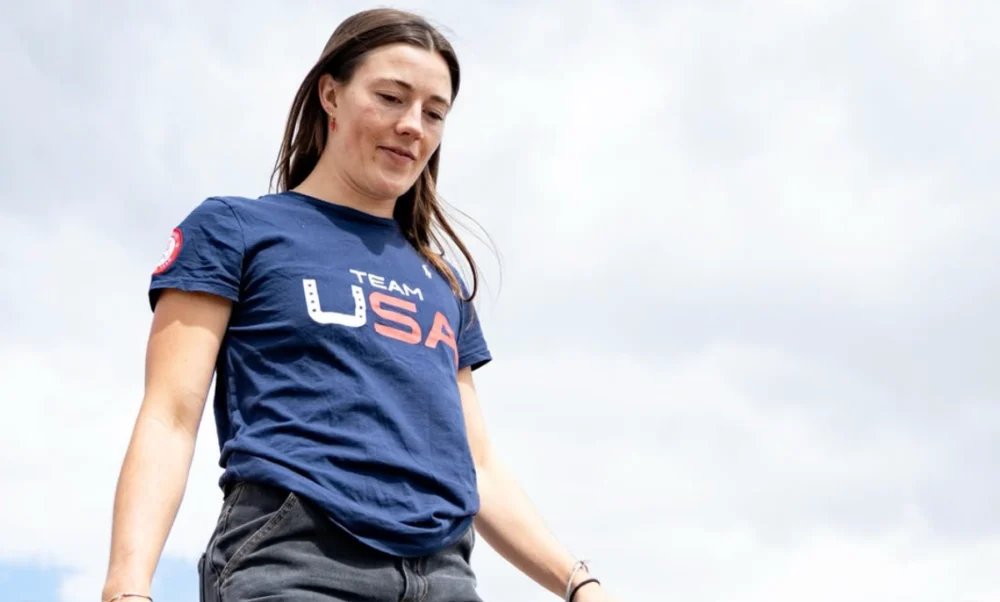
Fresh off their remarkable success at the Milano Cortina 2026 Winter Olympics, the U.S. Ski Team’s women’s freestyle moguls squad delivered another stunning performance, achieving a historic 1-2-3 podium sweep in the Dual Moguls event at the FIS Freestyle World Cup in Nanto-Toyama, Japan. Led by the sport’s most decorated active American freestyle skier, Jaelin Kauf, who clinched gold, the team showcased unparalleled depth and strategic brilliance, further solidifying their status as a global powerhouse. Olivia Giaccio secured the silver medal, making it an all-American final, while Tess Johnson fought valiantly to claim the bronze, triumphing over France’s formidable Perrine Laffont. This remarkable achievement marks the second such sweep for the U.S. women this season, sending a clear message to the international freestyle skiing community about their collective prowess and unwavering pursuit of excellence.
A Historic Return to Japanese Slopes
The return to Nanto-Toyama held a special significance for many, particularly for Jaelin Kauf. Nearly a decade prior, it was on Japanese snow, specifically in Tazawako, that Kauf celebrated her inaugural World Cup victory, a pivotal moment that launched her illustrious career. Now, in 2026, fresh from securing two silver medals at the recently concluded Winter Olympics in Italy, Kauf demonstrated that her competitive fire and technical mastery remain undimmed. Despite challenging spring-like conditions at the Taira Ski Area, characterized by slushy snow that demanded exceptional adaptability and precision, Kauf navigated the course with characteristic composure. Her ability to maintain speed and execute clean, powerful turns under pressure underscored her experience and mental fortitude, setting the stage for what would become a memorable day for Team USA. The Taira Ski Area, known for its challenging yet rewarding terrain, often tests athletes’ versatility, making the American team’s performance even more commendable given the adverse snow conditions. The crowd, comprising both local enthusiasts and international supporters, witnessed a masterclass in moguls skiing, particularly in the unforgiving dual format.
The Dual Moguls Showdown: An All-American Final
The climactic big final pitted two titans of American freestyle skiing against each other: Jaelin Kauf and Olivia Giaccio. From the outset, the intensity was palpable, with both athletes pushing the limits of speed and technicality. The course, softened by the spring thaw, proved tricky, as both Kauf and Giaccio were visibly bumped off their intended lines between the first and second jumps. This mid-course instability, a direct consequence of the challenging snow conditions and the aggressive pace, threatened to derail their runs. However, it was Kauf’s veteran composure that ultimately prevailed. She demonstrated remarkable recovery, quickly regaining control and charging through the lower section of the course, including a powerful final air, to secure a hard-fought 20-15 victory.
Giaccio, a formidable competitor in her own right, had already stamped her authority on the weekend by winning the traditional moguls event just 24 hours earlier. Her consistent performance across both disciplines highlighted her versatility and exceptional skill. While the silver medal was undoubtedly a testament to her talent, the head-to-head battle with Kauf showcased the internal competition and mutual respect that defines the U.S. team. The small final saw Tess Johnson deliver another standout performance, defeating France’s Perrine Laffont. Laffont, a multi-time World Cup champion and Olympic medalist, is widely regarded as one of the sport’s all-time greats. Johnson’s victory over such a distinguished rival was not merely a bronze medal win; it was a significant statement of her rising stature and the collective strength of the American contingent. Her clean, aggressive run in the small final perfectly encapsulated the team’s "collective mentality" and relentless pursuit of podium finishes. The sweep was a visual representation of the depth of talent, as three American flags proudly flew during the medal ceremony, a sight that thrilled fans and resonated across the global freestyle skiing community.
Olympic Momentum Carries Forward
The U.S. Ski Team’s performance in Nanto-Toyama was not an isolated incident but rather a continuation of a dominant trajectory established at the Milano Cortina 2026 Winter Olympics. At those Games, Jaelin Kauf had already etched her name further into Olympic history by securing two silver medals, adding to her impressive career tally. This Olympic success provided a powerful impetus, demonstrating that the team was peaking at the right time and carrying that momentum directly into the World Cup circuit. The confidence gained from performing on the world’s biggest stage, coupled with rigorous training and a well-honed competitive strategy, proved to be a potent combination.
Kauf’s journey from a promising newcomer to a three-time Olympic medalist and one of the most celebrated figures in freestyle skiing is a testament to her dedication and resilience. Her consistency across various seasons and conditions underscores her status as a true legend of the sport. Her ability to transition seamlessly from the high-pressure environment of the Olympics to the demanding World Cup circuit, maintaining peak performance, highlights her exceptional athleticism and mental strength. For the entire team, the Olympic experience, regardless of individual medal outcomes, served as invaluable preparation. It forged a collective resilience and a heightened sense of purpose, driving them to continue their winning ways and redefine what is possible in competitive moguls skiing. The focus was not just on individual glory but on elevating the entire team, a philosophy that has clearly yielded remarkable results.
Unprecedented Depth: The U.S. Women’s Moguls Dynasty
This podium sweep in Nanto-Toyama wasn’t merely a win; it was a resounding declaration of the U.S. women’s moguls team’s unprecedented depth. This marks the second instance this season where American women have swept a Dual Moguls podium, an extraordinary feat in a highly competitive international sport. This consistency underscores not just individual talent but also the effectiveness of the team’s developmental programs and coaching strategies. Even with a key athlete like Liz Lemley, a consistent top performer, sidelined for this particular event, the Americans still managed to occupy the top four spots in the overall World Cup standings following the Japan stop. This statistical dominance is a clear indicator of a robust talent pipeline and a deep bench of world-class athletes capable of stepping up when needed.

The strength of the U.S. team is multifaceted. It stems from a combination of individual brilliance, a highly supportive team environment, and a collective ethos that prioritizes shared success. Each athlete pushes the others to excel, fostering a healthy competitive spirit that elevates everyone’s performance. The coaching staff plays a crucial role in cultivating this environment, implementing training regimens that are both physically demanding and strategically astute. This depth ensures that even if one athlete faces challenges or has an off day, there are multiple teammates ready to step onto the podium, maintaining the team’s overall competitive edge. The ability to perform at such a high level consistently, across different venues and conditions, is a hallmark of a truly dominant force in any sport. The U.S. women’s moguls team is not just winning events; they are fundamentally reshaping the competitive landscape of freestyle skiing.
Strategic Excellence and Training Regimen
The consistent success of the U.S. Women’s Moguls team is not accidental; it is the product of a meticulously planned and executed strategy, both in training and competition. The team’s coaching staff, often working behind the scenes, implements advanced physiological conditioning programs tailored to the unique demands of moguls skiing. This includes specialized strength training to withstand the high-impact nature of the sport, agility drills for navigating the bumps, and aerial training to perfect jump execution. Furthermore, psychological preparation is paramount. Athletes undergo extensive mental training to develop focus, resilience, and the ability to perform under immense pressure, particularly in the head-to-head format of Dual Moguls.
Tactically, the team emphasizes adaptability. Coaches analyze course conditions extensively, providing athletes with detailed strategies for different snow types, mogul patterns, and jump configurations. This was evident in Nanto-Toyama, where the slushy conditions required a refined approach. The ability of Kauf, Giaccio, and Johnson to adjust their lines, manage speed, and maintain control despite the challenging snow speaks volumes about their training and tactical acumen. Video analysis plays a critical role, allowing athletes to review their runs, identify areas for improvement, and study competitors’ techniques. The "collective mentality" mentioned in the original article extends to a collaborative learning environment where athletes share insights and support each other’s development. This holistic approach, combining physical prowess, mental fortitude, and strategic flexibility, is the bedrock upon which the U.S. team’s dynasty is being built.
Reactions from the Camp and Beyond
The historic sweep in Nanto-Toyama elicited an outpouring of jubilation and pride from within the U.S. Ski & Snowboard camp. Head Coach for Freestyle Moguls, Matt Gnoza, speaking after the event, expressed immense satisfaction: "This is a truly special moment for our program. To achieve a 1-2-3 sweep, especially right after the Olympics and in challenging conditions, speaks volumes about the dedication, talent, and sheer grit of these athletes. It’s not just about individual brilliance; it’s about the collective belief and the way they push each other every single day. We preach a team-first approach, and today was the ultimate validation of that philosophy."
Jaelin Kauf, radiant with her gold medal, reflected on the significance of the win: "Japan always feels a bit like a second home for me, and to stand atop the podium here again, with Olivia and Tess right beside me, is incredible. The conditions were tough, but we train for every scenario. It was a true battle in the final with Liv, and that’s what makes these wins so rewarding – knowing you pushed your limits and came out on top against your own teammate, who is also one of the best in the world."
Olivia Giaccio, despite narrowly missing gold, shared her enthusiasm: "Winning the traditional moguls yesterday and then battling Jaelin in the Duals final today has made this an unforgettable weekend. We motivate each other constantly, and to share this podium with two of my closest teammates is an absolute dream. It just shows the strength we have as a team." Tess Johnson, securing her bronze, added, "Beating Perrine [Laffont] in the small final was a huge challenge, and I’m so proud to contribute to this sweep. It’s an incredible feeling to know we are making history together. Our coaches have prepared us so well, and our team dynamic is truly unmatched."
Internationally, the sweep was met with admiration and a degree of apprehension from rival nations. FIS commentators highlighted the depth and consistency of the American squad, acknowledging that they have set a new benchmark for excellence in the sport. The dominance of the U.S. women has become a central narrative of the current World Cup season, prompting other teams to re-evaluate their own strategies and training methodologies in an effort to close the widening gap.
Looking Ahead: Crystal Globes and a Legacy in the Making
As the FIS Freestyle World Cup circuit progresses toward its highly anticipated season finale in Azerbaijan, the U.S. women’s moguls team is in an enviable position. Their commanding performance in Nanto-Toyama has significantly bolstered their standings, with American athletes now occupying the top four positions in the overall World Cup rankings. This dominance positions them strongly for individual crystal globes, awarded to the overall season champions in each discipline, and potentially the Nations Cup for freestyle skiing. The psychological advantage gained from such consistent podium finishes, especially a clean sweep, cannot be overstated. It sends a clear message of invincibility to their competitors, who now face the daunting task of trying to break the American stranglehold.
The season finale in Azerbaijan promises to be a thrilling conclusion, with the U.S. team looking to cap off an already historic season with more victories and overall titles. Beyond the current season, this team’s performance has broader implications for the sport. They are not merely winning; they are setting new standards for athleticism, technical execution, and strategic depth in moguls skiing. Their collective success is inspiring a new generation of freestyle skiers in the United States, fostering growth and interest in the sport. This era of dominance could well be remembered as a golden age for American freestyle moguls skiing, defining a legacy that will inspire future athletes for decades to come. The team’s unwavering commitment to progression, coupled with their formidable talent, ensures that the U.S. women’s moguls squad will continue to be a force to be reckoned with on the international stage for the foreseeable future.
