

A Record-Breaking Warm Winter and the Specter of "Snow Drought"
The winter of 2025-26 has already etched its place in meteorological history, registering as the second-warmest on record for the contiguous United States. This widespread warmth has had a direct and profound impact on snowpack levels across crucial Western mountain ranges. As of mid-March 2026, many of these regions are experiencing their lowest snowpack densities in four decades. Data from NOAA’s CPC indicates that Snow Water Equivalent (SWE) – a key indicator of the amount of water contained within the snowpack – is significantly below normal, hovering at less than 50% of the average in the Pacific Northwest, California, and the Great Basin. This deficit represents a critical departure from typical seasonal accumulation and sets the stage for a challenging spring and summer.
The implications of this diminished snowpack are multifaceted. For outdoor recreation industries, particularly skiing and snowboarding, the shortened season has already led to significant operational adjustments and revenue losses. More critically, this "snow drought" directly impacts water resources for millions. The snowpack acts as a natural reservoir, gradually releasing meltwater throughout the spring and summer months, replenishing rivers, lakes, and groundwater. A severely depleted snowpack translates to reduced water availability for agriculture, municipal use, and ecological systems during the drier periods.
Projected Heatwaves and Accelerated Snowmelt
The concerning trend of warmth is projected to persist and even intensify in the coming months. NOAA’s forecast for April, May, and June of 2026 anticipates record-breaking temperatures across the Southwestern United States and the Rocky Mountain region. This sustained high heat will inevitably accelerate the melting of any remaining snowpack in higher elevations. While this might offer a brief and intense window for early-season activities like whitewater rafting, it also portends an unusually dry late summer for high-country regions. The rapid melt means that water sources will deplete faster, increasing the risk of water shortages and exacerbating drought conditions as the year progresses.

The confluence of a record-warm winter and an anticipated hot spring creates a volatile environment. The accelerated melt, coupled with increased evaporation rates due to higher temperatures, can lead to a phenomenon known as "flash drought." This occurs when dry conditions develop rapidly, often within weeks or a few months, rather than over longer, more gradual periods. The impact on soil moisture is immediate and severe, affecting vegetation and increasing susceptibility to other environmental stressors.
Drought Expansion and Summer Challenges in the West
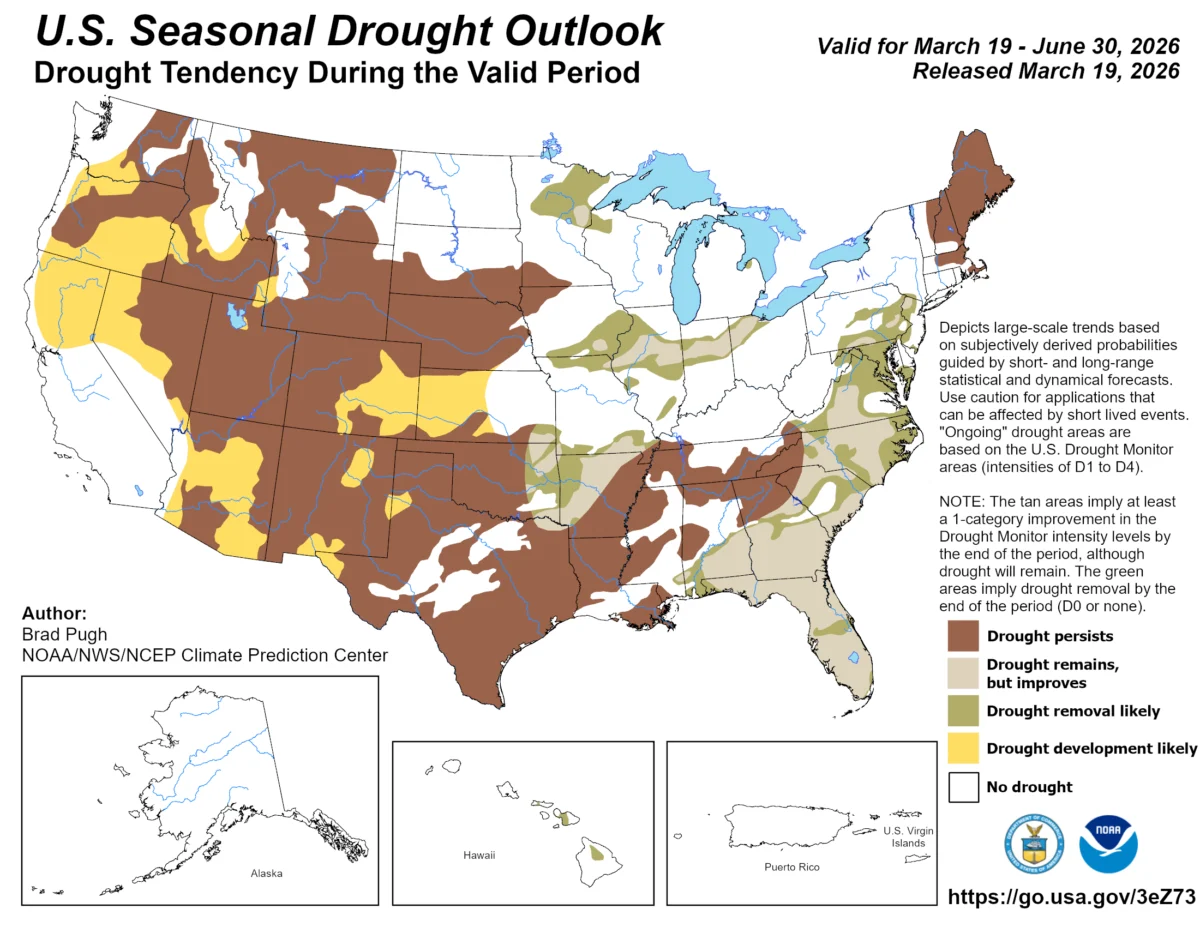
While the Southeast and Mid-Atlantic regions of the United States are forecast to experience a wetter-than-average spring, offering some relief from dry conditions, the narrative for the Western United States is starkly different. Forecasters are closely monitoring an anticipated "drought expansion" that is expected to encompass the Pacific Northwest, the Great Basin, and the Central Rockies by mid-summer. This expansion is directly linked to the predicted transition to El Niño conditions.
El Niño events are characterized by warmer-than-average sea surface temperatures in the central and eastern equatorial Pacific Ocean. These oceanic changes influence atmospheric circulation patterns globally, often leading to distinct shifts in precipitation and temperature regimes. For the Western U.S., a typical El Niño pattern can sometimes bring increased precipitation, particularly to California. However, the precise manifestation of an El Niño can vary, and in this instance, the prevailing forecast suggests a drying trend in the northern and interior West.
The combination of a critically low snowpack from the preceding warm winter and a dry spring is projected to result in critically low soil moisture levels in states like Montana, Idaho, and Eastern Washington by July and August. This alarming prognosis raises concerns about potential trail closures due to fire risk and the imposition of water restrictions earlier than typically seen, even in years that followed significant snowfall. The ecological consequences of prolonged dry spells are substantial, affecting plant life, wildlife habitats, and the overall health of these ecosystems.

While the northern regions face drying trends, there is a contingent possibility that El Niño could bolster the late-summer monsoon season in the Southwestern United States. This remains a significant wildcard for 2026, as the intensity and reach of monsoon activity are notoriously variable. A robust monsoon could provide much-needed moisture to arid regions, mitigating some of the drought impacts, but its reliability is far from guaranteed.
The Looming Threat of an Elevated Fire Season
The persistent heat and dryness across significant portions of the Western United States are inevitably raising alarms about the impending fire season. The National Interagency Fire Center (NIFC) and NOAA are collaborating to monitor potential wildfire risks, with particular attention being paid to the Southern High Plains and the Southwest. These regions are expected to experience elevated wildfire potential during the windy spring months.
Experts are emphasizing the concept of an extended "snow-free duration" this year. This means that the ground will be exposed and susceptible to ignition for a longer period, leading to earlier fire starts in boreal and high-alpine forests. The lack of adequate spring moisture is already "drought-stressing" vegetation, making it more combustible. Fine fuels, such as grasses and brush, are drying out at an accelerated rate, creating conditions ripe for rapid fire spread. Wildfire risk is already trending above normal for the Southern High Plains and Southwest for the spring. By June, this high-risk zone is projected to expand northward, encompassing the higher elevations of Southern Utah and the Western Slope of Colorado.
The implications of an early and potentially severe fire season are far-reaching. Wildfires can cause widespread destruction of homes and infrastructure, displace communities, lead to significant air quality degradation impacting public health, and inflict severe damage on natural landscapes and wildlife. The economic costs associated with wildfire suppression, recovery, and the loss of natural resources are substantial.

A Glimmer of Hope: The Potential for a Winter Jackpot
Despite the challenging forecast for the spring and summer of 2026, there is a significant silver lining on the horizon for the subsequent winter season, 2026-27. The projected high probability of a strong El Niño event developing by late 2026 is generating considerable optimism for certain regions. If the climate models prove accurate and a robust El Niño materializes, it could herald an exceptionally snowy winter for the Southern Rockies and the Sierra Nevada mountain ranges.
Such a scenario evokes memories of legendary storm cycles that have historically transformed drought-stricken summers into record-breaking powder years for the southern half of the Western United States. These powerful El Niño-driven snow events can replenish water supplies, revitalize ecosystems, and provide a much-needed economic boon to winter tourism destinations. The potential for a "winter jackpot" offers a counterpoint to the current concerns about drought and heat, highlighting the cyclical nature of climate patterns and the inherent variability that defines weather systems.
The transition from La Niña to El Niño is a complex and dynamic process, and while current forecasts provide a strong indication of the likely trajectory, ongoing monitoring and analysis will be crucial. The scientific community will continue to track sea surface temperatures, atmospheric conditions, and model outputs to refine predictions and provide timely updates. Understanding these shifts is vital for effective planning and mitigation strategies across various sectors, from agriculture and water management to disaster preparedness and outdoor recreation.
