

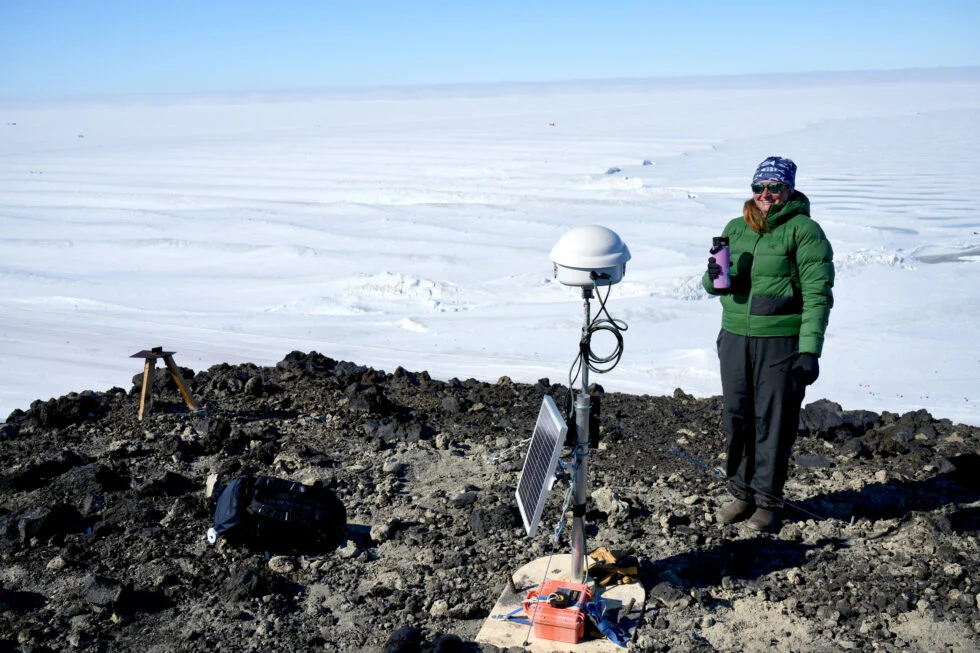
At the frozen southernmost reaches of the planet, where the sun remains fixed in the sky for months on end and the silence is broken only by the groan of shifting glaciers, a team of scientists is grappling with one of the most pressing questions of the modern era: how long can the Antarctic ice shelves remain intact? Dr. Ali Banwell, a Research Scientist at the University of Colorado Boulder and a Professor of Glaciology at Northumbria University, recently concluded a grueling six-week field season on the McMurdo Ice Shelf. As a member of the Protect Our Winters (POW) Science Alliance, her mission transcends academic curiosity; it is a vital investigation into the structural integrity of the continent’s coastal defenses and the subsequent implications for global sea-level rise.
The urgency of this research is underscored by a single, staggering statistic provided by Dr. Banwell: if the entirety of the Antarctic Ice Sheet were to melt, global sea levels would rise by approximately 190 feet. While experts agree that a total collapse is not imminent, the mechanisms that could trigger large-scale instability are already in motion. Antarctica is not a static block of ice; it is a dynamic, interconnected system where the health of the floating ice shelves dictates the fate of the massive glaciers resting on the land behind them.
The Critical Role of Ice Shelf Buttressing
To understand the focus of Dr. Banwell’s research, one must first understand the "buttressing effect." Antarctica’s ice sheets—vast layers of ice resting on the continental landmass—are ringed by ice shelves, which are floating extensions of these glaciers that cover roughly 75% of the coastline. These shelves act as a natural dam or a "cork in a bottle," exerting back-pressure that slows the flow of land-based ice into the Southern Ocean.
"Ice shelves buttress the glaciers flowing into the ocean," Dr. Banwell explains. "Without these ice shelves, ice on land would flow more rapidly into the ocean, accelerating sea-level rise." When an ice shelf thins or collapses, the land-based glacier behind it loses its restraint and surges forward. This process has been observed with alarming clarity in the past, most notably during the 2002 collapse of the Larsen B Ice Shelf, which led to a dramatic acceleration of the tributary glaciers that once fed it.
However, ice shelves are inherently fragile. They are susceptible to melting from the atmosphere above and from warming ocean currents below. They crack, thin, and fracture under the stress of their own weight and the movement of the tides. The McMurdo Ice Shelf, located near the United States’ McMurdo Research Station on Ross Island, presents a unique geographical puzzle that may hold the key to understanding how these structures survive—or fail—under pressure.
The Mystery of the McMurdo Rumples
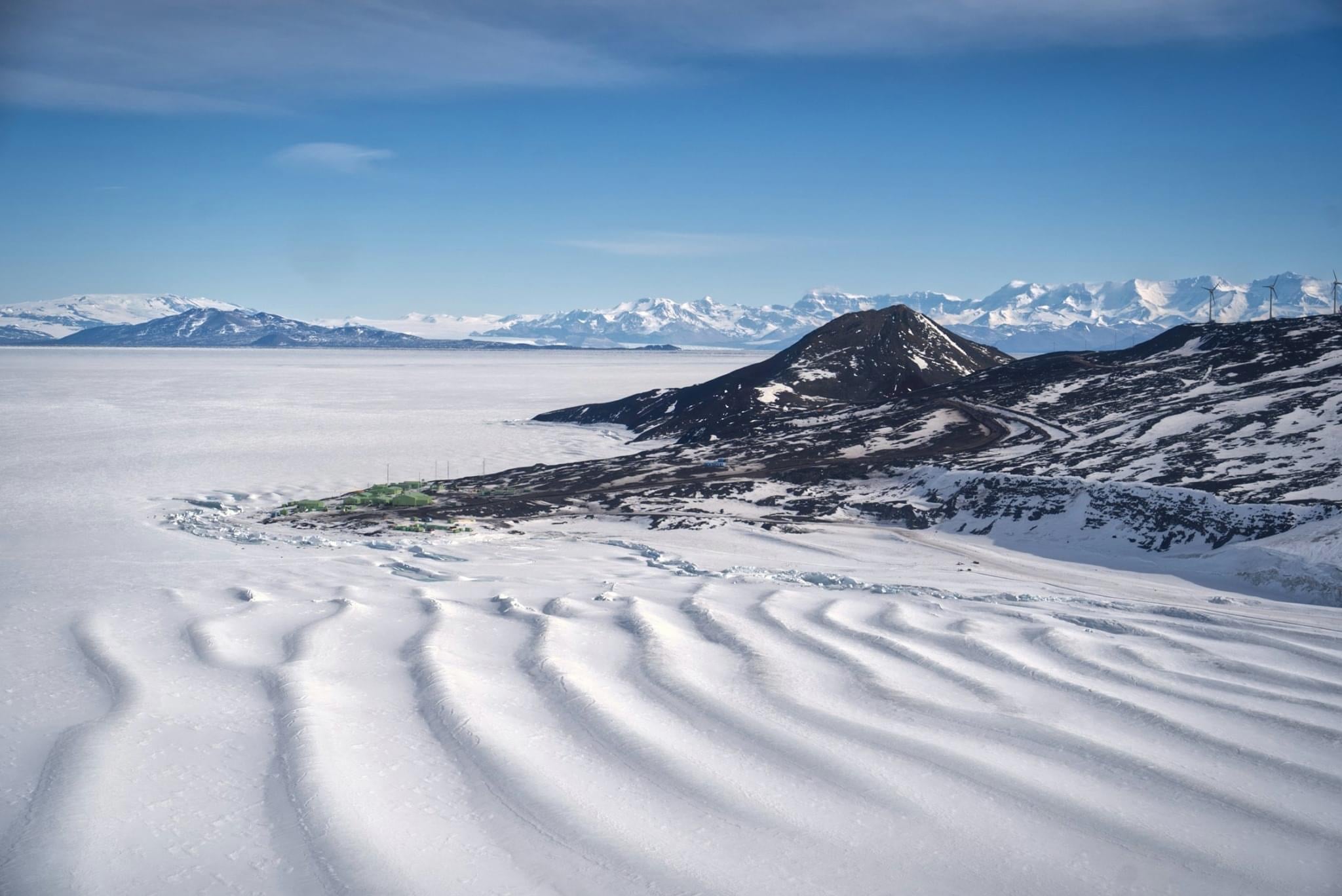
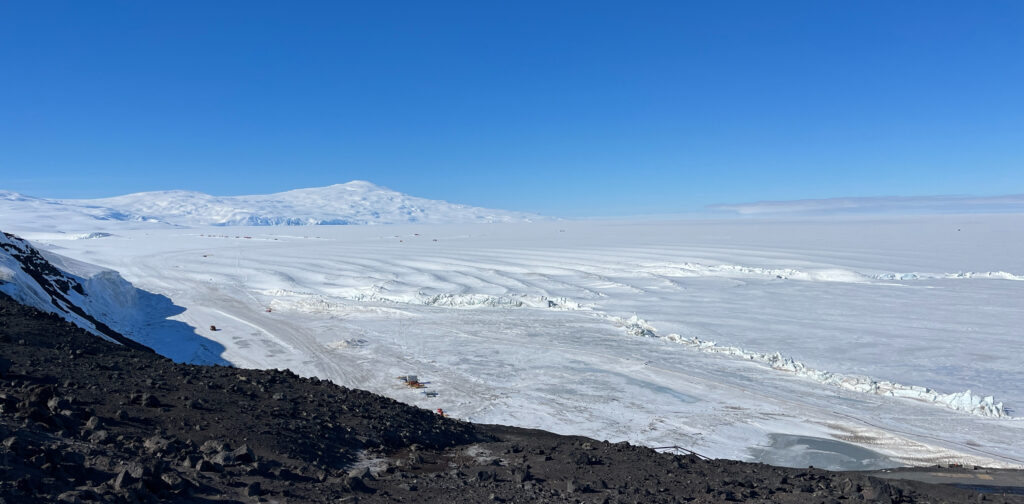
Typical ice shelves flow outward toward the open sea, thinning as they spread. However, the McMurdo Ice Shelf is behaving differently. In certain sectors, the ice is being forced into landmasses or grounded features on the seafloor. This compression causes the ice to "rumple," creating a topography of wave-like ridges and troughs that stretch across the frozen surface.
"Instead of simply flowing out to sea, parts of the ice shelf are actually being pushed into areas of land," says Dr. Banwell. "This compression causes the ice to crumple into features known as ice shelf rumples. In some cases, the ice within these rumples can even buckle and fracture."
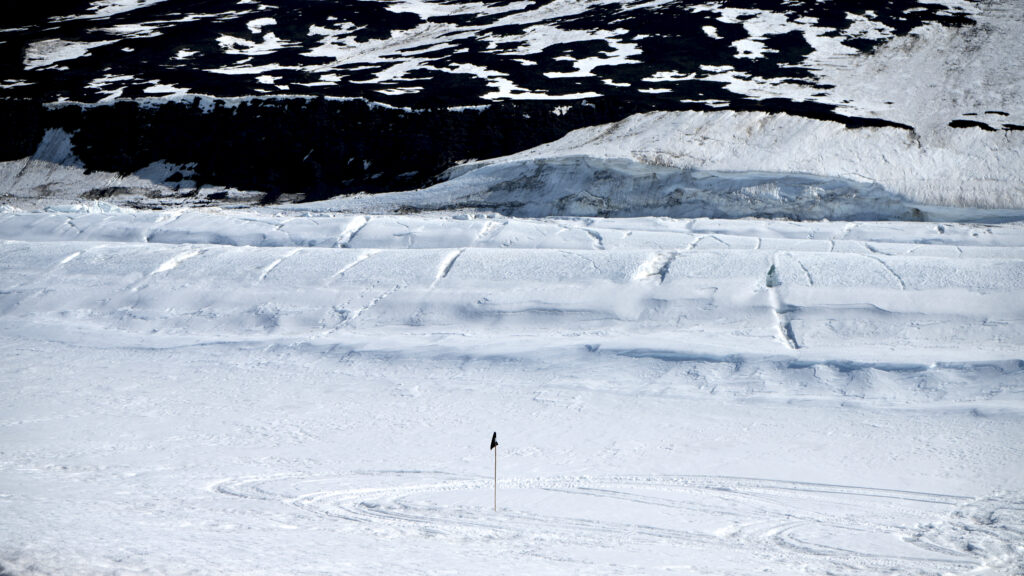
The central scientific inquiry of Dr. Banwell’s National Science Foundation (NSF)-funded project is whether these rumples act as a stabilizing force—essentially pinning the ice shelf in place—or whether the internal fracturing caused by the crumpling makes the shelf more vulnerable to a catastrophic break-up. The answer to this question has profound implications for climate modeling. If rumples provide stability, they may buy the world more time; if they are points of structural failure, the timeline for sea-level rise may need to be aggressively moved forward.
Six Weeks in the Field: Logistics and Observations
The expedition, led by Dr. Banwell, included a team of four: Co-Principal Investigator Dr. Ryan Cassotto (University of Colorado Boulder/University of Maine) and PhD students Allie Berry (University of Maine) and Michela Savignano (University of Colorado Boulder). For six weeks, the team operated out of McMurdo Station, traveling daily via snowmobile across the "vast, remote, and otherworldly" landscape of the ice shelf.
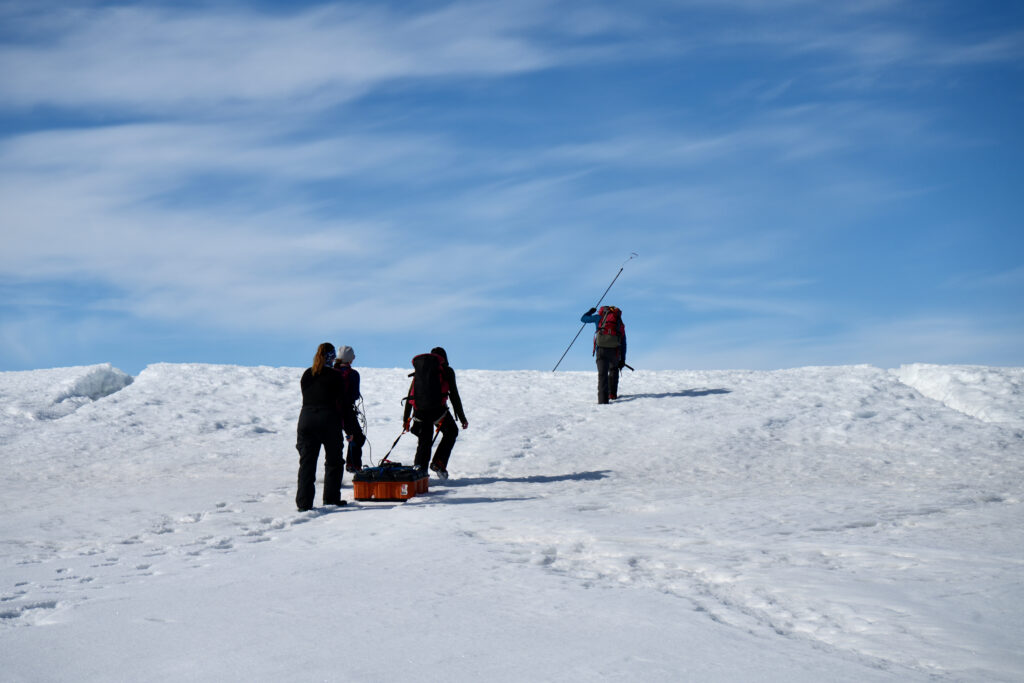
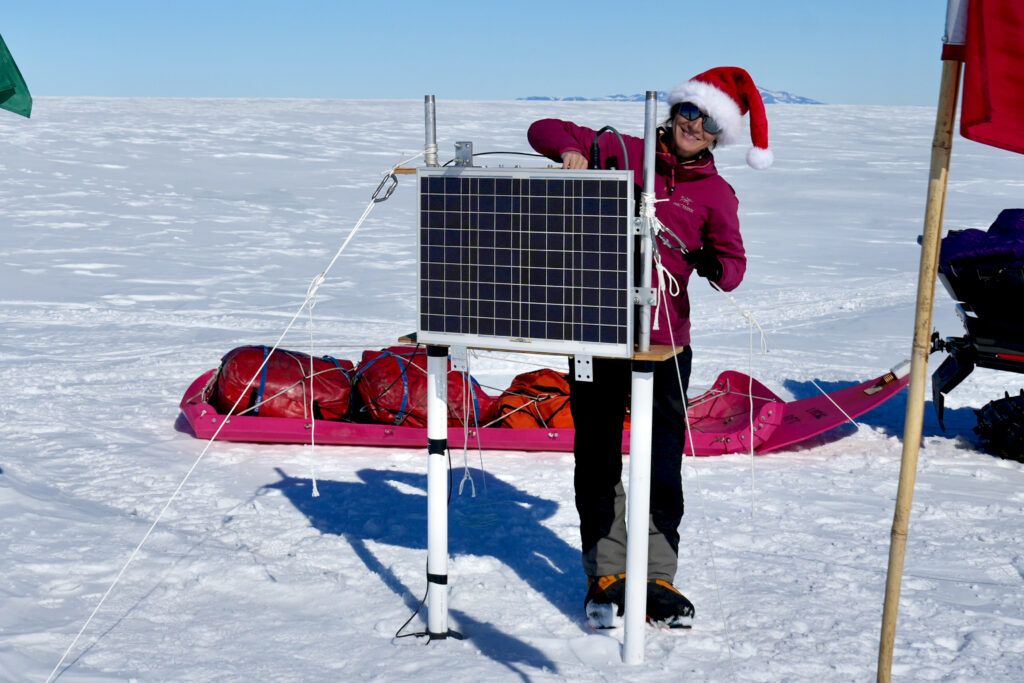
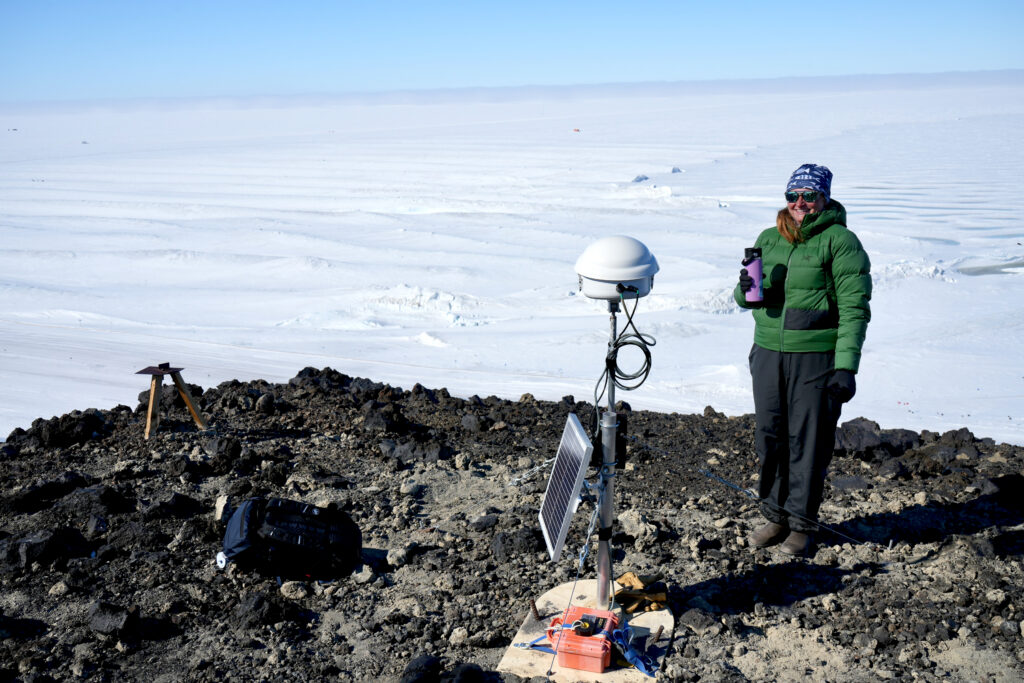
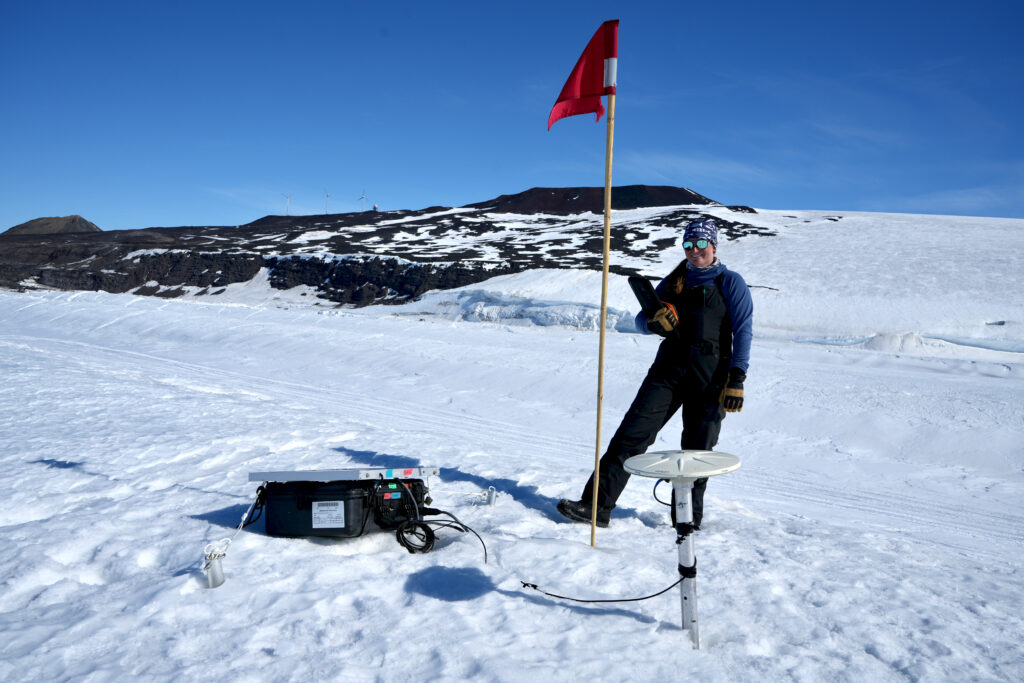
The field season was characterized by the grueling physical labor of "planting" a sophisticated network of scientific instruments. The team deployed seismometers to detect the "cryoseismic" signals of internal cracking—sounds that are often too deep or subtle for the human ear but indicate structural shifts. They also installed high-precision GPS units capable of tracking ice movement down to the centimeter, as well as radar systems designed to peer through the ice to measure its thickness and internal deformation.
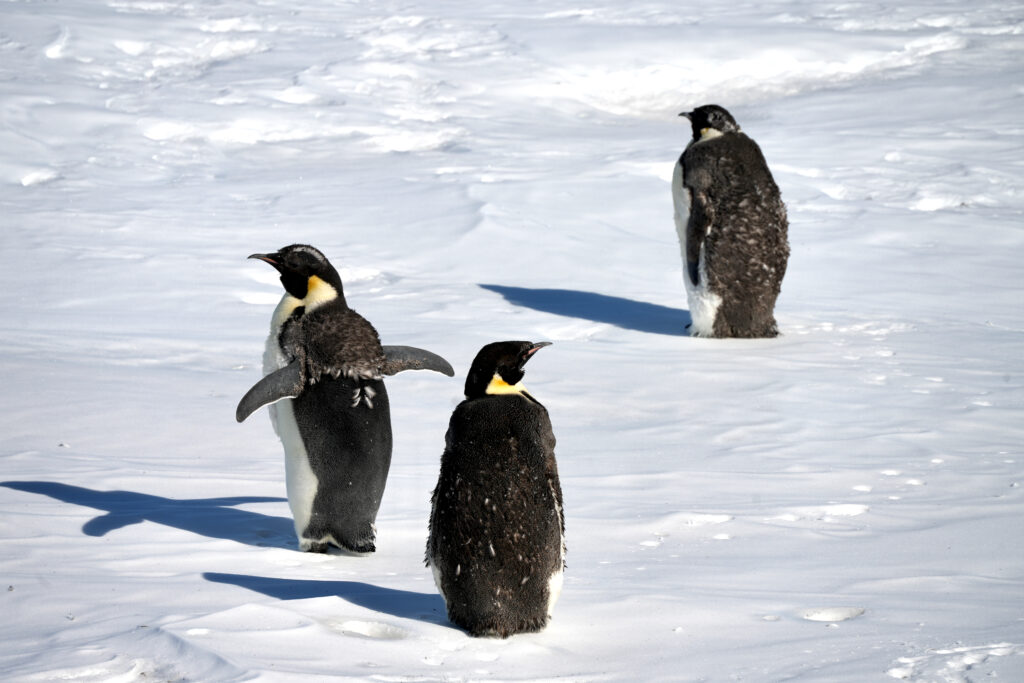
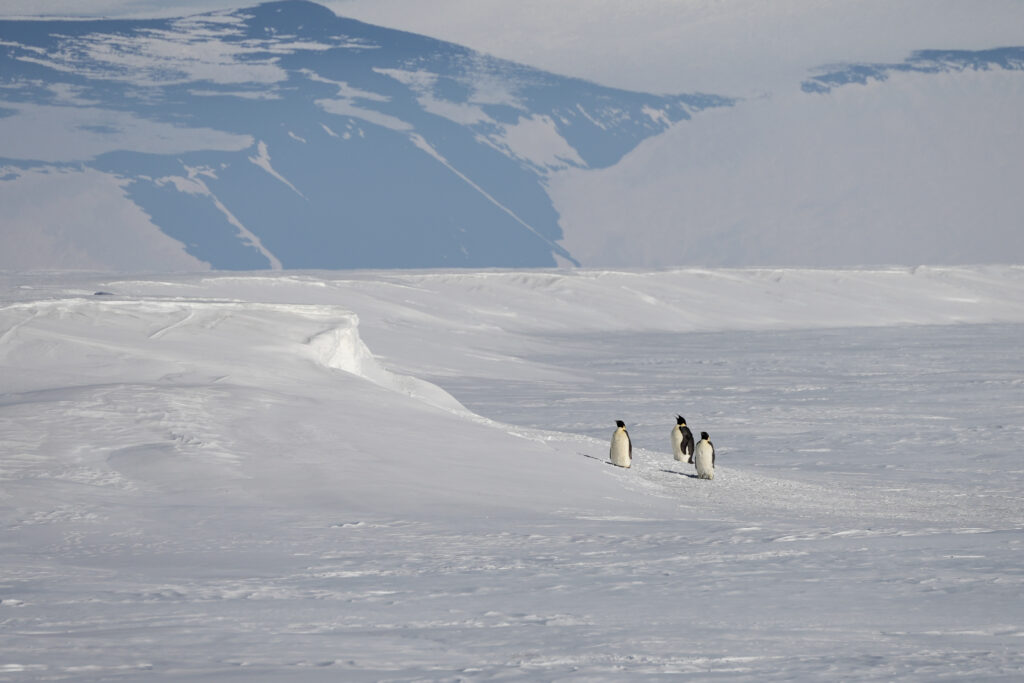
To complement the subterranean data, weather stations were erected to capture atmospheric conditions, and automated cameras were programmed to take photographs every 30 minutes. This provides a continuous visual record of the surface, even after the team departed. During their work, the team was frequently visited by three emperor penguins in the midst of their annual molt. The birds, heavy with new feathers and disinclined to move, became silent observers of the human activity, a reminder of the unique ecosystem that depends on the stability of the ice.
Early Findings: A Dynamic and Warming Environment
While the full dataset is currently being recorded through the dark Antarctic winter, early observations from the field season have already provided cause for concern. Dr. Banwell noted that the glacier ice was moving faster than anticipated, averaging one to two feet per day. While this may seem slow by human standards, in the context of glaciology, it represents a highly dynamic and rapidly changing system.
Perhaps more alarming was the temperature. "This was the warmest of the seven summers I’ve worked in Antarctica," Dr. Banwell reported. The unusual warmth led to an earlier-than-normal snowmelt, which stripped away the protective white blanket of the shelf to reveal a "far more fractured ice surface" beneath. The team encountered a significantly higher number of crevasses than expected, necessitating constant vigilance and the application of advanced mountaineering techniques to ensure the team’s safety.
This increased fracturing is a physical manifestation of the stress the ice shelf is under. As surface meltwater percolates into these cracks, it can lead to "hydrofracturing," a process where the weight of the water forces the cracks deeper, potentially slicing through the entire thickness of the ice shelf and leading to its disintegration.
Chronology of the Research Project
The McMurdo Ice Shelf study is a multi-year endeavor. The timeline of the project reflects the long-term commitment required for polar research:
- Year 1 (Recent Season): Deployment of the instrument array, initial surface observations, and establishment of the "rumple" monitoring zone.
- Current Phase (Antarctic Winter): The instruments remain on the ice, powered by batteries and solar (where possible), recording seismic activity, movement, and atmospheric changes through the months of total darkness.
- Year 2 (Upcoming Season): The team will return to the McMurdo Ice Shelf to retrieve the instruments and the stored data. This phase will involve "harvesting" the months of recorded information and conducting a second round of measurements to compare year-over-year changes.
- Data Analysis Phase: Back at the University of Colorado Boulder and Northumbria University, the team will cross-reference the field data with satellite observations. This will allow them to create high-resolution models of ice shelf behavior that can be applied to other vulnerable regions of Antarctica.
Broader Impact and Global Implications
The research conducted by Dr. Banwell and her team is a critical piece of the global climate puzzle. Current projections from the Intergovernmental Panel on Climate Change (IPCC) suggest a global sea-level rise of roughly one to three feet over the next century. While this may sound manageable, it is a conservative estimate that depends heavily on the continued stability of the Antarctic ice shelves.
A sea-level rise of just three feet would be catastrophic for low-lying coastal regions. Tens of millions of people in places like Bangladesh, Vietnam, and the Netherlands, as well as major metropolitan areas like New York, Miami, and Shanghai, would face regular flooding or permanent displacement. The economic cost of infrastructure loss and the humanitarian cost of climate migration are nearly incalculable.
By studying the "rumples" of the McMurdo Ice Shelf, Dr. Banwell is helping to refine the "uncertainty" in these climate models. In the world of climate science, uncertainty is the greatest challenge; knowing whether a shelf will hold for 50 years or 150 years allows governments and communities to plan and adapt.
The work of the POW Science Alliance and researchers like Dr. Banwell highlights a sobering reality: in Antarctica, even the smallest increments of change—a foot of movement, a degree of temperature—carry enormous weight for the rest of the planet. As the instruments on the McMurdo Ice Shelf continue to listen to the ice through the freezing winter, they are recording the pulse of a continent that serves as the ultimate regulator of our global environment. The data they return with next season will not just be a collection of numbers; it will be a forecast for the future of our coastlines.
