

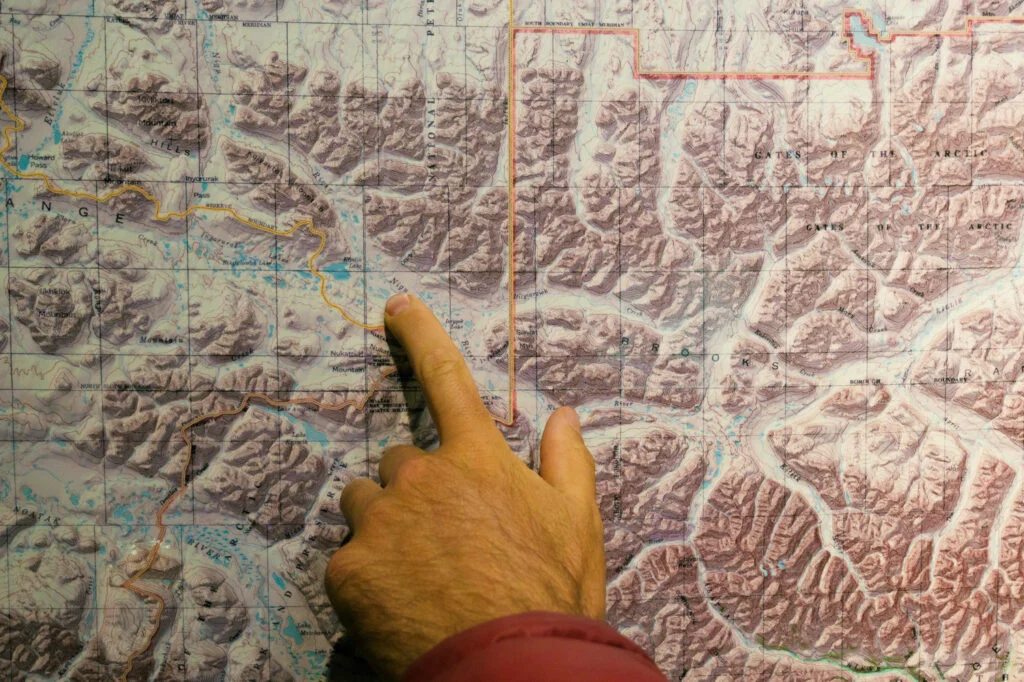
The federal government officially commenced the first of five mandated lease sales in the Western Arctic of Alaska on March 18, marking a significant escalation in the industrial development of the United States’ largest single block of public land. This move opens more than 5.5 million acres of the National Petroleum Reserve-Alaska (NPR-A) to energy exploration, including the ecologically sensitive Teshekpuk Lake wetlands. The sale is part of a broader federal mandate requiring at least five such auctions over the next decade, a policy that has reignited a century-old debate over the balance between national energy security and the preservation of the planet’s last remaining intact wilderness.
Historical Foundations: From Naval Reserve to National Petroleum Reserve
The origins of the current leasing program date back to 1923, when President Warren G. Harding signed an executive order designating a vast portion of Alaska’s North Slope as "Naval Petroleum Reserve No. 4." At the time, the United States Navy was transitioning its fleet from coal to oil, and early geological surveys had identified significant oil seeps along the Arctic coast. Amidst the tail end of the Alaska gold rush, the federal government sought to secure a long-term fuel supply, effectively withdrawing the land from all other uses and placing it in a strategic reserve.
The designation remained largely administrative for decades. In 1976, Congress passed the Naval Petroleum Reserves Production Act, which transferred management of the land from the Navy to the Department of the Interior. While the transition moved the land into civilian hands, the legislative update reinforced its primary identity as an energy resource by renaming it the National Petroleum Reserve-Alaska (NPR-A).
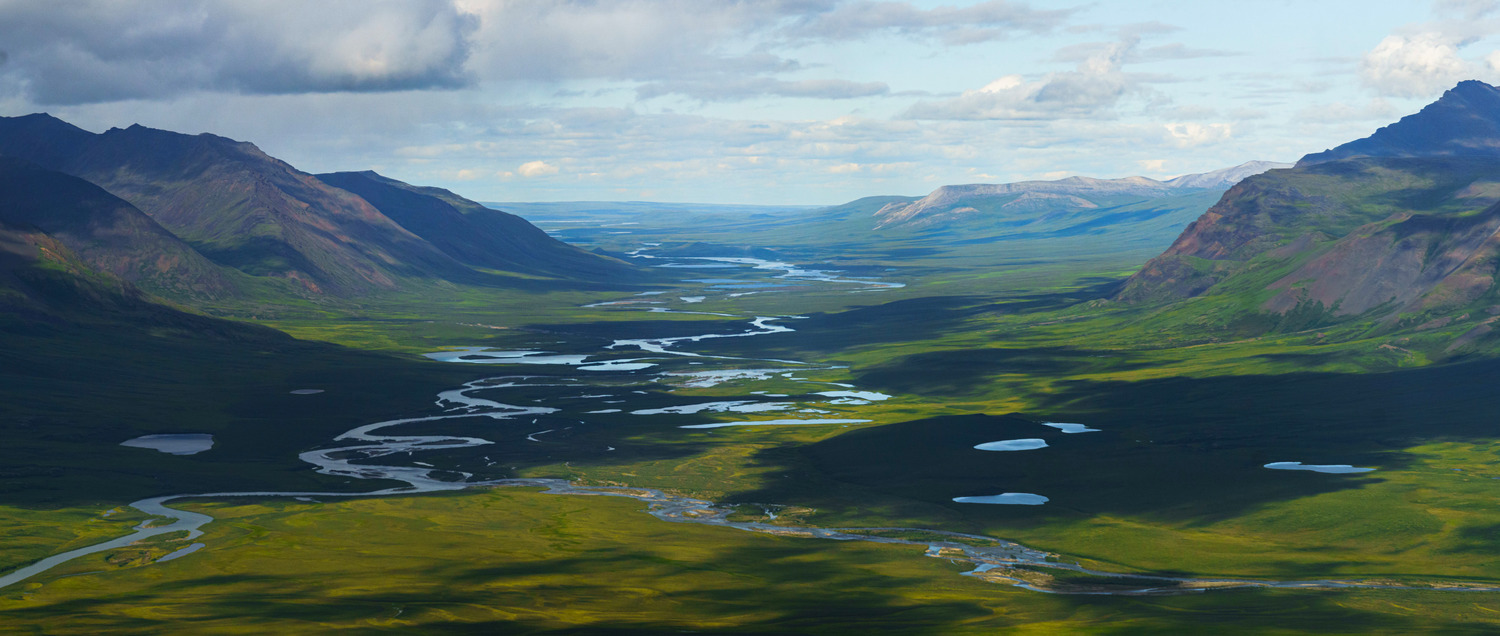
Spanning over 22 million acres, the NPR-A is an area roughly the size of the state of Indiana or nearly the size of Ohio. Its history has often been shadowed by political controversy. President Harding died shortly after the reserve’s designation, and his administration was subsequently embroiled in the Teapot Dome scandal, involving bribes accepted by Interior Secretary Albert Bacon Fall for oil leases in Wyoming’s Naval Petroleum Reserve No. 3. Modern critics argue that the "Petroleum Reserve" moniker continues to dictate federal policy, overriding the region’s ecological value through a bureaucratic mandate for "expeditious" competitive leasing.
Ecological Significance of the Western Arctic
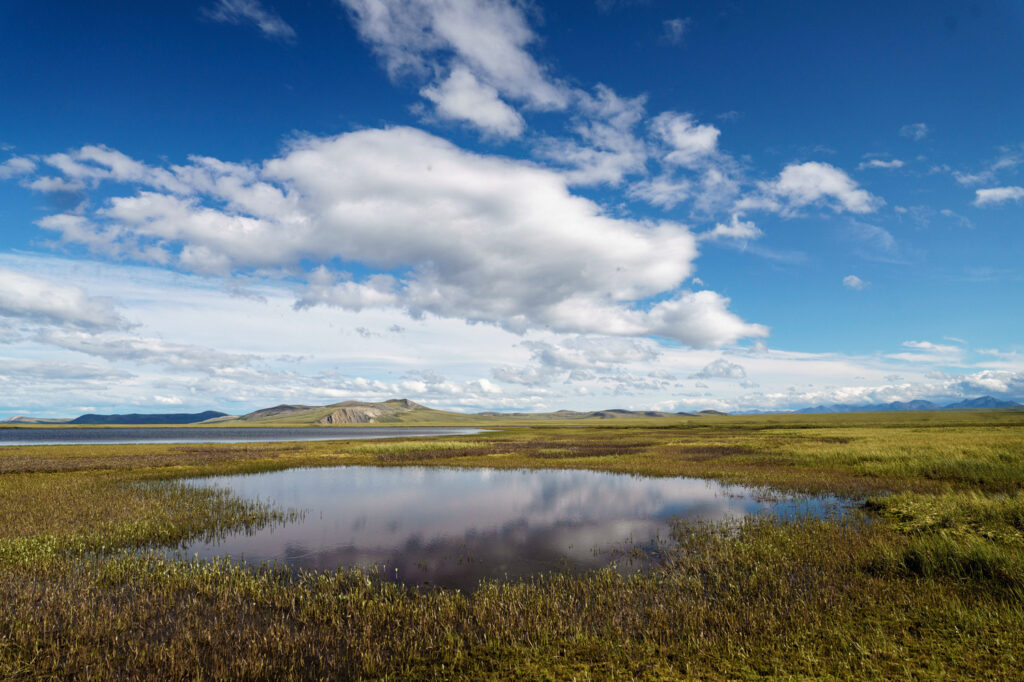
Despite its industrial name, the NPR-A is regarded by biologists as one of the most productive and essential ecosystems in the global Arctic. The region is home to the Teshekpuk Lake wetlands, a globally critical habitat that serves as the primary calving ground for the Teshekpuk Lake caribou herd. For decades, portions of these wetlands were protected from development due to their high biological value, but recent federal shifts have opened these areas to potential drilling.
The scale of avian migration to the NPR-A is unparalleled. An estimated 5.4 million aquatic birds migrate to the reserve each season, representing more than any other Arctic wetland on Earth. These birds arrive from six different continents and all 50 U.S. states to nest and molt in the nutrient-rich tundra. The region provides the single most important molting habitat for migratory waterfowl in the Arctic, making the NPR-A a central node in global biodiversity.
The broader Arctic landscape, stretching from the Yukon River to the Arctic Ocean, remains one of the few places on Earth where ecosystems function without the fragmentation of roads, fences, or large-scale human settlements. While the state of Alaska has a population density far lower than the contiguous United States, the North Slope supports roughly 10,000 residents alongside half a million caribou, maintaining an intact predator-prey dynamic that has largely disappeared elsewhere in North America.
Economic Projections and Industrial Expansion
The federal government’s push for leasing is driven by substantial estimates of undiscovered energy resources. According to the U.S. Geological Survey (USGS), the Northern Alaska region may contain nearly half of all undiscovered, technically recoverable oil on federal lands in the United States. Within the NPR-A specifically, estimates suggest the presence of approximately 900 million barrels of conventional oil.
The March 18 lease sale is part of a multi-pronged industrial strategy for the North Slope that includes several massive infrastructure projects:
- The Willow Project: A major oil development venture led by ConocoPhillips, which is moving into its development phase. It is estimated to produce up to 750 million barrels of oil over its lifetime.
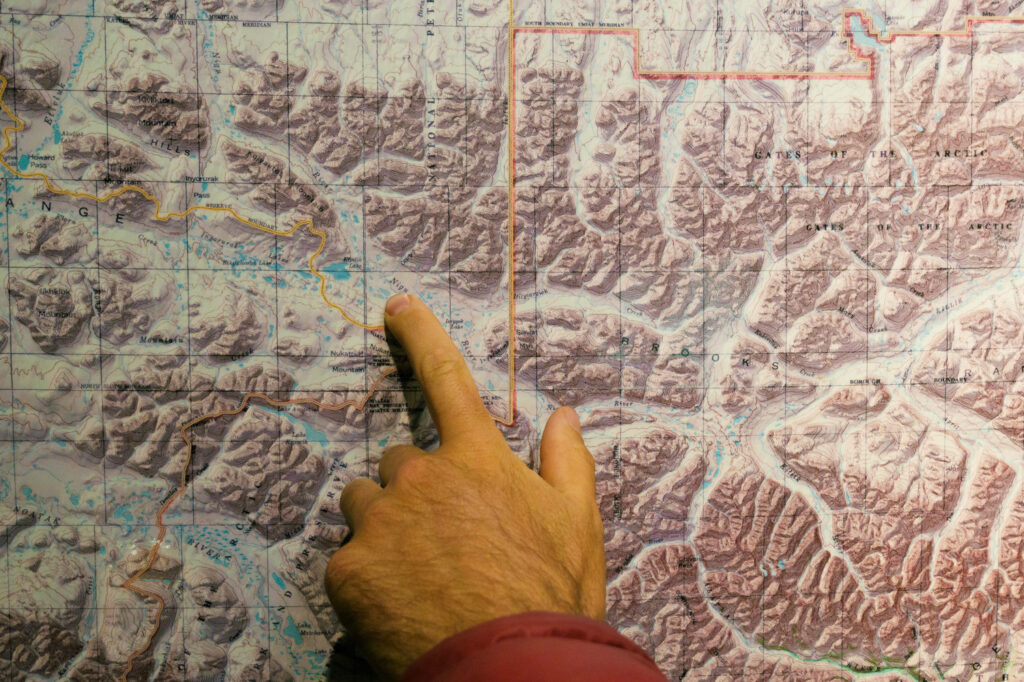
- The Ambler Road: A proposed 211-mile industrial access road designed to reach the Ambler Mining District, which would cut through the Brooks Range and further fragment the wilderness.
- Arctic National Wildlife Refuge (ANWR) Leasing: Concurrent lease sales in the neighboring wildlife refuge to the east, which, combined with NPR-A sales, represent a comprehensive push for North Slope industrialization.
Economists note that while the volume of oil is significant, the cost of extraction in the Arctic is among the highest in the world. Factors such as extreme weather, the lack of existing infrastructure, and the necessity of building seasonal ice roads make Arctic crude more expensive per barrel than domestic sources in the Permian Basin or the Gulf of Mexico. Critics of the program argue that these developments often require significant public subsidies to remain financially viable for private corporations.
Climate Change and Environmental Risks
The expansion of oil and gas leasing occurs as the Arctic undergoes a period of rapid climatic transformation. Scientific data indicates that the Arctic is warming three to five times faster than the global average. This warming is causing the degradation of permafrost, which serves as the foundation for both the ecosystem and industrial infrastructure.
The environmental risks of development in this region are categorized into two primary concerns:
- Local Impact: The construction of gravel pads, pipelines, and roads disrupts caribou migration routes and nesting sites for migratory birds. Spills in the Arctic environment are notoriously difficult to clean up due to the remote location and the presence of sea ice.
- Global Impact: The extraction and eventual combustion of hundreds of millions of barrels of oil contribute to the accumulation of atmospheric greenhouse gases. Environmental scientists argue that the "carbon bomb" represented by North Slope reserves is incompatible with international goals to limit global warming to 1.5 degrees Celsius.
Chronology of Modern Policy Shifts
The current trajectory of the NPR-A was established through a series of administrative and legislative actions over the last several years:
- 2017-2020: The federal administration overhauled management plans for the NPR-A, significantly increasing the acreage available for lease and reducing seasonal protections for the Teshekpuk Lake region.
- 2020: The Department of the Interior finalized a new Integrated Activity Plan (IAP) that opened roughly 82% of the reserve to mineral leasing.
- 2021-2023: Legal challenges and administrative reviews slowed some projects, but the "Willow" development received final approval, and the legal requirement for periodic lease sales remained in effect.
- March 18: The opening of the first of five mandated lease sales, signaling the execution of the long-term industrialization strategy.
Institutional and Stakeholder Responses
The commencement of lease sales has drawn polarized reactions from various stakeholders. Proponents of the sales, including many state officials in Alaska and industry trade groups, emphasize the economic benefits. They argue that North Slope production is vital for the Trans-Alaska Pipeline System (TAPS), which requires a minimum flow level to operate efficiently. Furthermore, oil revenues provide a significant portion of Alaska’s state budget and fund essential services in rural communities.
Conversely, environmental organizations and several Indigenous groups have expressed deep concern. Organizations like Protect Our Winters (POW) argue that the "Petroleum Reserve" name is an antiquated label that fails to reflect the modern reality of the climate crisis. They contend that the long-term capital horizons of oil companies—often 30 years or more—mean that decisions made today will lock in carbon emissions for decades to reach a "breakeven" point.
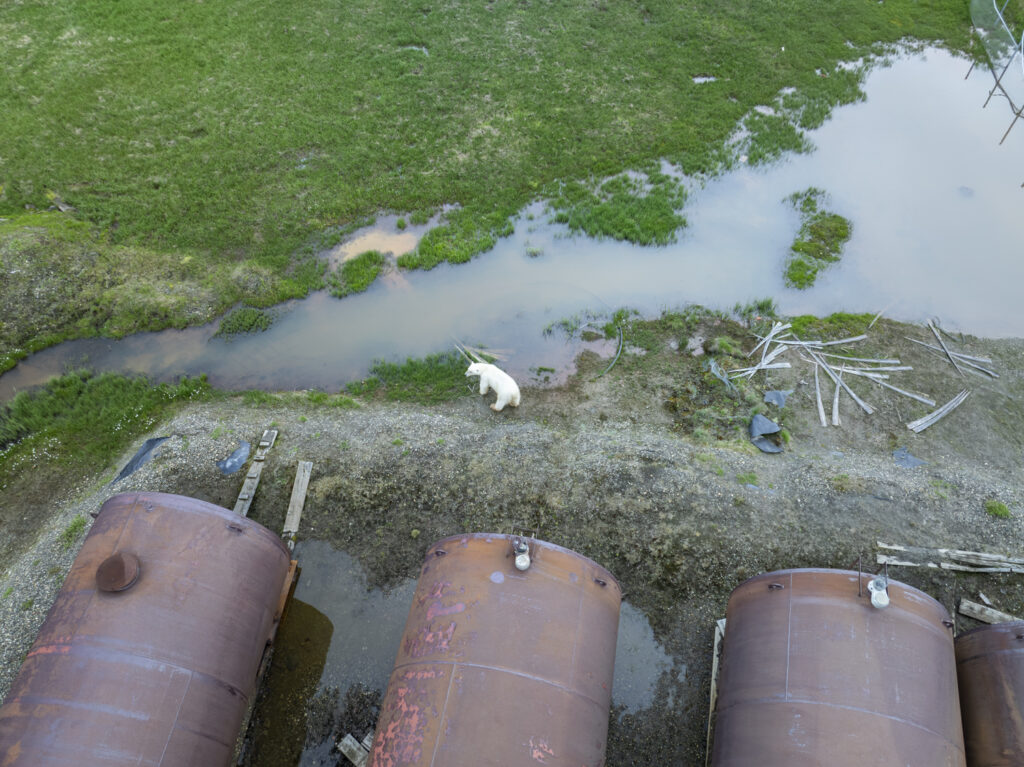
Indigenous communities on the North Slope are divided. Some tribal entities see development as a path to economic self-determination and improved infrastructure, while others, particularly those reliant on subsistence hunting of the Teshekpuk caribou herd, view the encroachment of industry as a direct threat to their food security and cultural heritage.
Future Implications: The Last Whole Place
As the legal machinery of federal lease sales continues, the Western Arctic stands at a crossroads. The NPR-A represents the "last whole place" in the American wilderness—a landscape defined by its continuity rather than its fragmentation. Analysts suggest that the future of the region will be determined not just by the current lease sales, but by the social and political landscape of the next decade.
The uncertainty of future political administrations and shifting global energy markets may influence the actual investment decisions of oil majors. However, the current federal mandate ensures that the industrial footprint of the United States will continue to expand into the Arctic. The "sticky name" given by President Harding a century ago has successfully transitioned from a military contingency plan to a legal scaffolding for one of the largest energy developments in American history. Whether the region remains an intact ecosystem or becomes a fully developed industrial corridor remains one of the most consequential environmental questions of the 21st century.
