

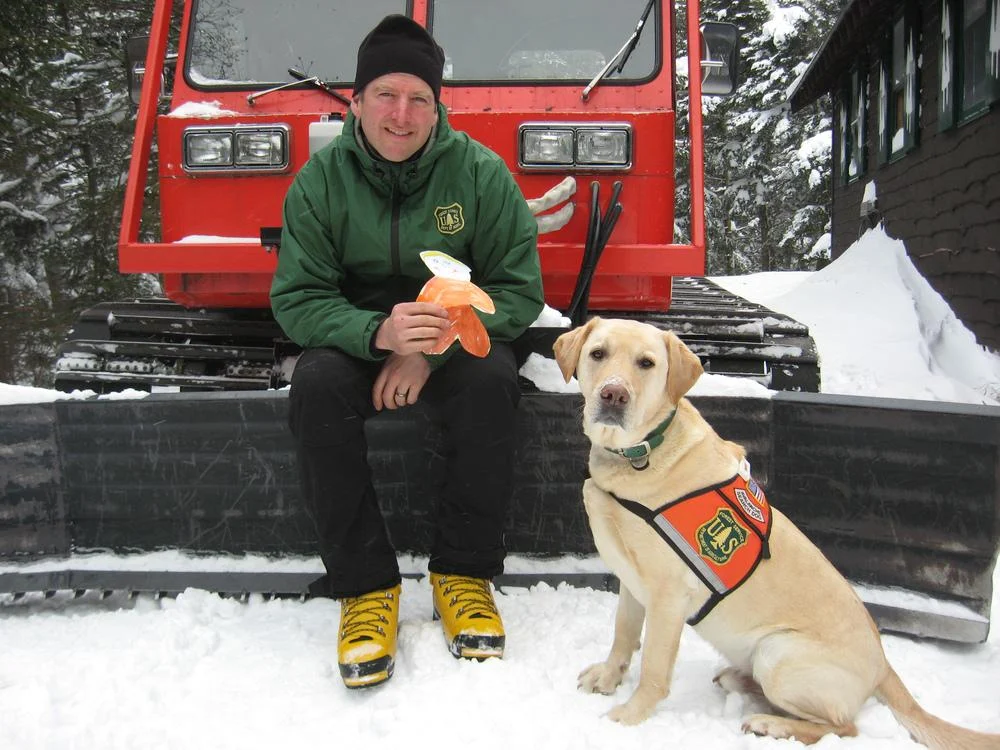
The Mount Washington Avalanche Center (MWAC) has announced the passing of Cutler, a highly decorated avalanche search and rescue dog who served the White Mountain National Forest for over a decade. Cutler, a canine fixture in the rugged terrain of New Hampshire’s Presidential Range, concluded a career that spanned 11 years of active service. Representing approximately 80% of his life, Cutler’s tenure was marked by a dual commitment to technical rescue operations and public safety education. Working alongside Mount Washington Avalanche Center Director Chris Joosen, Cutler became a symbol of the specialized K9 programs utilized by the United States Forest Service to mitigate risks in some of the most dangerous alpine environments in the Eastern United States.
The Operational Legacy of a Search and Rescue K9
In the specialized field of mountain rescue, the role of an avalanche dog is defined by efficiency and speed, two factors that are critical when responding to "burial" scenarios where every second determines the survivability of a victim. Cutler’s presence at the Mount Washington Avalanche Center provided a layer of security for the thousands of backcountry skiers, ice climbers, and hikers who frequent the White Mountain National Forest annually.
A trained avalanche dog like Cutler possesses the olfactory capability to search a debris field significantly faster than a human team utilizing traditional probe lines. While a human search party of 20 people might take four hours to thoroughly probe a one-hectare area, a trained K9 can clear the same area in approximately 30 minutes. Throughout his 11-year career, Cutler was maintained at a high level of readiness, prepared to deploy into the steep glacial cirques of Tuckerman Ravine and Huntington Ravine, where wind-loaded snow often creates high-consequence avalanche conditions.
A Chronology of Service and Training
Cutler’s journey from a specialized trainee to a veteran rescuer followed a rigorous path mandated by search and rescue standards. The timeline of his life and career reflects the long-term investment required to produce a reliable SAR (Search and Rescue) asset:
- Early Development (Birth to 18 Months): Cutler began his life with the foundational training necessary for high-stress environments. This phase focused on socialization, basic obedience, and the development of "prey drive," which is channeled into the motivation to find human scent buried under snow.
- Initial Certification: Upon entering service with the Mount Washington Avalanche Center, Cutler underwent rigorous scent-association training. This involved learning to identify "pool" scents emanating through various depths of snowpack.
- Active Duty (Years 1–11): For over a decade, Cutler was a daily presence on the mountain. His service coincided with a period of increasing popularity for backcountry sports in the Northeast. His routine involved "working the floor" of the ravines, staying acclimated to the extreme weather conditions of Mount Washington—often cited as having the "worst weather in the world."
- Public Relations and Education Peak: Beyond his physical rescue capabilities, Cutler’s middle years saw him become a primary tool for the Snow Rangers’ educational outreach. He served as an approachable entry point for the public to engage with Snow Rangers regarding daily avalanche advisories and safety gear.
- Retirement and Passing: Having reached the age of 14, Cutler’s retirement was a transition from the harsh alpine environment to a more domestic setting, though his legacy remained embedded in the operational protocols of the MWAC. His passing marks the end of an era for the current generation of White Mountain rescuers.
Technical Context: The Environment of Mount Washington
To understand the significance of Cutler’s service, one must consider the unique environmental challenges of the White Mountain National Forest. Mount Washington, standing at 6,288 feet, is the highest peak in the Northeastern United States. Despite its modest elevation compared to the Rocky Mountains, the peak experiences hurricane-force winds on average more than 100 days a year, and snow can fall during any month.
The Mount Washington Avalanche Center is the only US Forest Service avalanche center located east of the Mississippi River. The center is responsible for issuing daily hazard ratings for Tuckerman and Huntington Ravines, areas that see massive influxes of visitors, particularly during the spring skiing season. During peak weekends, thousands of individuals may gather in Tuckerman Ravine. In this high-density environment, the presence of a rescue dog is not merely a luxury but a vital component of the incident command system. Cutler’s ability to navigate the "Sherburne Trail" and the "Floor of the Ravine" under his own power or via transport allowed the Snow Rangers to maintain a mobile and responsive rescue posture.
Data and Impact: The Efficacy of K9 Units in the Field
Statistical data regarding avalanche survival highlights the importance of the work performed by Cutler and Director Chris Joosen. According to national avalanche safety data, a victim buried in an avalanche has an approximately 90% chance of survival if recovered within 15 minutes. This percentage drops precipitously to roughly 30% after 30 minutes.
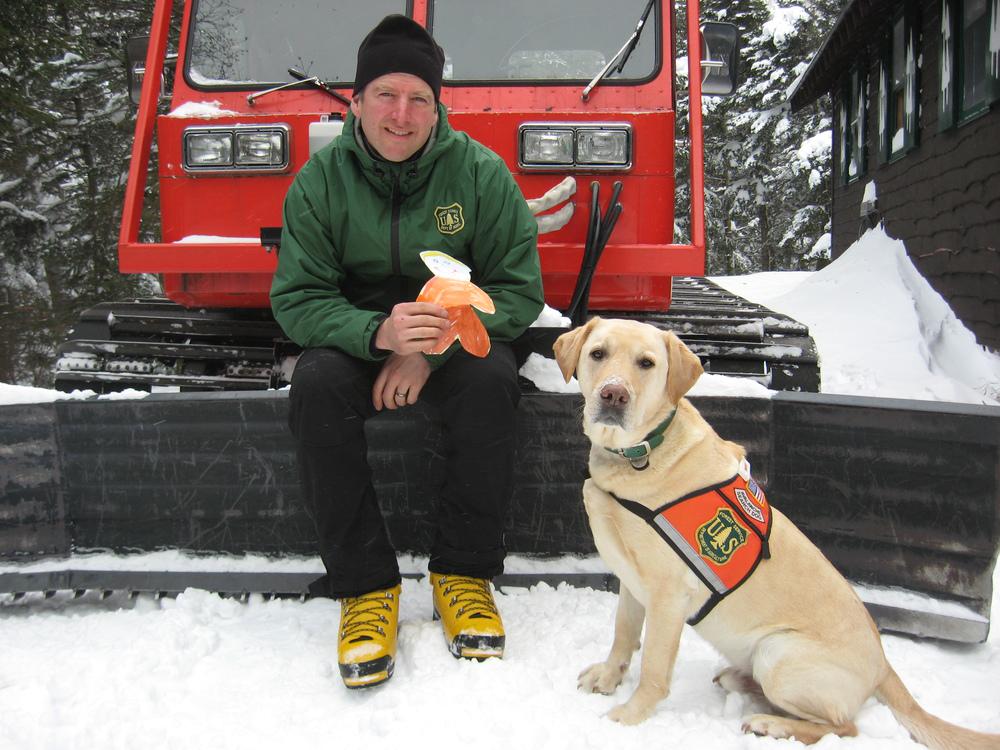
Because human-led search efforts are labor-intensive and slow, the "K9 asset" is considered the most effective tool for rapid area searches when victims are not wearing electronic beacons. Throughout his 11 years of service, Cutler contributed to the safety infrastructure of a forest that sees over 6 million visitors annually. While the specific number of "live finds" is often the metric used to judge SAR dogs, professionals in the field argue that the more significant metric is the "clearance rate"—the ability of the dog to prove that no one is buried in a debris field, thereby allowing rescuers to focus their efforts elsewhere and reducing the risk to human searchers who might otherwise be exposed to secondary avalanches.
Community Engagement and Public Safety Education
One of Cutler’s most significant contributions, as noted by Director Chris Joosen, was his excellence in public relations. The psychological barrier between government officials (Snow Rangers) and the public can sometimes hinder the delivery of safety information. Cutler acted as a bridge.
"Cutler excelled at public relations, allowing the Mount Washington Snow Rangers to reach and educate many more people about avalanche safety," the MWAC stated in their retrospective. By drawing hikers and skiers to the Snow Ranger caches, Cutler provided an opening for rangers to discuss the day’s "Avalanche Bulletin," the importance of carrying a shovel, probe, and beacon, and the current stability of the snowpack. This "soft" side of search and rescue is credited with preventative SAR—stopping accidents before they happen through effective communication.
Official Responses and Professional Analysis
The passing of a working dog is often felt deeply within the tight-knit community of mountain professionals. While official statements from the US Forest Service remain focused on the operational loss, the sentiment among local outdoor organizations—such as the Appalachian Mountain Club (AMC) and various mountain guiding services—reflects a profound respect for the animal’s service.
Professional analysts in the SAR community note that the loss of a dog like Cutler represents the loss of hundreds of hours of specialized training. Replacing such an asset requires years of financial investment and human labor. The Mount Washington Avalanche Center’s commitment to maintaining a K9 program in the wake of Cutler’s passing underscores the perceived value of these animals in the modern rescue landscape.
Broader Implications for Regional SAR Operations
The legacy of Cutler extends beyond the borders of New Hampshire. His career serves as a case study for the integration of K9 units in smaller, high-use alpine areas. As backcountry participation continues to grow across North America, the "Mount Washington Model"—utilizing dogs for both technical rescue and high-visibility public education—is being looked at by other regional parks and national forests.
Cutler’s 14 years of life and 11 years of duty provided a constant in an environment defined by volatility. For the Snow Rangers of the White Mountain National Forest, the dog was more than a tool; he was a partner who navigated the ice, the sub-zero temperatures, and the deep snows of the Presidential Range with a singular purpose. As the Mount Washington Avalanche Center moves forward, the standards set by Cutler and Chris Joosen will continue to inform the training of future K9 teams tasked with the daunting responsibility of keeping the "Home of the World’s Worst Weather" safe for all.
