

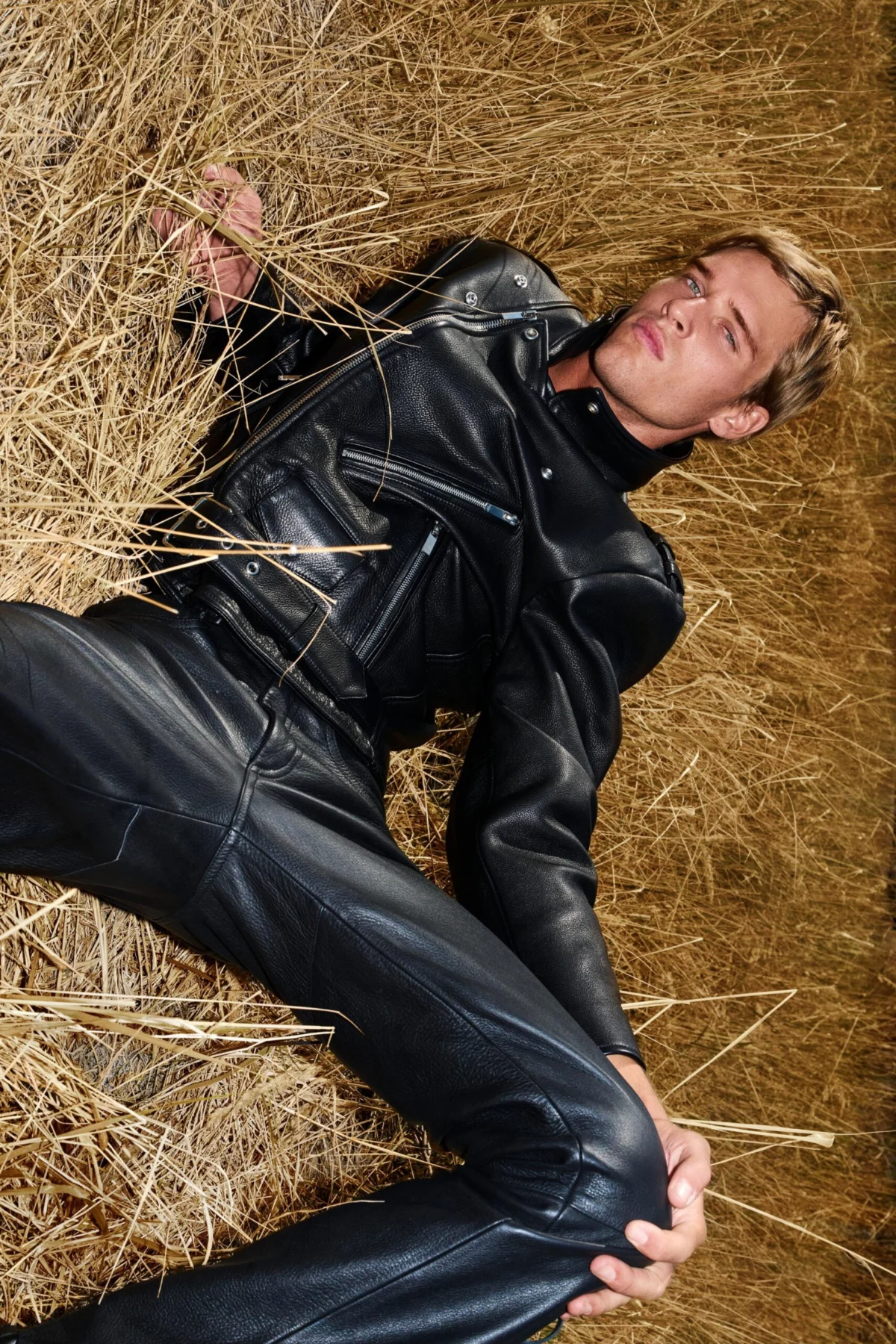
The fashion world buzzed with anticipation as Balmain, a house historically celebrated for its opulent and empowering womenswear, officially stepped into the realm of menswear with its inaugural pre-spring collection, helmed by Creative Director Antonin Tron. This pivotal launch, which took place during a private presentation in Paris, signifies a significant expansion for the iconic French maison, aiming to forge a unified aesthetic identity that bridges the gap between its established feminine allure and a newly articulated masculine spirit. Tron, in his characteristic introspective yet decisive manner, articulated his core philosophy for this dual-gendered approach: "For me, the men’s and the women’s, they are kind of like one entity. I really want the men and women to be able to talk to each other." This statement immediately set the tone for a collection that seeks not to segregate, but to harmonize, envisioning a Balmain universe where sartorial dialogue flows seamlessly between genders.
The Genesis of a Unified Vision
Antonin Tron’s appointment as Creative Director of Balmain in [Insert Year of Tron’s Appointment – research needed for accuracy, e.g., 2021] marked a new chapter for the brand, ushering in an era of thoughtful reinterpretation. His tenure has been characterized by a keen understanding of Balmain’s rich heritage, particularly its legacy of structured silhouettes and luxurious embellishments, while simultaneously infusing it with a contemporary sensibility. The decision to introduce a dedicated menswear line was not an abrupt departure, but rather a logical evolution stemming from Tron’s overarching vision of a holistic Balmain identity. This inaugural menswear collection, presented as part of the broader pre-spring offerings, underscores this ambition, allowing for a cohesive presentation of both lines.
The creative process, as described by Tron, involved a meticulous examination of how the masculine and feminine elements could not only coexist but also complement each other. "We have a lot of overcrossing material," Tron confirmed, hinting at a shared palette, fabrications, and design motifs that would visually connect the two collections. However, he was quick to differentiate his approach to each. While the Balmain woman, in Tron’s interpretation, is often envisioned as a character of bold confidence and overt sensuality, the Balmain man is conceived with a more internalized, personal resonance. "I’m also making things that I can’t find myself," Tron revealed, highlighting a pragmatic yet aspirational approach to menswear design. This personal quest for well-fitting, thoughtfully constructed garments directly informed the collection’s core pieces.
Tailoring as a Foundation: The "Surfer’s Suiting"
A prime example of Tron’s personal engagement with menswear design is evident in the tailoring. Frustrated by the prevalent extremes of either overly narrow or excessively oversized suits, Tron sought to create a sartorial block that offered a balanced and flattering fit. The result, described as "surfer’s suiting," features strong shoulders, a defined waist, and a silhouette that is both flattering and unrestrictive. This emphasis on precision tailoring speaks to a broader trend in contemporary menswear, where comfort and ease are increasingly prioritized without sacrificing polish. The concept of "surfer’s suiting" itself evokes a relaxed yet powerful confidence, a nod to the effortless style often associated with those who navigate both the ocean and the urban landscape.
This commitment to engineered construction and functional aesthetics extended beyond suiting. A pair of robust, heavy cotton canvas trousers stood out, artfully distressed and featuring articulated knees. The deliberate design of these trousers, moving beyond mere luxury utilitarianism, suggested a deeper consideration for movement and durability. Accompanying these were a boxy canvas jacket with a leather collar, its pockets adorned with metal rivets. This detail, a subtle yet impactful touch, was characterized by Tron as "work-kink," blending rugged functionality with an almost fetishistic appreciation for craftsmanship and material. These pieces embody a masculine sensibility that is grounded in practicality but elevated by sophisticated design.
A Pantheon of Inspiration: From Icons to Subcultures
Tron’s influences for this menswear collection are as diverse as they are compelling, drawing from a rich tapestry of cultural figures and subcultures. His "masculine pantheon" includes the impish charm of 1990s Hollywood icon Brad Pitt, suggesting a youthful, charismatic appeal. Equally significant is the influence of gothic glamour, embodied by figures like Lou Reed and Andrew Eldritch, the frontman of The Sisters of Mercy. Tron’s deep admiration for Eldritch, whom he has seen perform an impressive 25 times, points to an appreciation for a darker, more introspective aesthetic.
However, the most significant muse for Tron is David Nuuhiwa, the legendary Hawaiian surfer who revolutionized the sport in California during the 1960s and 70s. Tron’s fascination with Nuuhiwa transcends the stereotypical beach aesthetic; instead, he is drawn to the surfer’s "impulse to experiment and push forward." This ethos of innovation and forward momentum is palpable in the collection’s design philosophy, which seeks to disrupt conventional notions of menswear. Nuuhiwa represents a spirit of daring exploration, a quality Tron has sought to imbue in the Balmain man.
A Fluid Wardrobe: Denim, Leather, and Embellishment
These diverse inspirations coalesced into a wardrobe that exhibited a remarkable fluidity, moving effortlessly between different sartorial territories. Faded denim, a staple of casual wear, was juxtaposed with utilitarian outerwear, signaling a connection to practical, everyday dressing. Leather tailoring introduced a note of refined sensuality, while laced trousers offered a subtle hint of edginess. The unexpected inclusion of leopard-print silks injected a dose of unapologetic glamour, a nod to Balmain’s heritage of bold femininity.
A particularly striking element was the extensive use of richly embroidered evening pieces. Many of these garments featured kaleidoscopically immersive fabrics that, much like the denim, were shared with the womenswear collection. This shared material vocabulary served as a powerful visual testament to Tron’s vision of a unified Balmain universe. The double-breasted suiting, a cornerstone of classic menswear, was reinterpreted with "confidently controlled proportions," offering a sophisticated counterpoint to the more flamboyant material treatments and print. This careful balance between structured tailoring and expressive embellishment defined the collection’s nuanced aesthetic.
Redefining Luxury: Freedom Over Convention
Antonin Tron views the sensuality and boldness present in his Balmain collections as a deliberate rejection of bourgeois conventions in luxury. He perceives class-generated currents as inherent constraints, against which his personal temperament naturally reacts. His fundamental belief is that luxury should serve as an enabler of freedom, rather than an imposer of rigid rules. This philosophy is not merely an abstract ideal but is deeply embedded in the very fabric of his designs. The shared materials, the interconnected silhouettes, and the overarching spirit of exploration all contribute to a sense of liberation for the wearer.
The central filament that connects the new Balmain man and the new Balmain woman, therefore, is Tron himself. His personal journey of discovery and his evolving understanding of Balmain’s identity are intrinsically linked to the evolution of the collections. "I think slowly, I’m finding that line: I’m finding the woman and the man, basically," he admitted, suggesting a continuous process of refinement and self-discovery. This introspection, coupled with his clear design direction, has positioned Balmain at the forefront of a new wave of gender-fluid fashion, where individual expression is paramount.
Broader Implications for the Fashion Industry
The introduction of a cohesive menswear collection by Balmain, under the direction of Antonin Tron, carries significant implications for the broader fashion industry. It signals a continued move towards gender fluidity and the blurring of traditional sartorial boundaries. As consumers increasingly seek clothing that reflects their multifaceted identities, brands that can offer unified aesthetic visions across genders are poised for success.
Data from the fashion analytics firm Edited highlights a growing trend in gender-neutral and gender-fluid fashion. In the first half of 2023, searches for "gender-neutral clothing" increased by 40% year-over-year, and the number of gender-neutral products launched by retailers grew by 15%. Balmain’s strategic move aligns perfectly with this market shift, demonstrating an understanding of contemporary consumer desires.
Furthermore, the success of such a launch can inspire other heritage brands to explore similar avenues. For years, Balmain has been synonymous with its powerful and glamorous womenswear, often characterized by intricate embellishments and a distinctly feminine silhouette. Tron’s ability to translate this opulent DNA into a masculine context without compromising its essence is a testament to his design prowess. The collection’s success will likely encourage a more inclusive approach to luxury fashion, where the definition of masculinity is expanded to embrace a wider range of expressions.
The emphasis on thoughtful construction, shared materials, and a narrative that connects rather than divides genders offers a blueprint for future collections. It suggests that luxury fashion can be both aspirational and accessible, personal and universal. The Balmain menswear collection is not merely about clothing; it is about crafting an identity, fostering a dialogue, and ultimately, empowering individuals to express themselves with confidence and authenticity. As Antonin Tron continues to refine his vision, Balmain is poised to become a significant force in shaping the future of gender-inclusive luxury fashion. The house’s commitment to this unified approach, where the men’s and women’s collections are seen as "one entity," marks a bold and forward-thinking step that resonates deeply with the evolving landscape of style and self-expression in the 21st century.
