


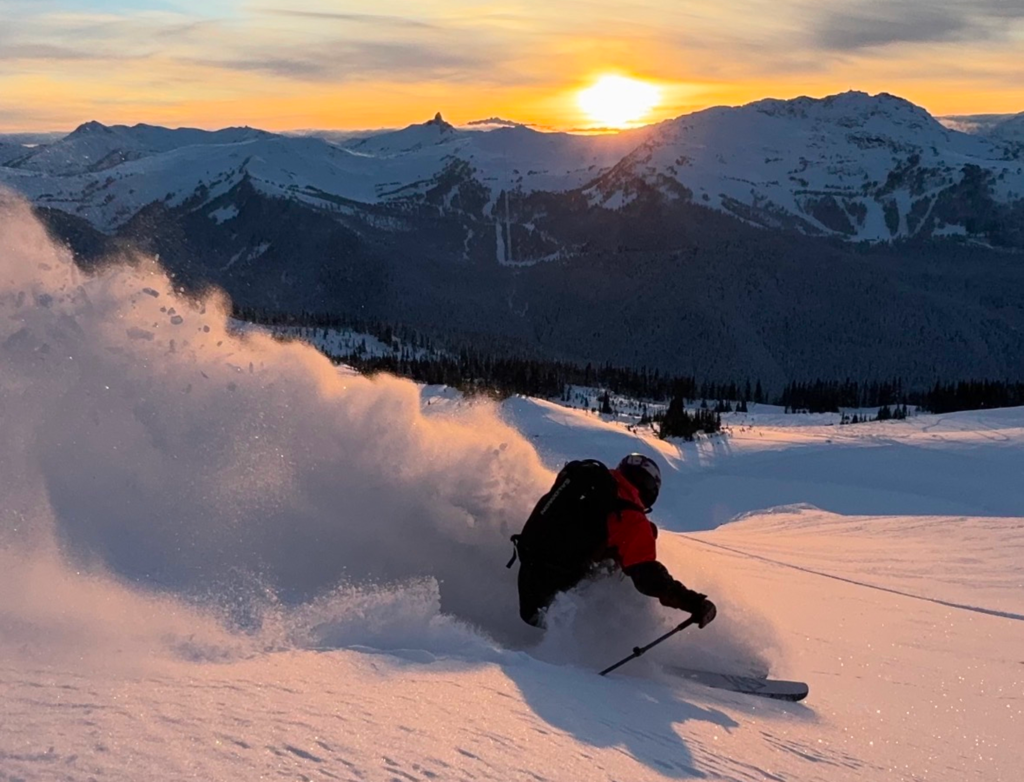
The decline of the Horstman Glacier at Whistler Blackcomb represents more than a localized environmental shift; it serves as a stark harbinger for the global winter sports industry and the millions of enthusiasts who rely on stable alpine ecosystems. When Mike Douglas, the professional skier often hailed as the "Godfather of Freeskiing," first arrived at Whistler Blackcomb in the 1990s, the glacier was a robust, year-round proving ground. It was a site where the world’s elite freestyle skiers honed their craft during the summer months, providing a reliable training platform that transcended the traditional winter season. Today, that platform has effectively vanished. In 2023, Whistler Blackcomb officially announced the indefinite suspension of summer skiing operations on the Horstman Glacier, citing significant recession and thinning ice. For Douglas and the brand he represents, Salomon, this development is not merely a loss of a recreational asset but a call to arms for corporate responsibility and systemic climate advocacy.
The Chronology of a Receding Landmark
The history of the Horstman Glacier is intrinsically tied to the evolution of modern freeskiing. Throughout the late 20th century, the glacier hosted legendary summer camps, including the Camp of Champions and Momentum Ski Camps, which attracted athletes from across the globe. However, the environmental stability required to maintain these operations began to falter at the turn of the millennium. Observations from the British Columbia glacier monitoring networks indicate that glaciers in the Coast Mountains have been losing mass at an accelerating rate over the last three decades.
A critical turning point occurred in 2020 when the Horstman T-bar, a permanent lift fixture that had serviced the glacier for decades, was permanently removed. The decision was driven by the fact that the glacier had thinned to such an extent that the lift towers, which were anchored in the ice, could no longer be safely maintained or stabilized. By 2023, the decision to end summer skiing operations entirely was seen as the final acknowledgement of a geographic reality: the glacier was no longer a permanent feature capable of supporting industrial-scale recreation. This timeline reflects a broader trend across Western Canada, where researchers estimate that up to 70 percent of glacier volume could disappear by the year 2100 if current warming trends persist.
The Evolution of the Athlete-Advocate
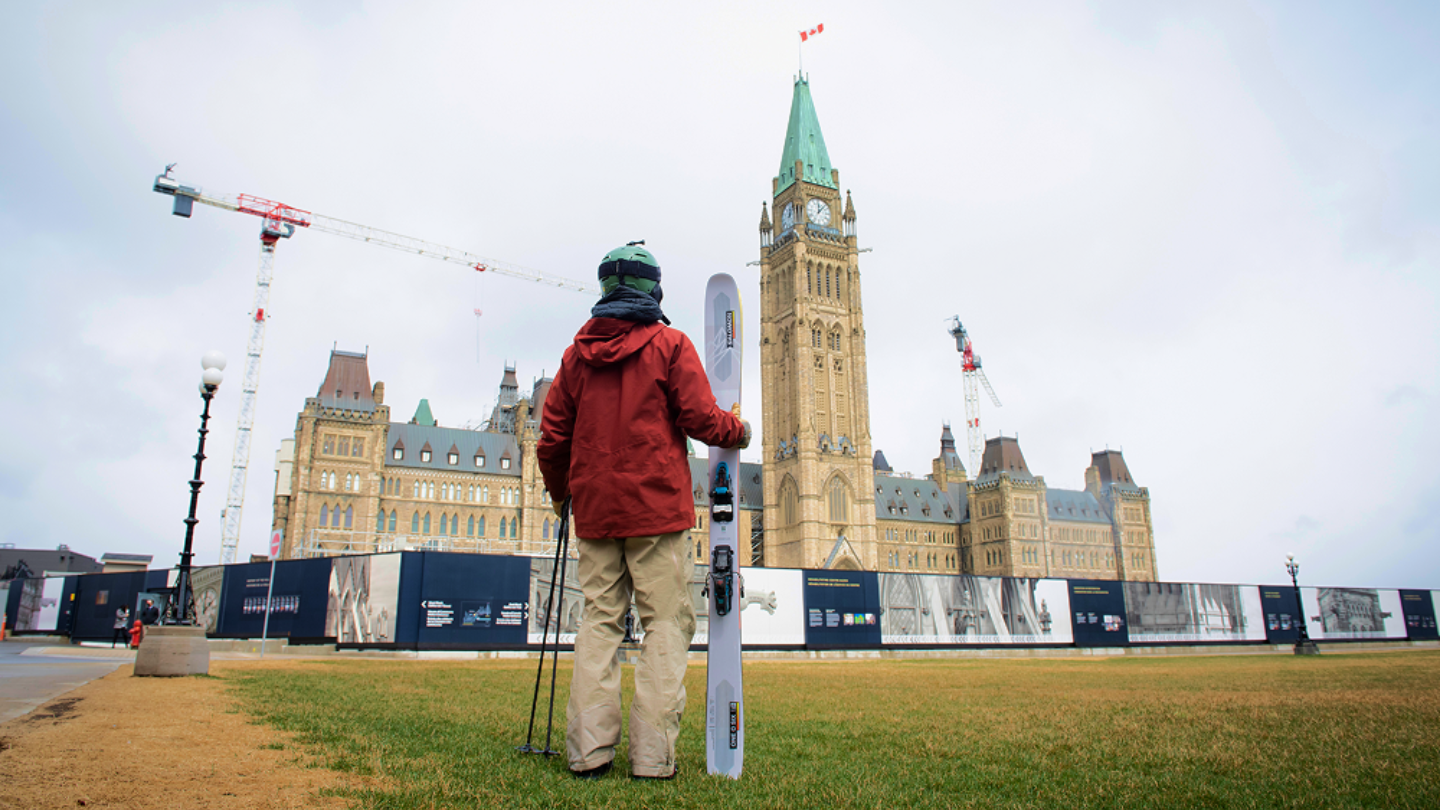
For Mike Douglas, the transition from a performance-focused athlete to a climate advocate was a gradual but inevitable process. As a Salomon ambassador and a member of the Protect Our Winters (POW) Canada Alliance since 2018, Douglas has leveraged his influence to bridge the gap between the core outdoor community and policy-driven climate action. His role transcends traditional sponsorship; he acts as a consultant and a witness to the environmental degradation occurring on the front lines of the sport.
Douglas notes that the "Godfather" moniker carries a responsibility to protect the future of the industry for the next generation of skiers. Through his production company, Switchback Entertainment, he has focused on storytelling that highlights the fragility of winter environments. By partnering with POW, an organization founded by professional snowboarder Jeremy Jones in 2007 to mobilize the outdoor community against climate change, Douglas has moved beyond personal lifestyle changes toward advocating for structural and legislative shifts. This includes participating in "Hill Days," where athletes meet with lawmakers to discuss carbon pricing, renewable energy transitions, and land conservation policies.
Salomon’s Sustainability Framework and Corporate Responsibility
The outdoor gear industry faces a unique paradox: it produces the equipment necessary to enjoy nature, yet the manufacturing processes—involving plastics, resins, and global shipping—contribute to the very environmental decline that threatens the sport. Salomon has addressed this through its "Play-Minded" program, a comprehensive sustainability roadmap that aims to reduce the company’s aggregate carbon footprint.
The brand’s commitment is categorized into several key operational pillars:
- Circular Design: Salomon has pioneered the development of recyclable performance gear, such as the Index.01 and Index.02 running shoes, which are designed to be disassembled and repurposed at the end of their lifecycle. The company aims to have 100 percent of its new products designed with circular economy principles by 2025.
- Supply Chain Transparency: Working under the umbrella of Amer Sports, Salomon has implemented stricter environmental standards for its Tier 1 and Tier 2 suppliers, focusing on reducing water usage and eliminating hazardous chemicals in the dyeing and finishing processes.
- Athlete Integration: Unlike traditional models where athletes are purely marketing assets, Salomon involves figures like Douglas in the feedback loop for sustainable product development. This ensures that recycled materials meet the rigorous demands of high-level backcountry skiing.
- Logistics and Advocacy: The brand has committed to reducing its absolute carbon emissions by 30 percent by 2030, a goal that involves optimizing global logistics and supporting initiatives like the Quality Ski Time (QST) tour, which emphasizes local engagement and climate education over excessive international travel.
The Economic and Socio-Cultural Impact of a Shrinking Snowpack
The disappearance of summer skiing on the Horstman Glacier is not just an emotional loss for the skiing community; it carries significant economic implications. Mountain tourism is a multi-billion-dollar industry in British Columbia, supporting thousands of jobs in hospitality, retail, and mountain operations. The loss of summer skiing shortens the operational window for resorts, impacting seasonal employment and the long-term viability of mountain-based economies.
Furthermore, the shrinking snowpack affects water security for the regions below these glaciers. Glaciers act as "water towers," releasing meltwater during the hot, dry summer months to feed river systems that support agriculture, hydroelectric power, and salmon habitats. The "industry-wide reality" that Douglas speaks of refers to the fact that the outdoor sector is the "canary in the coal mine" for these broader ecological and economic disruptions.
Industry analysts suggest that the outdoor sector must transition from a model of "take" to a model of "restore." This involves not only reducing harm but actively lobbying for the protection of public lands and the implementation of aggressive climate policies. The partnership between Salomon and POW serves as a blueprint for how brands can use their market power to influence public opinion and political will.
Official Responses and the Path Forward
The reaction from the broader outdoor industry has been one of cautious urgency. Major resort operators, including Vail Resorts (which owns Whistler Blackcomb), have launched "Commitment to Zero" initiatives, aiming for a zero net operating footprint by 2030. While these corporate goals are ambitious, advocates like Douglas argue that internal changes must be paired with external advocacy.

"Advocacy is the biggest move brands can play," Douglas stated during a recent industry summit. He emphasized that while making a more sustainable ski is important, supporting legislation that decarbonizes the power grid has a far greater aggregate impact. This sentiment is echoed by Protect Our Winters, which focuses on mobilizing the "Outdoor State"—a demographic of over 50 million outdoor enthusiasts in North America who, if unified, could represent a powerful voting bloc for climate-positive policy.
The closure of the Horstman Glacier to summer skiing is a permanent reminder that the window for meaningful intervention is narrowing. The science provided by organizations like the Intergovernmental Panel on Climate Change (IPCC) confirms that the coming decade is critical for limiting global warming to 1.5 degrees Celsius. For the ski industry, this is not a theoretical threshold but a practical one that determines whether winter, as it has been known for centuries, will continue to exist.
Conclusion: A New Standard for the Outdoor Industry
The story of Mike Douglas and the Horstman Glacier is a microcosm of the challenges facing the modern world. It illustrates the transition from an era of perceived environmental abundance to one of necessary restraint and active restoration. By integrating climate advocacy into the core of its business model, Salomon is attempting to prove that corporate success and environmental stewardship are not mutually exclusive.
The path forward for the industry requires an "all hands on deck" approach. This includes athletes using their platforms to educate, brands innovating in the laboratory to eliminate waste, and consumers holding companies accountable for their environmental claims. As the snowpack continues to shift and the glaciers continue to retreat, the legacy of today’s industry leaders will be defined not by the products they sold, but by the actions they took to protect the environments that made those products possible. The message from the slopes of Whistler is clear: the time for awareness has passed, and the era of decisive, collective action has begun.
