


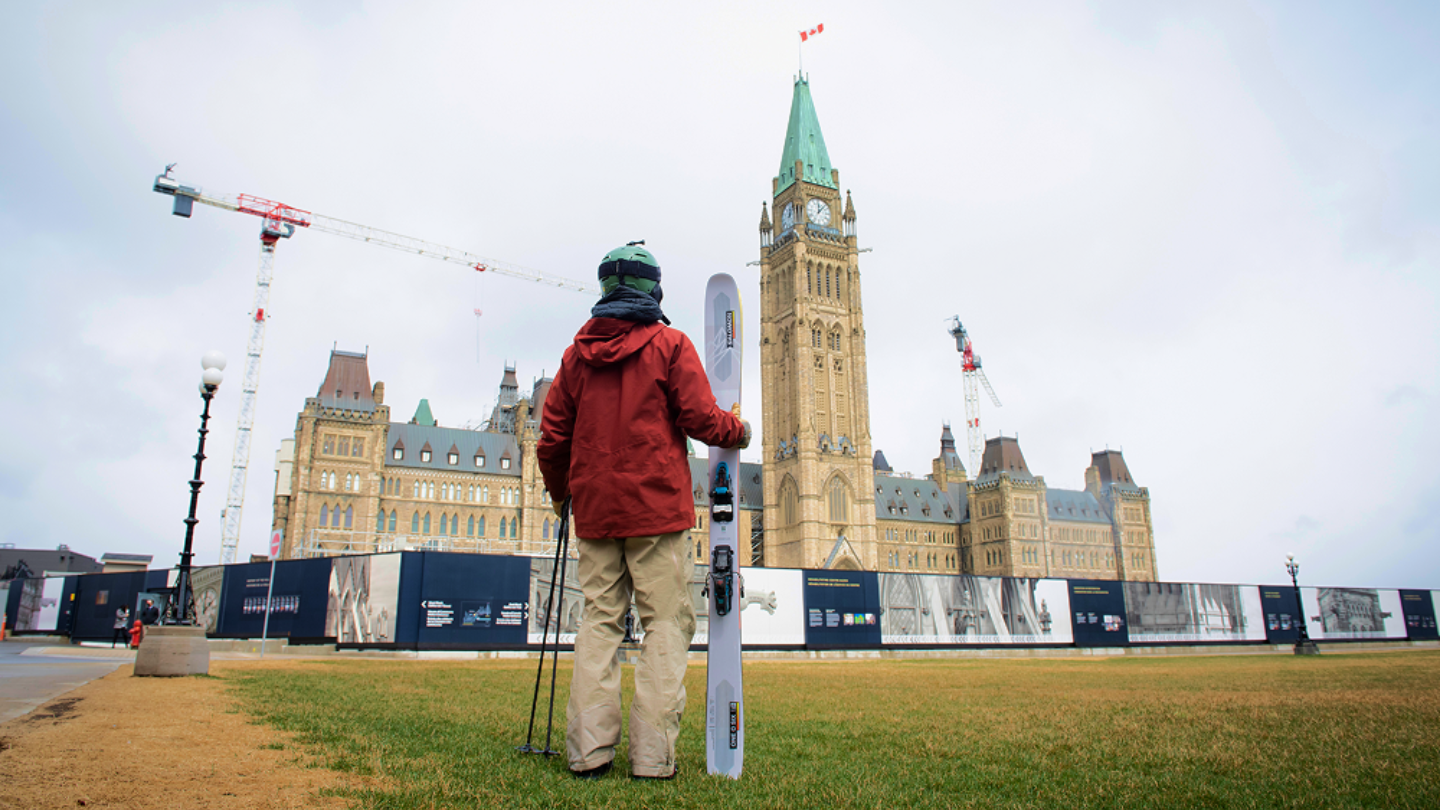
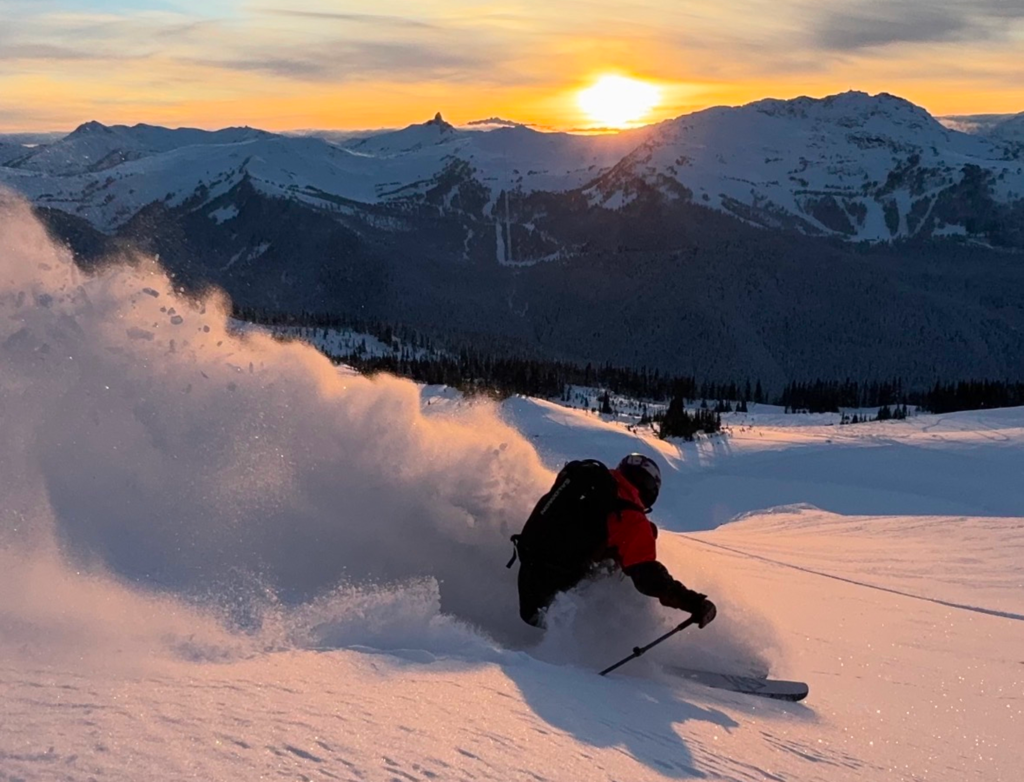
The indefinite suspension of summer skiing operations on the Horstman Glacier at Whistler Blackcomb marks a definitive turning point for the North American winter sports industry, signaling an end to a thirty-year era of year-round alpine training. For Mike Douglas, a professional skier often regarded as the "Godfather of Freeskiing," the loss of the glacier is not merely a logistical change for athletes but a visible manifestation of a rapidly warming climate. Douglas, who began his career as a mogul skier and coach on the glacier in the 1990s, has transitioned from a witness of these environmental shifts to a leading advocate for corporate responsibility. As a Salomon athlete and a member of the Protect Our Winters (POW) Canada Alliance, Douglas is now at the center of a broader movement where the outdoor industry is forced to reconcile its commercial interests with the preservation of the ecosystems that sustain it.
The Chronology of a Receding Landmark
The Horstman Glacier, situated on Blackcomb Mountain in British Columbia, served for decades as the premier summer training ground for the world’s elite freestyle skiers and snowboarders. During the 1990s, the glacier was a hive of activity throughout June and July, hosting legendary summer camps that helped birth the modern freeskiing movement. However, the environmental stability required to maintain these operations has eroded over the last three decades.
The decline of the Horstman Glacier became increasingly difficult to manage in the mid-2010s. In 2015, an unseasonably warm winter followed by a record-breaking summer heatwave forced Whistler Blackcomb to shorten its summer season. By 2020, the retreat of the glacier’s terminus had reached a point where the "Horstman T-bar," the primary lift infrastructure for summer skiing, could no longer be maintained on stable ice. In a significant operational move, Vail Resorts, the owner of Whistler Blackcomb, removed the T-bar in 2020, citing the rapid recession of the glacier.
The final blow came in early 2023, when Whistler Blackcomb officially announced that summer skiing on the Horstman Glacier would be suspended indefinitely. The decision was based on the fact that the glacier’s mass had thinned to the point where "blue ice"—dense, old ice that lacks the necessary friction and safety for recreational skiing—was being exposed too early in the season. This closure serves as a case study for the "snow-reliability" crisis facing resorts worldwide.
Scientific Context and Environmental Data
The disappearance of the Horstman Glacier is consistent with broader glaciological trends across Western Canada. According to a study published in Nature Geoscience, glaciers in British Columbia and Alberta are projected to lose approximately 70% of their 2005 volume by the year 2100 if current greenhouse gas emission trajectories continue. The loss of glacial mass is not only a concern for recreation but also for regional hydrology; glaciers act as "water towers," providing critical cool water runoff to river systems during the late summer months when precipitation is low.
Data from the University of Northern British Columbia indicates that the rate of ice loss in the Coast Mountains has accelerated significantly since the turn of the millennium. The shrinking snowpack, characterized by later starts to winter and earlier spring thaws, has reduced the "accumulation zone" of glaciers like the Horstman. When a glacier can no longer accumulate enough snow in the winter to offset its summer melt, it enters a state of negative mass balance, leading to the eventual disappearance of the ice body entirely.
Salomon’s Transition Toward Circular Manufacturing
In response to these environmental pressures, Salomon, a global leader in winter sports equipment, has undergone a strategic shift in its manufacturing and supply chain operations. The brand has recognized that maintaining the status quo is no longer viable in a world where the very existence of winter sports is under threat.
Central to Salomon’s strategy is the concept of the circular economy. The traditional model of "take, make, and dispose" is being replaced by a focus on "life cycle assessment" (LCA). One of the most notable outcomes of this shift is the development of the "Index" series of footwear, which is designed to be fully disassembled and recycled into new products, such as ski boot shells.
Salomon’s sustainability roadmap, titled "Play-Minded," sets ambitious targets for 2030, including a 30% reduction in absolute carbon emissions compared to 2019 levels. This involves transitioning to 100% renewable energy in its own operations and working with Tier 1 and Tier 2 suppliers to decouple production growth from environmental impact. By utilizing bio-based materials and recycled plastics in its ski and snowboard lines, the company aims to minimize the carbon footprint of the equipment used by athletes like Douglas.
The Role of Athlete Advocacy and Protect Our Winters
The partnership between Salomon and Protect Our Winters (POW) represents a shift from traditional sports marketing to political and social advocacy. Athletes are no longer viewed merely as billboard figures for equipment; they are increasingly utilized as credible messengers who can bridge the gap between scientific data and public perception.
Mike Douglas has leveraged his platform to engage in "climate diplomacy." Since joining the POW Canada Alliance in 2018, Douglas has moved beyond social media awareness to participate in direct advocacy. This includes meeting with policymakers to discuss carbon pricing, clean energy transitions, and the protection of public lands.
"Advocacy is the biggest move brands can play," Douglas noted in a recent assessment of the industry’s role. The logic behind this approach is that while individual carbon footprints and corporate manufacturing changes are necessary, they are insufficient without systemic policy change. POW provides the framework for athletes and brands to mobilize the "Outdoor State"—the millions of people who identify with outdoor recreation—to vote and lobby for climate-conscious legislation.
Official Responses and Industry Implications
The suspension of summer skiing at Whistler Blackcomb has reverberated through the outdoor industry, prompting reactions from various stakeholders. Vail Resorts, in its annual "Epic Promise" progress report, has doubled down on its commitment to a "Zero Net Footprint" by 2030, which includes zero net emissions, zero waste to landfills, and zero net impact on forests.
However, critics and industry analysts point out that the energy-intensive nature of ski resort operations—including snowmaking, lift operations, and the carbon-heavy travel associated with destination skiing—presents a monumental challenge. The loss of the Horstman Glacier is seen by many as a warning that technical adaptation (such as increased snowmaking) has its limits.

The broader implications for the winter sports economy are significant. In British Columbia alone, the ski industry contributes over $2 billion annually to the provincial GDP. As lower-elevation resorts face increasingly volatile winters, the economic pressure to move operations higher into the alpine grows, even as those high-alpine environments become more fragile.
Analysis of Future Challenges
The outdoor industry is currently navigating a "credibility gap." As brands promote sustainability, they are also faced with the reality of global shipping, plastic packaging, and the inherent consumption involved in selling new gear every season. Salomon’s efforts to train its athletes as climate advocates are intended to address this by fostering transparency. By acknowledging the "practical realities" of being a global sports brand, as Douglas suggests, the company aims to move away from "greenwashing" toward measurable impact.
The future of the industry likely depends on three pillars:
- Technological Innovation: Continued development of recyclable hardware and low-impact textiles.
- Operational Resilience: Resort management strategies that prioritize conservation and adapt to shorter seasons without further damaging sensitive alpine ecosystems.
- Political Mobilization: Using the economic weight of the outdoor industry to influence national and international climate policy.
The closure of the Horstman Glacier serves as a permanent reminder that the environment is the ultimate arbiter of the outdoor industry’s success. While the 1990s represented a period of exploration and expansion for skiers like Mike Douglas, the current era is defined by the necessity of preservation. The transition from the "proving grounds" of the glacier to the "boardrooms and courthouses" of climate advocacy reflects a maturing industry that understands it can no longer take more than it gives back. The window for action, as Douglas emphasizes, is narrowing, but the collaborative efforts between athletes, brands like Salomon, and organizations like Protect Our Winters provide a blueprint for how the industry might survive in a warming world.
