

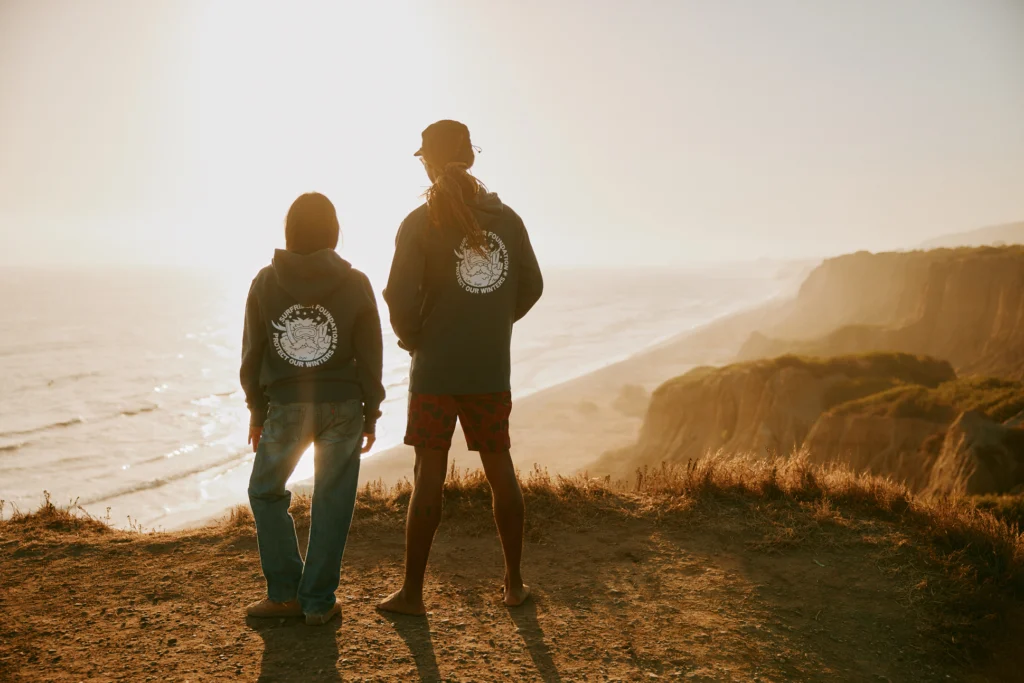
The intersection of mountain and marine conservation has reached a new milestone with the unveiling of the Ridge to Reef collection, a collaborative initiative between the climate advocacy group Protect Our Winters (POW) and the Surfrider Foundation. Featuring the visual storytelling of artist Dominic McLeod, the creative mind behind Dom Fish Designs, the collection seeks to bridge the cultural gap between high-altitude snow sports and coastal surf culture. This partnership arrives during a critical period for environmental policy, as both organizations mobilize their respective communities to oppose new offshore oil and gas drilling proposals that threaten the ecological integrity of American coastlines and the stability of the global climate.
The Ridge to Reef initiative is predicated on the philosophy that the ecosystems of the mountains and the oceans are intrinsically linked. For outdoor enthusiasts, the transition from winter snowpacks to summer swells represents a continuous rhythm of movement across a singular, interconnected landscape. By leveraging art as a medium for advocacy, POW and Surfrider aim to translate this shared experience into a collective political force. The proceeds from the collection, which includes apparel and accessories featuring McLeod’s unique "cross-pollinated" designs, are dedicated entirely to funding advocacy efforts aimed at defending public lands and waters from extractive industries.
The Evolution of the Ridge to Reef Philosophy
The concept of "Ridge to Reef" is not merely an aesthetic choice but a reflection of the geographical reality of the American West and other coastal mountain regions. Dominic McLeod, whose upbringing in Ojai, California, deeply influenced his perspective, describes the environment as a seamless transition. Ojai’s proximity to both the Topatopa Mountains and the Pacific Ocean allowed McLeod to experience the terrain as a unified whole. This geographical fluidity is a cornerstone of his artistic process, which seeks to dismantle the silos that often separate different outdoor disciplines.
McLeod’s journey into professional art began with character illustrations during his school years, eventually evolving into a sophisticated digital practice that captures the "grit and humor" of the outdoor community. His work often features a blend of iconography—such as a surfboard fin integrated with a mountain climbing scene—designed to challenge the rigid boundaries participants often build around their hobbies. This "cross-pollination" philosophy extends beyond sports into the realm of climate activism, suggesting that a unified "Outdoor State" is more effective than fragmented groups of enthusiasts.
Chronology of the Collaboration and Organizational History
The partnership between POW and the Surfrider Foundation is rooted in a shared history of grassroots activism. The Surfrider Foundation, established in 1984 by a group of surfers in Malibu, California, has spent four decades protecting the world’s oceans and beaches through a powerful activist network. Protect Our Winters was founded in 2007 by professional snowboarder Jeremy Jones, who was inspired by the early environmentalism he witnessed within the surf community.
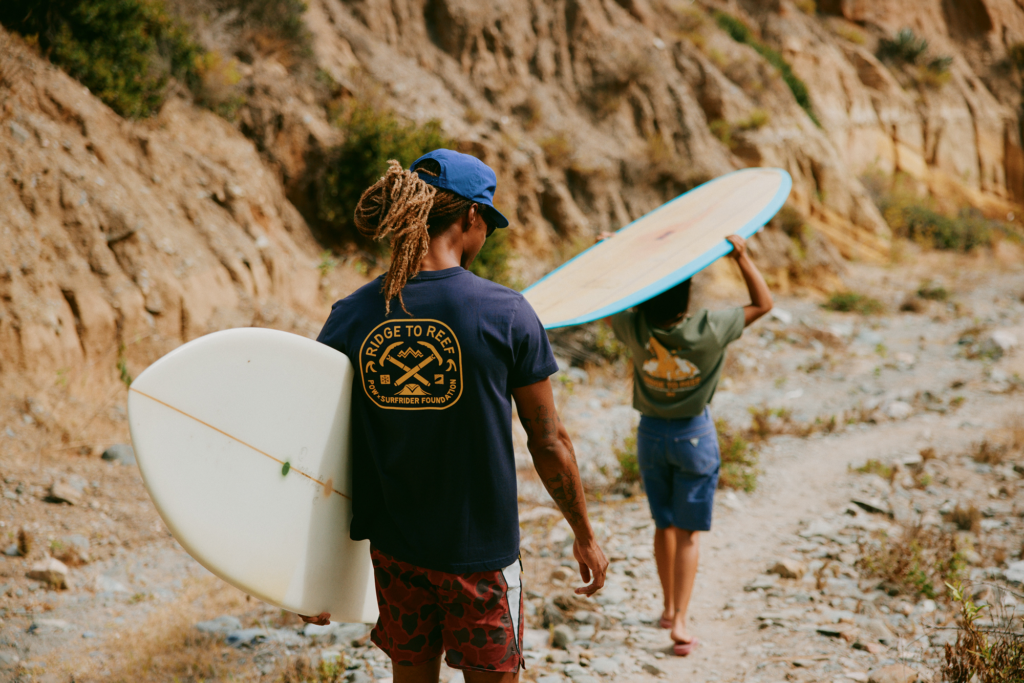
Jones has frequently cited the Surfrider Foundation as a primary influence on his own path toward advocacy. Growing up on Cape Cod, Jones observed Surfrider decals on the vehicles of local surfers, which served as his first introduction to the concept of environmental stewardship. By the age of 14, Jones had become a member of the foundation, adopting a personal mandate to be a "protector, not a plunderer." This foundational experience eventually led to the creation of POW, which focuses on mobilizing the winter sports community against the systemic causes of climate change.
The Ridge to Reef collection represents a formalization of this long-standing mutual respect. The project was catalyzed by a period of forced reflection for McLeod, who was sidelined from surfing for ten months following a significant ankle injury. During his recovery, he turned to bikepacking, a shift that reinforced his belief that outdoor enthusiasts should remain open to new experiences and perspectives. This period of personal transition mirrored the broader goal of the collaboration: encouraging individuals to move beyond their specific niches to support a larger cause.
Supporting Data: The Economic and Environmental Stakes
The urgency of the Ridge to Reef campaign is underscored by significant economic and environmental data. According to the U.S. Bureau of Economic Analysis (BEA), the outdoor recreation economy accounted for $1.1 trillion in economic output in 2022, representing 2.2% of the U.S. Gross Domestic Product (GDP). This sector supports nearly five million jobs, making the "Outdoor State" a significant economic constituency. However, this industry is highly vulnerable to climate change.
The National Oceanic and Atmospheric Administration (NOAA) has reported that rising global temperatures are leading to a decrease in annual snowpack in the Western United States, directly impacting the multi-billion-dollar ski and snowboard industry. Simultaneously, the ocean is absorbing approximately 90% of the excess heat generated by greenhouse gas emissions, leading to sea-level rise and more frequent, severe coastal storms that threaten surfing habitats and coastal infrastructure.
Furthermore, the threat of offshore drilling remains a primary concern for both organizations. Data from the Bureau of Ocean Energy Management (BOEM) indicates that offshore oil and gas production is a significant source of carbon emissions. The Ridge to Reef collection specifically targets the opposition to the "Five-Year Offshore Oil and Gas Leasing Program," which determines the schedule for oil and gas lease sales in U.S. waters. Advocacy groups argue that any expansion of offshore drilling is incompatible with the goals of the Paris Agreement and poses catastrophic risks to marine biodiversity through potential oil spills.
The Role of Visual Storytelling in Climate Advocacy
Dominic McLeod’s artistic process serves as a bridge between complex environmental data and the cultural identity of the outdoor community. His workflow—beginning with discovery calls and moodboards before moving to digital sketching on an iPad—is designed to ensure that the core message of advocacy remains intact while maintaining a high degree of personality and versatility.
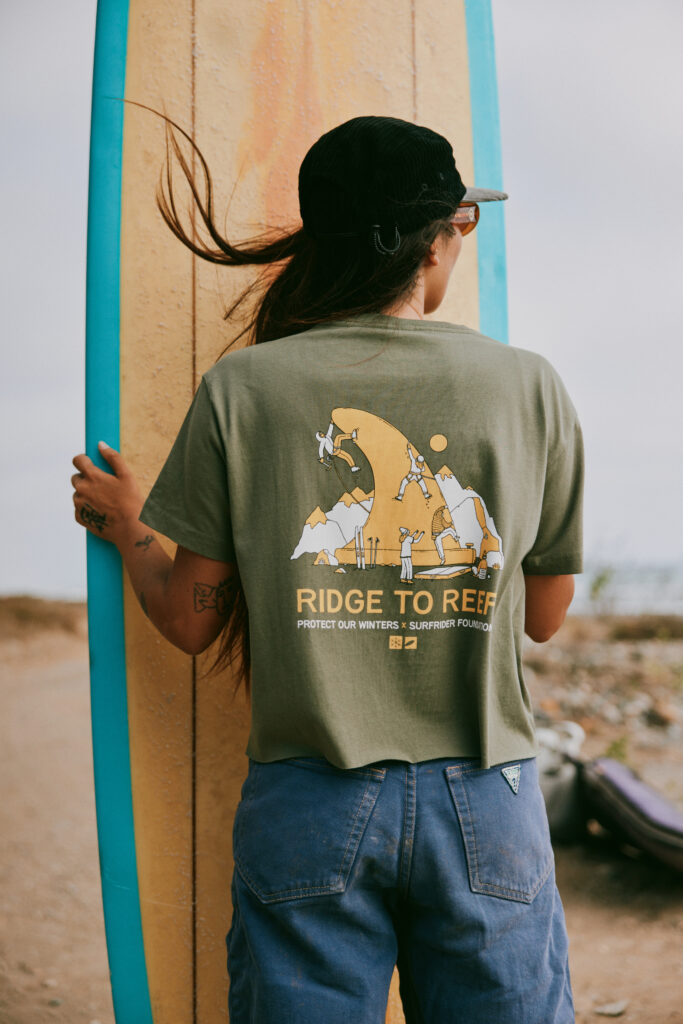
McLeod’s work focuses on the "characters" of the outdoor world, aiming to represent the community as it is: diverse, imperfect, and vibrant. This approach aligns with a modern strategy of climate advocacy that emphasizes inclusivity over perfection. McLeod notes that individuals do not need to be "mathematicians or climate scientists" to contribute to the movement. His philosophy suggests that one can drive a gas-powered vehicle to a trailhead and still be a valid and effective advocate for the planet. By lowering the barrier to entry, the Ridge to Reef collection seeks to expand the ranks of the "Outdoor State."
Official Responses and Strategic Implications
The collaboration has garnered praise from leaders within the environmental and outdoor sectors. Representatives from POW have emphasized that the collection is a vital tool for cultural representation, providing a visual language for a community that spans from "sea to summit." By merging the aesthetics of different sports, the project reinforces the idea that the fight for public lands is a shared responsibility.
The Surfrider Foundation has echoed these sentiments, highlighting the importance of federal policy in protecting coastal waters. The foundation’s involvement in the Ridge to Reef project is part of its broader strategy to engage younger, more diverse audiences who may identify with multiple outdoor disciplines. The focus on 100% of sales going toward advocacy ensures that the project provides tangible resources for legislative lobbying, legal challenges to drilling permits, and public education campaigns.
Broader Impact and Future Outlook
The Ridge to Reef collection arrives at a time when the outdoor industry is increasingly asserting its political influence. The collaboration between POW and Surfrider suggests a move toward a more integrated model of environmentalism, where specialized groups pool their resources and cultural capital to address the root causes of the climate crisis.
In the long term, the success of such initiatives will be measured not only by sales figures but by their ability to influence federal and state policy. The "Outdoor State" represents a powerful voting bloc that transcends traditional partisan lines, united by a shared reliance on healthy ecosystems for their livelihoods and recreation. By visualizing a future where these groups act as a collective force, Dominic McLeod and the collaborating organizations are setting a precedent for how art and industry can intersect to defend the natural world.
As the impacts of climate change become more pronounced, the narrative of the "Ridge to Reef" connection provides a compelling framework for understanding the stakes. Whether it is the loss of a winter season due to lack of snow or the closure of a beach due to an oil spill, the threats are part of the same systemic challenge. The collection serves as a constant reminder that the wild places defining the outdoor experience require active protection, transforming the "stoke" of the sport into the "action" of advocacy.
