

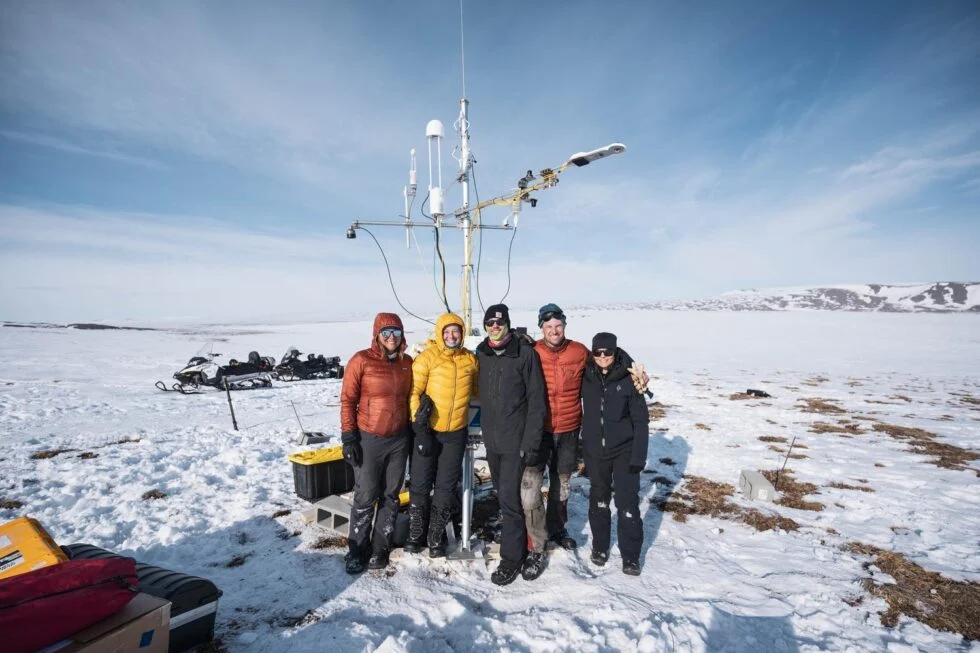
In the frigid expanse of the North Slope, a team of specialized researchers from the Woodwell Climate Research Center and the Protect Our Winters (POW) Science Alliance has successfully deployed a pioneering flux tower at a permafrost thaw slump near Toolik Field Station. Led by ecologist Dr. Jenny Watts and snow scientist Dr. Kelly Gleason, the mission represents a critical advancement in the study of Arctic feedback loops. The installation is the first of its kind in the region designed specifically to evaluate methane and carbon dioxide emissions from a rapidly collapsing permafrost feature, providing real-time data on how these "thaw slumps" contribute to the global climate crisis.
As the Arctic warms at nearly four times the global average, the stability of the region’s permafrost—ground that has remained frozen for at least two consecutive years—is reaching a breaking point. The mission to the North Slope comes at a time when climate models are struggling to account for the localized, high-intensity emissions released by thermokarst features. These features, such as the thaw slump currently under study, act as "hotspots" of greenhouse gas activity, potentially releasing ancient carbon that has been sequestered in the frozen soil for millennia.
The Toolik Expedition: Chronology and Deployment
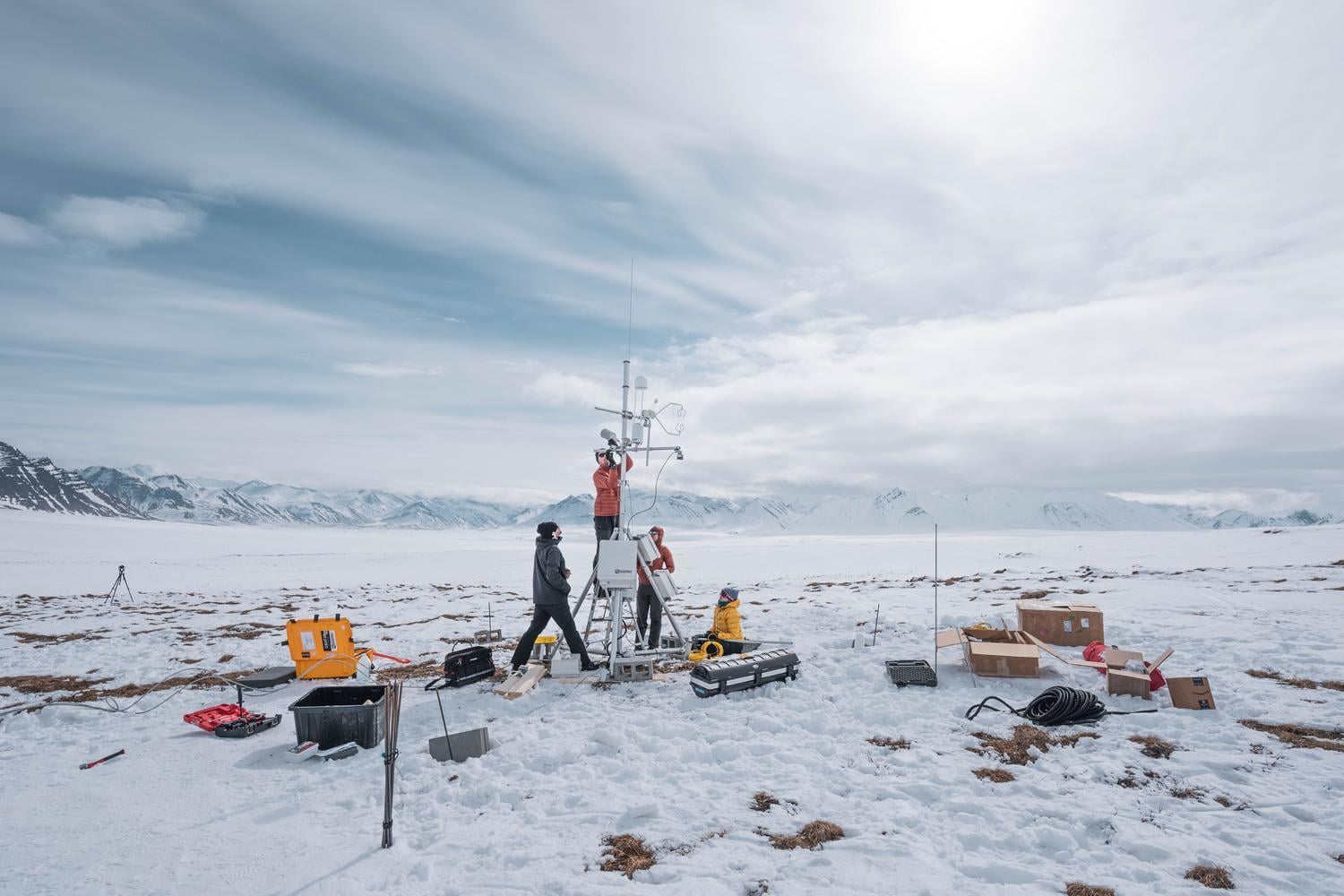
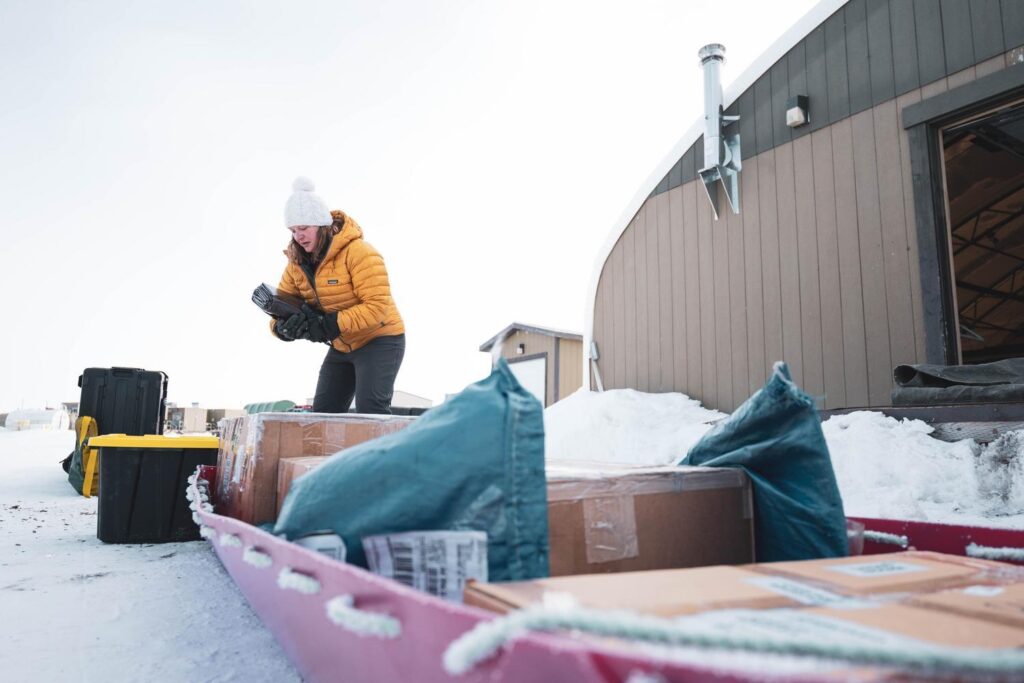
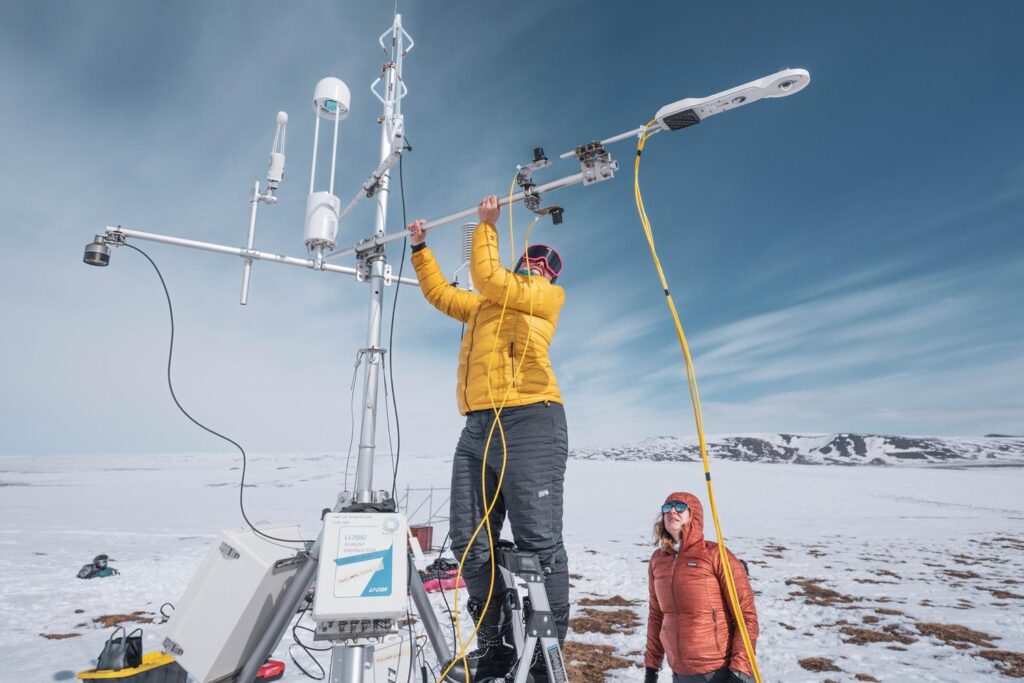
The research mission commenced at the Toolik Field Station, a premier long-term ecological research site located in the northern foothills of the Brooks Range. The deployment required a multi-day logistical effort to transport heavy instrumentation across the tundra under extreme conditions. The team, which included researchers Kyle, Christina, and Kai, utilized snowmachines to haul sleds packed with industrial-grade equipment across the hoarfrost-covered landscape.
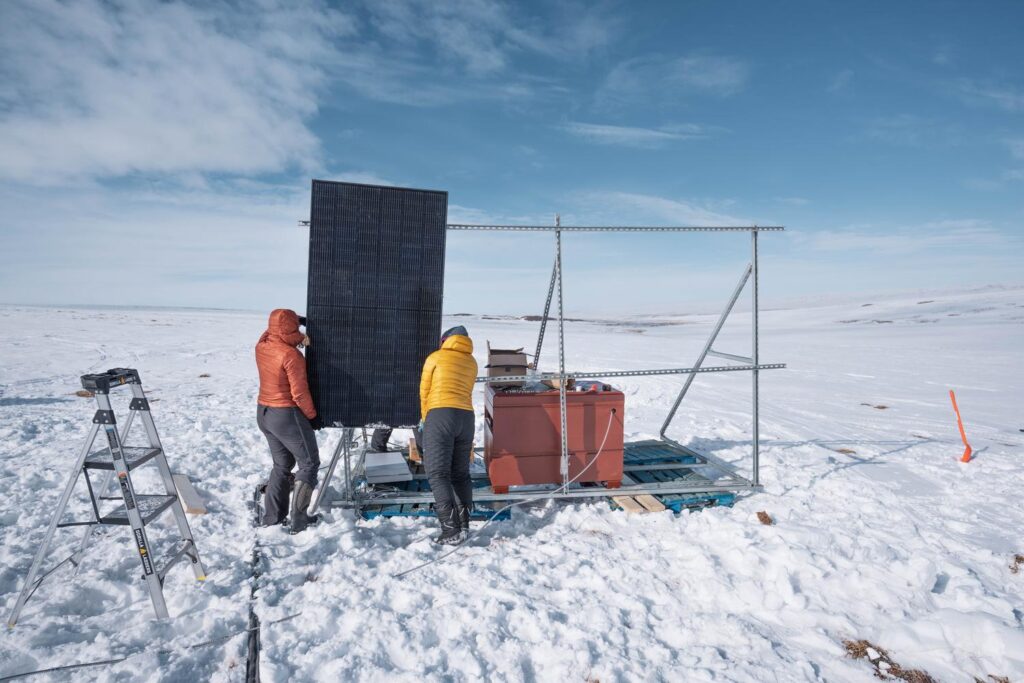
The primary objective was the installation of a 15-foot aluminum flux tower. This sophisticated apparatus is engineered to measure the exchange of gases between the earth’s surface and the atmosphere. The deployment involved the transport of eight deep-cell batteries, each weighing over 100 pounds, to power the sensors through the long Arctic nights. To maintain a sustainable energy source during the sun-drenched summer months, the team installed four large solar panels. The tower was secured with cement anchors, guy-lines, and steel spikes to withstand the high-velocity winds common to the North Slope.
By measuring the invisible release of carbon dioxide ($CO_2$) and methane ($CH_4$), the tower provides a granular look at the decomposition of organic matter within the slump. Unlike the surrounding intact tundra, which may remain relatively stable, the slump represents a site of active erosion where the protective layer of vegetation has been lost, exposing the "ice-rich" permafrost to the air.
Understanding the Mechanics of Thaw Slumps
Thaw slumps are dramatic geological indicators of permafrost degradation. They occur when ground ice melts, causing the soil to lose its structural integrity and slump downhill. This process creates a self-perpetuating cycle: as the soil moves, it exposes more ice to the sun and warm air, accelerating the thaw.
From a climate perspective, the danger lies in the "ancient organic material" contained within these layers. As the permafrost thaws, microbes begin to break down organic matter that has been frozen since the Pleistocene. This microbial activity releases $CO_2$ and $CH_4$. Methane is of particular concern to the scientific community; while it remains in the atmosphere for a shorter duration than carbon dioxide, its global warming potential is roughly 80 times more potent than $CO_2$ over a 20-year period.
The Woodwell-POW team noted that while global climate models often incorporate general warming trends, they frequently overlook these localized collapse features. The data gathered from this new flux tower is expected to fill a critical gap in carbon budgeting, allowing scientists to quantify exactly how much these slumps "over-contribute" to atmospheric warming compared to stable tundra.
The Dual Role of Snow: Reflectivity vs. Insulation
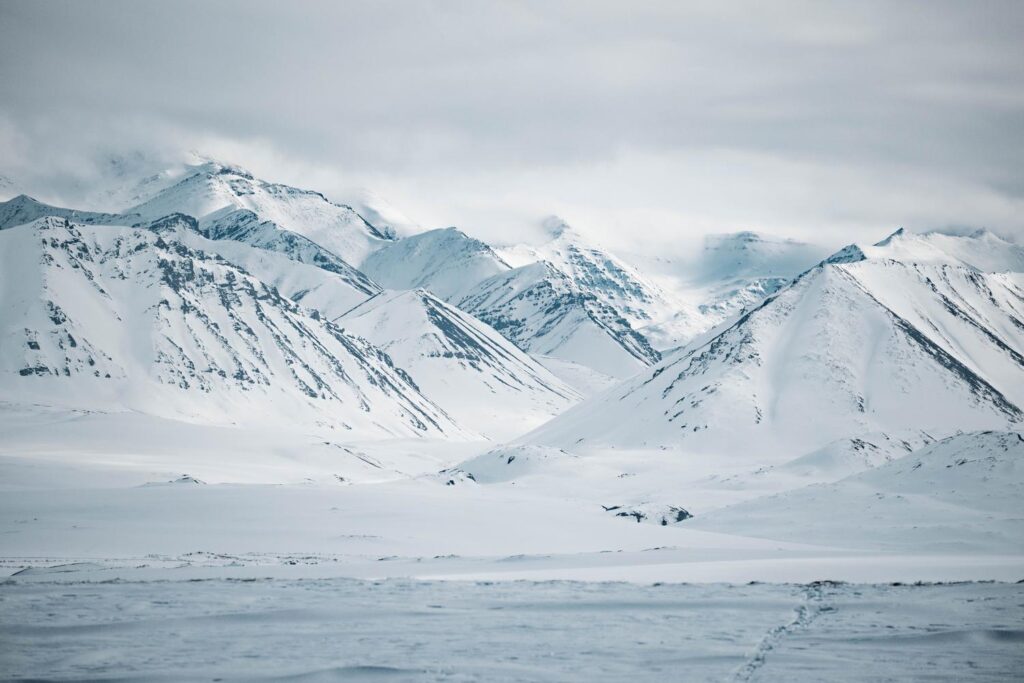
A central component of the research involved Dr. Kelly Gleason’s analysis of the Arctic snowpack. In mountain environments of the western United States, snow is primarily viewed as a water resource, measured by its snow-water equivalent (SWE). In the Arctic, however, snow serves two competing roles in the planetary energy balance: albedo and insulation.
Albedo and the Cooling Effect:
Snow is the Earth’s primary mirror. Its high albedo allows it to reflect up to 90% of incoming solar radiation back into space, effectively cooling the planet. As sea ice declines, the resulting open water absorbs more heat and increases atmospheric moisture. This has led to increased snowfall in certain sectors of the Arctic. While more snow could theoretically increase reflectivity and prolong the cooling season into late spring, the reality is more complex.
The Insulatory Feedback Loop:
Dr. Gleason’s field observations at the Toolik site revealed a "troubling" contrast in how snow depth affects ground temperature. By digging snow pits and recording temperature profiles, the team identified a significant disparity:
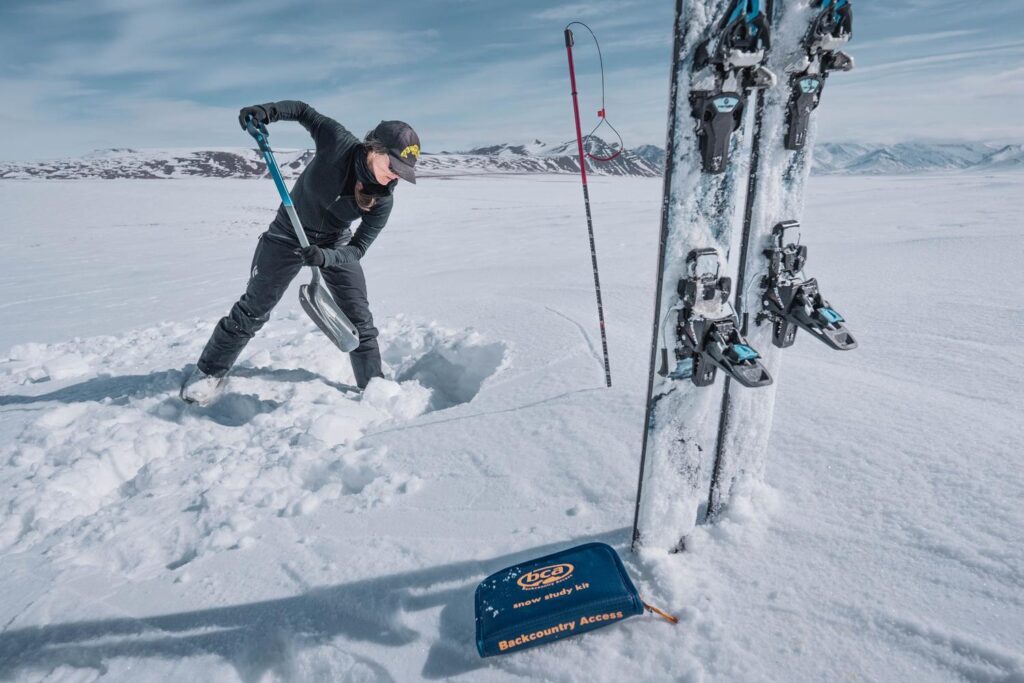
- Shallow Snowpack (57 cm): In areas with less snow, the ground was exposed to the deep cold of the Arctic atmosphere. Temperatures at the base of the snowpack dropped to -10°C. This extreme cold helps maintain the permafrost’s integrity.
- Deep Snowpack (2 meters): In areas where snow had drifted to depths of two meters, the snow acted as a heavy thermal blanket. While the surface temperature remained at -3°C, the temperature at the soil interface was also approximately -3°C—significantly warmer than the shallow sites.
This insulation prevents the "deep-freeze" necessary to keep permafrost stable. At temperatures near -3°C, microbial life can remain active even in winter, continuing the release of greenhouse gases beneath the snow. Consequently, the trend toward deeper Arctic snowpacks may inadvertently accelerate permafrost thaw by trapping heat in the ground throughout the winter months.
Technical Analysis of Arctic Feedback Loops
The research conducted by the POW Science Alliance highlights what climatologists refer to as a "positive feedback loop"—a process where the effects of global warming lead to changes that further accelerate warming.
- Ocean Warming: Declining sea ice leads to warmer, wetter air.
- Increased Precipitation: The wetter air produces heavier snowfall over the tundra.
- Ground Insulation: Deeper snow insulates the permafrost, preventing it from cooling during the winter.
- Permafrost Thaw: The warmer ground thaws, causing slumps and releasing methane.
- Atmospheric Warming: Methane traps more heat, leading back to further ocean warming.
The Woodwell Climate Research Center emphasizes that the Arctic holds an estimated 1,400 to 1,600 billion tons of carbon—roughly twice the amount currently in the Earth’s atmosphere. The liberation of even a small percentage of this carbon pool could make it nearly impossible to meet the temperature targets set by the Paris Agreement.
The Role of Advocacy and the POW Science Alliance
The involvement of Protect Our Winters (POW) marks a shift in how scientific data is communicated to the public and policymakers. The POW Science Alliance is a collective of world-class scientists who collaborate with professional athletes and industry leaders to advocate for systemic climate solutions.
In a statement regarding the mission, Dr. Gleason emphasized that "science alone isn’t enough." The objective of the Toolik expedition extends beyond data collection; it aims to translate complex hydrological and ecological findings into actionable policy recommendations. By documenting the "magic and the fragility" of the North Slope, the alliance seeks to build a narrative that underscores the Arctic’s relevance to lower latitudes.
"What happens in the Arctic doesn’t stay in the Arctic," noted members of the research team. The melting of permafrost and the subsequent release of methane affect global weather patterns, sea levels, and agricultural stability.
Broader Implications for Global Climate Policy
The data recovered from the new flux tower will be integrated into broader studies managed by the Woodwell Climate Research Center. These findings are expected to be presented at future international climate summits to argue for more aggressive methane reduction targets.
Current international policy often focuses heavily on industrial $CO_2$ emissions. However, the Toolik research suggests that "natural" emissions triggered by human-induced warming—such as those from thaw slumps—could eventually rival industrial sources if the Arctic reaches a critical tipping point.
Furthermore, the research has significant implications for Arctic infrastructure. As the ground loses its stability, roads, pipelines, and indigenous communities across the North Slope face increasing risks from ground subsidence. The study of thaw slumps is therefore not only a matter of global climate modeling but also a matter of regional security and human rights for those living in the Arctic circle.
As the flux tower begins its long-term monitoring of the Toolik slump, the scientific community awaits the first full season of data. This information will provide the most detailed look yet at the "invisible" gases shaping the future of the planet, turning a remote Alaskan hillside into a central battleground in the fight against climate change. Through the combined efforts of rigorous field science and strategic advocacy, the mission serves as a reminder that understanding the Arctic’s flux is the first step toward protecting the global climate.
