

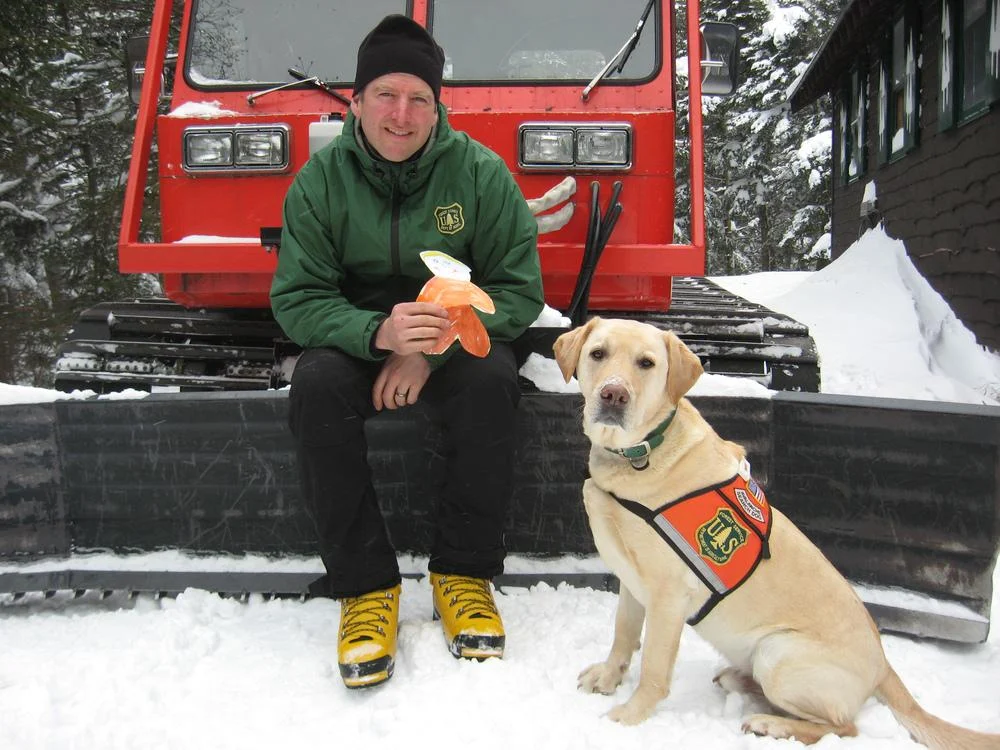
The Mount Washington Avalanche Center (MWAC) and the broader New England outdoor community are mourning the passing of Cutler, a dedicated avalanche search and rescue dog who served the White Mountain National Forest for over a decade. Cutler, a fixture of the Presidential Range, concluded a distinguished career that spanned 11 years of active service, a tenure representing nearly 80% of his 14-year life. Working alongside Mount Washington Avalanche Center Director Chris Joosen, Cutler was instrumental in both the technical aspects of mountain safety and the critical mission of public education in one of the most volatile alpine environments in the United States.
The Life and Career of a Specialized K9 Asset
Cutler’s career was defined by his presence in the rugged terrain of Tuckerman Ravine and Huntington Ravine, areas known for high-consequence avalanche activity and extreme weather conditions. Throughout his 11 years of service, Cutler was more than a mascot; he was a highly trained working dog capable of locating scent molecules buried deep beneath the snowpack. His presence on the mountain provided a layer of security for the thousands of skiers, hikers, and mountaineers who visit Mount Washington annually.
Born into a lineage of working dogs, Cutler began his training early, adapting to the grueling conditions of the White Mountains. For a search and rescue dog, the environment of Mount Washington presents unique challenges, including hurricane-force winds, sub-zero temperatures, and the dense, "bulletproof" snow characteristic of the Northeast. Cutler’s ability to maintain focus and perform search patterns in these conditions made him an invaluable asset to the U.S. Forest Service Snow Rangers.
The Critical Role of Avalanche Dogs in Search and Rescue
To understand the magnitude of Cutler’s contribution, it is necessary to examine the technical efficiency K9 units bring to avalanche recovery operations. In the event of an avalanche burial, time is the most critical factor. Statistics from the American Avalanche Association indicate that a victim buried in snow has a 93% survival rate if recovered within 15 minutes. This rate drops precipitously to about 37% after 35 minutes.
In a traditional "probe line," a team of human rescuers must stand shoulder-to-shoulder and systematically drive long metal poles into the snow to locate a victim. This process is labor-intensive and slow. A single avalanche dog, however, can search a 10,000-square-meter area in approximately 30 minutes—a task that would take a human team of 20 people roughly four hours to complete. Cutler’s presence at the MWAC ensured that should a disaster occur, the response time for locating a non-beacon-wearing victim would be reduced by several magnitudes.
A Legacy of Public Relations and Safety Education
Beyond the technical demands of search and rescue, Cutler played a pivotal role in the Mount Washington Avalanche Center’s outreach programs. The "Cutler Effect" was well-known among the Snow Rangers; his presence often served as a bridge between the authoritative figure of a Forest Service ranger and the recreating public.
Avalanche safety education is a primary pillar of the MWAC’s mission. By engaging with visitors at the Pinkham Notch Visitor Center and the Hermit Lake Shelters, Cutler allowed rangers to initiate conversations about snow stability, gear requirements, and the daily avalanche bulletin. This soft-power approach to safety education is credited with increasing the visibility of the center’s warnings and fostering a more collaborative relationship between the Forest Service and the backcountry community. For many visitors, Cutler was the face of mountain safety, humanizing the rigors of the Snow Rangers’ work and making safety protocols more approachable.
Chronology of Service and the Joosen-Cutler Partnership
The partnership between Cutler and Chris Joosen, the Director of the Mount Washington Avalanche Center, began in the early 2000s. Joosen, a veteran of mountain safety with decades of experience in the Presidential Range, integrated Cutler into the daily operations of the Snow Rangers.
- 2004-2005: Cutler begins his initial socialization and foundational search training, acclimating to the high-altitude environment and the mechanical noise of snowcats and helicopters.
- 2006: Cutler officially enters service as a certified avalanche dog, beginning a decade of patrolling the eastern slopes of Mount Washington.
- 2006–2015: Cutler participates in hundreds of patrols, public demonstrations, and standby alerts during high-risk avalanche cycles. He becomes a staple of the "Tuckerman Ravine Spring Season," where crowds can reach several thousand people in a single day.
- January 2015: Director Chris Joosen announces Cutler’s passing, reflecting on 14 years of companionship and 11 years of professional service.
The bond between a handler and an avalanche dog is one of the most intense professional relationships in the world of emergency services. They live together, train together, and face life-threatening environments as a singular unit. Joosen’s reflections on Cutler emphasize not just the dog’s utility, but his temperament and his unwavering reliability in the face of the Presidential Range’s notorious "world’s worst weather."
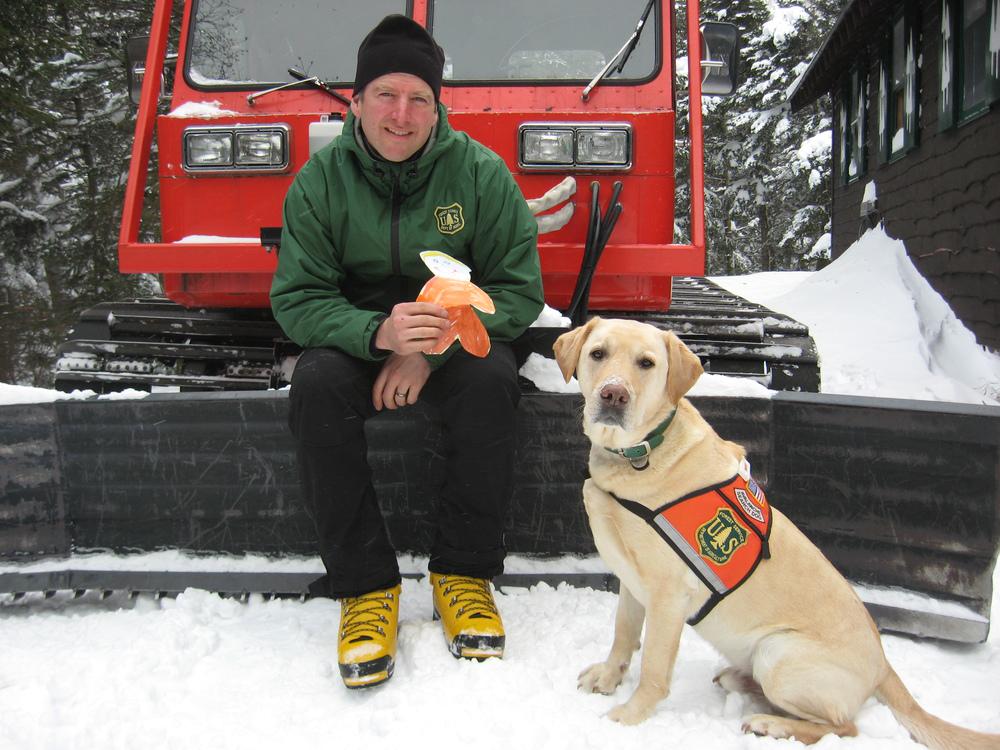
Environmental Context: Why Mount Washington Demands K9 Excellence
Mount Washington, while standing at only 6,288 feet, is widely considered one of the most dangerous mountains in the world due to its unique geography. It sits at the confluence of three major storm tracks: the Atlantic, the Gulf, and the St. Lawrence Valley. This creates a funnel effect that results in extreme wind speeds—the highest ever recorded by a human (231 mph) occurred on its summit.
For an avalanche dog like Cutler, this environment means navigating rime ice, massive snowdrifts, and "slab" avalanches that can be as hard as concrete. The technical difficulty of working in Tuckerman Ravine cannot be overstated. The terrain is steep, often exceeding 45 degrees, and the snowpack is subject to rapid changes in temperature and wind-loading. Cutler’s 11-year tenure in this environment is a testament to his physical resilience and the high level of care and training provided by the MWAC staff.
Broader Implications for the National Forest K9 Programs
The loss of a veteran dog like Cutler highlights the logistical challenges of maintaining a K9 program within the National Forest Service. Training an avalanche dog is a multi-year investment, often costing thousands of dollars in equipment, certification fees, and man-hours. These dogs are specialized tools that require continuous "maintenance" through daily training exercises to keep their scent-detection skills sharp.
Cutler’s career serves as a model for other regional avalanche centers. His success in balancing high-stakes rescue readiness with effective public engagement has influenced how other programs in the Western United States and Alaska structure their K9 units. The "dual-purpose" dog—one that is both a lethal search asset and a public ambassador—is now the gold standard for mountain safety organizations.
Official Responses and Community Impact
While the Mount Washington Avalanche Center is a government-run entity, the response to Cutler’s passing has been deeply personal for the New England outdoor community. Social media platforms and outdoor forums have seen an outpouring of tributes from hikers and skiers who encountered Cutler during his decade on the mountain.
In a blog post detailing Cutler’s life, Chris Joosen expressed profound gratitude for the dog’s service. Joosen noted that Cutler spent the vast majority of his life dedicated to the safety of others, a level of service that few humans achieve. The MWAC has indicated that Cutler’s legacy will continue to inform their safety programs and that the impact of his 11 years of service will be felt for years to come.
Analysis of the Future of K9 Units at MWAC
The vacancy left by a dog of Cutler’s experience is not easily filled. As the Mount Washington Avalanche Center looks to the future, the integration of new K9 assets will likely build upon the foundation Cutler established. The evolution of search technology, such as RECCO reflectors and advanced transceiver technology, has changed the landscape of mountain rescue, but the consensus among experts remains that no technology can yet match the speed and adaptability of a well-trained dog in a complex debris field.
Cutler’s passing marks the end of an era for the MWAC Snow Rangers. He was a witness to a decade of changing climate patterns, evolving backcountry gear, and the ever-increasing popularity of extreme winter sports in the White Mountains. As the center continues its mission to protect the public from the inherent risks of the alpine environment, the standard of excellence set by Cutler will remain the benchmark for all future K9 members of the team.
In the final analysis, Cutler’s life was a testament to the symbiotic relationship between humans and animals in the pursuit of safety. Through 11 years of biting winds and deep snow, he remained a steadfast guardian of the Presidential Range, leaving behind a legacy of lives potentially saved and a public better educated on the dangers of the mountain he called home.
