

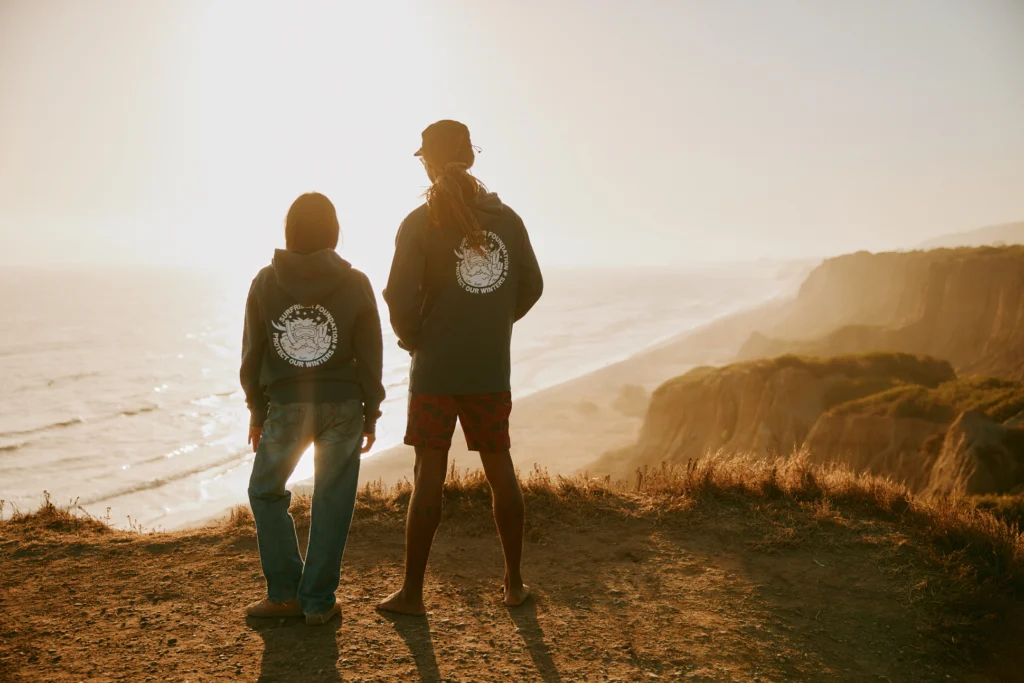
The convergence of mountain and maritime environments has long been a focal point for outdoor enthusiasts, yet the legislative and environmental threats facing these landscapes have increasingly necessitated a unified front in climate advocacy. In a strategic partnership aimed at bridging the gap between high-altitude snowpack and coastal ecosystems, Protect Our Winters (POW) and the Surfrider Foundation have announced the launch of the "Ridge to Reef" collection. This initiative features the work of California-based artist Dominic McLeod, the founder of Dom Fish Designs, and serves as a vehicle for visual storytelling intended to galvanize the outdoor community against offshore drilling and land degradation.
The collaboration represents a significant alignment of two of the most influential non-profit organizations in the outdoor sector. By leveraging McLeod’s artistic vision, the partnership seeks to translate complex environmental threats into accessible cultural narratives, emphasizing the interconnectedness of all wild places. The initiative comes at a critical juncture as federal policies regarding offshore oil and gas leasing continue to face scrutiny from environmental scientists and recreation-based economies alike.
The Evolution of the Ridge to Reef Concept
The "Ridge to Reef" philosophy is predicated on the hydrological and ecological reality that the health of alpine environments directly dictates the vitality of downstream coastal regions. For Dominic McLeod, this connection is not merely theoretical but a lived experience. Raised in Ojai, California—a region characterized by its proximity to both the Topatopa Mountains and the Pacific coastline—McLeod’s upbringing provided a unique vantage point on environmental fluidity.
McLeod’s transition from a recreational enthusiast to a professional artist began during his primary education, where he developed a reputation for character illustration. Over time, his focus shifted toward capturing the "grit and humor" of the outdoor community. His current portfolio reflects the diverse demographics found in surf lineups and on mountain trails, utilizing a process that integrates traditional sketching with modern digital tools. His workflow typically commences with discovery phases and mood boards, eventually progressing to digital iterations on an iPad, ensuring that the final designs maintain a balance between personality and a clear advocacy message.
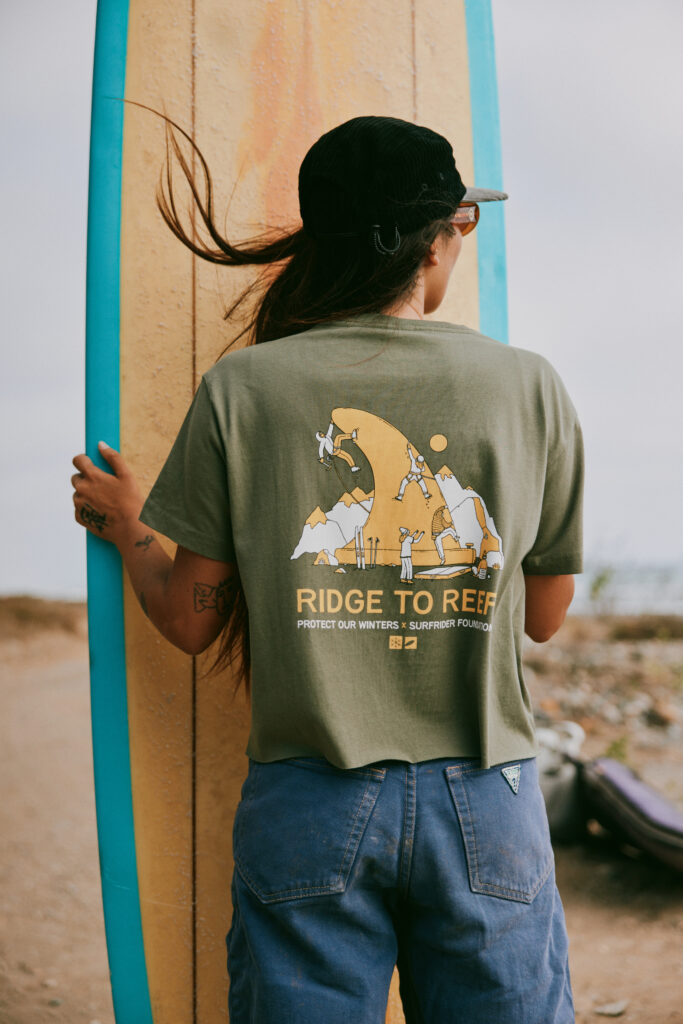
The impetus for the "Ridge to Reef" collection was further solidified following a significant personal setback. A severe ankle injury sidelined McLeod from surfing for ten months, a period during which he pivoted toward bikepacking. This transition fostered a philosophy he describes as "cross-pollination"—the idea that outdoor enthusiasts should not silo themselves by sport. This concept has become a cornerstone of the new collection, which frequently merges disparate outdoor symbols, such as a surfboard fin integrated with a climbing scene, to challenge the rigid boundaries often found in outdoor culture.
Strategic Alliance: POW and the Surfrider Foundation
The partnership between POW and the Surfrider Foundation is rooted in a shared history of grassroots activism. Protect Our Winters was founded in 2007 by professional snowboarder Jeremy Jones, who observed a direct correlation between warming global temperatures and declining snowpack in the Sierras and beyond. The Surfrider Foundation, established in 1984 by a group of surfers in Malibu, California, has spent decades litigating for coastal access and water quality.
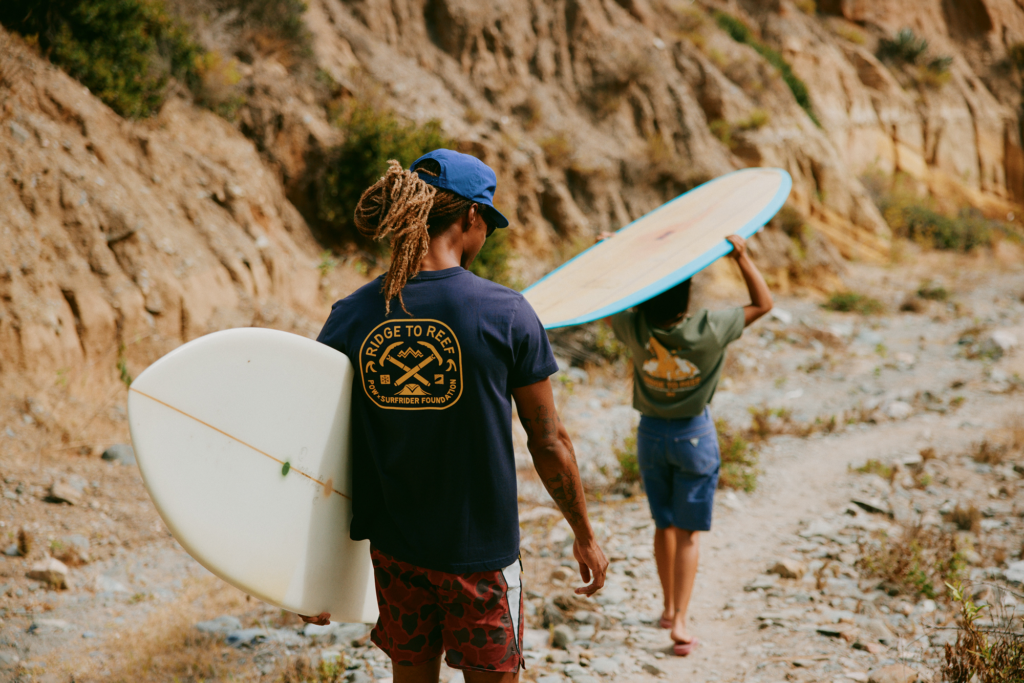
The connection between the two organizations is personified by Jones himself. Growing up in Cape Cod, Jones was influenced by the Surfrider Foundation’s presence in the local surfing community. At the age of 14, he became a member of the foundation, an experience he cites as the catalyst for his transition from a "plunderer" of natural resources to a "protector." This historical link underscores the "Ridge to Reef" initiative’s goal: to unite the "Outdoor State"—a demographic of millions of hikers, skiers, surfers, and climbers—into a singular political force.
Environmental and Legislative Context: The Threat of Offshore Drilling
The primary focus of the advocacy funded by the Ridge to Reef collection is the opposition to expanded offshore oil and gas drilling. This issue remains a flashpoint in American environmental policy, particularly concerning the Bureau of Ocean Energy Management (BOEM) and its Five-Year Outer Continental Shelf (OCS) Oil and Gas Leasing Program.
Current federal mandates, influenced by the Inflation Reduction Act (IRA) of 2022, have created a complex landscape for energy leasing. While the IRA includes significant investments in renewable energy, it also requires the federal government to offer millions of acres for oil and gas leasing as a prerequisite for authorizing new wind and solar leases on federal lands and waters. This "linkage" has sparked intense debate among climate advocates who argue that continued fossil fuel extraction is incompatible with the goal of limiting global warming to 1.5 degrees Celsius.
Data from the National Oceanic and Atmospheric Administration (NOAA) indicates that offshore drilling poses multifaceted risks to coastal ecosystems. Beyond the catastrophic potential of large-scale oil spills, the routine operations of offshore rigs contribute to seismic blasting, which disrupts the migratory and mating patterns of marine mammals, including the endangered North Atlantic right whale. Furthermore, the infrastructure required for offshore extraction often leads to the degradation of wetlands and estuaries, which serve as critical buffers against storm surges and sea-level rise.
The Economic Power of the Outdoor State
A central component of the advocacy strategy employed by POW and Surfrider is the emphasis on the economic contributions of the outdoor recreation industry. According to the 2023 report from the U.S. Bureau of Economic Analysis (BEA), the outdoor recreation economy accounts for $1.1 trillion in economic output, representing 2.2% of the U.S. Gross Domestic Product (GDP). This sector supports nearly 5 million jobs across the country, outperforming industries such as farming and mining in several states.
By framing environmental protection as an economic necessity, POW and Surfrider aim to influence policymakers who may be hesitant to support climate measures on purely ecological grounds. The "Outdoor State" represents a diverse voting bloc that spans the political spectrum, united by a shared reliance on public lands and waters for both livelihood and recreation. The Ridge to Reef collection serves as a visual identifier for this movement, signaling a collective commitment to preserving the "playgrounds" that drive this billion-dollar economy.
Philosophy of the Imperfect Advocate
One of the more nuanced aspects of McLeod’s and POW’s messaging is the rejection of "purity politics" within the climate movement. McLeod advocates for the "imperfect advocate" model, which acknowledges the contradictions inherent in modern life. He posits that individuals do not need to be climate scientists or live entirely carbon-neutral lives to contribute to environmental solutions.
"You don’t have to be a mathematician or a climate scientist to contribute," McLeod stated during the collection’s development. "You just have to be willing to use the skills you do have."
This approach is designed to lower the barrier to entry for climate activism. By suggesting that an individual can drive a gas-powered vehicle to a trailhead while still advocating for systemic policy changes, the campaign seeks to expand the movement’s reach. This pragmatic stance is reflected in the artwork itself, which celebrates the joy of outdoor sports while maintaining a firm focus on the necessity of legislative protection.
Impact and Future Outlook
The Ridge to Reef collection is more than a retail endeavor; it is a direct-funding mechanism for environmental litigation and policy lobbying. One hundred percent of the proceeds from the collection are allocated to the advocacy efforts of both POW and the Surfrider Foundation. These funds are used to support legal challenges against illegal drilling permits, fund scientific research on coastal erosion, and organize "Hill Days" where professional athletes and industry leaders meet with members of Congress to discuss climate legislation.
As the effects of climate change become more pronounced—evidenced by shorter winters in the Northern Hemisphere and increasingly volatile hurricane seasons in the Atlantic—the need for integrated advocacy has never been more urgent. The collaboration between Dominic McLeod, POW, and Surfrider demonstrates a shift toward a more holistic, culturally-driven environmentalism.
In the broader context of social movements, art has historically served as a bridge between data and action. By visualizing the "Ridge to Reef" connection, McLeod provides a tangible representation of what is at stake. As the outdoor community continues to grow, the ability to mobilize this "Outdoor State" through shared culture and values will likely play a pivotal role in the future of American environmental policy. The fight to protect public lands and waters is no longer confined to the mountains or the sea; it is a unified effort that spans the entire landscape, driven by the realization that to save one is to save the other.
