

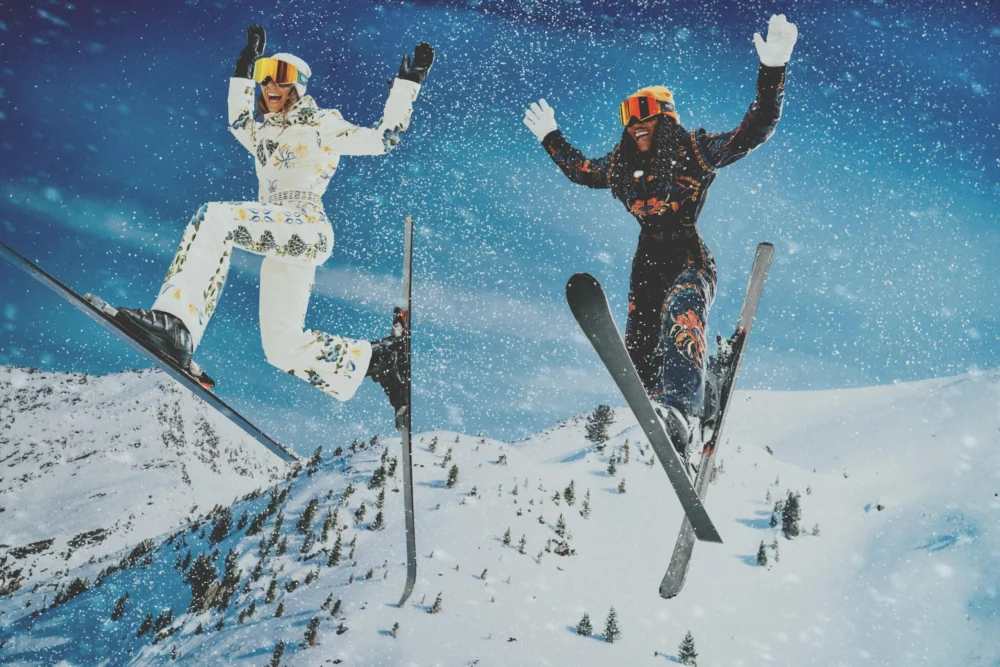
The winter sports apparel industry is currently undergoing a significant paradigm shift as manufacturers move away from the monochromatic, utilitarian designs that have dominated the market for the last decade toward a more expressive, high-fashion aesthetic. This transition, characterized by a return to the bold colors and flamboyant silhouettes of the 1970s and 80s, is most clearly evidenced by the recent collaboration between WHITESPACE, the performance-driven brand founded by Olympic gold medalist Shaun White, and Farm Rio, a Brazilian fashion house celebrated for its vibrant, tropical-inspired prints. As skiing and snowboarding re-emerge not only as athletic pursuits but as significant cultural and lifestyle markers, this partnership highlights a growing demand for technical gear that does not compromise on personal expression or feminine identity.
The Convergence of Technical Performance and High Fashion
For much of the early 21st century, the prevailing trend in ski gear was defined by "quiet luxury" and extreme minimalism. The industry standard favored neutral palettes—olives, blacks, and greys—designed to blend into the natural mountain environment. This "serious" aesthetic was largely a reaction to the preceding "shrink it and pink it" era, during which women’s gear was often under-engineered and aesthetically patronizing. In the push for gender parity in performance, the industry pivoted toward a hyper-technical, often masculine-coded look.
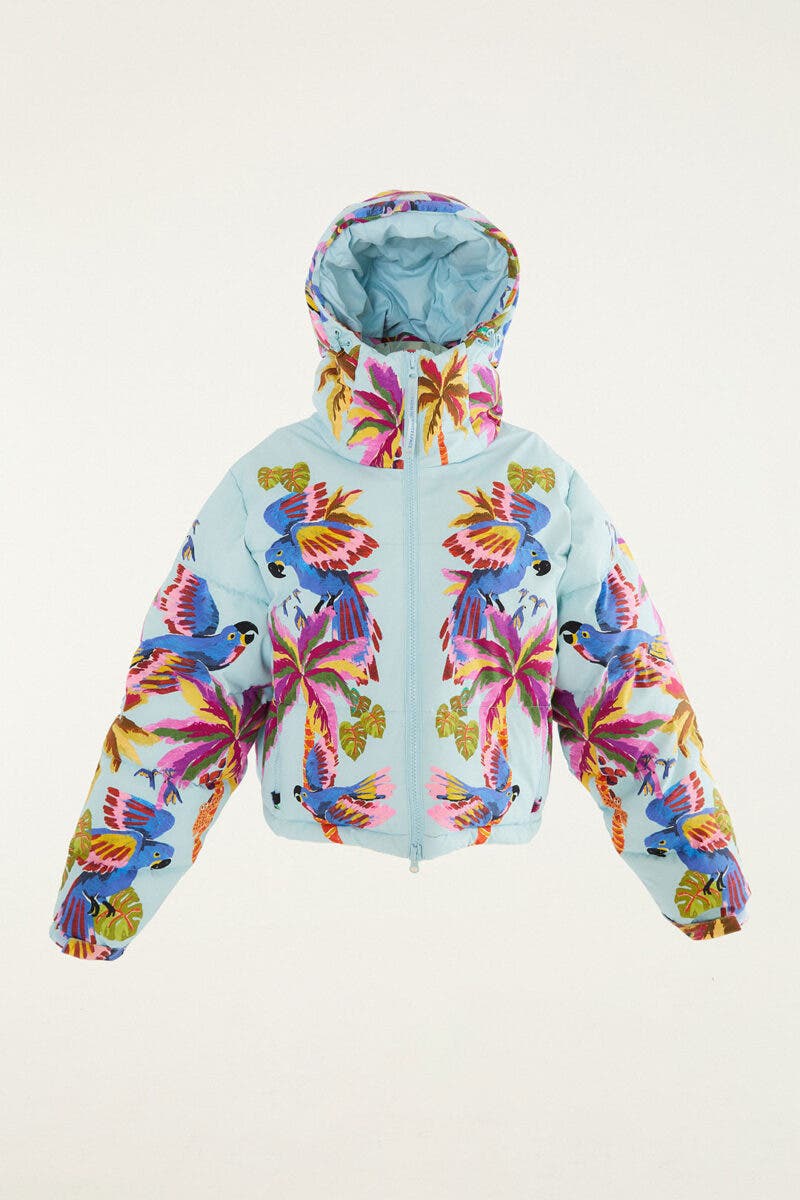
However, market data from the 2023-2024 season suggests a correction in this trend. Consumers, particularly women, are increasingly seeking "athleisure" integration and expressive outerwear. The WHITESPACE x Farm Rio collection, which features the "Blue Macaw" motif across insulated puffers and technical bibs, serves as a primary case study for this shift. The collection integrates Farm Rio’s signature borogodó—an effortless Brazilian charm—with WHITESPACE’s rigorous mountain standards. This intersection addresses a specific market gap: high-performance apparel that functions in sub-zero temperatures while maintaining the visual impact of high-street fashion.
Historical Context: From Maria Bogner to Modern Minimalism
The history of women’s ski fashion is a cycle of tension between form and function. In the 1950s, Maria Bogner revolutionized the sport by introducing stretch pants, which combined athletic mobility with a tailored, glamorous silhouette. This era defined skiing as a "sexy," aspirational sport. By the 1990s and early 2000s, the industry faced criticism for the "shrink it and pink it" strategy, where manufacturers simply reduced the size of men’s products and added floral patterns or pastel colors without adjusting for female anatomy or technical requirements.

In response, the 2010s saw a rise in brands like Halfdays, Wild Rye, and Seniq, which prioritized female-specific fit and high-level waterproofing and breathability. While this improved the experience for female athletes, it also led to a period of aesthetic austerity. The current movement, exemplified by the WHITESPACE and Farm Rio partnership, represents a "third wave" of women’s ski wear: one that accepts the technical benchmarks established over the last decade but reintroduces the joy and maximalism of earlier eras.
Technical Specifications and Performance Standards
Despite the flamboyant visual nature of the WHITESPACE x Farm Rio collection, the partnership maintains a focus on technical integrity. The "Blue Macaw" kit, which includes a hooded puffer jacket retailing at $539 and suspender ski pants at $599, is built to withstand professional-grade use.
The technical specifications for the collection include:
- Fabrication: Three-layer softshell material bonded with brushed-back fleece for thermal retention.
- Weatherproofing: Fully seam-sealed construction with high-rated waterproof membranes.
- Durability: Stretch ripstop boot gaiters and abrasion-resistant panels.
- Ergonomics: Adjustable waistband tension hooks designed to eliminate the "waist gap" common in traditional women’s ski pants.
Jesse White, Chief Creative Officer at WHITESPACE, noted that the collaboration had strict "non-negotiables" regarding performance. Several design concepts were reportedly discarded during the development phase because they failed to meet the brand’s standards for breathability or moisture management. This rigorous testing ensures that the apparel is suitable for high-intensity skiing on "groomers" and in resort environments, though it may differ from the ultra-lightweight shells required for backcountry touring.
Market Analysis and Consumer Demographics
The strategic importance of this collaboration is backed by shifting demographics in the winter sports sector. According to the National Ski Areas Association (NSAA), women now make up approximately 40% of the skiing population in North America, a figure that has seen steady growth over the last five years. Furthermore, female consumers are increasingly identified as the primary decision-makers for family travel and gear purchases, representing a significant portion of the $1.4 billion global winter sports apparel market.

The "lifestyle" segment of skiing is also expanding. The entry of mainstream fashion entities—such as J.Crew’s partnership with the U.S. Ski Team and SKIMS’ foray into technical outerwear—indicates that the "après-ski" aesthetic is becoming a year-round fashion influence. Media outlets like Vogue have begun covering ski style as a subset of luxury travel, further driving demand for gear that looks as good in a village setting as it does on a black diamond run.
Executive Perspectives and Industry Reactions
The leadership behind the collaboration emphasizes that the partnership was born out of a desire to serve an underserved demographic. Katia Barros, founder and creative director of Farm Rio, stated that the goal was to create "technical skiwear that doesn’t ask women to leave their personality behind when they step onto the slopes." She noted that the contrast between the warmth of Brazilian culture and the cold of the alpine environment provided the creative tension necessary for the collection’s success.
From the WHITESPACE perspective, the move is a deliberate attempt to broaden the brand’s cultural reach. Jesse White highlighted that the female customer has been "underserved for so long" in an industry that remains largely male-focused. By partnering with a brand that has "no business being in the snow," WHITESPACE effectively signals a more inclusive, less gate-kept version of mountain culture.
Industry analysts suggest that this collaboration could prompt other heritage brands to reconsider their design languages. If successful, the WHITESPACE x Farm Rio model proves that "fashion-forward" does not have to mean "performance-light," a stigma that has long plagued women’s technical apparel.
Chronology of the WHITESPACE x Farm Rio Launch
The development of the collection followed a multi-year timeline:
- Initial Conception (Early 2024): WHITESPACE identifies a need for a high-visibility, fashion-centric women’s line to complement its core technical offerings.
- Partnership Formation: WHITESPACE reaches out to Farm Rio, seeking to leverage their expertise in prints and emotional branding.
- Technical Prototyping (Mid-2025): Design teams in Brazil and the U.S. work to reconcile tropical aesthetics with alpine performance requirements, testing various fabric bonds and insulation weights.
- Market Testing: Limited releases and influencer previews at high-profile resorts like Alta and Aspen.
- Full Launch (Winter 2025-2026 Season): The collection debuts globally, featuring the Blue Macaw, Tropical Forest, and other signature prints.
Broader Impact on Mountain Culture
The emergence of bold, expressive gear like the WHITESPACE x Farm Rio line has broader implications for mountain culture and social dynamics on the slopes. For years, "serious" skiers often looked down upon fashion-forward apparel, equating visual flair with a lack of technical skill. This internalized bias is now being challenged by a new generation of skiers who view self-expression as an integral part of the sporting experience.
The return of the "sexy, joyful, and bold" aesthetic—reminiscent of the Maria Bogner and Warren Miller era—recontextualizes skiing as an accessible and fun activity rather than an exclusive club defined by rugged minimalism. By providing women with gear that is both "powerful" and "cute," the industry is moving toward a future where performance and style are no longer mutually exclusive.
As the 2026 season progresses, the success of this collaboration will likely be measured not just by sales figures, but by the visible change in the "monochromatic landscapes" of major ski resorts. With more brands likely to follow suit, the era of the "quiet" mountain may be coming to an end, replaced by a more colorful and inclusive alpine environment.
