

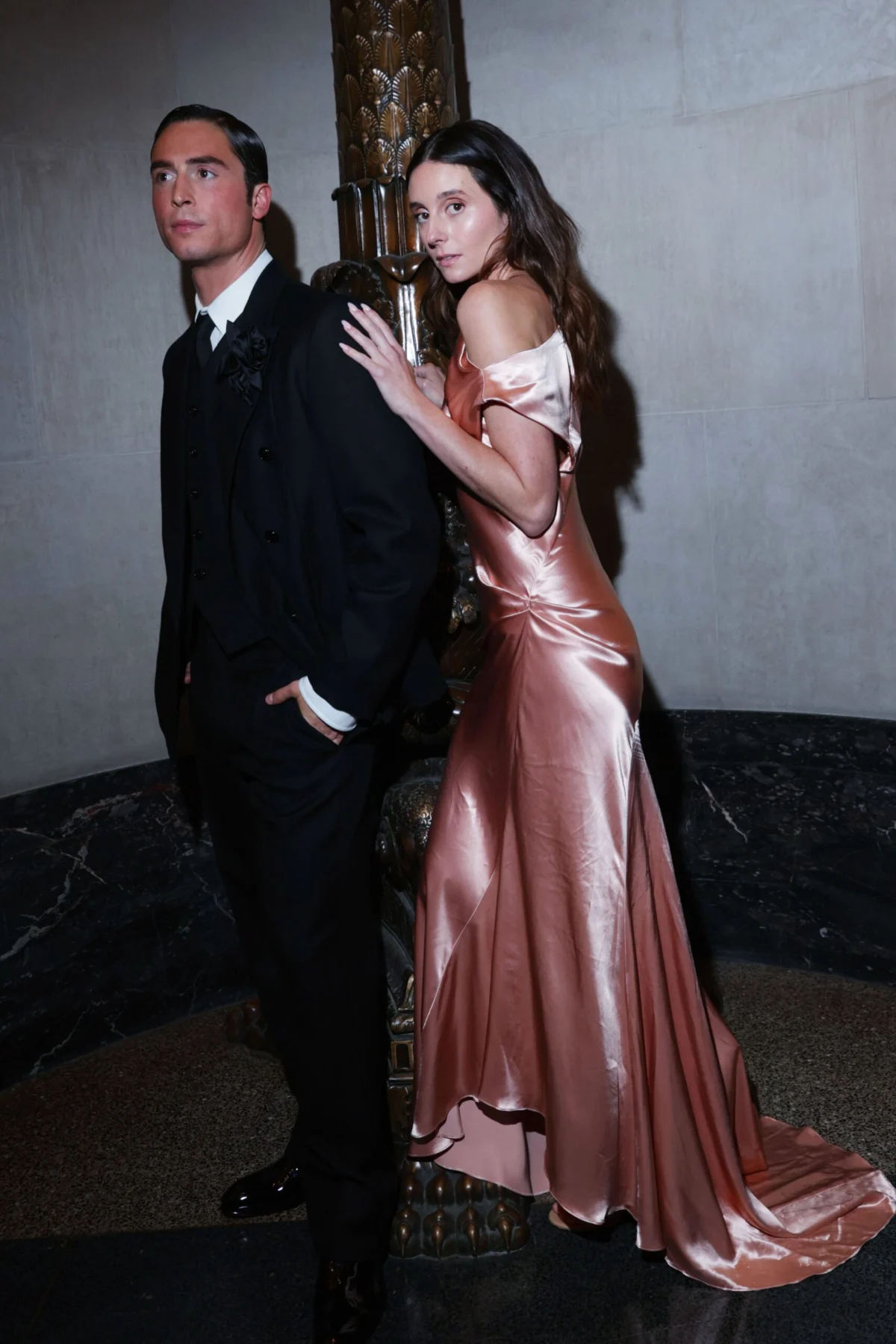
On a recent episode of the popular podcast Ride, hosted by Mary Beth Barone and Benito Skinner, a moment of sartorial appreciation punctuated the conversation. Skinner, turning his attention to Barone’s ensemble, inquired about her "kinda top," to which she proudly declared it a vintage Miu Miu piece. This exchange was more than just a casual chat about fashion; Skinner then playfully launched into an "Outfit of the Day" (OOTD) video simulation, detailing his own ensemble: a vintage "society archive" T-shirt, pre-owned Ralph Lauren Polo shorts, and minimalist flip-flops by The Row. While Ride is not exclusively a fashion podcast, this vignette perfectly encapsulates a burgeoning trend: podcasts, particularly those now widely streamed as video content, are evolving into significant platforms for the fashion industry. This shift is not going unnoticed by brands, who are increasingly recognizing the cultural cachet and purchasing power of these audio-visual storytellers.
The landscape of podcasting has dramatically transformed in recent years. What began as an audio-first medium has rapidly embraced video, blurring the lines between traditional broadcasting and digital content creation. This evolution has not only broadened the reach of podcasts but has also amplified the influence of their hosts, transforming them into potent arbiters of taste and significant players in the marketing and cultural spheres. The financial implications are substantial, with the global podcast industry generating an estimated $9.2 billion in sales in the past year, marking a significant 23% increase compared to 2024, largely propelled by the surge in video content, according to Bloomberg. Major streaming platforms like Netflix, Hulu, Tubi, and Disney+ are now entering the podcasting space, a stark contrast to the days when Apple and Spotify were the primary destinations. Data indicates that approximately 81% of weekly podcast listeners now engage with video content, either through streaming services or YouTube. This visual dimension is crucial for audience growth, especially in an era of viral clips where many young individuals discover new podcasters through short-form video content shared on platforms like TikTok and Instagram Reels.
"Over the last three years, the definition of a podcast has changed entirely," states Rebecca Steinberg, a creator agent at United Talent Agency (UTA), who represents prominent podcasters such as Jake Shane of Therapuss and Josh Peck and Ben Soffer of Good Guys. "The way audiences consume podcasts has shifted, and by extension, so has the way the industry defines and categorizes the format." This fundamental change has opened new avenues for brand partnerships, moving beyond traditional audio advertisements to encompass visual placements, event sponsorships, and even direct product collaborations.

The impact of this evolution is palpable within the fashion industry itself. Take, for instance, Benito Skinner. He is a regular fixture on the front row at Prada shows and has collaborated on campaigns and content for esteemed brands like Tory Burch, J.Crew, and Ralph Lauren. His podcast co-host, Mary Beth Barone, has also become a consistent presence at Tory Burch shows for the past three seasons. Their podcast, Ride, has secured brand deals with a diverse range of companies, including fitness label Tonal, hair care brand K18, and Bobbi Brown’s Jones Road, demonstrating their broad appeal and influence across various consumer categories.
This trend extends far beyond Ride. During the Spring/Summer 2027 men’s and women’s fashion seasons, podcasters were a notable presence on the front rows of major fashion weeks. Jake Shane of Therapuss was seen at Calvin Klein and Dior Men shows, while Owen Thiele, host of In Your Dreams, attended Louis Vuitton. Chris Black, host of How Long Gone, has become a regular at Copenhagen Fashion Week, often accompanied by his co-host Jason Stewart. These appearances underscore the growing recognition of podcasters as cultural influencers whose personal brands and audience engagement are highly valued by fashion houses.
The Shifting Power Dynamics of Cultural Influence
The rise of podcasters as influential figures can be attributed to several key factors. Firstly, the format itself fosters a unique sense of intimacy and authenticity. Unlike traditional advertising, where messages can feel impersonal or intrusive, podcast ads are often integrated into the host’s narrative, delivered in their own voice, and may even incorporate inside jokes or personal anecdotes. This approach resonates deeply with audiences. As Marissa Hurwitz, a talent agent at WME who represents Skinner and Barone, explains, "The audiences are so loyal and engaged in a way that translates to real purchasing power. People with a podcast business like Benito, Mary Beth, Hannah Berner, Paige Desorbo, Tinx, you see all of them showing up at these fashion week events because fans truly want to see where they’re going, what they’re wearing, who they’re wearing, and how can they get their hands on it."
The traditional podcast ad read, where hosts seamlessly weave brand promotions into their content, has proven remarkably effective. Studies consistently show that podcast advertisements deliver high performance across all brand channels, often surpassing other forms of advertising. "Because people choose to consume podcasts [rather than being bombarded with content on the feed], their recommendations carry more weight," notes Steinberg. "Podcast and creator audiences are incredibly sticky, and that trust creates a unique opportunity for brands to reach potential buyers." This trust is cultivated through consistent, authentic engagement with listeners.

Furthermore, the long-form nature of podcasts allows for deeper dives into topics and more nuanced discussions, which can be particularly appealing to audiences seeking more substantive content than what is often found in fleeting social media feeds. A.J. Leone, a UTA creator agent with nine years of experience in the podcast division, highlights this advantage: "Brands of all kinds want to tap into podcasts today because of the long-form format where the audience is captivated. The podcast audience is not just passively scrolling on TikTok. They’re clicking play on YouTube, on their podcast player, on Netflix, and they’re choosing to listen or watch for 45-60 minutes. As a result, a brand partnership that’s part of a podcast feels more authentic; when listening, people feel like they’re on FaceTime with a friend." This sense of personal connection makes brand endorsements feel more like genuine recommendations from a trusted source.
Podcasters as Arbiters of Taste and Culture
In an era where attention spans are fragmenting and the digital landscape can feel saturated with superficial content, podcasters are increasingly positioned as trusted guides to culture. They function not just as entertainers but as curators, helping their audiences navigate the vast world of books, music, films, and fashion. This role as "arbiters of culture" is solidified through their consistent recommendations and the shared vernacular that develops between hosts and listeners.
This cultural authority is further demonstrated through the emergence of live events and award ceremonies conceived by podcasters. The Las Culturistas Culture Awards and How Long Gone‘s The Goneies are prime examples, with the latter even awarding Mary Beth Barone "It-girl of the Year," signifying their impact on contemporary culture. These events, often tongue-in-cheek, highlight the significant influence these creators wield and their ability to shape cultural discourse.
"Established podcasters should be understood as brands in their own right, and an awards show is the clearest sign of that," says Parisa Parmar, a strategist at culture and entertainment marketing agency Attachment. "It’s not a side project, it’s the brand’s IP expanding into the exact territory traditional cultural figures already operate in. Sustained conversation on relevant topics positions a host as a cultural barometer over time, rather than a one-off voice. There’s a genuine appetite for an unfiltered point of view, and it’s fueling what is known as the ‘credibility economy,’ where having a genuine take is a form of social power or capital." This "credibility economy" is particularly attractive to brands looking to align themselves with authentic voices that resonate with discerning audiences.

Annie Corser, a pop culture analyst at Stylus, elaborates on this phenomenon: "Culturally, we have a strange relationship with expertise. We want those people who don’t seem like they’re talking down to us. Podcasters have some more inbuilt credibility, so we allow them to be tastemakers, it’s different to other types of media like film or TV in that it is by and large non-fiction. So we’re going there for information." This inherent trust makes podcasters ideal conduits for brand messaging.
The Visual Evolution and its Implications for Fashion
The increasing visual nature of podcasts has significantly impacted how podcasters collaborate with brands, particularly in the fashion sector. As more podcasts gain streaming deals and launch video components, they are becoming more visually engaging, creating new opportunities for fashion brands to integrate their products and messaging.
The podcast Las Culturistas, hosted by Bowen Yang and Matt Rogers, recently secured a streaming deal with Disney+ and Hulu. The duo’s investment in a new video set over the summer has facilitated more product placements and brand interactions, according to UTA agent Leone. "Fashion hasn’t tapped into the podcast space as significantly as other categories," he notes, "But it’s only a matter of time, especially with the added visual component." This suggests a significant growth potential for fashion brands seeking to connect with engaged podcast audiences.
Jake Shane, host of Therapuss, has also experienced a significant boost in his career through visual platforms. His deal with Netflix to stream his episodes signifies Hollywood’s recognition of the value in creator-produced content originating from social and audio platforms. "Bringing Therapuss to Netflix was one inflection point that signaled platforms traditionally associated with TV and film see real value in licensing and distributing creator-produced shows that originated on social and audio platforms," says Steinberg. "Hollywood is seeing that these creators are the new frontier of entertainment – backing them with bigger budgets, new distribution, and the ability to story tell on a different stage."

This visual integration extends to brand ambassadorships. Alo, a wellness and activewear brand, recently partnered with Jake Shane, launching a workout series with him on the Alo app. This collaboration stemmed from Shane’s long-standing engagement with the brand and his transparent sharing of his fitness journey. "It’s clear to the audience that there is a true relationship there, and I think the customer can just feel it and see it, and that’s why they connect with the brand more organically," commented Alo CEO Benedetta Petruzzo. Such authentic endorsements are highly effective in driving consumer engagement and purchase decisions.
Expanding Horizons: From Digital to IRL Experiences
The evolution of podcasts is not limited to digital platforms; live events and in-person experiences are emerging as the next frontier for brand activations. Podcasters are increasingly hosting live recordings, tours, and even elaborate events that foster a strong sense of community among their fans.
Mary Beth Barone and Benito Skinner’s Ride live tour last year, which saw sold-out venues across the US and Europe, is a testament to this trend. Fans, identifiable by T-shirts featuring inside jokes from the podcast, demonstrated a profound connection to the show and its hosts. These live events provide brands with opportunities to engage with highly dedicated audiences in a more immersive and memorable way.
"There’s more and more brands that want to be part of that real-life podcast moment," observes Leone. He cites Heather McMahan, host of Absolutely Not, who organized a live event cruise. "Her fans are willing not just to go on the road with her, but are willing to go on a boat and do a whole cruise with her. So it’s really the community that they build." This ability to mobilize and engage a dedicated community is a significant asset for brands seeking to connect with consumers on a deeper level.

When brands participate in these live events or collaborate on products, alignment with the podcaster’s personal brand and audience is paramount. "One of the things that we really focus on at WME is trying to super serve [the audience] and ensure that we’re protective of the podcaster," states Hurwitz. "We never want to do anything with the brand that would jeopardize the incredible relationship and community that they’ve built with the audience." This emphasis on authenticity and respect for the existing community ensures that brand partnerships enhance, rather than detract from, the podcaster’s credibility.
The success of such collaborations hinges on allowing podcasters the creative freedom to integrate brands authentically into their content. "Brands need to let podcasters talk about a product in their own voice, and trust that they know their audience best and what will be entertaining, informative and actually resonate," advises Steinberg. "If a brand is overly prescriptive about the creative, it can be difficult because there’s going to be misalignment. Creators have a direct relationship with their audience, and they know what works."
Meaningful brand integration, as Parmar suggests, involves participating where fans already gather, adding value rather than merely inserting promotional content. This could manifest as sponsorships for community-focused events, collaborations on physical products that authentically reflect the host’s identity, or initiatives that genuinely address the needs of the podcast’s audience.
The growing influence of podcasters is also evident in their expansion into other creative fields. Bowen Yang, a former regular on Saturday Night Live, is currently performing on Broadway in Oh, Mary!. Owen Thiele is acting in the TV series Adults, while Benito Skinner, who starred in and wrote the series Overcompensating (which also features Mary Beth Barone and is filming its second season), demonstrates how podcasting serves as a launchpad for broader entertainment careers. "Now, we can take a podcast business and build it into many other areas," Hurwitz explains. "Whether that is TV, is it a book? Is it a tour? Is it a venture deal? Is it more brand deals? That’s really helped differentiate some of the podcasters we represent." This cross-platform success further solidifies their status as powerful cultural figures with significant marketability.
