

The relentless rhythm of fashion month, a whirlwind of shows, presentations, and industry events, occasionally delivers a moment that pierces through the fatigue, commanding the attention of even the most seasoned fashion editors. This season, that pivotal moment arrived courtesy of Demna Gvasalia, the visionary creative director at the helm of Gucci. His highly anticipated Spring 2027 collection was not merely a display of new designs; it was a curated tableau of distinct personalities, a formidable ensemble that included everything from alluring figures draped in sequins to elegantly coiffed senior citizens and the archetypal "rich-bitch" equestrians. Amidst this captivating cast, a familiar face emerged, drawing significant attention: Rosie Huntington-Whiteley. Her presence, cloaked in an opulent, oversized faux-fur coat and shielded by statement sunglasses, evoked the image of a woman who possessed an innate understanding of power and a discerning eye for luxury.

The Spectacle of Demna’s Gucci Universe
Demna’s approach to fashion shows has consistently pushed boundaries, transforming the runway into a narrative space where clothing becomes an extension of character. For Spring 2027, he eschewed traditional seasonal themes in favor of a more visceral exploration of archetypes. The collection, as described by those in attendance, presented a diverse spectrum of individuals, each embodying a specific facet of modern identity and aspiration. This approach allows for a deeper engagement with the clothing, moving beyond mere aesthetics to explore the psychology and social positioning of the wearer. The show’s ability to create such a memorable and varied cast speaks to Demna’s skill in not only designing garments but also in crafting compelling narratives through fashion.
The strategic inclusion of a wide range of models, from those embodying traditional notions of glamour to those representing unexpected sources of style, is a hallmark of Demna’s design philosophy. This inclusivity challenges conventional beauty standards and celebrates individuality, reflecting a broader societal shift towards appreciating diverse forms of expression. The "sultry sirens in sequins" represent a classic interpretation of allure, while the "coiffured OAPs" inject an element of ageless chic and unexpected sophistication. The "rich-bitch equestrians" tap into a specific cultural signifier of wealth and leisure, adding a layer of aspirational fantasy. Each character, meticulously crafted, contributes to the overall immersive experience of the show.

Rosie Huntington-Whiteley: A Return to the Runway’s Spotlight
Rosie Huntington-Whiteley’s appearance in the Gucci Spring 2027 show was a significant moment, marking her return to the high-profile fashion stage in a role that resonated with her established persona. Her striking ensemble, a voluminous faux-fur coat paired with dark sunglasses, immediately captured the imagination. This dramatic silhouette and the air of mystery it projected led to an immediate interpretation: she embodied a woman of considerable means and sharp intellect, someone whose every decision is carefully considered. This initial impression was not lost on observers, who quickly recognized the power and confidence exuded by the model and actress.
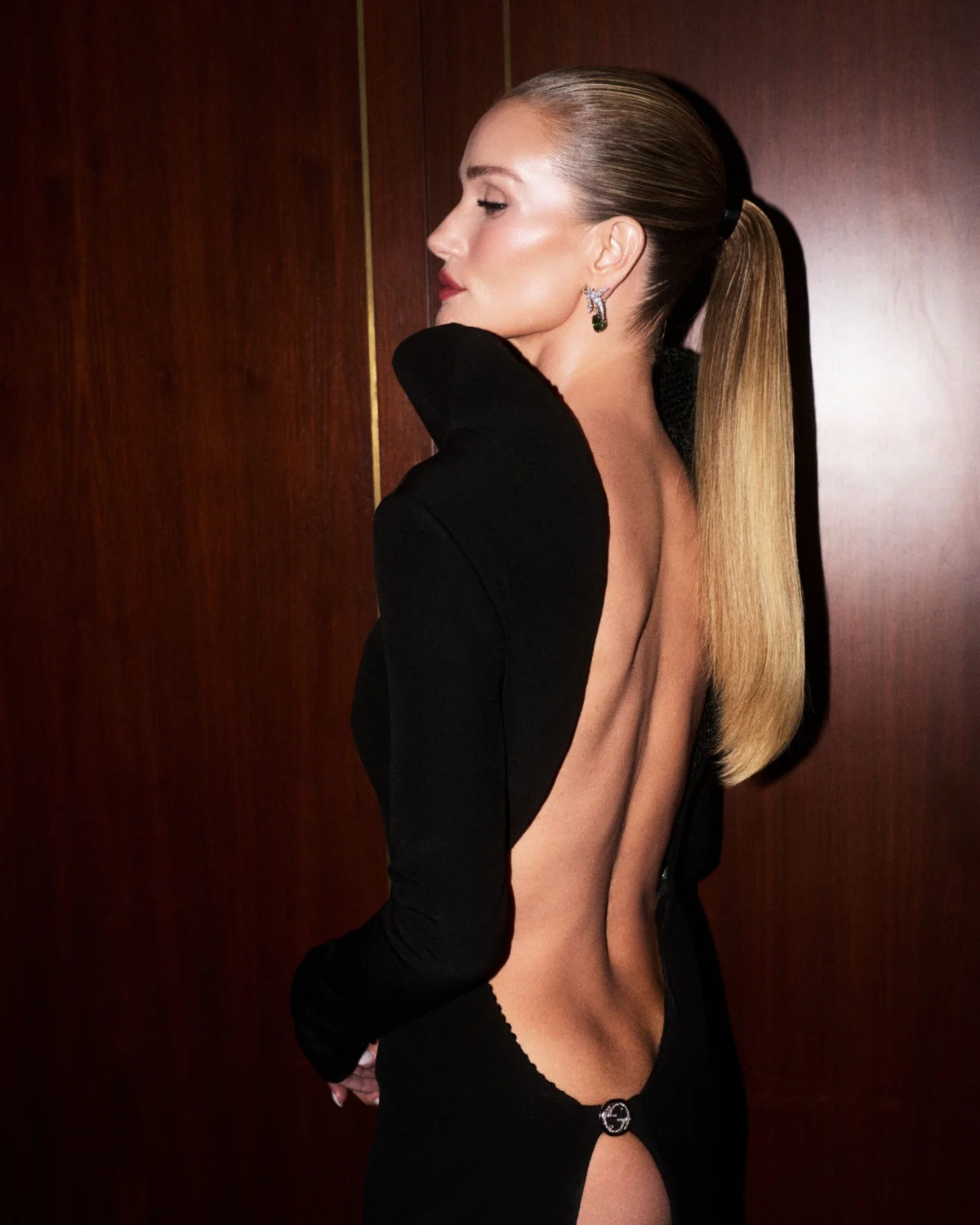
Speaking with Vogue ahead of the LACMA Gala, Huntington-Whiteley confirmed that the character she portrayed on the runway was indeed a continuation of a persona that had captivated the audience. "She’s back," Huntington-Whiteley stated, signaling the return of this compelling figure. While this iteration saw her shedding the all-encompassing coat, she adopted a decidedly different, yet equally impactful, look. She traded the dramatic outerwear for a seemingly demure, high-necked black dress. However, the dress’s true impact lay in its daring, barely-there back, a detail that injected a potent dose of sensuality and unexpected boldness. This juxtaposition of modesty and daring perfectly encapsulated the character’s complex nature.

Huntington-Whiteley herself acknowledged the distinct "Demna-coded" essence of her portrayal. "I think there’s definitely something very similar in spirit to the character," she remarked, highlighting the synergy between her performance and Demna’s creative direction. This statement underscores the collaborative nature of such high-profile fashion presentations, where the model’s interpretation becomes integral to the designer’s vision. The character, she explained, was a blend of several archetypes, a deliberate choice that allowed for a richer and more nuanced performance.
Deconstructing the Archetypes: A Multi-Faceted Persona
According to Huntington-Whiteley, the characters featured in Demna’s Spring 2027 show were intentionally structured around three core archetypes: "The rebellious aristocrat, the snob, and the eccentric." She elaborated on her own character’s embodiment of these distinct traits, stating, "I actually felt like my character embodied a little of all three." This multi-layered portrayal allowed her to explore a spectrum of characteristics, from an undeniable air of command and unapologetic self-assurance to a specific brand of eccentricity and attitude. Crucially, she noted, "I also love that she didn’t take herself too seriously." This self-aware approach to playing a character who exudes such power and confidence added a relatable dimension, preventing the persona from becoming overly stern or unapproachable.

The effectiveness of her performance was underscored by the reaction of Derek Blasberg, a prominent figure in the fashion and entertainment industries. His observation, "I can see you dug really deep for this character," served as a testament to the authenticity and conviction with which Huntington-Whiteley inhabited the role. This recognition from an industry insider validates the depth and thoughtfulness that went into her portrayal, moving beyond a simple modeling assignment to a more profound acting engagement.
The Power of Attitude: Fashion as Performance
Huntington-Whiteley’s foray into the Demna-Gvasalia-designed Gucci universe served as a potent reminder of the transformative power of theatricality in fashion. She articulated her understanding of the modeling profession as an ability to inhabit diverse characters and interpret a designer’s vision. "My job as a model is basically being able to step into different characters and explore a designer’s vision," she explained. "It’s about really understanding their world and finding a way to bring that character to life that feels authentic and natural to me." This perspective highlights the intellectual and emotional engagement required of models in contemporary fashion, elevating their role beyond mere presentation to active interpretation.

Her insights further emphasize the critical role of attitude in how clothing is perceived and experienced. "It’s always a reminder, when you do projects like this, of how important attitude is with the clothes we embody," she stated. She posited a fundamental truth about fashion: "Ultimately, clothes are clothes, but the way you wear them, the attitude and the way you embody them are what really make something memorable, what makes something iconic." This philosophy resonates deeply within the fashion industry, where the intangible quality of how an outfit is carried can elevate it from mere attire to a statement of personal style and identity. The "Demna-coded" character she embodied was a perfect illustration of this principle, demonstrating how a specific attitude can imbue a garment with profound meaning and lasting impact.
A Legacy of Glamour: Rosie Huntington-Whiteley and Gucci’s Enduring Relationship
Rosie Huntington-Whiteley’s connection with Gucci is not a recent development; her earliest recollections of the brand are rooted in the iconic era of Tom Ford’s creative direction. Reflecting on that period, she noted, "Of course, back then I could never afford Gucci, but what’s always struck me is that the brand has this glamour to it. It’s unapologetic." This sentiment speaks to the enduring allure of Gucci, a brand that has consistently projected an image of opulence and confidence. The campaigns from that era, she remembers, were particularly influential during her nascent career. "At a time when fashion imagery felt like something you really studied and committed to memory. They become part of your reference bank, so to speak. I loved that era and always will." This deep appreciation for Gucci’s heritage is evident in her continued engagement with the brand.

Her personal history with Gucci extends beyond admiration for its past campaigns. "I’ve really worn and loved Gucci on the red carpet ever since, and certainly in my real life too," she affirmed. This statement underscores a genuine and long-standing affinity for the brand, translating from the aspirational realm of fashion imagery to tangible, personal choices. Her history with Gucci is marked by memorable sartorial moments, including her appearance at the LACMA Art+Film Gala in 2012. For that event, she chose another striking open-back gown, this time in a vibrant green hue. Describing the look, she said, "It was sharp and clean, but really sexy." This particular outfit exemplifies her ability to embrace both elegance and sensuality, a characteristic that aligns seamlessly with Gucci’s design ethos. The enduring rapport between Rosie Huntington-Whiteley and Gucci, built on shared appreciation for glamour, confidence, and a touch of daring, suggests that their stylistic collaborations will continue to be a source of inspiration for years to come. The creative direction under Demna Gvasalia, with its penchant for bold narratives and memorable characters, provides fertile ground for further exploration of this celebrated partnership.
