

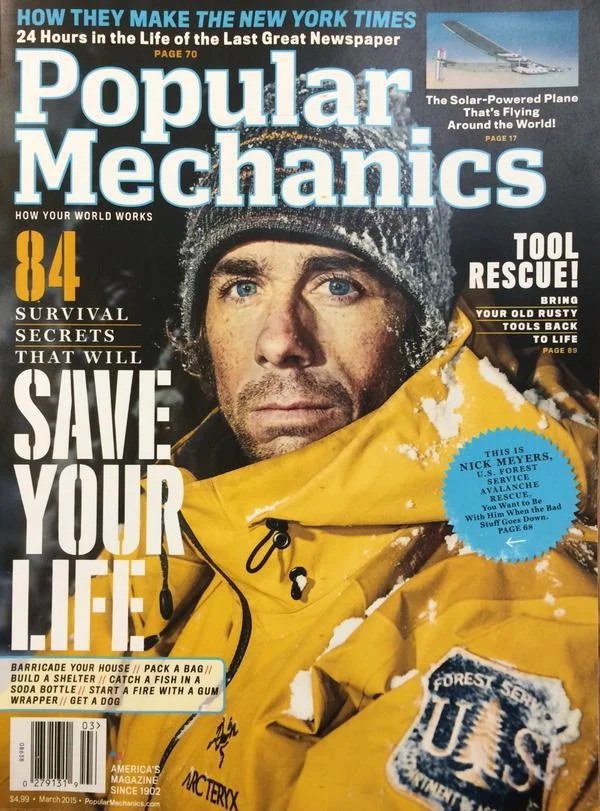
The selection of Nick Meyers, Director of the Mount Shasta Avalanche Center and Lead Climbing Ranger for the Shasta-Trinity National Forest, as the cover figure for a major issue of Popular Mechanics represents a significant milestone in the public communication of alpine safety and snow science. As a prominent figure in the Pacific Northwest’s mountaineering community, Meyers’ feature in a high-circulation national publication highlights the increasing importance of technical expertise in managing the risks associated with high-altitude environments. The feature, which centers on the "10 survival essentials" carried by avalanche rescue experts, serves as both a profile of a seasoned professional and an educational resource for a public that is increasingly venturing into the backcountry.
Meyers has spent years overseeing the safety operations on Mount Shasta, a 14,179-foot stratovolcano that attracts approximately 15,000 climbers and skiers annually. His dual role involves not only the administrative oversight of the Mount Shasta Avalanche Center (MSAC) but also the physical, on-the-ground management of search and rescue (SAR) operations and the monitoring of volatile snowpack conditions. The Popular Mechanics coverage brings his specialized knowledge to a broader audience, bridging the gap between professional mountain rescue protocols and the recreational outdoor community.
The Popular Mechanics Feature: Gear, Strategy, and Survival
The editorial focus of the Popular Mechanics article revolves around the intersection of human endurance and mechanical reliability. By focusing on the specific gear that Meyers carries, the publication highlights the evolution of survival technology. The "10 essentials" discussed in the feature are not merely items of convenience but are categorized as life-critical systems. These include advanced avalanche transceivers, probes, shovels, and emergency communication devices, alongside traditional survival tools like navigation equipment and insulation.
In the article, Meyers emphasizes that while gear is essential, it is the proficiency in using that gear under duress that determines the outcome of a rescue operation. The feature details how professional rangers like Meyers utilize "tools of the trade" to mitigate the inherent dangers of Mount Shasta’s "Everest-like" terrain, which is prone to sudden weather shifts and high-velocity wind events. The recognition of Meyers on the cover signifies a shift in media interest toward the technical and scientific aspects of mountain safety, moving away from sensationalized survival narratives toward factual, gear-oriented education.
Background and Context: The Mount Shasta Avalanche Center
To understand the significance of Meyers’ national recognition, it is necessary to examine the role of the Mount Shasta Avalanche Center. Established in 1998, the MSAC operates as a partnership between the U.S. Forest Service and the Friends of the Mount Shasta Avalanche Center, a non-profit organization. The center’s primary mission is to provide daily avalanche advisories, weather forecasts, and educational workshops to the public.
Mount Shasta presents unique challenges for avalanche forecasting. Unlike many other mountain ranges in the United States, Shasta is an isolated peak that rises nearly 10,000 feet above the surrounding valley floor. This creates its own microclimate, characterized by "orographic lifting," where moisture-laden air from the Pacific Ocean is forced upward, leading to massive snowfall and extreme wind-loading on the mountain’s upper slopes. Meyers’ leadership at the MSAC has been instrumental in refining the accuracy of these forecasts, utilizing a network of remote weather stations and manual snow pit observations to provide real-time data to the public.
Chronology of Leadership and Public Safety Initiatives
Nick Meyers’ career path reflects a long-term commitment to the Shasta-Trinity National Forest. His trajectory from a seasonal climbing ranger to the Director of the Avalanche Center has been marked by several key developments in regional mountain safety:
- Early 2000s: Meyers began his tenure with the U.S. Forest Service on Mount Shasta, gaining foundational experience in high-altitude rescue and trail management.
- 2010: Meyers assumed the role of Director of the Mount Shasta Avalanche Center. Under his leadership, the center expanded its digital presence, providing more accessible and detailed daily advisories.
- 2012–2014: A period of significant modernization for the MSAC, including the integration of more sophisticated snow-science telemetry and the expansion of the "Know Before You Go" educational program.
- 2015: The feature in Popular Mechanics occurs, marking a peak in national visibility for the MSAC and the U.S. Forest Service’s climbing ranger program.
- Present: Meyers continues to lead the center, overseeing a team of rangers and forecasters who manage one of the most visited high-altitude peaks in the lower 48 states.
Supporting Data: The Rising Stakes of Backcountry Safety
The recognition of experts like Nick Meyers comes at a time when backcountry recreation is seeing unprecedented growth. According to data from the Snowsports Industries America (SIA), participation in backcountry skiing and alpine touring has seen double-digit percentage increases over the last decade. This surge in participation has direct implications for avalanche centers and search and rescue teams.
National statistics from the Colorado Avalanche Information Center (CAIC), which tracks fatalities across the U.S., show that on average, 25 to 30 people die in avalanches each year in the United States. The majority of these incidents involve experienced outdoor enthusiasts who are traveling in "unmanaged" backcountry terrain. On Mount Shasta, the risks are compounded by the mountain’s sheer vertical relief. The "Avalanche Gulch" route, the most popular climbing path, is a natural terrain trap where snow from higher elevations can funnel into a narrow corridor, posing a constant threat during the winter and spring climbing seasons.
Meyers’ work at the MSAC is data-driven. The center monitors "Snow Water Equivalent" (SWE), wind speed at the 10,000-foot level, and temperature fluctuations to predict the likelihood of "slab avalanches"—the most dangerous type of snow slide. By appearing in Popular Mechanics, Meyers is able to advocate for the "Safety Triangle": the combination of proper gear, proper training, and the daily advisory.
Official Responses and Professional Implications
The U.S. Forest Service (USFS) has expressed support for the visibility Meyers has brought to the agency. In a statement regarding the feature, representatives from the Shasta-Trinity National Forest noted that the national coverage validates the hard work of the climbing rangers who often work in anonymity under extreme conditions. The Forest Service views this media exposure as a vital tool for "preventative search and rescue," a strategy that focuses on educating the public to avoid accidents before they happen, thereby reducing the risk to first responders.
Colleagues in the snow science community have also noted that Meyers’ feature helps humanize the role of the "Lead Ranger." In the professional mountaineering world, the lead ranger is responsible for making life-or-death decisions regarding mountain closures or rescue attempts. Meyers’ ability to communicate these complex decisions through the lens of technology and gear in Popular Mechanics provides a rare glimpse into the professional standards of the USFS.
Analysis of Broader Impacts
The impact of Nick Meyers’ appearance on the cover of Popular Mechanics extends beyond personal accolades. It highlights three critical areas of modern mountain management:
1. The Professionalization of Backcountry Information
In the past, mountain safety was often shared through informal networks of local climbers. Today, through the work of Meyers and the MSAC, this information is professionalized and distributed through high-tech platforms. The Popular Mechanics feature reinforces the idea that mountain safety is a discipline grounded in science and engineering, not just "outdoorsmanship."
2. The Role of Technology in Survival
The focus on "essentials" in the magazine feature underscores a broader trend in the outdoor industry: the reliance on technology to mitigate human error. Devices like the RECCO rescue system and satellite-linked personal locator beacons (PLBs) have revolutionized rescue timelines. Meyers serves as a bridge between these technological advancements and the practical application on the mountain.
3. Public Awareness and National Forest Resources
By highlighting a USFS employee, the article brings attention to the often-underfunded resources of the National Forest system. Mount Shasta’s climbing ranger program relies on a combination of federal funding and community donations. The national spotlight can serve as a catalyst for increased support for avalanche centers across the country, which play a pivotal role in public safety as mountain tourism grows.
Conclusion
The feature of Nick Meyers in Popular Mechanics is a testament to his expertise and the vital importance of the Mount Shasta Avalanche Center. As the Lead Climbing Ranger on one of America’s most iconic peaks, Meyers embodies the intersection of physical bravery and scientific rigor. The "10 survival essentials" he carries are more than just tools; they represent a comprehensive philosophy of risk management that is essential for the modern era of backcountry exploration.
Through this national platform, the message of mountain safety has reached a wider audience, potentially saving lives by encouraging climbers and skiers to prioritize preparation and education. As the MSAC continues to evolve under Meyers’ leadership, the center remains a model for how data-driven forecasting and professional ranger services can coexist with the spirit of adventure that draws thousands to the slopes of Mount Shasta every year. The recognition is not only a "great work" for Nick Meyers personally but a significant win for the entire community of search and rescue professionals and snow scientists nationwide.
