

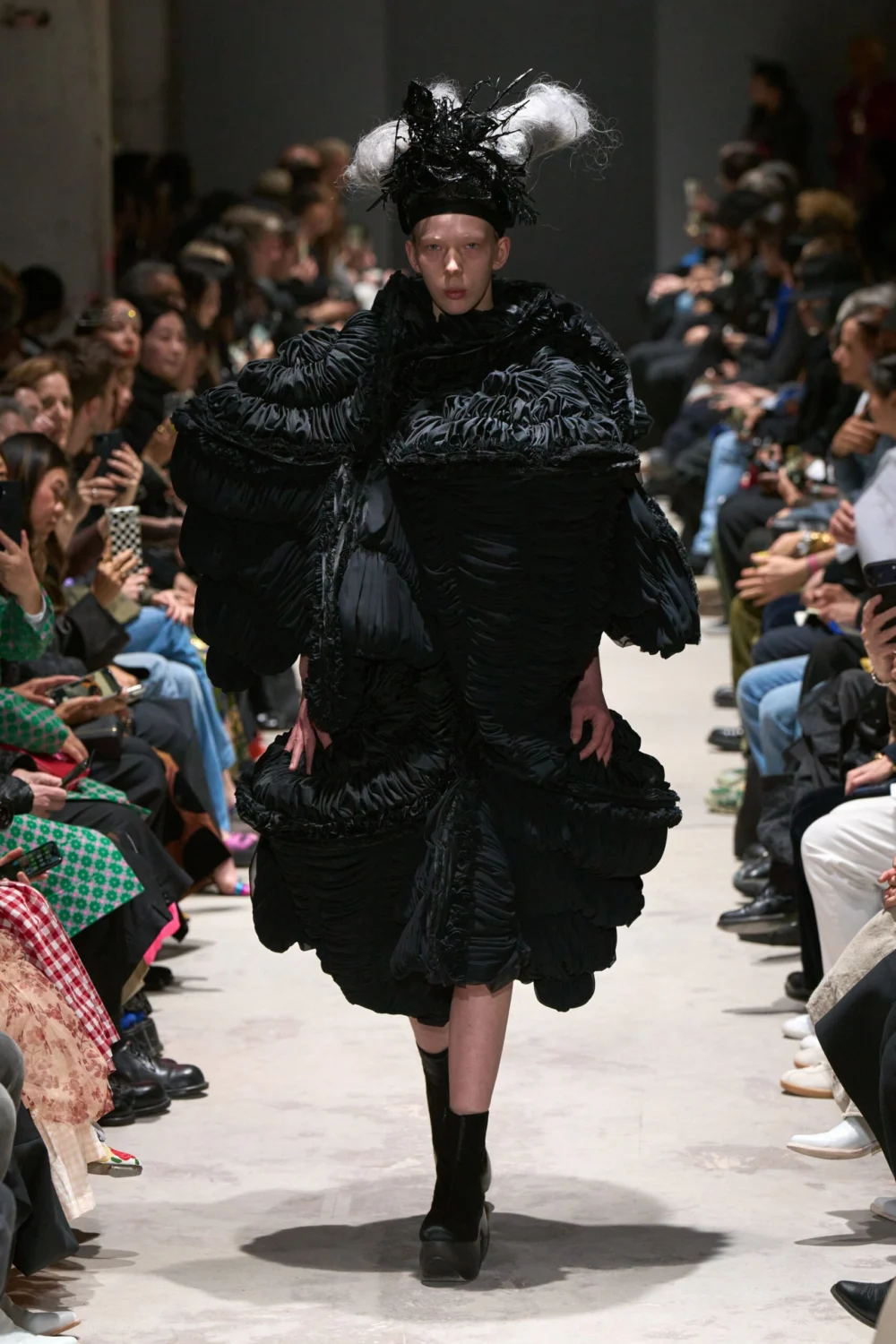
The hushed anticipation in the venue was palpable, a collective breath held as the first notes of music faded, leaving a profound silence. What followed was a runway presentation that defied conventional expectations, a masterclass in sartorial paradox and conceptual depth. Rei Kawakubo, the enigmatic force behind Comme des Garçons, has once again challenged the very notion of fashion, presenting a collection that initially plunged the audience into an all-consuming void of black, only to emerge, unexpectedly, into a vision of saccharine pink. This duality, a signature of Kawakubo’s avant-garde approach, offered a profound exploration of darkness and light, rebellion and innocence, and the inherent complexities of artistic expression.
The Initial Descent into Darkness: A Universe of Black
The initial segment of the Comme des Garçons Autumn/Winter collection, as observed, comprised sixteen looks, each a testament to meticulous technical execution and audacious visual innovation. While the quantity might have been perceived as brief, the intensity and detail embedded within each ensemble far surpassed what is often seen in entire seasonal offerings from other designers. These were not merely garments; they were architectural statements, exploring the profound depth and multifaceted nature of the color black.
Each of the initial sixteen looks showcased a remarkable degree of technical complexity. Techniques such as intricate shirring, strategic ruching, deliberate layering, and the subtle inclusion of gathered tulle created a tactile and visual richness on the surface of Kawakubo’s typically voluminous silhouettes. A "spidery trail of embroidery" further embellished these already imposing forms, adding a delicate yet persistent detail that drew the eye and invited closer examination. This intricate detailing served to punctuate the overwhelming darkness, preventing the collection from becoming monolithic and instead highlighting the nuanced ways in which light and shadow could interact with fabric.
The abstract nature of these pieces allowed for a broad spectrum of interpretation. Kawakubo’s designs are renowned for their ability to act as blank canvases for the viewer’s imagination, prompting questions rather than dictating answers. The curved panels of padding on the bosom, skirt, and shoulders of one particular look (identified as Look 6) could evoke the rustic charm of Mediterranean terracotta tiles or, conversely, the formal gravitas of British judges’ wigs. This deliberate ambiguity is a hallmark of Comme des Garçons, encouraging a dialogue between the garment and its observer. Similarly, the "marvelous fronds of fringe" adorning the final look created a dynamic, almost ethereal movement, inviting comparisons to the delicate undulations of jellyfish or the dramatic spectacle of a meteor storm’s ion tails. These were garments designed to provoke thought, to challenge perceptions, and to initiate a deeper engagement with the power of form and material.
A Sudden Interruption: The Pink Dawn
The abrupt cessation of music following the black ensembles created a moment of palpable pause, a collective inhale from the audience. This silence was then dramatically punctuated by the emergence of a cluster of six looks from backstage. These were not entirely new creations but rather reinterpretations of earlier designs, rendered in the most unexpected of hues: a vibrant, almost defiantly sweet shade of pink.
These subsequent ensembles were described as "huge and stately abstract envelopments," characterized by their considerable width. The sheer scale of these garments presented a logistical challenge on the narrow runway, with models requiring assistance and careful navigation to avoid collision. The rapid succession with which these pink creations appeared further intensified the visual impact, leaving photographers scrambling to capture their full scope. The room, previously charged with a contemplative silence, remained enveloped in a "hotly swathed" stillness, as if the sheer audacity of the color shift had momentarily stunned the onlookers.
The introduction of this vibrant pink was a significant departure, particularly for those who had received a pre-show note from Rei Kawakubo. This handwritten statement, a rare glimpse into the designer’s creative philosophy for the season, articulated a profound commitment to the color black. Kawakubo declared, "In the end, there is black. Ultimately Black. I have come to realize that, after all, black is the color for me. It’s just the strongest, the best for creation, and the color that embodies the rebellious spirit. And has the biggest meaning: The Universe and the Black Hole." This declaration positioned black not merely as a color choice, but as a fundamental principle, an embodiment of creative power and rebellious identity, intrinsically linked to cosmic concepts like the universe and black holes.
Context and Contrast: A Deliberate Paradox
The unexpected pink interlude served as a potent counterpoint to Kawakubo’s explicit pronouncements on the supremacy of black. This juxtaposition was not arbitrary but rather a calculated artistic decision, designed to amplify the impact of both elements. For those familiar with Comme des Garçons’ history, this move echoed a previous season. During the menswear show in January, titled "Black Hole," Kawakubo similarly concluded the presentation with a series of all-white looks. This established pattern of presenting stark contrasts—black followed by white, or in this instance, an overwhelming black followed by an exuberant pink—demonstrates a consistent thematic exploration of duality.
The "inky darkness of the universe seems even darker in contrast" when juxtaposed with light, and similarly, the profound depth of black is amplified by the introduction of its apparent antithesis. This deliberate play on contrasts is a recurring motif in Kawakubo’s work, forcing the audience to re-evaluate their preconceived notions of color and its symbolic weight.
The Power of Pink: Reinterpreting Innocence and Rebellion
While Kawakubo’s note championed black as the color of rebellion and ultimate meaning, the sudden eruption of pink offered a compelling reinterpretation of its potential. Pink, often associated with innocence, sweetness, and femininity, was here transformed through Kawakubo’s architectural lens. The "cutsiest, most saccharine" description of the pink hue suggests an almost childlike embrace of its inherent qualities, yet when applied to the voluminous, abstract forms, the effect was anything but demure.
This strategic deployment of pink could be interpreted as a subversion of traditional gendered associations with color. By applying this ostensibly "girly" hue to monumental, avant-garde structures, Kawakubo challenged the notion that such forms are inherently masculine or devoid of softer connotations. Instead, the pink garments, while visually striking, could be seen as representing a different facet of rebellion – the freedom to embrace and redefine perceived softness as a form of strength. It suggested a playful, perhaps even ironic, defiance of expectations, a declaration that even the most saccharine of colors can possess profound power when wielded with artistic intent.
The Resonance of Silence and Sound
The soundscape of the show played a crucial role in shaping the audience’s experience. The initial silence that followed the black looks was a deliberate choice, amplifying the visual impact of the garments and allowing for contemplation. This silence was eventually broken not by triumphant applause, but by the melancholic strains of Tomaso Albinoni’s "Adagio in G Minor." The selection of this Baroque masterpiece, known for its profound emotional depth and often associated with themes of sorrow and reflection, further underscored the contemplative nature of the collection.
The Adagio’s slow, deliberate tempo and its rich, resonant harmonies provided a sonic backdrop that was both grand and introspective. It created a space for the audience to process the stark visual dichotomy they had just witnessed. The music served as a bridge between the two distinct phases of the collection, imbuing the entire experience with a sense of gravitas and artistic purpose.
Broader Implications and Artistic Legacy
Rei Kawakubo’s Comme des Garçons collections consistently transcend the ephemeral trends of the fashion world, offering instead enduring artistic statements. This particular presentation, with its stark embrace of black and its surprising, yet ultimately resonant, dive into pink, highlights several key aspects of her enduring influence:
- The Power of Contrast in Design: Kawakubo’s mastery of contrast, whether in color, form, or texture, is a fundamental element of her creative output. This collection, by juxtaposing the absolute void of black with the vibrant effervescence of pink, demonstrated a profound understanding of how opposing elements can be used to amplify each other’s impact. This approach has influenced generations of designers who seek to create visually arresting and conceptually rich work.
- Redefining Color Symbolism: By recontextualizing the color pink within her avant-garde framework, Kawakubo challenged established notions of color symbolism. This act of redefinition encourages a broader and more nuanced understanding of how colors can be perceived and utilized in art and fashion, moving beyond simplistic associations.
- The Role of Silence and Sound in Presentation: The deliberate use of silence and carefully chosen musical pieces underscores the theatrical and performative nature of fashion shows. Kawakubo’s ability to curate a specific emotional and intellectual response through sonic choices demonstrates a sophisticated understanding of the complete sensory experience of fashion presentation.
- Enduring Relevance of Avant-Garde Fashion: In an industry often driven by commercial viability and fleeting trends, Comme des Garçons, under Kawakubo’s direction, remains a bastion of artistic integrity and boundary-pushing design. The continued critical acclaim and cultural impact of her collections demonstrate the enduring importance of avant-garde fashion as a platform for critical discourse and creative innovation.
The Comme des Garçons Autumn/Winter presentation was not simply a display of clothing; it was a philosophical inquiry rendered in fabric. It was a testament to Rei Kawakubo’s unparalleled ability to provoke, to challenge, and to ultimately inspire, proving that even in the deepest darkness, a glimmer of unexpected light can emerge, transforming perception and redefining meaning. The collection, in its bold duality, offered a potent reminder of the multifaceted nature of existence, beauty, and the boundless possibilities of artistic expression.
