

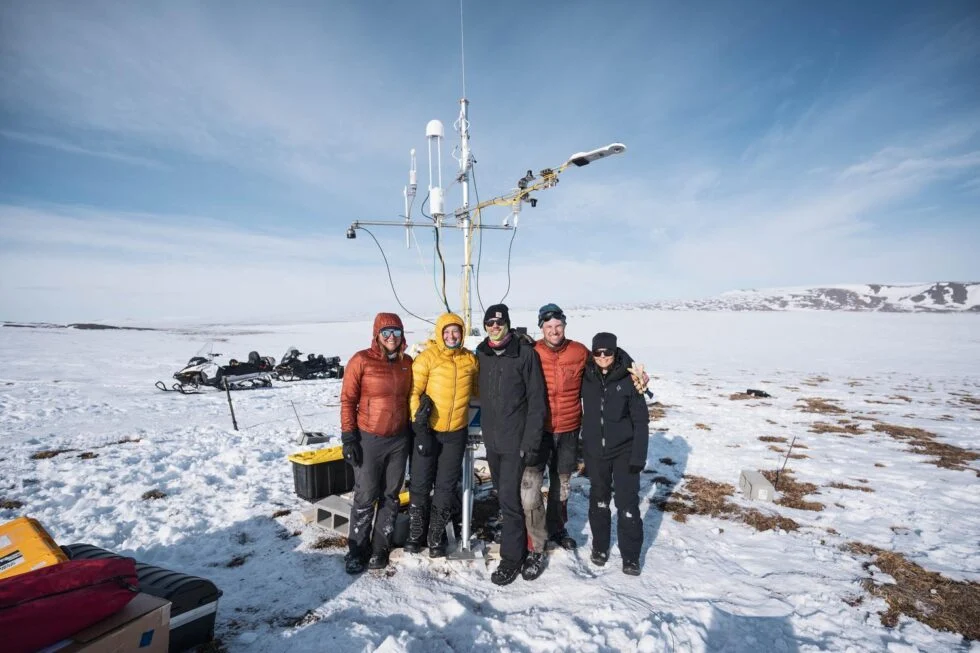
A specialized team of climate scientists and ecologists recently completed the installation of a sophisticated flux tower at a permafrost thaw slump near the Toolik Field Station on Alaska’s North Slope, marking a significant advancement in the study of Arctic feedback loops. Led by Dr. Kelly Gleason, an assistant professor of eco-hydro-climatology at Portland State University, and ecologist Jenny Watts, an expert in carbon flux from the Woodwell Climate Research Center, the mission sought to quantify the precise volume of methane and carbon dioxide escaping from rapidly destabilizing Arctic soils. This installation represents the first flux tower in the region specifically dedicated to evaluating emissions from a permafrost thaw slump—a dramatic geological feature where once-frozen ground collapses, exposing ancient organic matter to the atmosphere.
The expedition, conducted under the auspices of the Protect Our Winters (POW) Science Alliance, underscores the growing urgency of monitoring the Arctic, which is currently warming at nearly four times the global average rate. As the permafrost thaws, it transitions from a long-term carbon sink into a potential source of greenhouse gases, creating a self-reinforcing cycle that threatens to accelerate global temperature rises. The data collected by this new instrumentation is expected to fill critical gaps in global climate models, which have historically struggled to account for the localized but high-intensity emissions generated by thermokarst features and thaw slumps.
Technical Specifications and Field Deployment
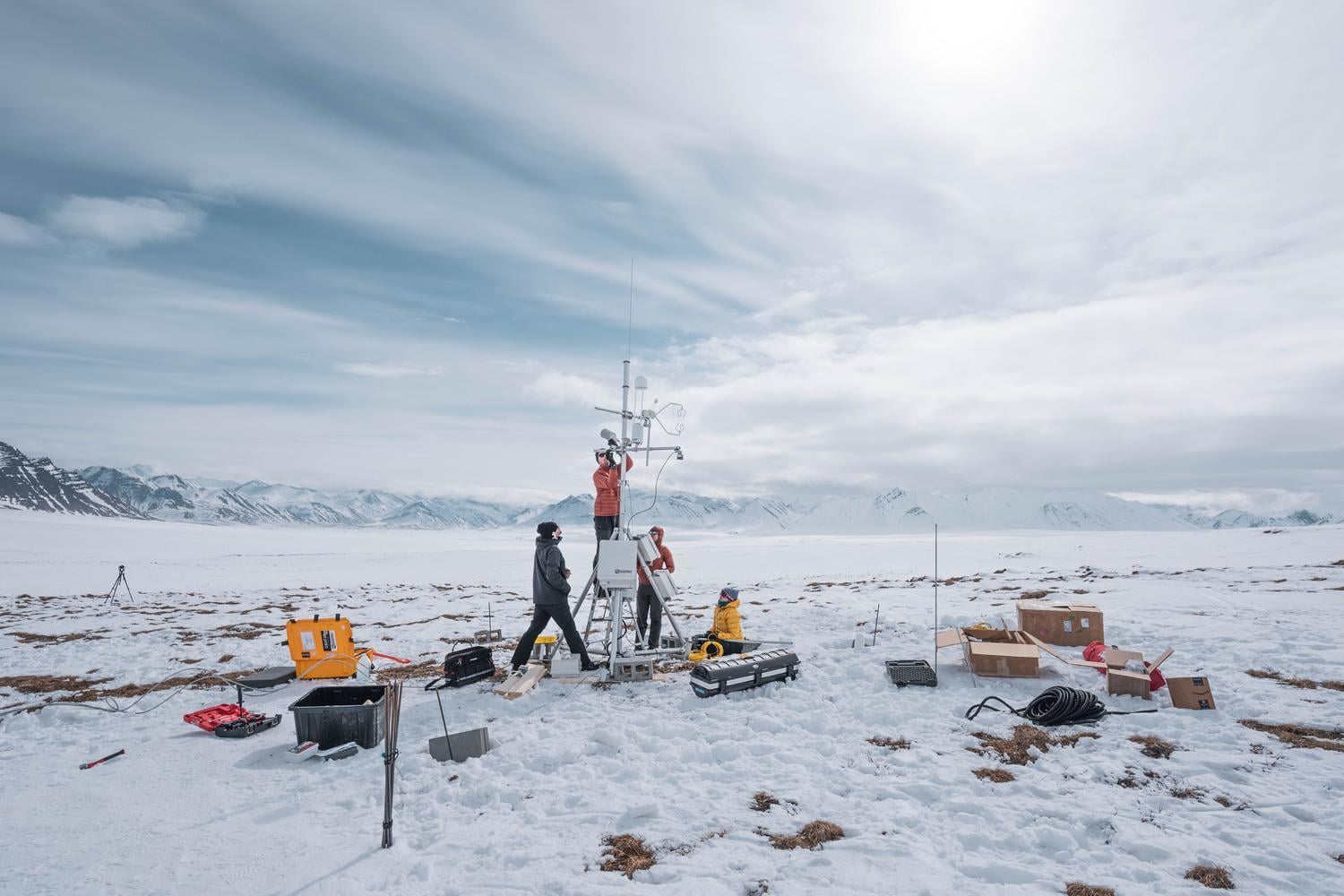
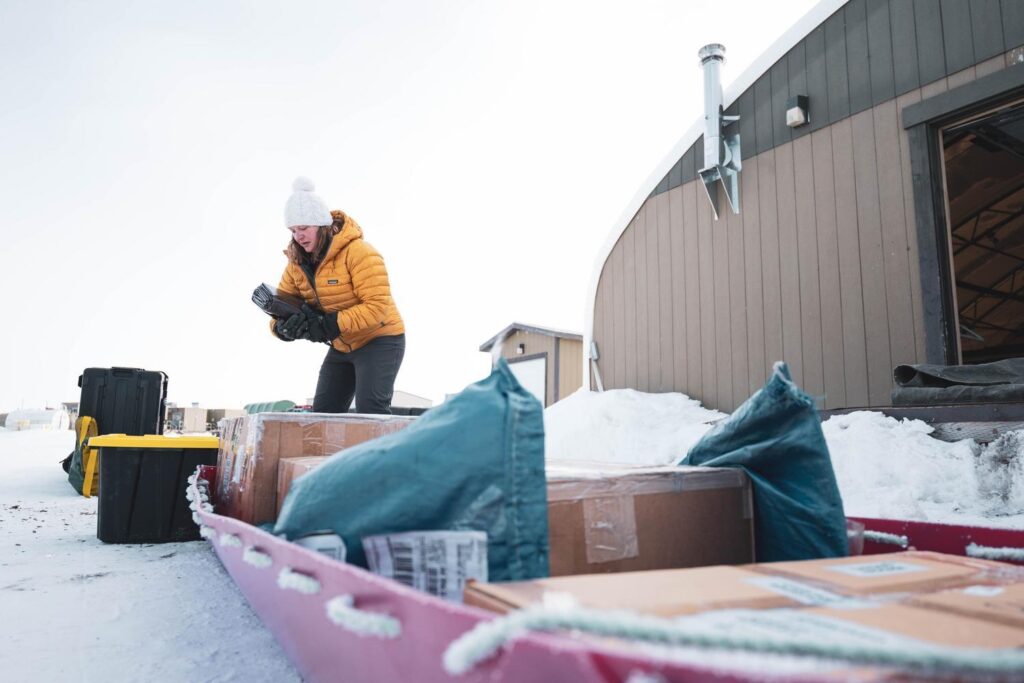
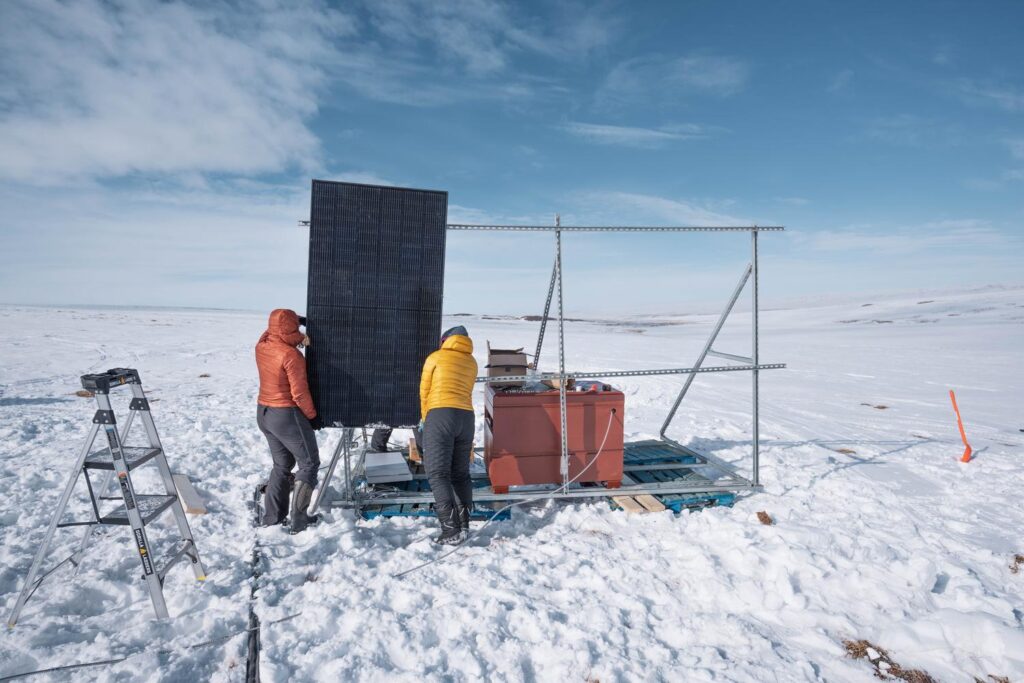
The deployment at the North Slope involved the transport and assembly of heavy-duty scientific instrumentation in a remote, sub-zero environment. The team, which included researchers Kyle, Christina, and Kai, utilized snowmachines and heavy sleds to navigate the vast tundra expanses between the Toolik Field Station and the specific thaw slump site. The equipment load was substantial, comprising a 15-foot-tall aluminum frame equipped with side arms, guy-lines, and cement anchors to ensure stability against high Arctic winds.
To power the sensors in the remote location, the team installed four large solar panels and eight deep-cell batteries, each weighing over 100 pounds. This power system supports a suite of sensors designed to measure "the invisible": the vertical exchange of carbon dioxide and methane between the land surface and the atmosphere. Known as the eddy covariance method, this technique allows scientists to calculate the net ecosystem exchange of gases over a specific area, providing a real-time ledger of how much carbon the thawing ground is losing to the sky.
The Mechanics of Permafrost Thaw Slumps
Permafrost, defined as ground that remains frozen for at least two consecutive years, covers approximately 15% of the Northern Hemisphere’s land area. Within this frozen soil lies an estimated 1,400 to 1,600 billion metric tons of carbon—nearly double the amount currently present in the Earth’s atmosphere. As temperatures rise, the ice wedges within the soil melt, leading to ground subsidence and the formation of thaw slumps.
These slumps are more than just geographical scars; they are active sites of rapid decomposition. When the soil loses its structural integrity and slumps downhill, organic material that has been sequestered for thousands of years is exposed to sunlight and microbial activity. These microbes consume the organic matter, releasing carbon dioxide in dry conditions and methane—a greenhouse gas with 80 times the warming power of CO2 over a 20-year period—in saturated or anaerobic conditions. While intact tundra may release gases slowly, thaw slumps act as "hotspots," venting concentrated plumes of greenhouse gases that are often missed by broad-scale satellite monitoring.
Chronology of the Expedition and Observation
The mission began in early May, a period when the North Slope is still dominated by winter conditions but experiences increasing daylight. The chronology of the field operation was dictated by the logistical challenges of the Arctic spring:
- Site Selection and Scouting: The team identified a specific permafrost thaw slump that exhibited signs of active erosion and instability, making it an ideal candidate for the first-of-its-kind flux monitoring.
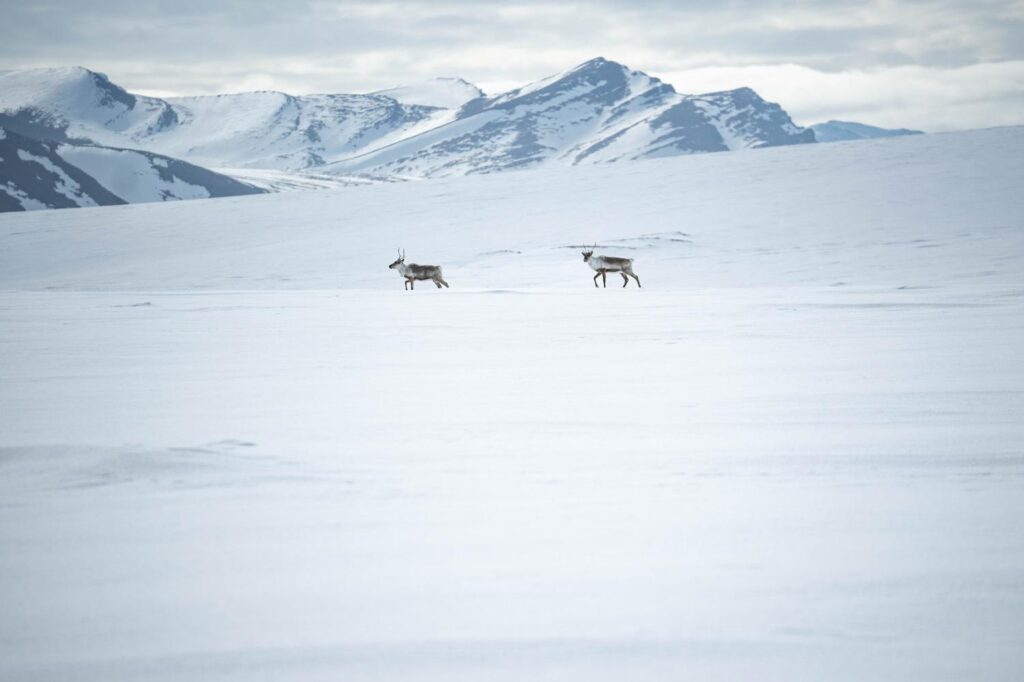
- Equipment Hauling: Over several days, the team moved thousands of pounds of equipment via snowmachine sleds across the frozen tundra, navigating around caribou herds and through the rugged terrain of the Brooks Range foothills.
- Tower Assembly: The 15-foot aluminum structure was erected and anchored into the frozen substrate. This process required precision engineering to ensure the sensors remained level and functional throughout the freeze-thaw cycles of the coming months.
- Energy Integration: Solar arrays and battery banks were synchronized to provide a continuous power loop, essential for maintaining data integrity during the transition from the 24-hour sunlight of summer to the eventual darkness of the Arctic winter.
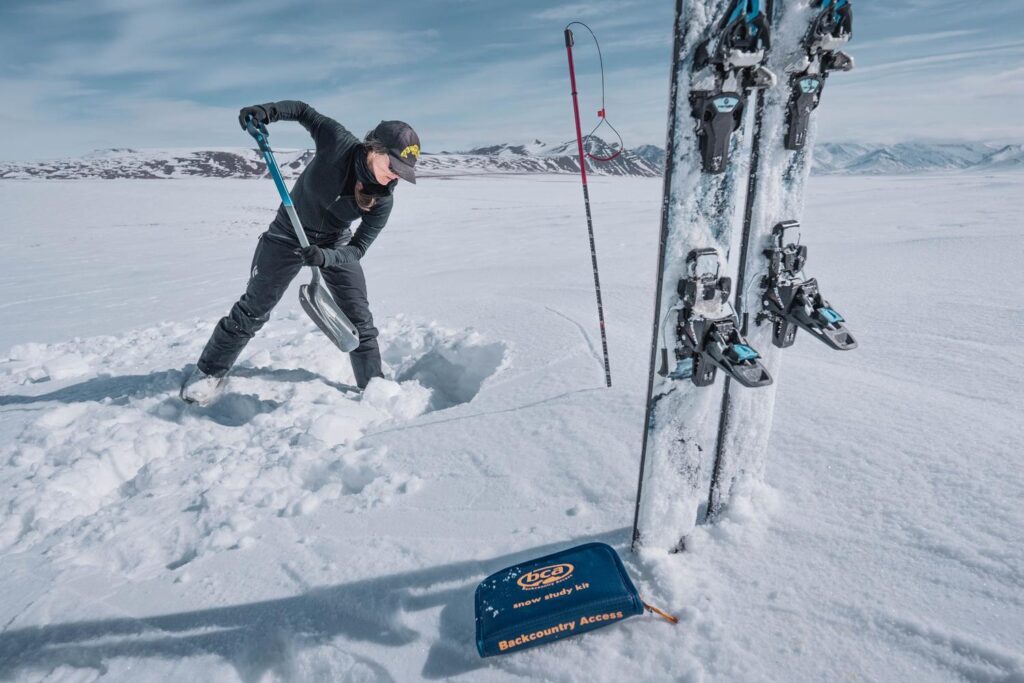
- Sub-surface Analysis: Parallel to the tower installation, Dr. Gleason and the team conducted snow pit excavations to analyze the thermal relationship between the snowpack and the underlying permafrost.
Supporting Data: The Dual Role of Arctic Snow
A primary focus of Dr. Gleason’s research during the expedition was the role of snow as both a cooling agent and a thermal insulator. In the western United States, snow is primarily valued as a water resource, measured by its snow-water equivalent (SWE). However, in the Arctic, the importance of snow lies in its albedo (reflectivity) and its insulating properties.
While fresh snow reflects up to 90% of solar radiation back into space, thereby cooling the planet, it also acts as a heavy blanket for the ground. As climate change reduces sea ice cover, the resulting open water increases atmospheric moisture, leading to higher snowfall totals in certain Arctic sectors. Dr. Gleason’s findings from the field highlighted a troubling paradox:
- Shallow Snowpack (57 cm): At the base of a shallow snowpack, temperatures were recorded at a frigid -10°C. This allows the cold ambient air to penetrate the soil, keeping the permafrost stable and microbial activity dormant.
- Deep Snowpack (2 meters): Beneath a large drift, the temperature at the soil interface was measured at nearly -3°C, despite identical surface temperatures.
This seven-degree difference is critical. At -3°C, the soil is warm enough to potentially support microbial life and accelerate the internal melting of permafrost, even while the surface remains covered in white snow. This suggests that increased Arctic snowfall may actually be hastening the thaw of the very ground it appears to be protecting.
Institutional Responses and Advocacy
The expedition highlights a growing trend of "advocacy science," where researchers partner with non-governmental organizations to translate complex data into actionable policy. The POW Science Alliance, which supported the mission, aims to bridge the gap between academic research and public awareness.
Representatives from the Woodwell Climate Research Center emphasized that the data from the Toolik flux tower will be integrated into larger datasets to improve the accuracy of the Arctic Carbon Monitoring Network. By providing high-resolution data on thaw slumps, the researchers hope to influence international climate agreements, arguing that current emission reduction targets may be insufficient if they do not account for the "unmanaged" emissions coming from the thawing North.
Dr. Gleason noted that the role of the scientist is evolving. Beyond measuring the snow’s albedo or the soil’s methane flux, researchers are increasingly tasked with telling the story of a landscape in flux. The partnership with Protect Our Winters allows these scientific findings to reach a broader audience of outdoor enthusiasts and policymakers who can advocate for systemic changes in energy and land-use policy.
Broader Impact and Climate Implications
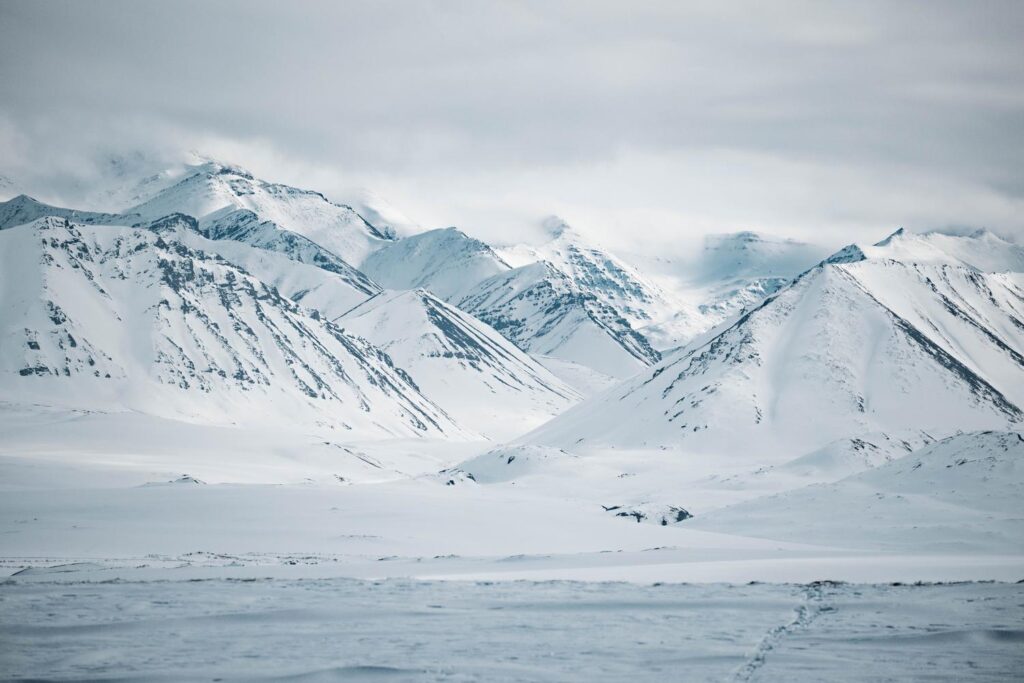
The implications of the research conducted on the North Slope extend far beyond the borders of Alaska. The Arctic is often described as the "world’s air conditioner," but the transition of permafrost from a carbon vault to a carbon chimney could flip this dynamic.
If the feedback loops observed by Dr. Gleason and Dr. Watts—where deeper snow insulates warming ground, leading to more methane release and further warming—become the regional norm, the global "carbon budget" will shrink significantly. Most current climate projections assume a relatively stable Arctic floor; however, the presence of active thaw slumps suggests that the ground is far more volatile than previously mapped.
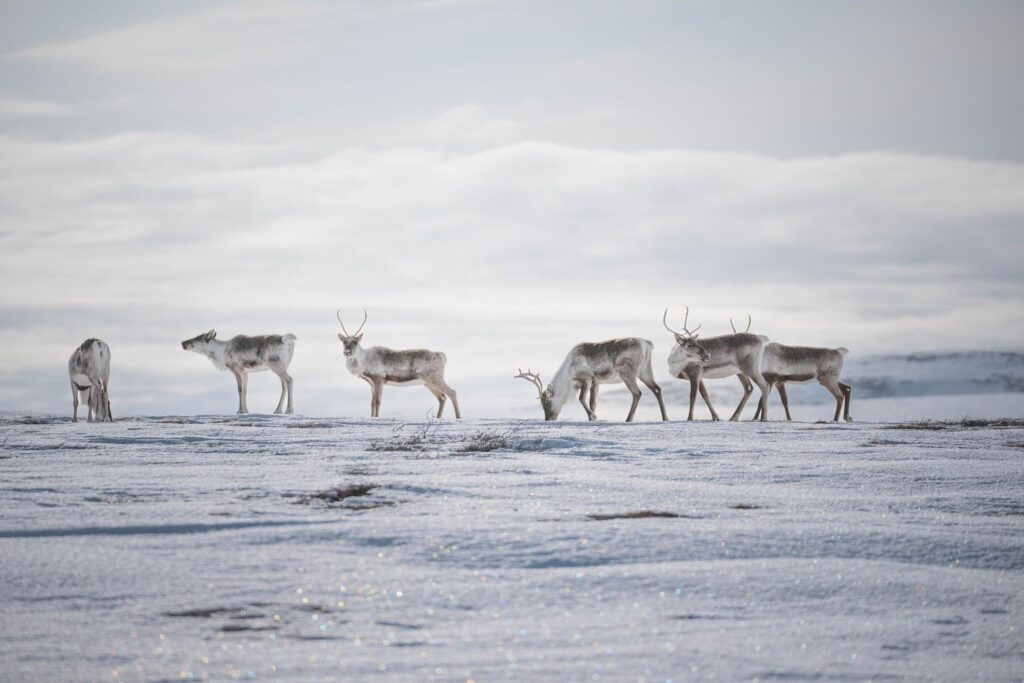
Furthermore, the destabilization of permafrost has immediate local consequences, including the destruction of infrastructure, the alteration of caribou migration paths, and the contamination of freshwater sources with ancient silt and organic runoff. The installation of the Toolik flux tower is a vital step toward quantifying these risks.
As the team concluded their initial deployment, the focus shifted to long-term data acquisition. The sensors will continue to transmit data throughout the summer thaw, providing a 24-hour account of the North Slope’s respiratory cycle. This research serves as a stark reminder that while the Arctic may seem remote, its atmospheric chemistry is inextricably linked to the global climate future. The success of this mission provides a new set of tools for understanding a landscape that is both fragile and fierce, and whose fate will ultimately determine the pace of climate change for the rest of the century.
