

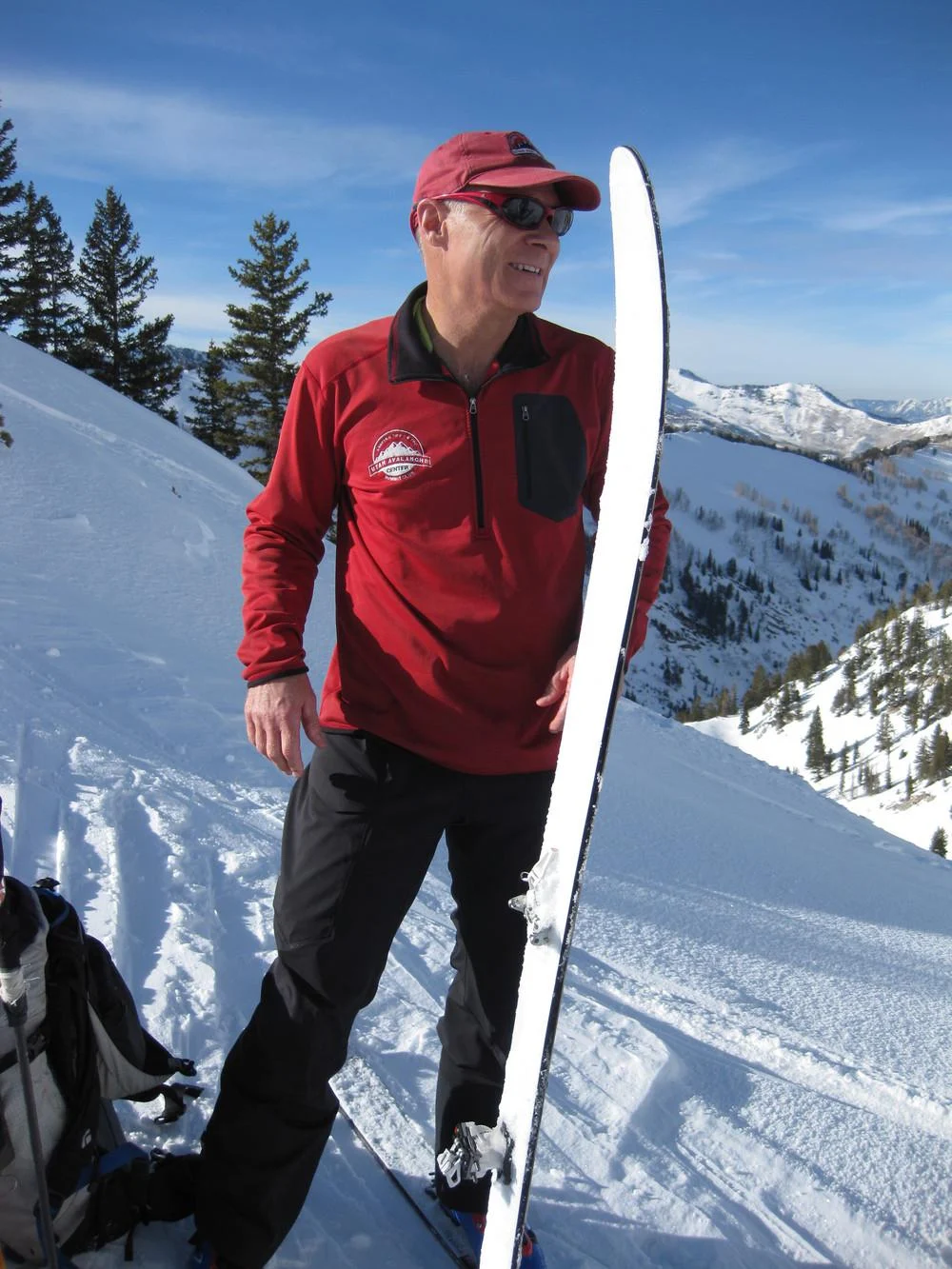
The Utah Avalanche Center has officially announced the retirement of Bruce Tremper, who has served as the director of the organization for 29 years, marking the end of a transformative era for avalanche safety in the United States and abroad. Tremper’s departure from the U.S. Forest Service at the end of August 2015 signals a major leadership transition for one of the world’s most respected avalanche forecasting centers. In conjunction with this announcement, the Forest Service has named Mark Staples, a veteran forecaster from the Gallatin National Forest Avalanche Center, as the incoming director. Tremper’s legacy is defined not only by his longevity in the role but also by his pioneering efforts to modernize public safety communications and his significant contributions to the scientific understanding of snowpack stability.
A Career Defined by Field Experience and Academic Rigor
Bruce Tremper’s journey into the world of snow science began in the rugged mountains of Montana, where he pursued a Master of Science degree at Montana State University. Studying under the tutelage of the renowned Dr. John Montagne, Tremper developed a foundational understanding of the mechanical properties of snow and the meteorological factors that contribute to slope failure. This academic background provided the theoretical framework for what would become a career dedicated to the practical application of avalanche hazard mitigation.
Before taking the helm at the Utah Avalanche Center (UAC) in 1986, Tremper cut his teeth in some of the most challenging winter environments in North America. He performed high-stakes avalanche control work at Bridger Bowl and Big Sky Resort in Montana, where he gained firsthand experience in the use of explosives and terrain management to protect recreational skiers. His expertise eventually took him to the Alaska Avalanche Center, where he worked alongside industry legends such as Doug Fesler, Jill Fredston, and Jim Woodmency. This period in Alaska was instrumental in shaping his perspective on large-scale mountain safety and the necessity of clear, actionable communication for backcountry users.
Revolutionizing Public Forecasting and Communication
When Tremper assumed the directorship of the UAC in the mid-1980s, avalanche forecasting was a burgeoning field that relied heavily on primitive technology. At the time, the primary method for disseminating safety information was through recorded telephone advisories. Users would call a dedicated number to listen to a brief report on snow conditions. Under Tremper’s leadership, the UAC became a global leader in the digital evolution of avalanche safety.
As the internet began to reshape information sharing in the 1990s and 2000s, Tremper spearheaded the development of internet-based products that provided more granular and visual data. One of his most significant contributions to the field was the introduction of standardized icons and the categorization of "avalanche problems." By moving away from purely descriptive text and toward a system that identified specific threats—such as wind slab, persistent weak layers, or wet snow—Tremper made complex scientific data accessible to the average backcountry enthusiast. This visual language is now a staple of avalanche centers worldwide, helping users make better decisions by identifying not just if it is dangerous, but why and where it is dangerous.
The Conceptual Model of Avalanche Danger
Tremper’s influence extended far beyond the daily operations of the Wasatch Mountains. In 2010, he was a pivotal member of the working group that developed the Conceptual Model of Avalanche Danger. This model sought to standardize how avalanche danger is assessed and communicated across different regions and agencies. By helping to create a unified Avalanche Danger Scale, Tremper ensured that a "High" danger rating in Utah meant the same thing as a "High" danger rating in Colorado or Europe.
This standardization was a critical step in professionalizing the industry. It allowed for better data sharing between scientists and practitioners and provided a clearer educational path for students of snow science. His work in this area underscored his belief that while snowpack analysis is a science, public safety is a communication challenge that requires clarity, consistency, and psychological insight.
Literary Contributions and the 2002 Winter Olympics
Beyond his administrative and scientific roles, Bruce Tremper is widely recognized as one of the most effective educators in the history of the sport. He served as the editor for The Avalanche Review for six years, providing a platform for cutting-edge research and field observations. However, he is perhaps best known to the general public as the author of Staying Alive in Avalanche Terrain, which is considered the definitive textbook for backcountry travelers. His ability to distill complex physics into engaging, life-saving prose has made his books essential reading for generations of skiers, snowboarders, and snowmobilers.

In 2002, when the world’s eyes were on Salt Lake City for the Winter Olympic Games, Tremper was tasked with overseeing backcountry avalanche safety. This high-pressure role required coordinating with multiple federal, state, and local agencies to ensure the safety of thousands of visitors and athletes in the high-alpine environment surrounding the Olympic venues. His successful management of the event, coupled with hundreds of media interviews throughout his career, cemented the UAC’s reputation as a world-class institution and established Tremper as a trusted voice in mountain safety.
Transition of Leadership: The Appointment of Mark Staples
The selection of Mark Staples to succeed Tremper marks a strategic move to maintain the high standards of the UAC while bringing in fresh perspectives from another prominent forecasting region. Staples arrives in Utah with an impressive resume that mirrors the professional trajectory of his predecessor. With a Master of Science in Engineering from Montana State University, Staples has a deep background in snow research and the mechanics of slab avalanches.
Staples spent eight seasons as a backcountry forecaster at the Gallatin National Forest Avalanche Center in Bozeman, Montana, an area known for its complex snowpacks and high levels of backcountry use. His experience also includes professional ski patrolling and snow safety work at Big Sky Ski Area, as well as several research projects for the National Avalanche Center. Staples is expected to continue the UAC’s tradition of innovation, particularly as new technologies like remote sensing and advanced snow modeling become more integrated into daily forecasting.
The Broader Impact of the Utah Avalanche Center
The transition comes at a time when the importance of avalanche forecasting has never been higher. Over the last decade, there has been an exponential increase in the number of people venturing into the backcountry. Technological advancements in equipment—such as lighter touring bindings and more efficient splitboards—have made the mountains more accessible, but the inherent risks of the terrain remain unchanged.
According to data from the American Avalanche Association, the U.S. sees an average of 25 to 30 avalanche fatalities per year. The Wasatch Range, with its proximity to a major metropolitan area and its legendary "Greatest Snow on Earth," is one of the most heavily used backcountry areas in the world. The work of the UAC is credited with keeping fatality rates relatively low despite the massive surge in participation. The center’s partnership between the U.S. Forest Service and the non-profit "Friends of the Utah Avalanche Center" serves as a national model for how public and private interests can collaborate to provide essential public safety services.
The Future of the Wasatch Backcountry
While Bruce Tremper is retiring from his official capacity with the Forest Service, his involvement in the avalanche community is expected to continue. He has expressed plans to remain active in teaching, writing, and consulting on safety projects. For the locals in the Wasatch, Tremper remains a fixture of the community, often seen skiing the very slopes he spent decades monitoring.
The legacy Tremper leaves behind is one of professionalization, scientific advancement, and a relentless focus on the end-user. He transformed the Utah Avalanche Center from a local forecasting office into an international powerhouse of education and safety. As Mark Staples takes the reins, he inherits an organization that is at the peak of its influence, supported by a community that deeply values the expertise and dedication of those who watch the snow.
The retirement of Bruce Tremper is not merely the conclusion of a career; it is a milestone in the history of North American mountaineering. His work has undoubtedly saved countless lives, and his innovations will continue to serve as the foundation for avalanche safety for decades to come. The industry now looks forward to a new chapter under Staples’ leadership, as the Utah Avalanche Center continues to adapt to the evolving challenges of a changing climate and an ever-growing population of winter enthusiasts.
