

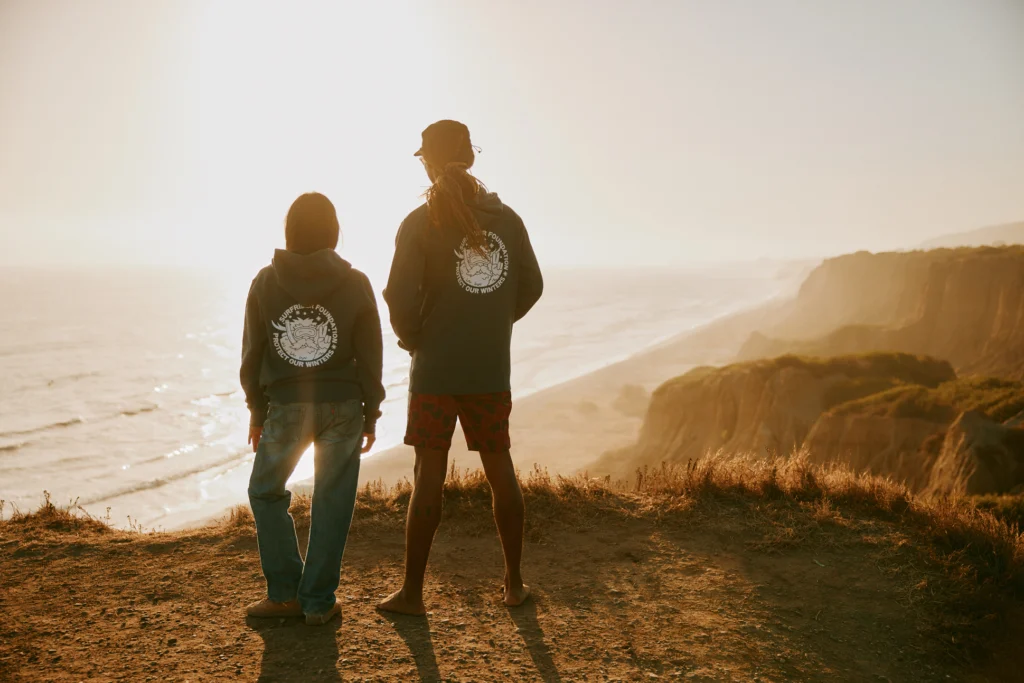
The intersection of winter mountain sports and coastal recreation has long been a shared space for outdoor enthusiasts, yet the advocacy efforts for these two distinct landscapes have often operated in separate spheres. In a strategic move to unify the "Outdoor State," Protect Our Winters (POW) and the Surfrider Foundation have announced a collaborative initiative titled the Ridge to Reef collection. This partnership features the work of California-based artist Dominic McLeod, the founder of Dom Fish Designs, and aims to leverage visual storytelling to mobilize a diverse coalition of skiers, snowboarders, surfers, and mountain bikers against the rising threats of offshore oil and gas extraction and the broader climate crisis.
The collaboration marks a significant moment in environmental activism, recognizing that the ecological health of high-altitude watersheds is inextricably linked to the vitality of the marine environments they eventually feed. By bridging the gap between the summit and the sea, the two organizations are signaling a more integrated approach to conservation—one that views the protection of public lands and the preservation of coastal waters as a singular, continuous mission.
The Convergence of Mountain and Maritime Advocacy
The Ridge to Reef collection is built on the premise that the rhythm of movement found in carving through powder is fundamentally the same as that found in riding a swell. For many athletes, the seasons dictate a migration from the peaks to the coast, yet the political threats facing these areas have historically been addressed by different niche organizations. POW, founded by professional snowboarder Jeremy Jones in 2007, has traditionally focused on mobilizing the winter sports community to affect systemic climate policy. The Surfrider Foundation, established in 1984, has long been the preeminent voice for beach access and the protection of the world’s oceans and waves.
This partnership formalizes a shared history. Jeremy Jones often cites the Surfrider Foundation as his first introduction to environmental activism. Growing up on Cape Cod, Jones was inspired by the Surfrider decals on the vehicles of older surfers, leading him to join the organization at the age of 14. This early exposure to the "protector, not plunderer" philosophy laid the groundwork for the eventual creation of POW. The Ridge to Reef project represents a full-circle moment for the two organizations, combining their respective memberships to form a more formidable political block.
Dominic McLeod and the Philosophy of Cross-Pollination
At the center of this campaign is Dominic McLeod, an artist whose upbringing in Ojai, California, provided a unique vantage point on the connectivity of ecosystems. Ojai’s geography—nestled within a valley surrounded by the Topatopa Mountains yet only a short distance from the Pacific coastline—informed McLeod’s artistic perspective. His work for the Ridge to Reef collection seeks to dismantle the "silos" that often define outdoor sports.

McLeod’s artistic process is rooted in sociological observation. He captures the "characters" of the surf lineup and the "grit" of the backcountry trail, translating the humor and community of outdoor culture into digital sketches that eventually become advocacy tools. His design philosophy, which he terms "cross-pollination," encourages athletes to step outside their primary disciplines. He argues that a climber who tries surfing or a snowboarder who takes up mountain biking develops a more holistic appreciation for the environment, which in turn fosters a more robust commitment to advocacy.
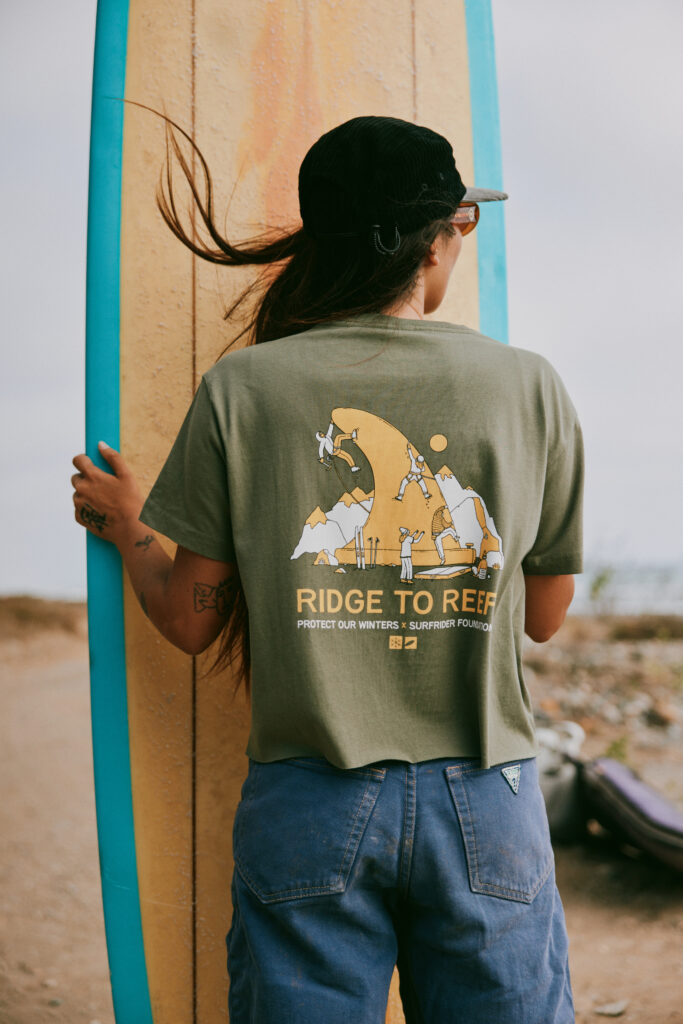
One of the standout pieces in the collection illustrates this concept by merging a surfboard fin with a mountain climbing scene. This visual metaphor serves to challenge the rigid boundaries individuals build around their hobbies. According to McLeod, this fluidity should also apply to climate activism. He emphasizes the concept of the "imperfect advocate," arguing that one does not need to lead a carbon-neutral life to be a legitimate voice for the planet. "You don’t have to be a mathematician or a climate scientist to contribute," McLeod stated during the project’s launch. "You just have to be willing to use the skills you do have."
The Threat of Offshore Extraction and Policy Implications
The timing of the Ridge to Reef collection is driven by immediate legislative and environmental concerns. Specifically, the collaboration aims to raise awareness regarding new offshore oil and gas drilling proposals that threaten both wildlife and the coastal economy. The Five-Year Outer Continental Shelf (OCS) Oil and Gas Leasing Program has been a focal point of contention, as environmental groups argue that any expansion of fossil fuel infrastructure is incompatible with the goals of the Paris Agreement and the need to limit global warming to 1.5 degrees Celsius.
Offshore drilling poses dual threats: the localized risk of catastrophic oil spills and the global impact of continued carbon emissions. Historically, spills such as the 1969 Santa Barbara blowout and the 2015 Refugio spill have devastated California’s coastal ecosystems, killing thousands of seabirds and marine mammals while crippling the local tourism and fishing industries. By funding advocacy through the Ridge to Reef collection, POW and Surfrider intend to lobby for the permanent protection of coastal waters and the transition toward renewable energy sources.
Furthermore, the "ridge" aspect of the campaign addresses the impact of climate change on high-altitude environments. Diminishing snowpacks and receding glaciers not only threaten the winter sports industry but also jeopardize the primary water source for millions of people. The "Outdoor State"—a term coined by POW to describe the 50 million Americans who identify as outdoor enthusiasts—represents a massive economic engine. According to data from the Bureau of Economic Analysis (BEA), the outdoor recreation economy accounts for approximately $1.1 trillion in annual economic output, or roughly 2.2% of the U.S. GDP. This economic weight provides these advocacy groups with significant leverage in Washington, D.C.
Chronology of a Collaboration: From Concept to Collection
The development of the Ridge to Reef collection followed a rigorous creative and strategic timeline:
- Initial Strategy (Late 2023): Leadership from POW and Surfrider identified the need for a unified campaign that could speak to "multi-sport" athletes who inhabit both the mountains and the coast.
- Artist Selection (Early 2024): Dominic McLeod was selected due to his authentic connection to both landscapes and his established "Dom Fish Designs" brand, which resonates with a younger, action-sports-oriented demographic.
- Discovery and Design (Spring 2024): McLeod engaged in a series of "discovery calls" and mood-boarding sessions with both organizations to ensure the designs reflected the core missions of each. This period involved digitizing sketches on iPad platforms to create versatile assets for apparel and digital media.
- The Philosophy Shift: During the design phase, McLeod’s philosophy of "cross-pollination" became the guiding light for the campaign, emphasizing that advocacy is more effective when it is inclusive rather than exclusionary.
- Launch (July 2024): The collection was officially released through POW’s digital storefront, with 100% of the proceeds designated for joint advocacy efforts.
Economic and Social Impact of Culture-Led Advocacy
The use of art and apparel as a vehicle for advocacy is a deliberate strategy to move beyond traditional "doom and gloom" environmental messaging. By focusing on "stoke"—the excitement and passion inherent in outdoor sports—POW and Surfrider aim to build a culture of conservation that feels like an extension of the lifestyle itself.
The Ridge to Reef collection serves as a "uniform" for the Outdoor State. When an individual wears a garment featuring McLeod’s designs, they are not merely making a fashion statement; they are signaling their membership in a political collective. This cultural representation is vital for bridging the gap between individual action and systemic policy change.
Financial transparency is a cornerstone of the project. The commitment that 100% of sales will fund advocacy ensures that the consumer’s contribution directly supports lobbyists, organizers, and scientists working to defend public lands and waters. These funds are particularly critical as the organizations face escalating threats from deregulation and the expansion of industrial activities in sensitive habitats.
Future Implications: A Unified Outdoor Front
The Ridge to Reef collaboration is likely a precursor to more integrated campaigns within the outdoor industry. As the effects of climate change become more pronounced, the traditional boundaries between different outdoor disciplines are expected to continue blurring. The "Outdoor State" is increasingly recognizing that a threat to one ecosystem is a threat to all.
The success of this initiative will be measured not only by the revenue generated for advocacy but also by its ability to diversify the voices in the climate movement. By emphasizing that one does not need to be a "perfect" advocate, McLeod and the partnering organizations are lowering the barrier to entry for millions of people who may have previously felt alienated by the complexities of climate science or the perceived elitism of environmentalism.
In the broader context of American policy, this unified front represents a shift in how public lands and waters are managed. The advocacy generated by the Ridge to Reef collection supports a vision of the future where these landscapes are valued more for their ecological and recreational benefits than for their extractive potential. As the fight to protect the wild places from "sea to summit" continues, the fusion of art, sport, and activism provided by Dominic McLeod, POW, and the Surfrider Foundation offers a roadmap for a more inclusive and powerful environmental movement.
