

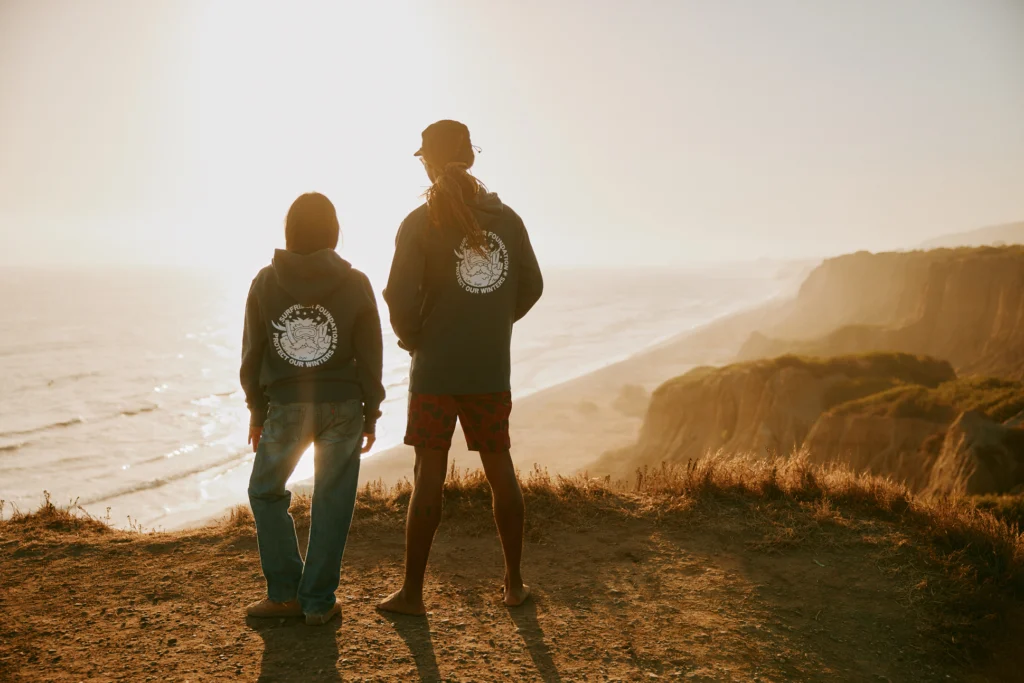
The intersection of mountain sports and ocean conservation has reached a new milestone with the launch of the Ridge to Reef collection, a strategic partnership between Protect Our Winters (POW) and the Surfrider Foundation. This collaboration, featuring the artistic work of Dominic McLeod of Dom Fish Designs, marks a concerted effort to unify disparate segments of the outdoor recreation community under a single banner of climate advocacy. By leveraging visual storytelling and the shared cultural identity of surfers, skiers, and cyclists, the initiative aims to fund legal and grassroots defenses against the expansion of offshore oil and gas drilling, highlighting a growing movement where lifestyle and activism are increasingly inseparable.
The Convergence of Mountain and Ocean Advocacy
For decades, environmental advocacy was often segmented by ecosystem. Organizations focused on alpine preservation rarely intersected with those dedicated to coastal protection. However, the Ridge to Reef initiative operates on the premise that the hydrological cycle and the climate crisis do not recognize these boundaries. The collaboration represents a formalization of a long-standing cultural overlap between "shredders" of the snow and "chargers" of the sea.
The initiative comes at a critical juncture for U.S. environmental policy. As the federal government navigates the complexities of energy independence and carbon reduction goals, the Department of the Interior’s Five-Year Program for offshore oil and gas leasing remains a focal point of contention. Protect Our Winters and the Surfrider Foundation have identified these leasing proposals as primary threats not only to biodiversity but to the $1.1 trillion outdoor recreation economy. By pooling resources and audiences, the two organizations seek to amplify their influence in Washington D.C. and beyond.
Artistic Vision and the Philosophy of Cross-Pollination
At the heart of the collection is Dominic McLeod, an artist whose upbringing in Ojai, California, provided a unique vantage point on the interconnectedness of California’s landscapes. McLeod’s work for the Ridge to Reef collection is characterized by what he calls "cross-pollination"—the blending of different outdoor disciplines into a singular visual narrative.
McLeod’s transition from a specialized athlete to a multi-disciplinary enthusiast was born of necessity. After a severe ankle injury sidelined him from surfing for nearly a year, he turned to bike packing and mountain exploration. This period of forced diversification informed his artistic approach, leading him to create designs that merge surfboard fins with mountain peaks and climbing gear with coastal motifs.
"Growing up in Ojai really shaped how I see things," McLeod stated during the project’s development. "You’re close enough to the mountains to feel that terrain, but the ocean is right there, too. It makes you realize these environments aren’t separate; they’re part of the same experience."
His creative process is methodical, beginning with discovery calls and mood boards before moving to digital sketches on an iPad. The goal is to capture the "grit and humor" of the outdoor community, moving away from sterile environmental messaging toward something that reflects the actual culture of the trailhead and the surf lineup.
Historical Context: From Cape Cod to Global Advocacy
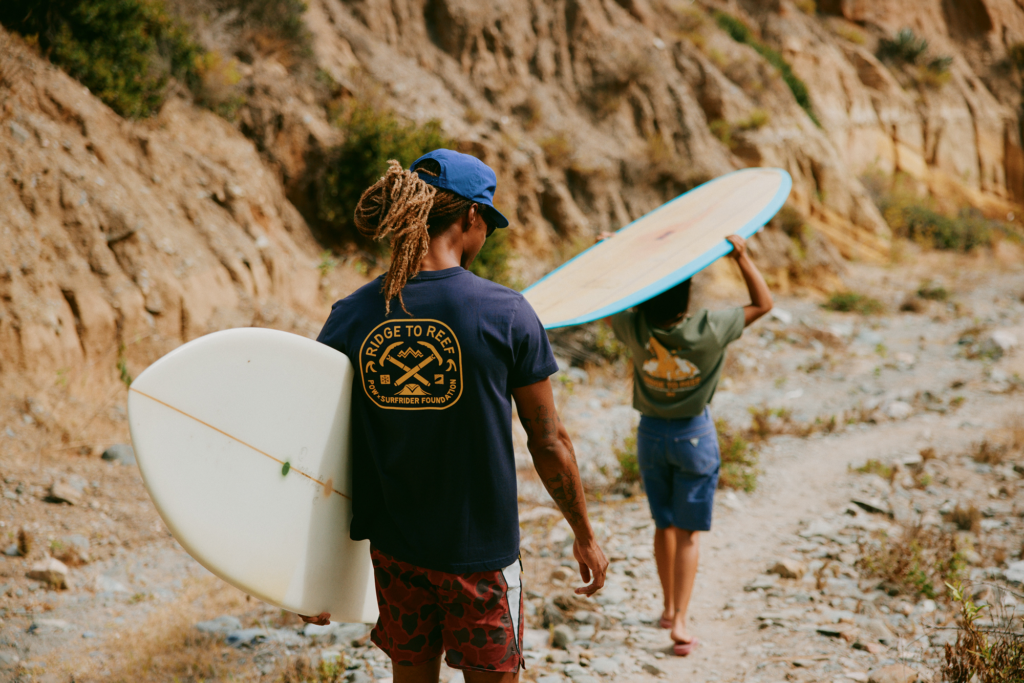
The partnership between POW and Surfrider is rooted in the personal history of POW’s founder, professional snowboarder Jeremy Jones. Long before he founded the climate-action non-profit, Jones was a 14-year-old surfer on the cold-water breaks of Cape Cod. It was the presence of Surfrider Foundation stickers on the vehicles of local surfers that first introduced him to the concept of environmental stewardship.
The Surfrider Foundation, established in 1984 by a group of surfers in Malibu, California, has grown into a global network of activists dedicated to the protection of the world’s oceans and beaches. Protect Our Winters, founded by Jones in 2007, followed a similar trajectory, mobilizing the winter sports community to protect the "Outdoor State"—a demographic of outdoor enthusiasts that, if it were a U.S. state, would be the fourth largest in the country by population.
The Ridge to Reef collection serves as a full-circle moment for these organizations. It underscores a shift in advocacy from "plundering" natural resources for recreation to becoming "protectors" of the landscapes that facilitate those experiences.
Supporting Data: The Economic and Environmental Stakes
The urgency of the Ridge to Reef campaign is supported by significant economic and environmental data. According to the Bureau of Economic Analysis (BEA), the outdoor recreation economy accounted for 2.2% of the U.S. GDP in 2022, supporting nearly 5 million jobs. This sector is heavily dependent on stable climates and unpolluted ecosystems.
On the environmental front, the threats are twofold:
- Offshore Drilling Impacts: Beyond the risk of catastrophic spills, such as the 2010 Deepwater Horizon disaster, offshore drilling contributes to the long-term acidification of oceans. As the ocean absorbs approximately 30% of the carbon dioxide produced by humans, its pH levels drop, threatening coral reefs and the entire marine food chain.
- Alpine Degradation: Simultaneously, rising global temperatures are shortening the winter season. Data from the National Oceanic and Atmospheric Administration (NOAA) indicates that snow cover in the Northern Hemisphere has decreased significantly over the last 50 years, directly impacting the viability of the multi-billion-dollar ski and snowboard industry.
The Ridge to Reef collection directs 100% of its proceeds toward advocacy efforts aimed at blocking new oil and gas leases. This funding is critical for legal challenges, policy lobbying, and public awareness campaigns that aim to keep fossil fuels in the ground and protect public lands and waters.
Analysis of Implications: Culture as a Catalyst for Policy
A key takeaway from the collaboration is the emphasis on cultural representation as a tool for policy change. Dominic McLeod’s assertion that "you don’t have to be a mathematician or a climate scientist to contribute" reflects a broader trend in modern activism. By lowering the barrier to entry, POW and Surfrider are engaging a younger, more diverse demographic that may feel alienated by technical or overly political discourse.
This approach acknowledges the "imperfect advocate." McLeod’s philosophy suggests that driving a gas-powered vehicle to a trailhead does not disqualify an individual from speaking up for the planet. This pragmatic stance is designed to reduce the "hypocrisy trap" that often prevents people from engaging in climate activism. By focusing on the "Outdoor State" as a collective force, the movement shifts the focus from individual lifestyle purity to systemic policy reform.
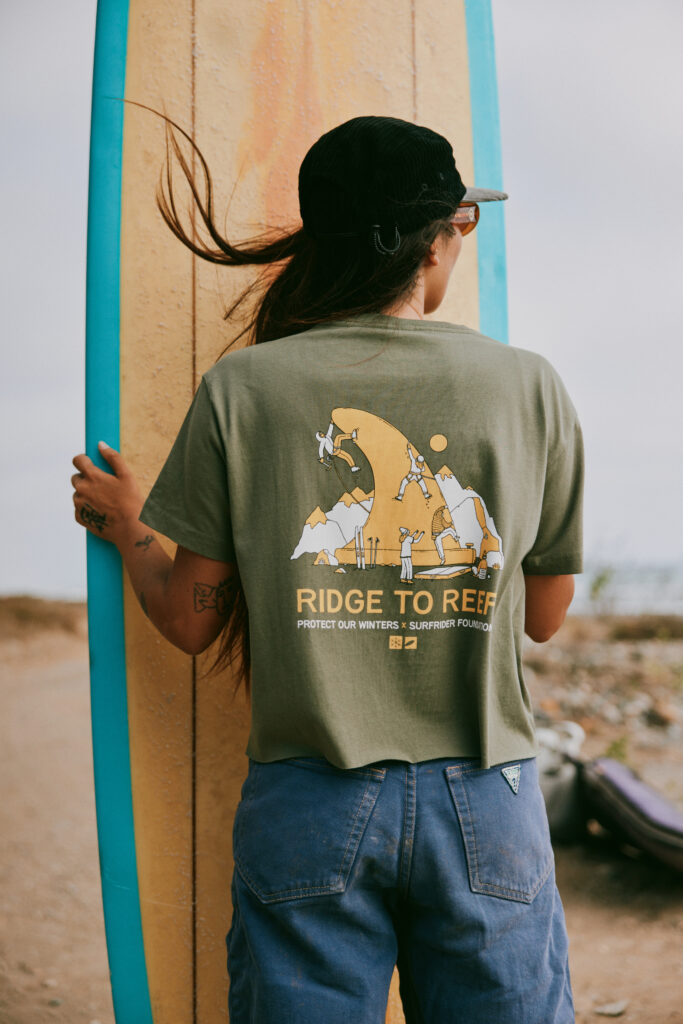
The visual nature of the Ridge to Reef collection also plays a strategic role. In an era of digital saturation, compelling visual storytelling is often more effective at conveying the stakes of the climate crisis than raw data alone. McLeod’s designs serve as a "visual bridge," helping enthusiasts see themselves as part of a larger, interconnected ecosystem.
Official Responses and Strategic Goals
Leadership from both organizations has expressed a commitment to long-term collaboration. The primary goal of the Ridge to Reef collection is to ensure that the voice of the outdoor community is heard in the halls of power.
"We need more than just policy; we need culture and representation," noted a spokesperson for Protect Our Winters. "Dominic is helping bridge that gap by visualizing a future where our community is not just a group of individuals, but a collective force dedicated to the wild places that define us."
The Surfrider Foundation has echoed this sentiment, highlighting the importance of the "summit to sea" approach. The foundation’s focus on the 2024-2029 National Outer Continental Shelf Oil and Gas Leasing Program is bolstered by the influx of support from the winter sports community, creating a more formidable front against industrial encroachment on public waters.
Conclusion: The Path Forward for the Outdoor State
As the Ridge to Reef collection reaches consumers, the broader impact will be measured in more than just sales figures. It represents a maturation of the outdoor industry’s role in environmental politics. No longer content to simply enjoy the wilderness, the "Outdoor State" is increasingly asserting its economic and social influence to protect it.
The collaboration between POW, the Surfrider Foundation, and Dominic McLeod provides a blueprint for future advocacy: it must be inclusive, visually engaging, and grounded in the shared experiences of the community. As threats to public lands and waters escalate, the "cross-pollination" of different sporting disciplines into a unified activist front may prove to be the most effective defense against the further extraction and degradation of the natural world. From the highest peaks to the deepest reefs, the message of the movement is clear: the landscapes we play in are the same landscapes we must fight for.
