

The 2025-2026 snow season across the Western United States has emerged as one of the most volatile and concerning periods for hydrologists and climatologists in recent decades. Characterized by a significant disconnect between precipitation levels and temperature-driven accumulation, the season has been described by experts as a "snow drought" rather than a traditional precipitation drought. While total moisture levels in several regions remained near historical averages, record-breaking temperatures throughout the winter months prevented the formation of a stable snowpack, leading to catastrophic implications for winter recreation, municipal water supplies, and agricultural planning.
As the region transitions into the summer months, the collapse of the seasonal snow reservoir has triggered a series of early-season water management crises. From the Pacific Northwest to the Intermountain West, the premature melt-out of mountain snow—in some cases occurring months ahead of schedule—has forced a re-evaluation of the Western United States’ resilience to a warming climate.
The 2025-2026 Winter Chronology: A Season of Moving Goalposts
The winter season began with a degree of cautious optimism in October and November 2025. Early-season storms provided a baseline layer of snow in higher elevations, suggesting a standard, if not robust, start to the water year. However, this momentum was abruptly halted by an unprecedented atmospheric warming trend that took hold in December.
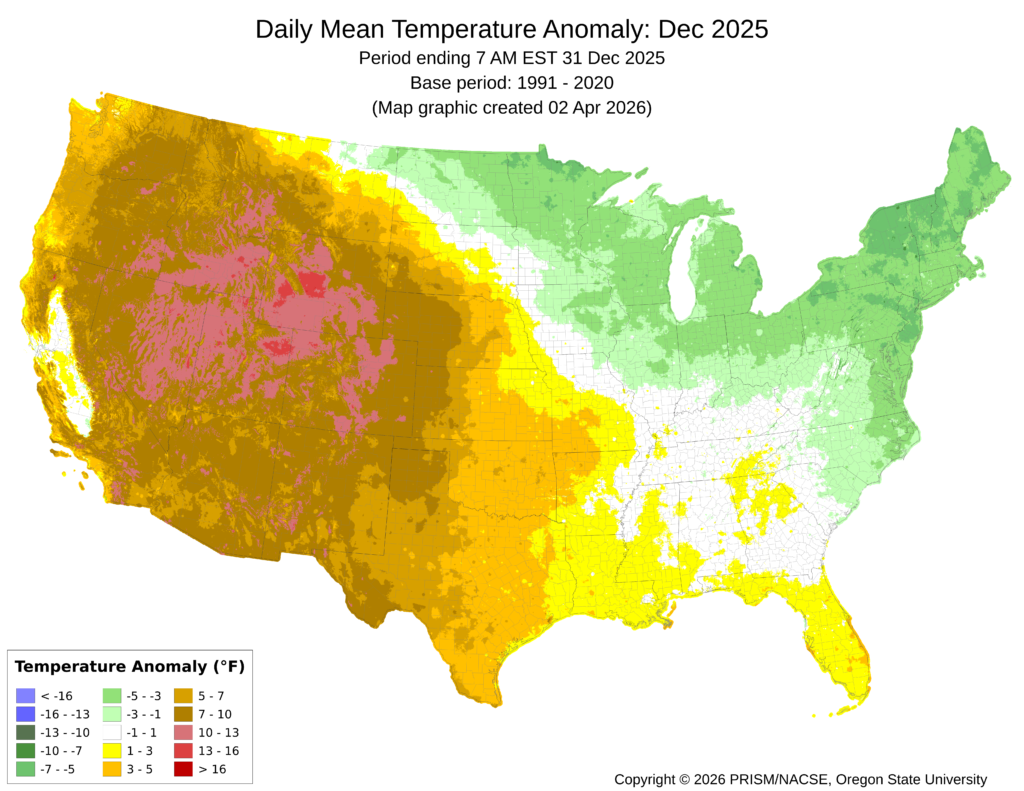
During December 2025, temperature anomalies across the Western United States reached levels between 5 and 15 degrees Fahrenheit above the long-term average. This "thermal spike" transformed what should have been significant snow-building storms into rain-on-snow events or high-elevation rain. For the ski industry and backcountry enthusiasts, this period marked the beginning of a "nightmare" scenario. Resort operators were forced into a cycle of opening, pausing operations, and reopening as they struggled to maintain base layers against unseasonable warmth.
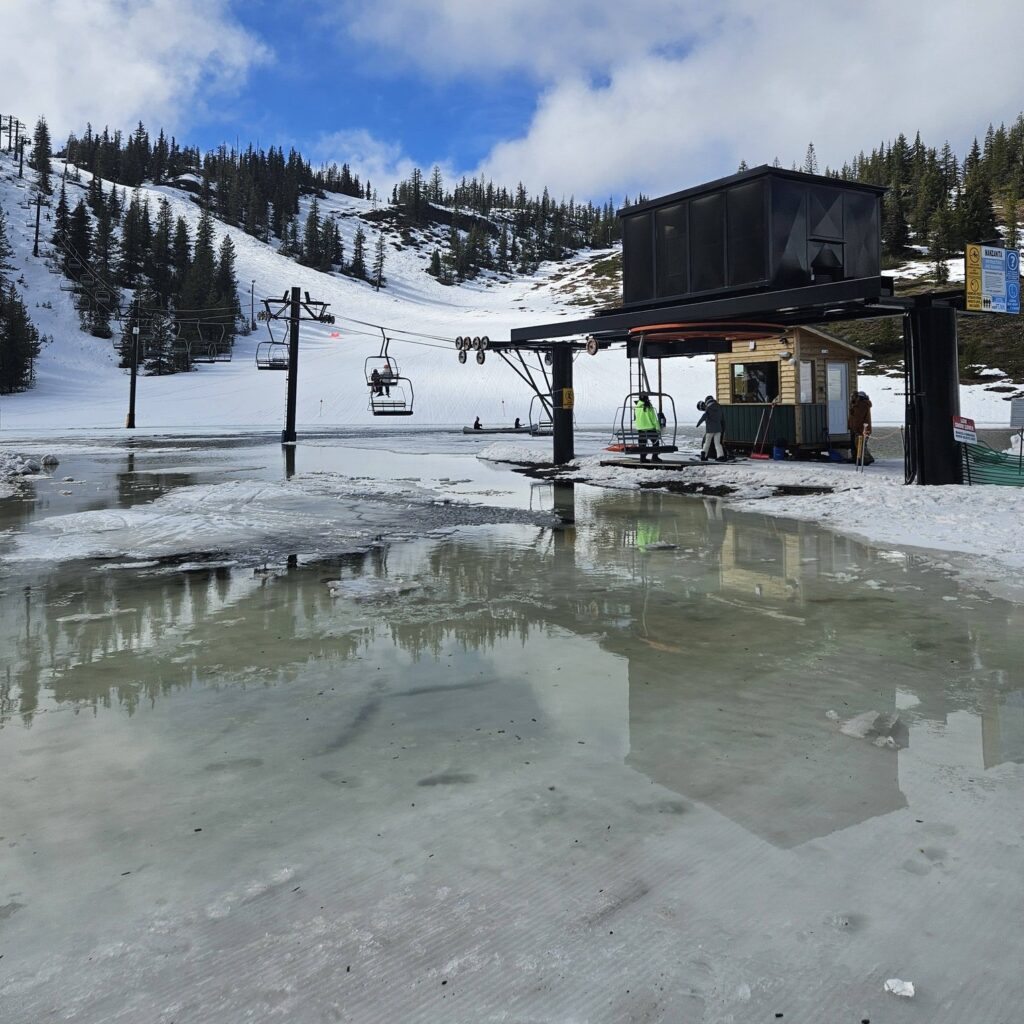
By the turn of the year, the "goalposts" for a recovery of the snowpack were repeatedly shifted. Initial hopes for a "January miracle" were dashed as the high-pressure ridges remained stubbornly in place. The timeline for a meaningful season start moved from the New Year’s holiday to Martin Luther King Jr. Weekend, and subsequently to President’s Day. Ultimately, many regions did not see significant accumulation until late spring, by which time the window for building a deep, insulating snowpack had closed. By mid-March, unconventional sights such as "unscheduled pond skims" at areas like Oregon’s Hoodoo Ski Area became symbols of a season that failed to materialize.
Regional Data Analysis: Precipitation vs. Accumulation
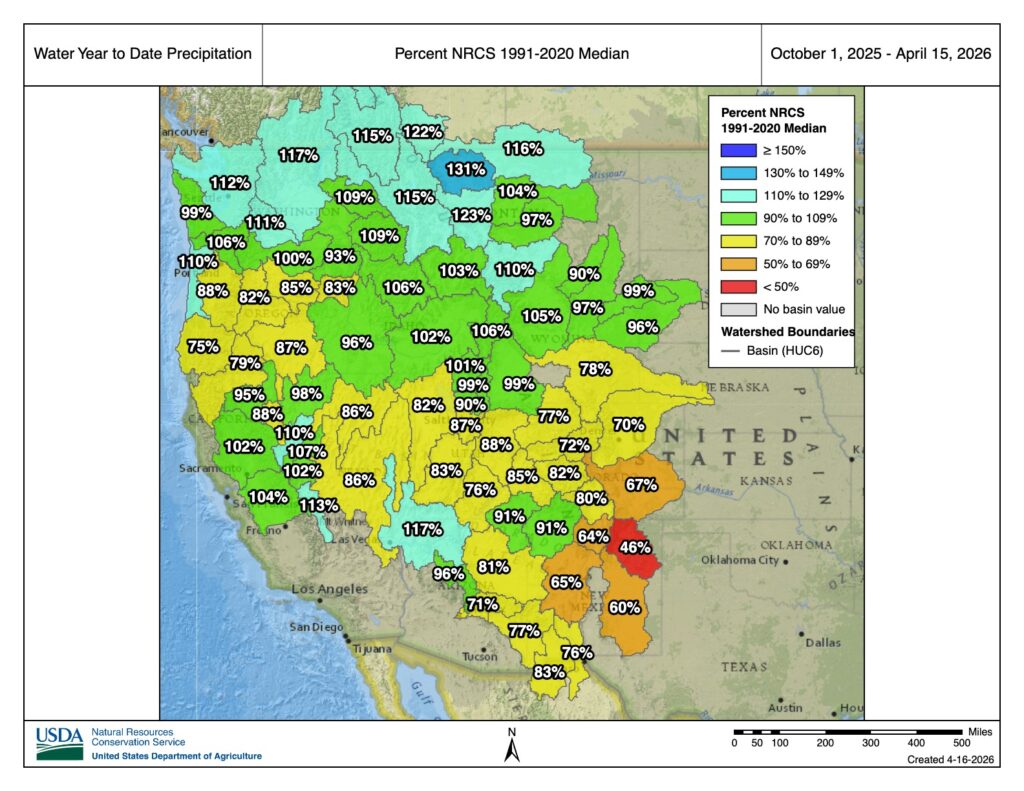
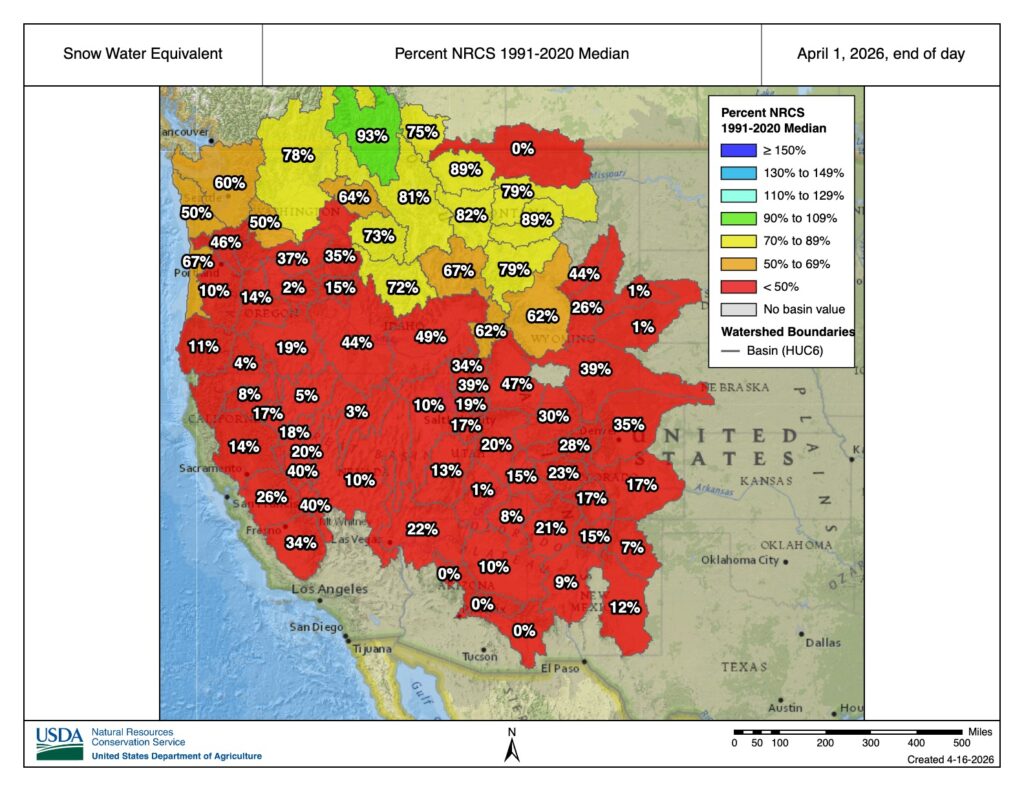
Data provided by the Natural Resources Conservation Service (NRCS) and the PRISM Climate Group highlights the stark disparity between the "wet" and the "cold" during the 2025-2026 water year.
In terms of precipitation, the season was statistically average for much of the West. Northwest Wyoming, Montana, Idaho, and Washington recorded moisture levels slightly above the historical mean. Conversely, Oregon, Utah, and Colorado experienced slightly drier conditions. However, the "smoking gun" for the season’s failure was the temperature. Because the air remained too warm to support freezing at traditional elevations, the moisture fell as rain or "wet" snow that lacked the density and longevity required for a sustained pack.
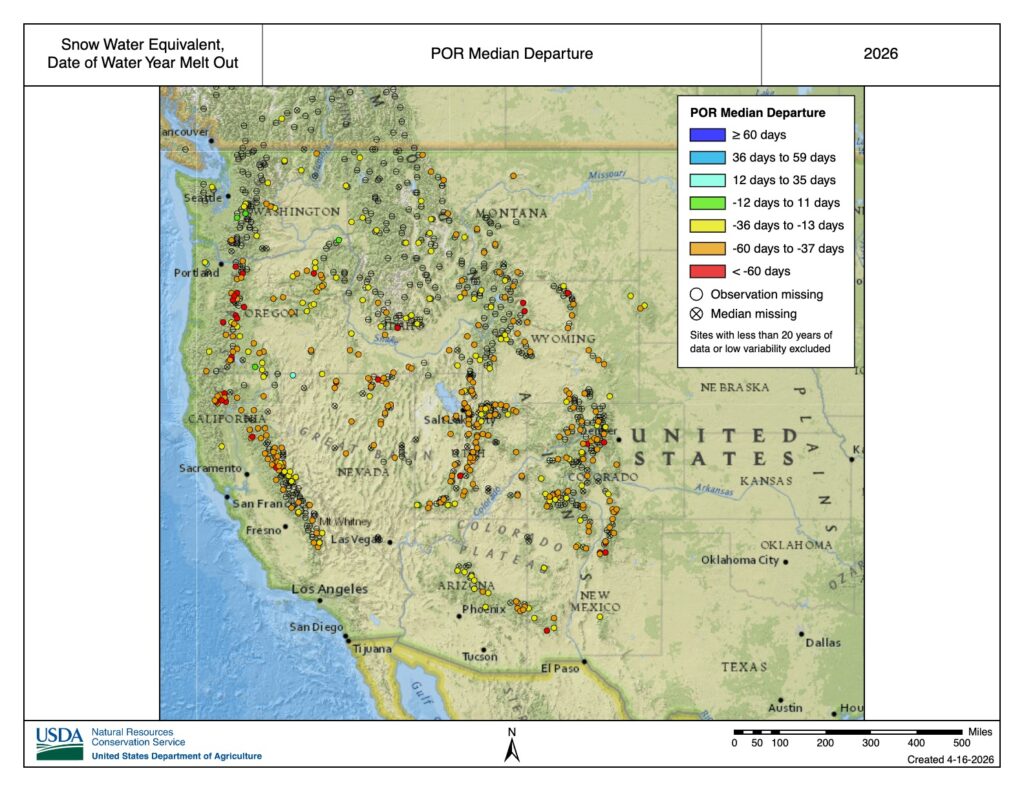
The most critical metric for Western water management is the April 1 Snow Water Equivalent (SWE). Historically, April 1 serves as the benchmark for peak snow accumulation, representing the "water in the bank" available for the summer months. In 2026, April 1 SWE values across the West were recorded at a tiny fraction of their long-term averages. Many observation stations reported the lowest peak values in the last 45 years. Furthermore, the "snow-off" dates—the days when a station records zero snow remaining—occurred not just days or weeks, but in some instances, two months earlier than average.
The Hydrologic Cycle and the Global Water Context
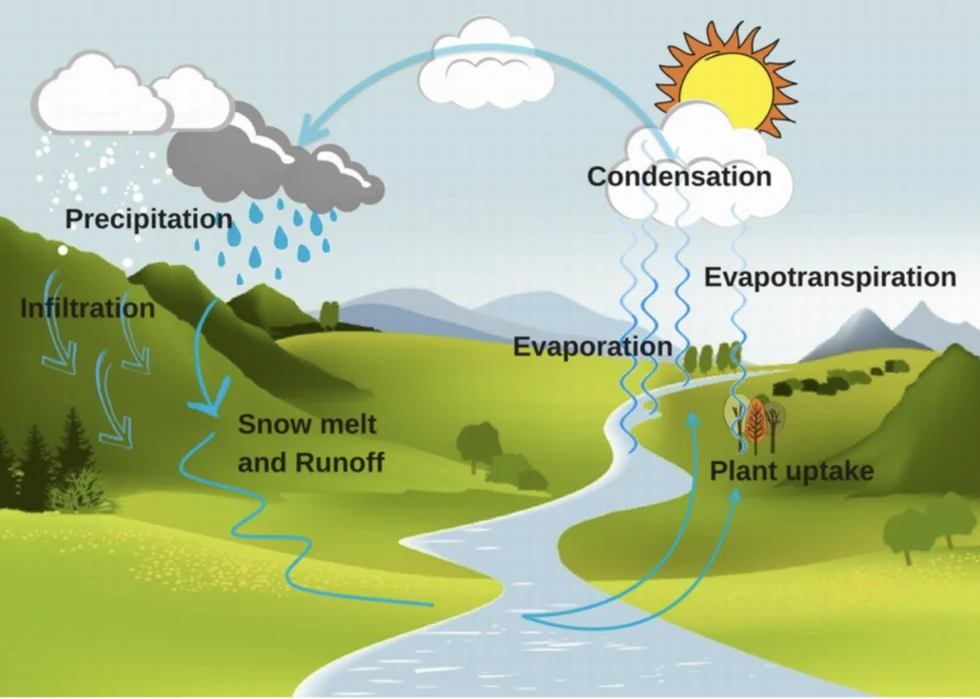
To understand the severity of a low snowpack, it is necessary to contextualize the Earth’s water resources. While the planet is often called the "Blue Marble," the amount of accessible freshwater is remarkably small. If all of Earth’s water were consolidated into a single sphere, its diameter would be only 40% of the moon’s diameter. When salt water, polar ice, and deep groundwater are excluded, less than 0.01% of the Earth’s water is readily available to support human life and ecosystems.
On average, land surfaces receive approximately one meter of precipitation annually. While this equates to roughly 13,000 gallons per person per day globally, the primary challenge of water management is the mismatch between supply and demand. In the Western United States, the majority of precipitation occurs during the winter months, while the highest demand for water—for agriculture, fire suppression, and municipal use—occurs during the arid summer.
The region has historically relied on a dual-infrastructure system to bridge this gap:
- Human-made Infrastructure: A network of canals, aqueducts, and surface reservoirs (such as Lake Mead and Lake Powell).
- The Natural Reservoir: The seasonal snowpack.
The "Superpower" of Snow as a Natural Reservoir
The seasonal snowpack acts as a massive, distributed insurance policy. By storing water in solid form during the winter and releasing it slowly through late spring and early summer, the snowpack provides a "lag" between precipitation and runoff. This gradual release is essential for several reasons:
- Flood Mitigation: It prevents the immediate runoff of winter storms, reducing the risk of catastrophic downstream flooding.
- Ecosystem Health: It ensures a steady supply of cool water for mountain streams, which is vital for the survival of aquatic species like trout and salmon.
- Infrastructure Efficiency: It allows human-made reservoirs to be managed more effectively, as the snowpack handles the "storage" duty during the early months of the year.
By current estimates, the volume of water stored in the contiguous United States’ snowpack at its peak is approximately five times the storage capacity of Lake Mead, the nation’s largest reservoir. When this natural reservoir fails, as it did in the 2025-2026 season, the pressure on human-made infrastructure becomes unsustainable.
Broader Impacts: The Colorado River Basin and Beyond
The implications of the 2025-2026 snow drought are perhaps most visible in the Colorado River Basin. Years of consecutive dry conditions and warming temperatures have already led to declining elevations in Lake Mead. The 2026 data has intensified "increasingly urgent" conversations among the seven basin states regarding water allocation.
Agricultural sectors in the West, which rely heavily on predictable runoff for irrigation, are facing a summer of difficult choices. Reduced streamflow and early melt-out mean that water rights holders may see their allocations cut earlier in the season than ever before. Furthermore, the lack of a cooling snowpack often leads to drier soils and more flammable vegetation, increasing the risk of an early and severe wildfire season.
In the recreation sector, the economic impact has been immediate. Ski resorts, which serve as economic engines for rural mountain communities, saw shortened seasons and decreased skier visits. This has led to broader discussions about the long-term viability of low-elevation ski areas in a changing climate.
Analysis of Long-Term Trends vs. Annual Variability
Climate scientists, including Dr. David Hill of Oregon State University, emphasize that while the 2025-2026 season was extreme, it exists within a larger context of dwindling snowpacks. The long-term trend across the West shows that snow is not only decreasing in volume but is also persisting for shorter durations.
However, the public’s understanding of these trends is often obscured by high annual variability—the "feast or famine" cycle of the West. A record-breaking "lean" year can be followed by a record-breaking "boom" year. This volatility makes long-term planning difficult for water managers who must balance the immediate needs of a growing population with the reality of a shrinking natural water storage system.
Conclusion: Navigating a Water-Scarce Future
The 2025-2026 snow season serves as a stark reminder that the Western United States’ water security is inextricably linked to the "cold" as much as it is to the "wet." The disappearance of the snowpack months ahead of schedule is not merely a disappointment for winter sports enthusiasts; it is a systemic threat to the region’s hydrologic stability.
As the West moves forward, the focus must shift toward enhanced water conservation, investment in aquifer recharge, and a more nuanced understanding of how to manage human-made reservoirs in the absence of a reliable natural snowpack. While the "glass half full" perspective suggests that next year could bring a return to record-breaking snow, the 2025-2026 season has proven that the region can no longer afford to treat such anomalies as isolated events, but rather as a preview of a more volatile climatic future.
