

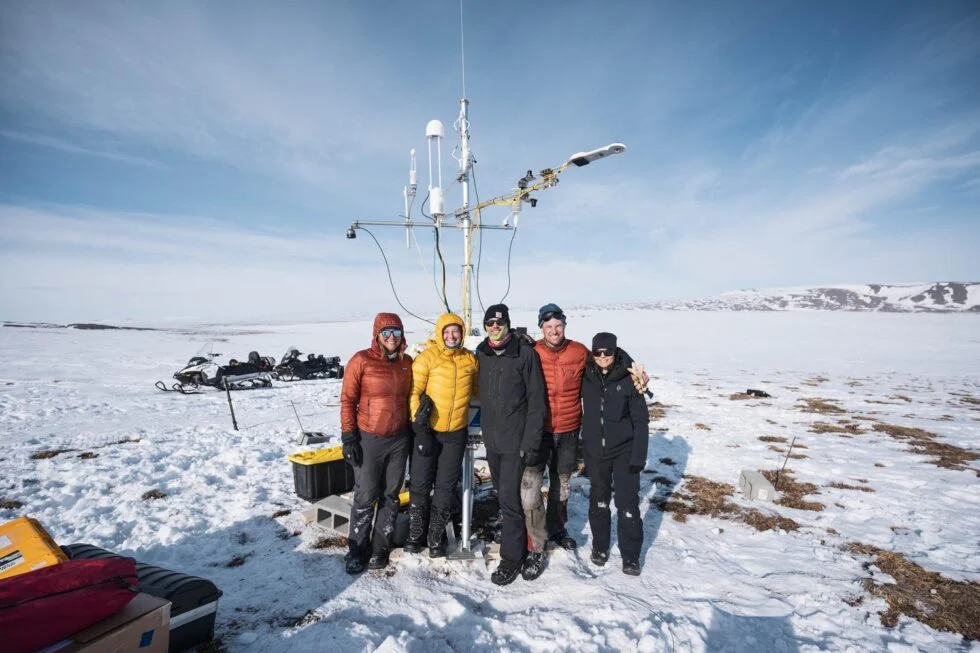
A specialized team of researchers from the Protect Our Winters (POW) Science Alliance and the Woodwell Climate Research Center has successfully completed a landmark mission to Alaska’s North Slope to install a high-precision flux tower. This equipment, positioned at a permafrost thaw slump near the Toolik Field Station, represents the first installation of its kind designed to specifically quantify methane and carbon dioxide emissions from a localized area of rapidly collapsing permafrost. Led by ecologist Dr. Jenny Watts and snow scientist Dr. Kelly Gleason, the expedition aims to fill a critical gap in global climate models, which frequently overlook the disproportionate impact of abrupt permafrost degradation on the Earth’s atmosphere.
The deployment occurs at a time when the Arctic is warming at nearly four times the global average. While steady, top-down permafrost thaw has been studied for decades, "thaw slumps"—dramatic features where the ground loses structural integrity and slides downhill—are recognized as significant "hotspots" for greenhouse gas release. By measuring the invisible exchange of gases between the exposed ancient soil and the atmosphere, the team seeks to provide the empirical data necessary to understand how these features accelerate global warming.
The Arctic Expedition: Logistics and Chronology
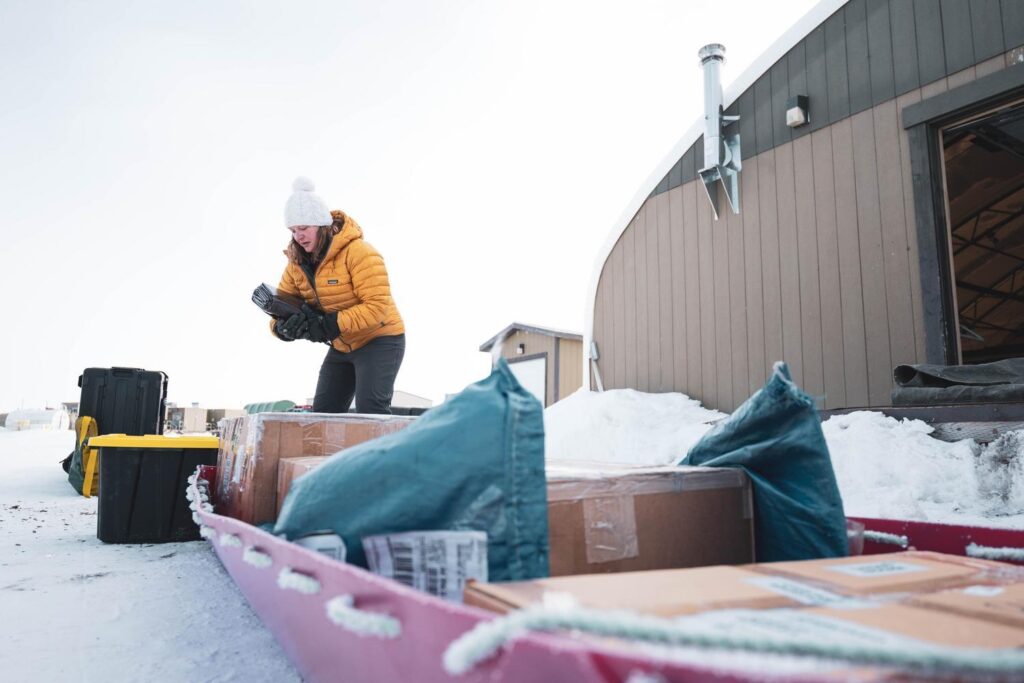
The expedition was centered at the Toolik Field Station, a premier long-term ecological research site located in the northern foothills of the Brooks Range. The operation required the transport of several tons of sensitive equipment across the tundra during a period of extreme cold, characterized by hoarfrost and temperatures well below freezing.
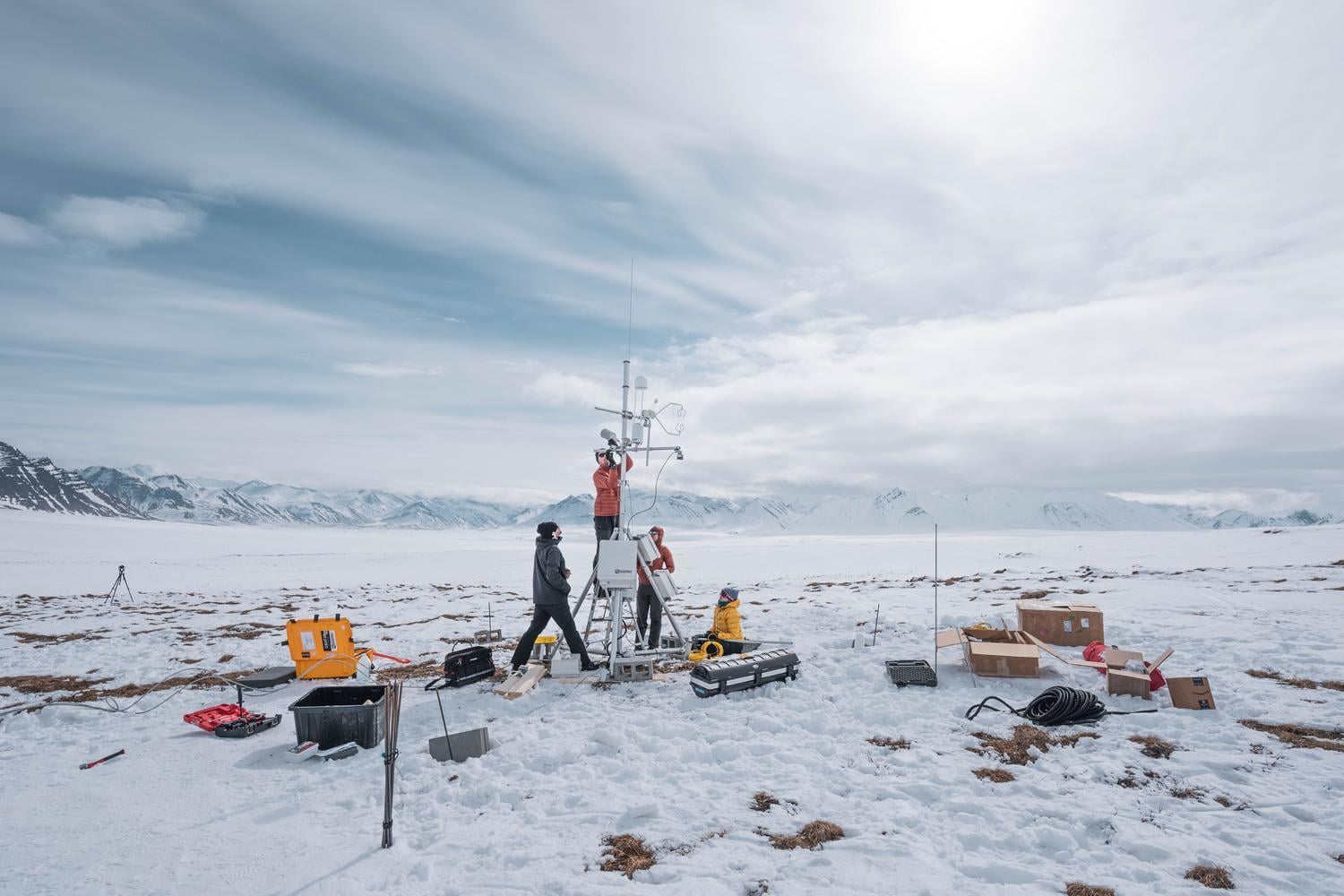
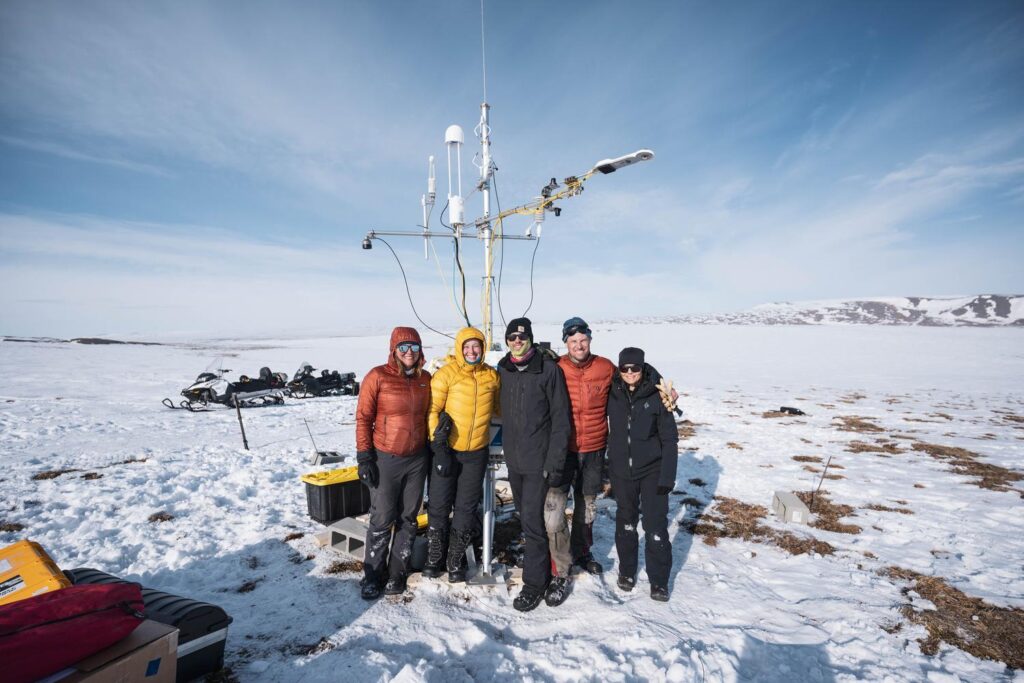
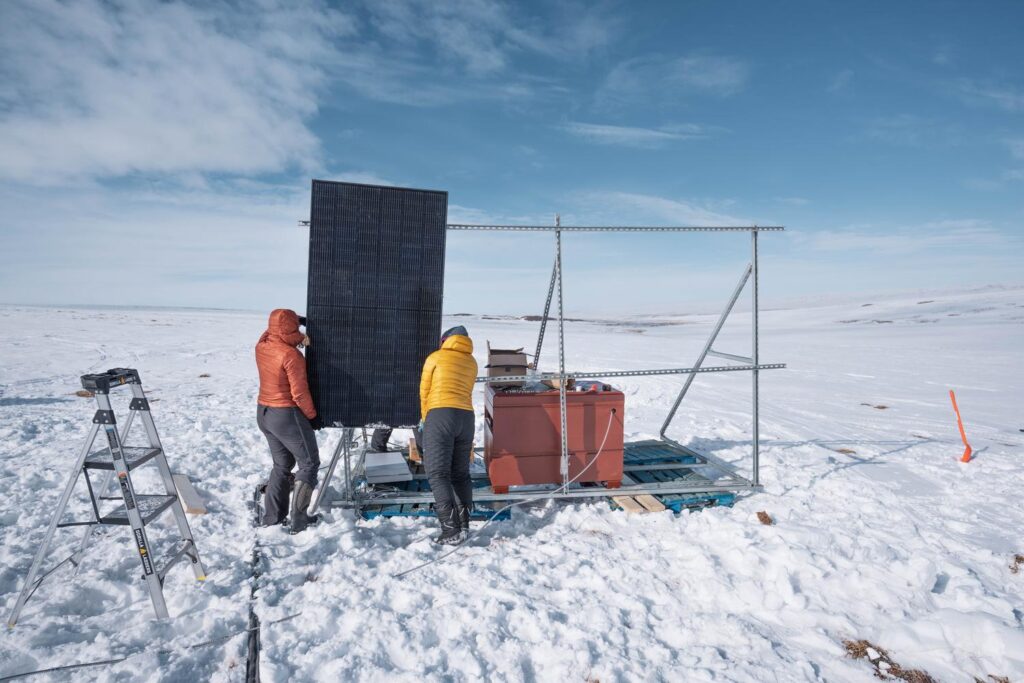
The technical assembly of the flux tower involved a multi-day effort by a five-member team including Dr. Watts, Dr. Gleason, and researchers Kyle, Christina, and Kai. The hardware consisted of a 15-foot-tall aluminum frame equipped with specialized sensors, guy-lines, and cement anchors to withstand the harsh Arctic winds. Powering the station in this remote environment necessitated the hauling of eight deep-cell batteries, each weighing over 100 pounds, alongside four large solar panels and a massive electrical enclosure.
The chronology of the mission began with a scouting phase to identify a stable yet representative thaw slump. Once a site was selected, the team utilized snowmachines and heavy-duty sleds to navigate the sparkling expanse of the North Slope. The final installation of the tower ensures that as the spring melt progresses into the summer thaw, the sensors will be active to capture the initial "pulse" of carbon and methane as the soil becomes biologically active.
Scientific Context: The Role of Permafrost Thaw Slumps
Permafrost is defined as ground that remains frozen for at least two consecutive years. It acts as a massive subterranean reservoir, containing an estimated 1,400 to 1,600 billion metric tons of organic carbon—roughly twice the amount currently in the Earth’s atmosphere. As this ground thaws, microbes begin to decompose the ancient organic matter, releasing it as carbon dioxide or, in oxygen-poor environments like saturated slumps, as methane. Methane is of particular concern to climatologists because its heat-trapping potential is approximately 80 times greater than that of carbon dioxide over a 20-year period.
Thaw slumps, a form of thermokarst, are particularly volatile because they expose deep layers of frozen soil that have been sequestered for thousands of years. These features create steep, eroding scars in the landscape. Unlike the gradual thawing of the surface layer (the "active layer"), slumps represent a catastrophic failure of the landscape. Because these events are localized and episodic, they are difficult to capture in the coarse-grid cells of global climate models. The new flux tower at Toolik is designed to provide high-resolution, site-specific data that can eventually be scaled up to improve the accuracy of regional and global emission estimates.
The Snow Paradox: Albedo versus Insulation
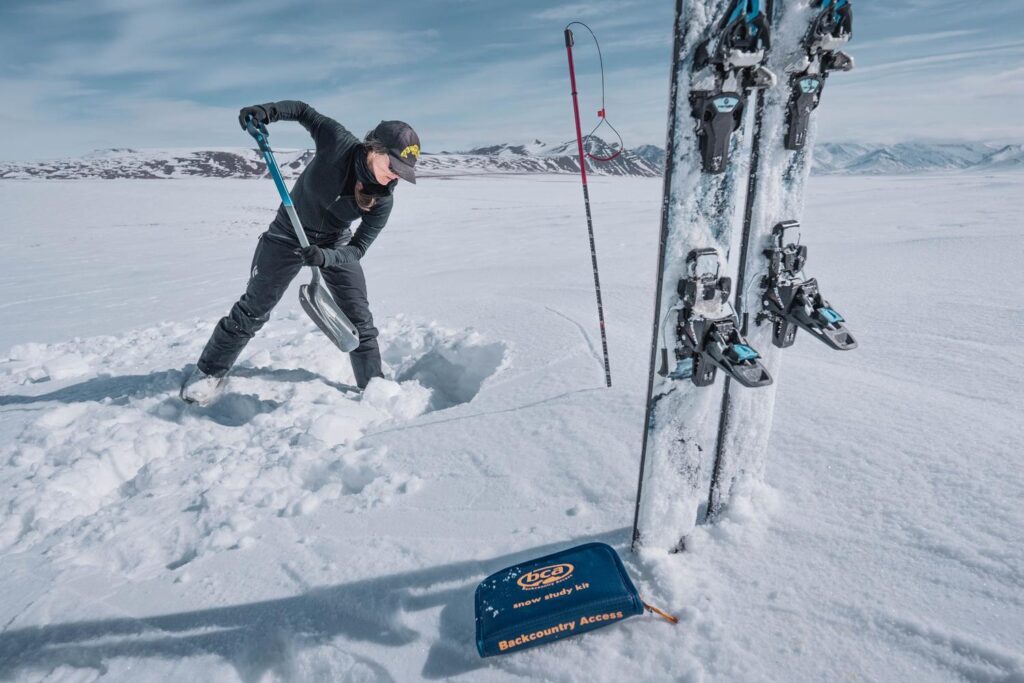
A secondary but equally vital component of the expedition involved the study of snow hydrology and its influence on permafrost stability. Dr. Kelly Gleason, an assistant professor of eco-hydro-climatology at Portland State University, conducted detailed snow pit analyses to investigate the "insulation effect" of the Arctic snowpack.
In the context of climate science, snow plays a dual role. On the surface, its high albedo (reflectivity) is a cooling mechanism, reflecting up to 90% of incoming solar radiation back into space. However, as the Arctic atmosphere becomes wetter due to the loss of sea ice and increased evaporation from open oceans, snowfall patterns are shifting. In some regions, deeper snowpacks are becoming more common, which introduces a dangerous feedback loop.
Dr. Gleason’s research at the site revealed a stark contrast in temperature profiles between shallow and deep snow. In early May, while surface temperatures were consistent at approximately -3°C, the internal dynamics varied wildly:
- Shallow Snowpack (57 cm): This layer allowed the deep cold of the Arctic winter to penetrate more effectively, cooling the base of the snow to -10°C. This promotes the formation of faceted "depth hoar" crystals and keeps the underlying permafrost in a stable, frozen state.
- Deep Snowpack (Approx. 2 meters): The deeper snow acted as a powerful thermal blanket. At a depth of 35 cm, the temperature was -8°C, but near the soil interface, the temperature rose to nearly -3°C.
The data suggests that deeper snow prevents the ground from "recharging" its cold during the winter. By maintaining soil temperatures near the freezing point, the snow allows microbial activity to persist longer into the cold season and facilitates an earlier, more aggressive thaw in the spring. This finding underscores that even an increase in "cooling" white snow can paradoxically accelerate the warming of the ground beneath it.
Supporting Data and Technical Analysis
The flux tower utilizes eddy covariance technology, a statistical method used to measure the vertical turbulence of gases in the atmosphere. By calculating the covariance between the vertical wind speed and the concentration of methane and CO2, researchers can determine the net exchange of these gases between the tundra and the sky.
Current satellite observations provide a broad overview of Arctic greening and thawing, but they lack the granularity to detect the specific emissions from individual thaw slumps. Preliminary data from similar studies in the Canadian Arctic suggest that these slumps can emit several times more carbon per square meter than the surrounding undisturbed tundra. The Toolik installation will provide the first continuous data stream from an Alaskan North Slope slump, allowing for a direct comparison between different Arctic regions.
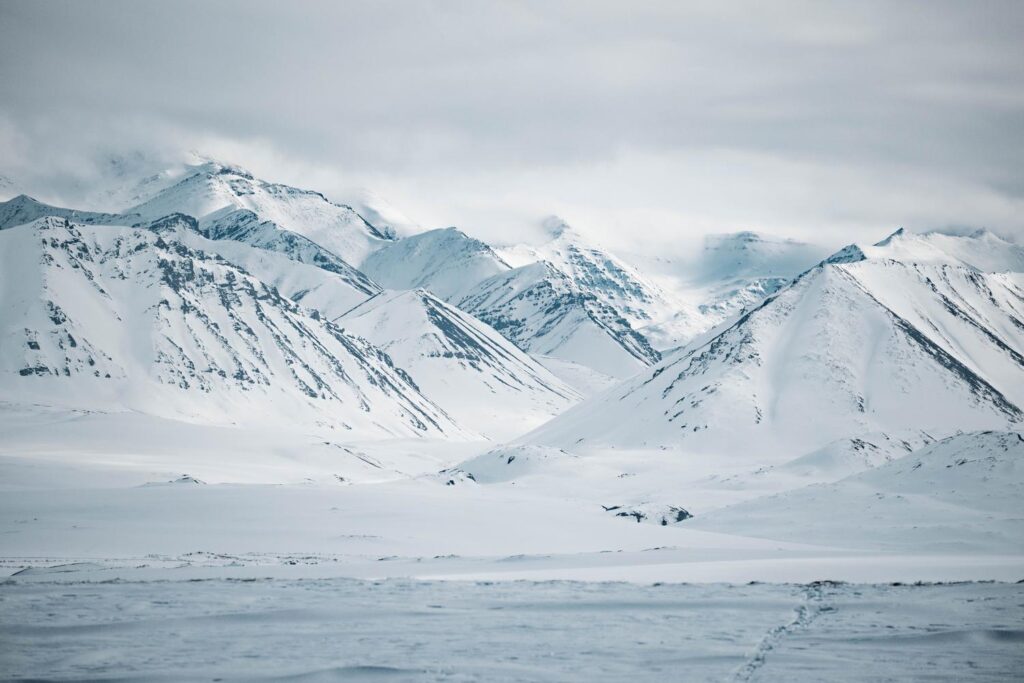
Furthermore, the team’s focus on the Brooks Range foothills provides a unique dataset. The proximity to the mountains influences local weather patterns and snow accumulation, making the data highly relevant for understanding how mountainous Arctic terrain responds differently to climate pressure compared to the flat coastal plains.
Institutional Collaboration and Advocacy
The expedition was supported by the POW Science Alliance, a branch of the Protect Our Winters organization. This alliance is comprised of leading climate scientists who volunteer their expertise to bridge the gap between complex research and public policy. The involvement of Dr. Gleason and Dr. Watts highlights a growing trend in the scientific community: the move from passive observation to active advocacy.
"Science shows us what is happening, but advocacy gives us a path forward," the researchers noted in post-expedition briefings. The collaboration with the Woodwell Climate Research Center further strengthens the mission, as Woodwell is globally recognized for its work on the "Permafrost Carbon Feedback" loop—a process where warming causes more emissions, which in turn causes more warming.
While the primary output of the mission is peer-reviewed data, the secondary goal is to translate these findings into actionable narratives for policymakers. The team emphasized that the North Slope is not a remote, isolated wilderness, but a critical component of the global climate system. Changes occurring at Toolik Field Station have direct implications for sea-level rise, global weather patterns, and the international effort to limit warming to 1.5°C.
Broader Impact and Future Implications
The data collected by the new flux tower will be integrated into the larger network of Arctic monitoring stations. As the world moves toward more rigorous carbon accounting under international climate agreements, understanding the "natural" emissions from thawing permafrost becomes essential. If permafrost emissions are higher than previously estimated, the "carbon budget" remaining for human industrial activity will be significantly smaller than current projections suggest.
The expedition also highlights the urgent need for infrastructure investment in the Arctic. Conducting research at the Toolik Field Station is a logistically intensive endeavor, requiring specialized transport, power solutions, and cold-weather survival gear. As the Arctic becomes more unstable, the window for safely conducting this research may narrow.
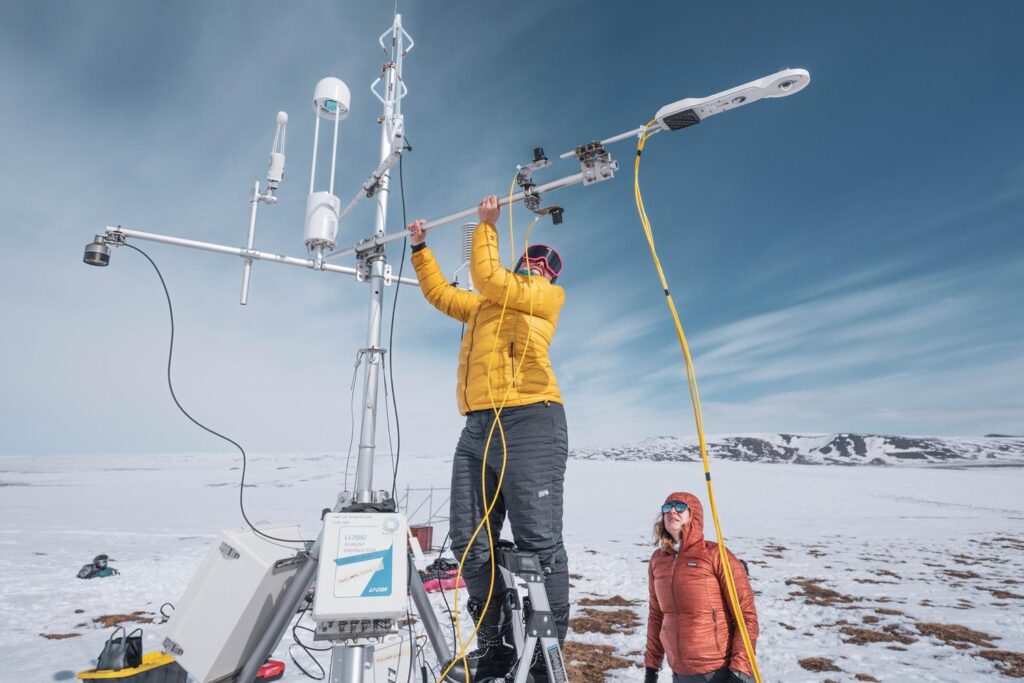
In the coming months, Dr. Watts and her team will monitor the data transmissions from the tower via satellite link. The findings are expected to be presented at major geophysical conferences and will contribute to the ongoing assessment reports of the Intergovernmental Panel on Climate Change (IPCC). For now, the 15-foot aluminum sentinel stands alone on the North Slope, silently measuring the breath of a landscape in the midst of a profound and irreversible transformation.
The mission serves as a reminder that the Arctic is in flux. From the shifting sea ice and the collapsing ground to the insulating power of the snow, every variable is interconnected. The work of the POW Science Alliance ensures that as these changes occur, they do not go unrecorded, and more importantly, they do not go unanswered.
