

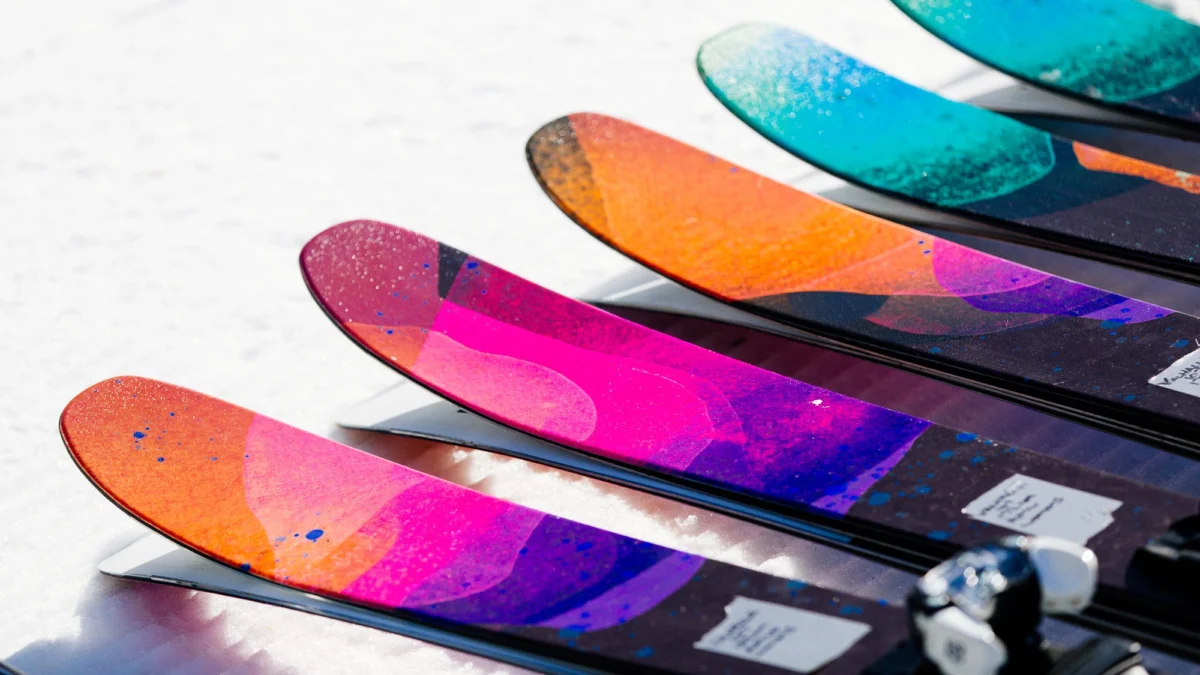
The winter sports equipment market is currently undergoing a significant structural transformation as major manufacturers reconsider the traditional categorization of "men’s" and "women’s" hardware. For decades, the industry relied on gender-binary marketing and engineering to segment its product lines, a strategy that evolved from simple aesthetic changes to sophisticated, gender-specific technical builds. However, as of early 2026, a growing number of influential brands have begun to phase out women-specific designations in favor of "unisex" or "all-gender" collections. While proponents of this shift argue that it fosters inclusivity and prioritizes individual skiing styles over biological labels, technical experts and biomechanical researchers suggest that the removal of gender-specific engineering may overlook fundamental physiological differences that affect performance and safety on the slopes.
The Historical Trajectory of Gendered Ski Design
To understand the current pivot toward unisex equipment, it is necessary to examine the three distinct eras of women’s ski development. In the late 20th century, the industry largely ignored the female demographic from a technical standpoint. Most "women’s skis" were simply men’s models produced in shorter lengths and adorned with softer colors—a practice derisively known in the industry as "shrink it and pink it." These skis often failed to account for the different power-to-weight ratios of female skiers, leading to equipment that was either too stiff to flex properly or too unstable for high-speed performance.
The second era began in the early 2000s and reached its peak between 2010 and 2020. During this period, brands like Blizzard, with its "Women to Women" (W2W) program, and Nordica, with the "Santa Ana" series, began investing in dedicated research and development for female-specific cores. Engineers realized that simply shortening a ski was insufficient; they needed to adjust the mounting points, the distribution of metal laminates like Titanal, and the wood core density to accommodate a lower center of gravity and different muscular engagement patterns.
The third and current era, emerging in the mid-2020s, is characterized by "inventory consolidation" and "inclusive branding." Brands such as Salomon, Atomic, and K2 have begun merging their lines. The rationale provided by corporate communications departments is that a skier’s ability, weight, and preferred terrain are more accurate predictors of the necessary equipment than gender. By offering a single line with a broad range of lengths and flex patterns, manufacturers aim to simplify the purchasing process and reduce the stigma for men who may prefer a "female" flex or women who require a "male" stiffness.
Biomechanical Realities and the Physics of Force
Despite the trend toward gender-neutral marketing, biological data remains a cornerstone of equipment efficacy. A pivotal study published in the Journal of Applied Physiology and utilized by military researchers highlights the stark differences in physical composition between the sexes. On average, women possess approximately 26 pounds less skeletal muscle mass than men and roughly 33 percent less lower-body strength. Furthermore, when comparing individuals of the same height, men are typically 12 to 26 pounds heavier than women, a gap that significantly impacts how much force is applied to a ski’s edge during a turn.
In the context of physics, skiing is a game of leverage and pressure. A ski requires a specific amount of force to engage its sidecut and create a carved turn. If a ski is engineered for a 190-pound male with high explosive leg power, a 140-pound female with different muscle recruitment may find the ski "dead" or unresponsive. Conversely, if she is placed on a "unisex" ski that is too short in an attempt to compensate for weight, she loses the effective edge and stability required to navigate variable terrain, leading to a "chattery" or "nervous" sensation at high speeds.
Beyond muscle mass, the "Q-angle"—the angle at which the femur meets the tibia—is typically wider in women due to pelvic structure. This anatomical difference affects how pressure is transferred to the inside edge of the ski. True women-specific designs often incorporate a slightly forward mounting point (usually 1 to 2 centimeters) to help the skier stay over their center of gravity, preventing the common "backseat" skiing posture that leads to fatigue and ACL injuries.
Technical Divergence in Construction
The argument for maintaining a separate women’s category rests on the internal architecture of the ski. A "true" woman’s ski is not merely a cosmetic variation but a distinct construction. Several key technical differences define high-end women-specific models:
- Core Composition: Manufacturers often use lighter wood species, such as Paulownia or Aspen, in women’s cores, while reserving heavier Beech or Poplar for unisex models. This reduces "swing weight," making the ski easier to maneuver in tight trees or moguls.
- Strategic Metal Placement: Rather than using full-length double layers of Titanal (a high-strength aluminum alloy), women-specific designs often use "tapered" or "milled" metal layers. This allows the ski to maintain torsional rigidity for ice grip while remaining longitudinally flexible enough for a lighter skier to bend.
- Flex Profile and Rebound: Women’s skis are often tuned to have more "snap" or rebound at lower speeds. Because a lighter skier generates less kinetic energy, the ski must be engineered to return that energy more efficiently to assist in the transition between turns.
By moving to a unisex model, critics argue that brands may gravitate toward a "middle-of-the-road" construction that serves the average user but fails to provide the specialized performance that both high-level female experts and progressing beginners require.
Market Drivers: Economics vs. Inclusivity
While the public-facing narrative for the shift toward unisex skis focuses on social progress and inclusivity, industry analysts point to significant economic incentives. Managing two distinct product lines—each with its own molds, graphics, marketing budgets, and SKU (Stock Keeping Unit) counts—is exponentially more expensive for manufacturers and retailers.
In a post-2024 economy marked by fluctuating supply chains and rising raw material costs, SKU consolidation allows brands to streamline production. Retailers, too, benefit from unisex lines as they no longer have to gamble on whether to stock a "men’s 172cm" or a "women’s 172cm" ski, which may have identical dimensions but different top sheets. By moving to a single line, shops can reduce "dead stock" and simplify their inventory management.
However, this consolidation has met with pushback from specialized retailers who argue that the "unisex" label is often a mask for a return to male-centric design. "If a unisex line consists of six lengths, and the construction is based on the average male weight for each length, the female skier is once again being forced to adapt to equipment not designed for her physiology," noted one veteran boot fitter and equipment consultant.
Chronology of the Transition (2020–2026)
- 2020–2021: Brands begin introducing "Global Collections" where the only difference between men’s and women’s skis is the graphic, though they maintain separate category names.
- 2022–2023: Introduction of "extended size runs" in popular unisex models (e.g., the Salomon QST line), encouraging women to buy into the main line rather than female-specific alternatives.
- 2024: Several major European manufacturers announce the sunsetting of their dedicated women’s brands, moving toward a "one-model, multiple-flex" approach.
- 2025: Market data shows a 15% decline in the availability of women-specific "true-build" skis across major North American retailers.
- 2026: The industry reaches a crossroads, with "unisex" becoming the standard for 70% of major brands, while a handful of "holdout" brands double down on women-specific engineering as a premium differentiator.
Broader Implications for the Sport
The disappearance of gender-specific categories could have long-term effects on participation and progression within the sport. For beginner and intermediate women, equipment that is too stiff or difficult to turn can create a steep learning curve and increase the risk of injury. Professional female skiers, who often have the strength and technique to handle "unisex" or "men’s" stiff-flex skis, are less affected by this change. However, for the "vast majority" of the skiing public, the loss of specialized equipment may lead to a less intuitive and less "fun" experience on the mountain.
Furthermore, there is a concern regarding the "shop bro" culture. Historically, female skiers have been underserved by retail environments where they are often steered toward skis that are too short for stability or too soft for their actual ability. Without a dedicated women’s category that demands technical explanation, there is a risk that gender-neutral marketing will lead to even less specialized advice, as the nuances of biomechanics are glossed over in favor of size charts.
As the 2026/2027 season approaches, the industry remains divided. While the "unisex" movement reflects a modern approach to gender and identity, the laws of physics and biomechanics remain unchanged. The success of this transition will ultimately be measured not by the inclusivity of the marketing, but by whether the "average" skier finds the equipment under their feet to be a help or a hindrance to their performance. For those who prioritize the unique finesse and power-to-weight advantages of female-specific builds, the "unisex" trend represents a potential step backward in a decades-long journey toward technical equity.
