

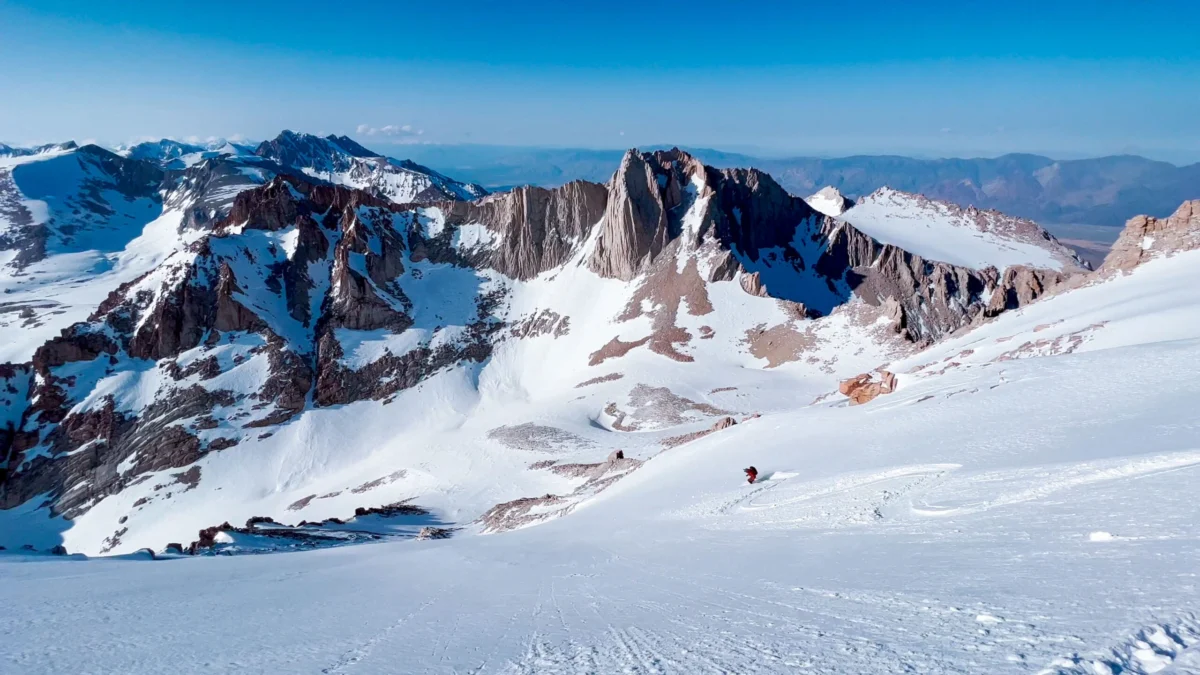
The winter of 2022–2023 in the Sierra Nevada was defined by atmospheric rivers that deposited record-shattering snowpacks across the "Range of Light." For backcountry skiers Jenna Kane and Greg Cunningham, this historic accumulation provided a rare opportunity to attempt the Redline Traverse, a high-altitude ski route that follows the crest of the Sierra Nevada. While the physical challenge of traversing nearly 150 miles of rugged terrain is immense, the journey also highlights a shifting paradigm in mountain travel, where modern technology, climate volatility, and the philosophical interpretation of adventure intersect.
The Genesis of the Redline: A Vision of High-Alpine Purity
The concept of the Redline Traverse originated in the early 1980s, conceived by legendary California skiers Allan Bard, Chris Cox, and Tom Carter. Their objective was as simple in theory as it was grueling in practice: follow the geopolitical "red line" on topographic maps that marks the Sierra Crest, the literal divide between the eastern and western watersheds of California.
Between 1981 and 1983, the trio completed the route in sections. Their equipment—randonee Nordic skis with three-pin bindings and leather boots—offered little of the stability or comfort found in modern alpine touring gear. Carrying heavy external-frame packs, they navigated nearly 50 passes and summited more than 20 peaks, rarely descending below the 11,000-foot contour.
The founders documented their journey in a 1983 edition of Powder Magazine, but they intentionally omitted a turn-by-turn itinerary. Instead, they described "stringing together dozens of exciting ski descents like so many pearls." This lack of prescription transformed the Redline from a fixed trail into a "poetry of vision," challenging future generations to find their own way across the high-altitude wilderness.
Chronology of Major Redline Milestones
The history of the Redline is marked by long gaps of inactivity, dictated primarily by the "feast-or-famine" nature of Sierra Nevada winters.
- 1981–1983: Allan Bard, Chris Cox, and Tom Carter complete the first Redline Traverse in sections during high-snow years.
- 2009: The publication of comprehensive backcountry guidebooks for the Eastern Sierra begins to demystify high-alpine routes, though the Redline remains largely untouched.
- 2017: Following a massive winter, Bishop-based guide Jed Porter completes the first continuous solo traverse of the Redline. He covers 125 miles and 79,000 vertical feet in 16 days, adding 25 peaks to the original count.
- May 2023: Two separate parties—Jenna Kane and Greg Cunningham, and Spencer Dillon and Matt Skorina—set out within days of each other to attempt the traverse during the deepest snowpack in recorded California history.
Technical Data and Expedition Metrics
The Redline Traverse is not a sanctioned trail but a high-alpine objective. Comparing modern efforts reveals the staggering physical demands of the route.
| Expedition (Year) | Distance (Approx.) | Vertical Gain | Duration | Key Parameters |
|---|---|---|---|---|
| Bard/Cox/Carter (1981-83) | ~120 miles | Unknown | Sectional | Stayed above 11,000 ft; 20 peaks. |
| Jed Porter (2017) | 125 miles | 79,000 ft | 16 days | First continuous traverse; 45 peaks. |
| Kane/Cunningham (2023) | 145 miles | 80,000+ ft | 19 days | 26 peaks; 28 ski lines; Mt. Langley to Mammoth. |
| Dillon/Skorina (2023) | 160 miles | 70,000 ft | 16 days | Extended route toward Bridgeport; prioritized logic over crest fidelity. |
The 2023 Expeditions: A Study in Style and Interpretation
The 2022–2023 season offered the "right place at the right time" for two different teams with distinct philosophies. Jenna Kane, a freeride coach, and Greg Cunningham, a ski patroller and avalanche forecaster at Kirkwood Mountain Resort, approached the Redline with a commitment to "good style." To them, this meant honoring the founders’ 11,000-foot rule and tagging the original peaks named in the 1983 article.
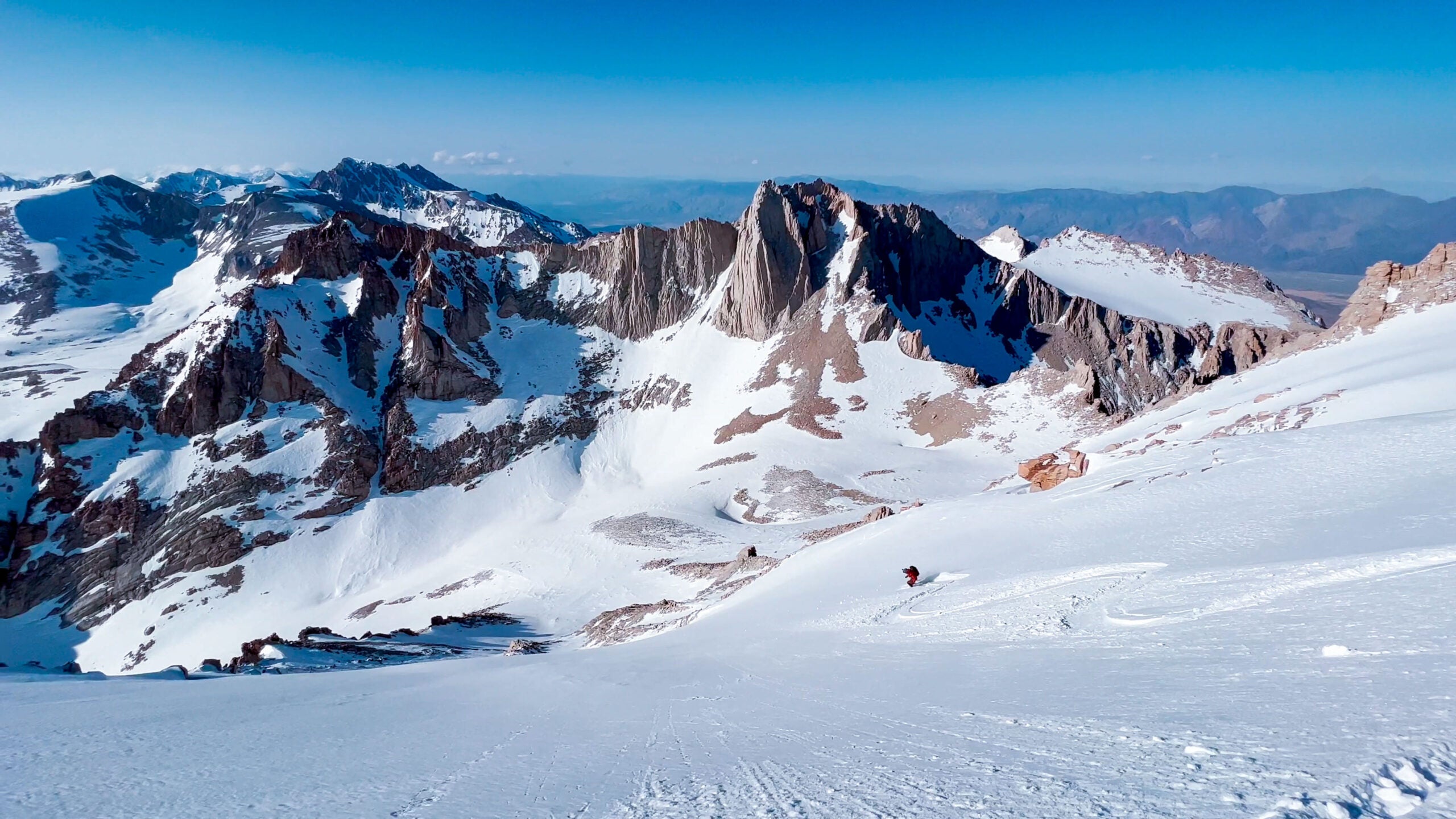
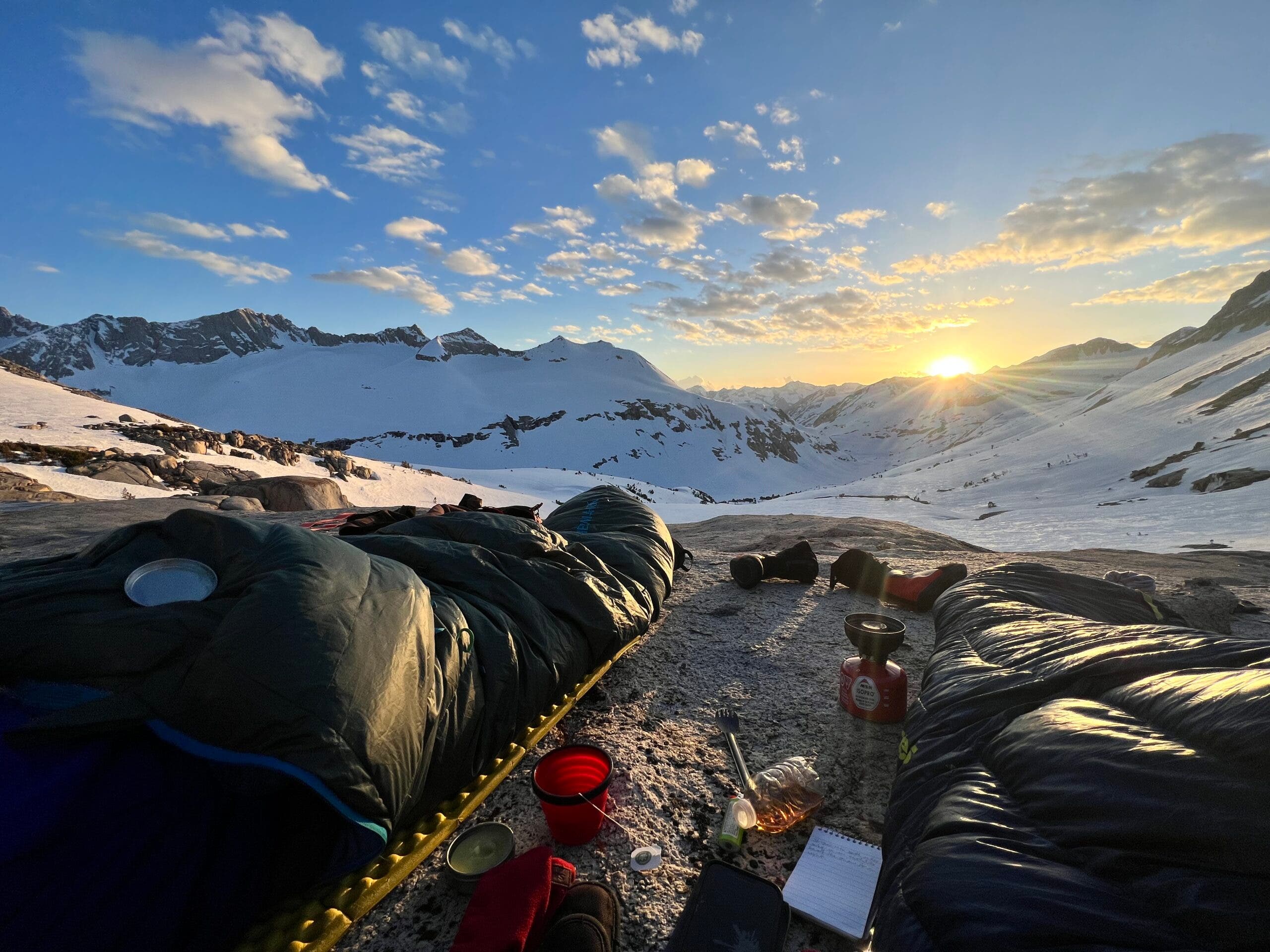
Their journey began at Mt. Langley and moved north toward Mt. Whitney. On the second day, they stood atop Whitney’s summit—the inspiration for Kane’s middle name—and dropped into the rarely skied north face. For 19 days, the pair lived in the high alpine, navigating a landscape that was simultaneously familiar and alien due to the sheer volume of snow.
Simultaneously, Spencer Dillon, a graduate student from Salt Lake City, and Matt Skorina, a guide recently returned from a submarine research mission in the Galapagos, launched their own attempt. Dillon’s approach was more experimental. While he initially struggled with the "guilt of deviation" when skipping certain peaks to maintain a logical line, he eventually embraced a more personal interpretation of the traverse.
Dillon’s team extended the finish line 40 miles north of Mammoth to Bridgeport, emphasizing the "adventure" over the "checklist." This highlighted a central tension in modern mountaineering: the balance between adhering to historical precedents and the freedom to draw a unique line based on current conditions.
The Role of Technology and Information Sharing
A significant evolution since the 1980s is the role of digital technology. Bard and his companions navigated using paper maps and compasses, with no way to track their exact path for others to follow. Today, GPS-enabled smartphone apps like Gaia GPS and Strava have revolutionized route-finding.
Jed Porter, after his 2017 traverse, chose to share his trip report and elevation profile but withheld his exact GPX (Global Positioning XML) file from the general public. He argued that providing a "bread-crumb" trail would rob future skiers of the "raw adventure" and the necessity of creative route selection.
"The goal is not for it to remain forever a secret," Porter noted, but he expressed hope that the community’s "creative capacities" would evolve alongside the availability of information.
This ethos sparked a debate regarding "gatekeeping" in the outdoors. While Kane became the first woman to complete the Redline, the roster of finishers remains predominantly white and male. Critics of information-withholding argue that transparency helps lower barriers to entry for underrepresented groups. However, proponents like Dillon suggest that true inclusivity requires mentorship and systemic changes at the entry level, rather than simply providing a map to a high-risk, expert-level traverse.
Environmental Implications and Climate Volatility
The viability of the Redline is increasingly tied to the volatility of the Sierra Nevada snowpack. Climatologists point to a trend of "climate whiplash" in California, where extreme droughts are punctuated by "big years" like 2017 and 2023.
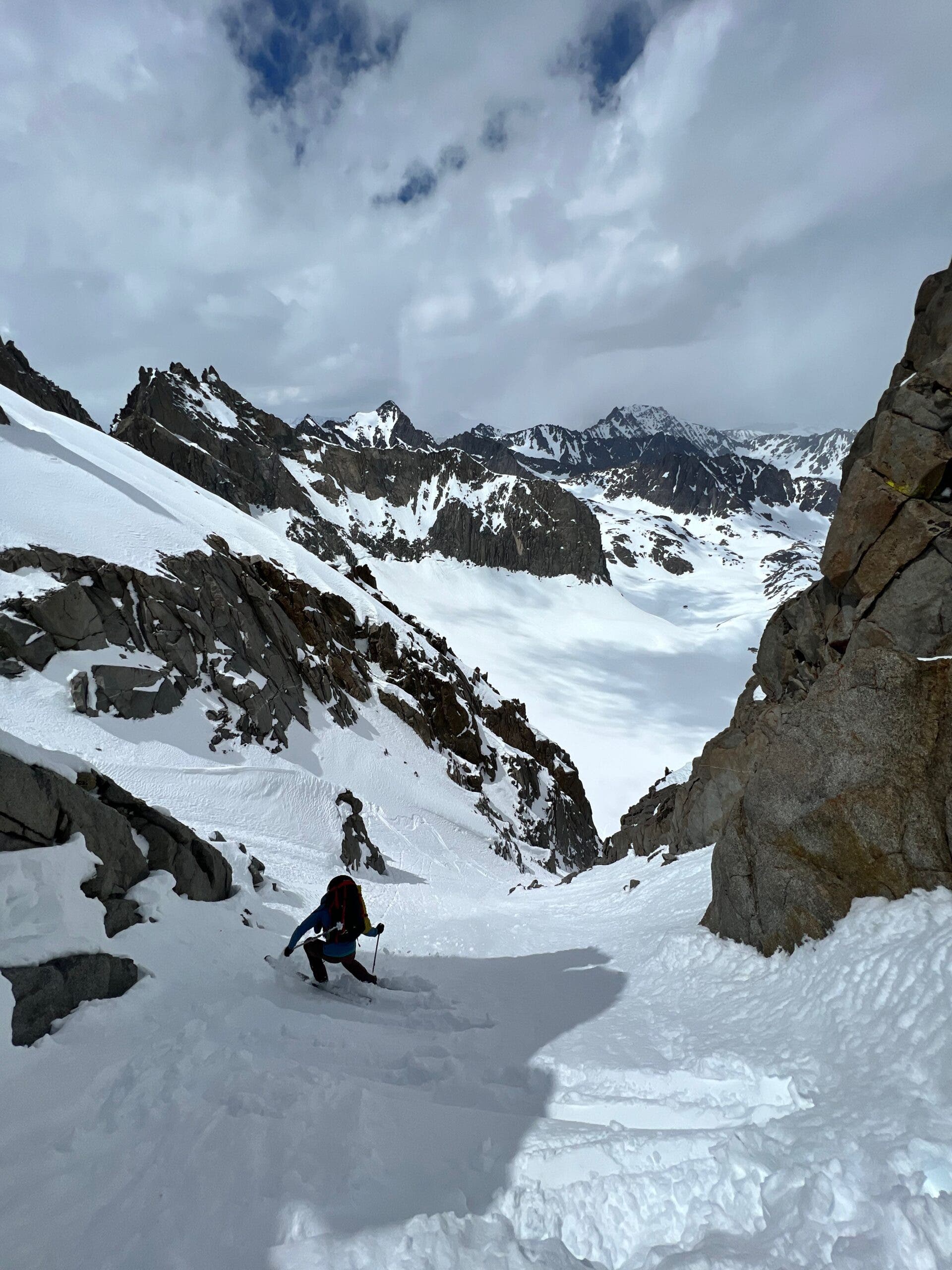
For high-alpine traverses, this means the windows of opportunity are becoming narrower. While 2023 provided a surplus of snow, it also presented new dangers. Kane and Cunningham faced harrowing decisions on their sixth day when sloppy snow conditions and impassable cliffs forced them to drop below the 11,000-foot mark for a brief period. This "undesirable detour" was a concession to safety, as rising temperatures increased the risk of wet-slab avalanches.
The reality of modern ski mountaineering is that "purity" is often at odds with "stability." As the climate shifts, the "logical line" may increasingly involve descending to lower elevations to avoid hazardous terrain, further complicating the definition of the Redline.
Conclusion: The Enduring Legacy of the Redline
The Redline Traverse remains one of the most prestigious and elusive objectives in North American ski mountaineering. Its lack of a fixed route ensures that it remains an act of creativity rather than a mere feat of endurance. Whether a skier follows the crest with literal fidelity or uses the "red line" as a general guide for "redlining the fun meter," the traverse continues to demand a deep intimacy with the Sierra Nevada.
As Tom Carter, one of the original founders, reflected: "It’s not just about checking the boxes… so much of it is letting the spirit of the range inform the plan."
In the end, the Redline is less about the data recorded on a GPS and more about the "invisible, glowing threads" left behind by those who choose to immerse themselves in the high alpine. For Kane, Cunningham, Dillon, and those who will follow, the traverse is a reminder that in an age of total information, the greatest adventures are still those that require us to figure it out for ourselves.
