

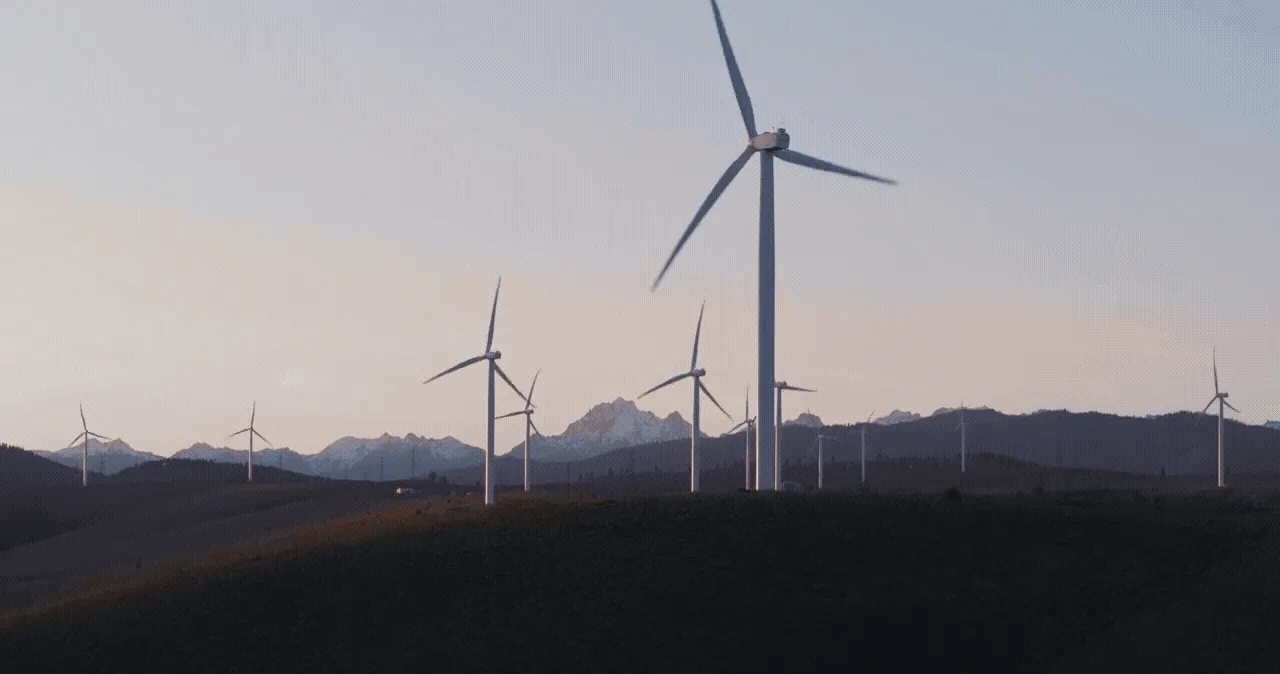
The rapid expansion of renewable energy infrastructure across the globe has been met with a parallel surge in sophisticated opposition campaigns designed to undermine public confidence in the transition. As offshore wind projects, solar arrays, and electric vehicle (EV) initiatives scale to meet international climate targets, they are increasingly targeted by narratives that characterize clean energy as unreliable, ecologically destructive, or economically unviable. While some concerns stem from genuine local anxieties, experts and researchers have identified a coordinated infrastructure of disinformation, often funded by fossil fuel interests, aimed at stalling the shift away from carbon-intensive energy sources. This phenomenon represents a critical challenge for policymakers and environmental advocates who must navigate a landscape where scientific consensus is frequently clouded by strategic deception.
The distinction between misinformation and disinformation is central to understanding this conflict. Misinformation refers to the accidental sharing of false or inaccurate information, often by individuals who believe they are performing a public service. In contrast, disinformation is a deliberate, orchestrated effort to plant misleading narratives to achieve a specific political or economic end. In the context of the energy transition, disinformation often takes the form of "red herrings" or "straw man" arguments—logical fallacies that distract from the broader benefits of decarbonization by focusing on narrow, often exaggerated, secondary impacts.
A Chronology of Climate Communication and Obstruction
The current wave of renewable energy disinformation is the latest chapter in a decades-long history of strategic communication by the fossil fuel industry. To understand the present landscape, it is necessary to examine the evolution of these tactics:
The 1970s and 1980s: Internal documents from major oil companies, such as Exxon, reveal that their own scientists had accurately predicted the warming effects of carbon dioxide emissions. During this period, the industry’s public stance remained relatively neutral while internal research confirmed the looming climate crisis.
The 1990s: Following the establishment of the Intergovernmental Panel on Climate Change (IPCC) in 1988, the strategy shifted toward active denial. The Global Climate Coalition, an industry-backed lobby group, spent millions of dollars questioning the scientific consensus and framing climate change as a matter of "debate" rather than a physical reality.
The 2000s and 2010s: As the physical evidence of climate change became undeniable, the narrative shifted from "it isn’t happening" to "it isn’t caused by humans" or "it’s too expensive to fix." This era saw the rise of "lukewarmism" and the promotion of natural gas as a "bridge fuel," despite its methane leakage issues.
The 2020s: With renewable energy now the cheapest form of new electricity generation in most of the world, the focus has shifted to localized obstruction and "green-on-green" conflict. Disinformation campaigns now target specific technologies—such as wind turbines and EVs—by co-opting environmental language to argue that clean energy is actually worse for the planet than fossil fuels.
Deconstructing the Electric Vehicle Lifecycle Narrative
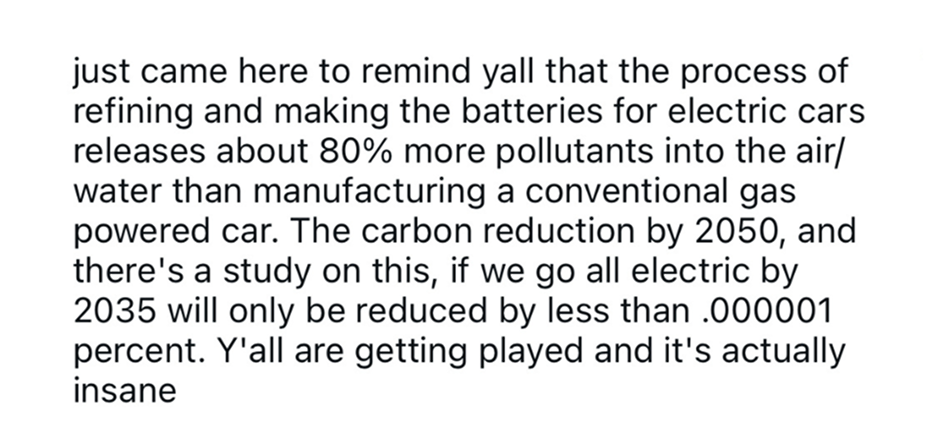
One of the most persistent narratives in the clean energy debate concerns the environmental impact of electric vehicle battery production. Critics frequently claim that the resource extraction required for lithium-ion batteries—specifically the mining of lithium, cobalt, and nickel—renders EVs more harmful than internal combustion engine (ICE) vehicles.
However, empirical data from the Massachusetts Institute of Technology (MIT) and the Environmental Protection Agency (EPA) provides a more nuanced reality. While it is true that the manufacturing phase of an EV is more carbon-intensive than that of a gas-powered car due to battery production, the "emissions debt" is typically paid off within six to 18 months of driving, depending on the carbon intensity of the local power grid.
According to researchers at MIT’s Climate Portal, gasoline-powered cars emit an average of more than 350 grams of CO2 per mile driven over their entire lifetimes. In contrast, fully battery-electric vehicles generate approximately 200 grams per mile. This figure includes the emissions from mining, manufacturing, and the electricity used for charging. As the global power grid continues to decarbonize, the lifetime emissions of EVs will continue to drop, whereas the emissions of ICE vehicles are locked in by the physics of fuel combustion.
The Ecological Impact of Offshore Wind vs. Fossil Fuel Extraction
Offshore wind energy has become a primary target for disinformation, with claims often surfacing that turbine noise and construction are responsible for whale strandings and bird population declines. These narratives frequently gain traction in coastal communities, yet they lack support from major scientific organizations such as the National Oceanic and Atmospheric Administration (NOAA).
Biological data suggests that the primary threats to marine mammals remain ship strikes, entanglement in fishing gear, and the warming of ocean waters due to climate change, which shifts the migratory patterns of prey species. In contrast, the fossil fuel industry’s impact on marine ecosystems is well-documented and catastrophic. The 2010 Deepwater Horizon disaster released an estimated 134 million gallons of oil into the Gulf of Mexico, causing long-term genetic damage to marine life and destroying thousands of miles of habitat.
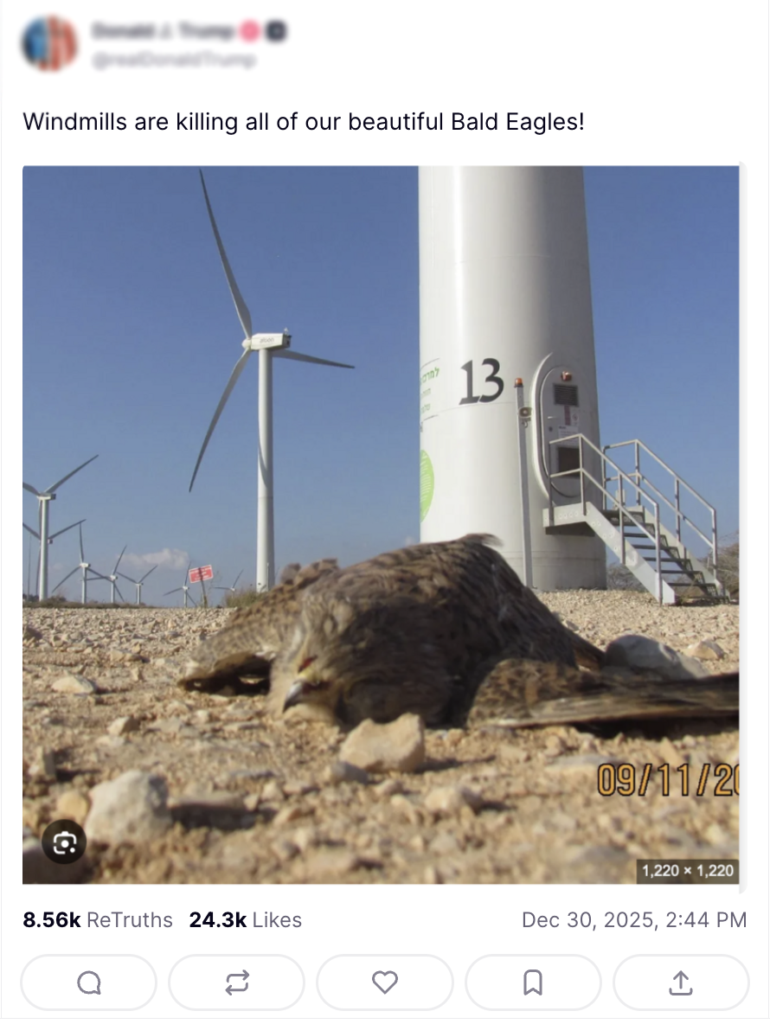
Furthermore, the "bird mortality" argument against wind turbines is often presented without comparative context. While wind turbines do account for bird deaths, the numbers are statistically dwarfed by other human-caused factors. Research indicates that domestic cats kill approximately 2.4 billion birds annually in the United States alone, and building glass collisions account for nearly 600 million deaths. Wind turbines, by comparison, are responsible for a fraction of a percent of avian mortality, and the industry is increasingly adopting mitigation technologies, such as AI-powered cameras that pause turbines when large birds approach.
The Economic Reality: Levelized Cost of Energy
The argument that renewable energy is an "expensive luxury" is increasingly contradicted by market data. The Levelized Cost of Energy (LCOE)—a measure of the average net present cost of electricity generation for a generating plant over its lifetime—has seen a dramatic shift over the last decade.
According to data from Lazard’s annual LCOE report, the cost of utility-scale solar energy fell by approximately 90% between 2009 and 2023, while the cost of wind energy fell by 70%. In many jurisdictions, it is now cheaper to build and operate new wind and solar installations than it is to continue running existing coal or nuclear plants. This economic reality is a primary driver of the transition, yet disinformation campaigns continue to focus on the "unreliability" of renewables, ignoring the rapid advancements in battery storage and grid management that are stabilizing intermittent power sources.
Official Responses and the Fight for Information Integrity
Governments and international bodies have begun to recognize climate disinformation as a systemic risk to national security and economic stability. The European Union has implemented the Digital Services Act (DSA), which requires social media platforms to take greater responsibility for the spread of harmful disinformation. In the United States, the House Oversight Committee has conducted hearings into the fossil fuel industry’s role in spreading misleading climate claims, drawing parallels to the tobacco industry’s historical efforts to hide the health risks of smoking.
Non-governmental organizations (NGOs) are also playing a crucial role. Groups like Protect Our Winters (POW) have pivoted toward "climate literacy" programs, teaching their communities how to identify logical fallacies and verify sources. These organizations argue that while the transition to clean energy involves complex trade-offs and requires responsible resource extraction, the "perfection is the enemy of the good" mindset is often weaponized by those who benefit from the status quo.
Broader Impact and the Path Forward
The success of the global energy transition depends not only on engineering and finance but also on the integrity of the information ecosystem. When communities are fed a steady diet of fear-based narratives, the resulting "Not In My Backyard" (NIMBY) sentiment can delay critical infrastructure projects by years, leading to increased costs and prolonged reliance on carbon-heavy fuels.
To counter this, experts suggest a three-pronged approach:

- Radical Transparency: Developers must engage with communities early, providing transparent data on both the benefits and the unavoidable impacts of new projects.
- Comparative Analysis: Discussions about the "harms" of renewables must always be framed against the documented harms of the fossil fuel status quo.
- Legislative Accountability: Strengthening laws regarding truth-in-advertising for energy companies and holding platforms accountable for the amplification of provably false claims.
The transition to renewable energy is not a claim of "perfect" energy, but a shift toward a significantly "better" energy system. By identifying the mechanics of disinformation and grounding the conversation in peer-reviewed data, society can move past the manufactured controversies and focus on the logistical and ethical challenges of building a sustainable future. The information war is ongoing, but as the costs of climate-driven disasters rise and the costs of renewables fall, the window for effective deception is steadily closing.
