

Updated March 12, 2026 09:51 AM. In the dire scenario of an avalanche burial, few sights could offer more profound hope than a dog’s muzzle breaking through the crushing darkness to signal rescue. This image, a beacon of survival, encapsulates the vital role of avalanche rescue dogs, whose unparalleled olfactory capabilities and unwavering dedication remain the gold standard in a race against time where every second counts.
For those who have experienced an avalanche dog training drill, the sensation of being buried, even in a safe, pre-dug underground space, offers a glimpse into the profound isolation. In a real-life avalanche, the experience is brutally different: individuals are violently tumbled, smashed, and then cemented into an icy tomb, often disoriented and struggling for air. The slim hope rests on creating an air pocket, enduring the crushing pressure, and then, miraculously, hearing the vibrations of a dog digging overhead before seeing that life-saving muzzle pierce the snow. Yet, the grim reality of avalanche survival is stark. John Reller, a veteran of over 35 years in avalanche search and rescue, has, despite his extensive experience, never found a buried avalanche victim alive. This sobering statistic underscores the immense challenges inherent in these operations but also reinforces his steadfast belief in the superior efficacy of canine search teams.
Avalanches are among the most unpredictable and lethal natural hazards in mountainous regions, particularly for winter recreationists. Statistics from the Utah Avalanche Center reveal a harrowing truth: approximately a quarter of avalanche victims succumb to trauma from impact or debris before burial. For those who survive the initial impact, suffocation becomes the primary threat during and after being entombed in snow. While variables such as burial depth, snow density, and the presence of an air pocket significantly influence outcomes, the consensus remains chillingly clear: about 90 percent of avalanche victims survive if rescued within a critical 15-minute window. This narrow timeframe highlights the extraordinary urgency of search and rescue efforts. Beyond this window, survival rates plummet dramatically, decreasing to roughly 30% after 30 minutes and near zero after two hours due to hypothermia, anoxia, or secondary injuries.
In the ongoing quest to enhance avalanche safety and improve victim recovery rates, a plethora of advanced technologies has emerged. State-of-the-art transceivers emit signals to aid location, RECCO chips embedded in gear offer passive reflectivity for detection, and inflatable airbags are designed to keep individuals on top of the snow. While each tool offers a layer of protection or assistance, none has proven to measure up to the raw, biological power of a dog’s nose. "There’s no technology that can replace that," Reller asserts, emphasizing the biological advantage. "Transceivers have done a hell of a job. By far your best chance of survival is companion rescue. If you’re waiting for someone to arrive, you’ve probably already used up the survival window. But the way these dogs pick up scent is incredible." This "scent cone" detection, where dogs follow airborne human particles trapped within the snowpack, allows them to cover vast areas quickly and precisely, a feat unmatched by any electronic device.
The organized deployment of avalanche dogs in Colorado has a history intertwined with increasing backcountry recreation and the tragic incidents that spurred innovation. John Reller’s journey into this specialized field began in the late 1980s as a patroller at Copper Mountain, where he also volunteered with local search and rescue and the Sheriff’s Office. At the time, canine involvement in searches was sporadic, often limited to one or two dogs. A pivotal moment arrived in 1987 when a large avalanche on Breckenridge’s Peak 7, then a popular backcountry area, claimed the lives of four skiers. This tragedy served as a stark "red flag," igniting a broader recognition of the critical need for dedicated avalanche search dogs on ski patrol teams across the region.
The response to this urgent need was spearheaded by Reller and his wife, Andrea. Following their marriage in 1990, they acquired Skadee, a golden retriever who would become the first in a lineage of highly trained female golden retrievers. More significantly, they formalized their efforts by establishing Colorado Rapid Avalanche Deployment (C-RAD). This non-profit organization rapidly became instrumental in organizing and standardizing avalanche dog training and testing throughout Colorado and neighboring states. C-RAD’s commitment to excellence and its pioneering role in professionalizing avalanche dog teams earned it the prestigious 2025 Colorado Snowsports Hall of Fame Top of the Hill Award, a testament to its profound impact. Over the past several years, a C-RAD-validated dog and handler team has ascended to become the recognized "gold standard" for avalanche search missions, signifying a benchmark of competency and reliability. "If the Sheriff’s Office is calling a C-RAD dog team, they know they have a certain level of competency and professionalism they can trust," explains John Alfond, Dog Program Leader at Vail Mountain Ski Patrol. "They can say, ‘OK, these guys are validated? They’re good to go.’" This trust is paramount in high-stakes rescue scenarios where lives depend on the swift and effective deployment of skilled teams.
Rigorous Training and Validation: The Gold Standard
A C-RAD validation drill offers a compelling demonstration of the extraordinary capabilities of these specialized canines. In February of this year, a multi-agency exercise at Vail Mountain brought together a team from Summit County Rescue Group and five teams representing various Colorado ski resort patrol squads. These drills are intentionally conducted on unfamiliar terrain for patrol dogs, a crucial element to simulate real-life avalanche rescues where prior knowledge of the landscape is absent. Each dog and handler team was tasked with searching a 100-square-meter zone, buried under a significant snowpack, with a strict 20-minute time limit to locate one to three "victims" (volunteers safely interred).
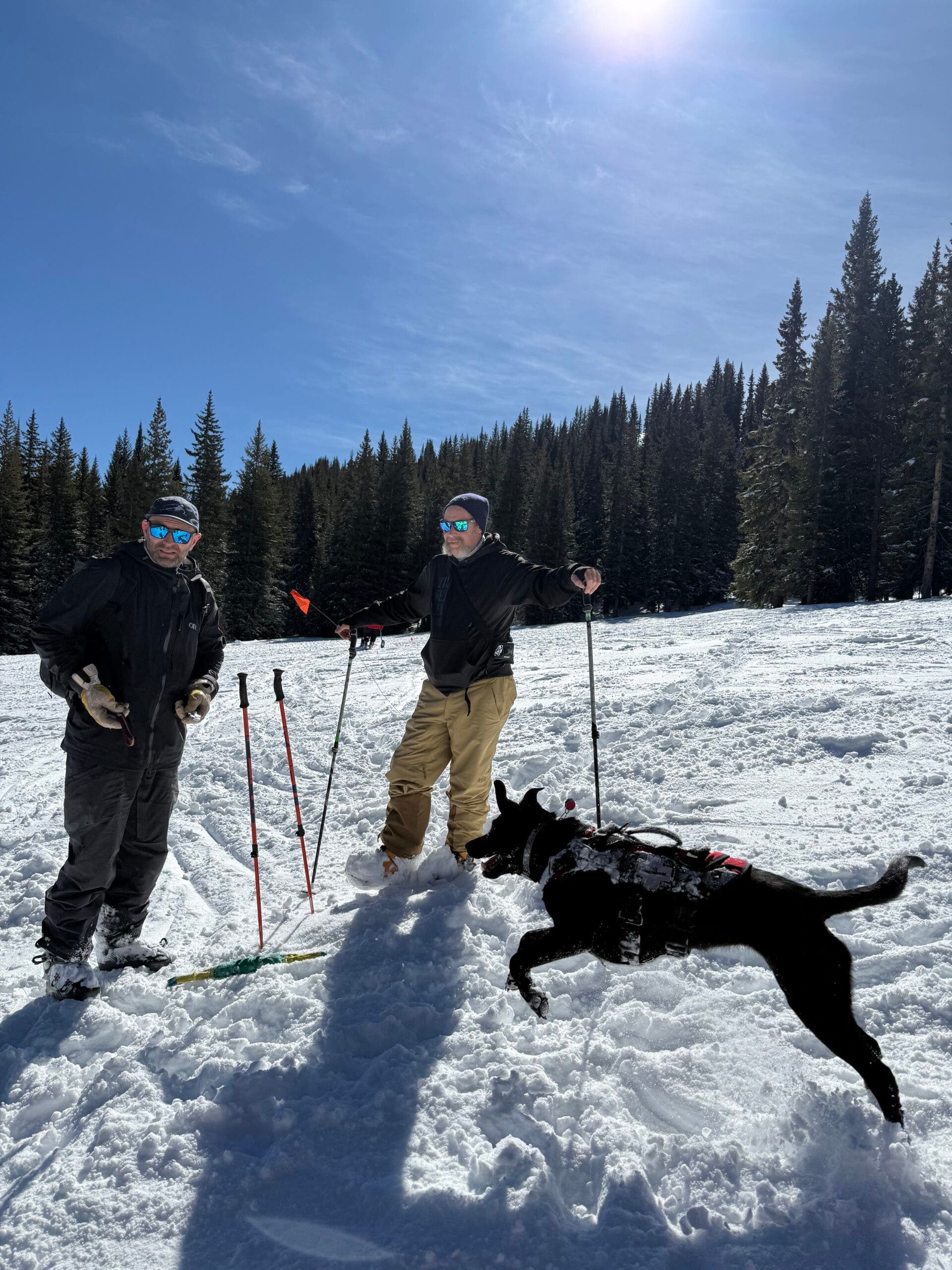
Daisy, a four-year-old black Labrador from Steamboat Resort’s Ski Patrol, exemplified the high-drive and focus characteristic of these working dogs. Leaping with barely contained anticipation, she launched into the designated search zone at her handler Chad Feagler’s command. With her nose to the snow, tail wagging furiously – a clear indicator of active scenting – she methodically scoured the area. Her performance was remarkable: the first target was located in under 30 seconds, and the second, approximately 80 feet away, was found just a minute and a half later. Such speed and precision are not accidental; they are the result of thousands of hours of training, conditioning, and an innate drive. "Watching the dogs, you have to be like, ‘they didn’t know beforehand where this person was buried?’," marvels Chrissie Oken, an avalanche technician on Vail’s ski patrol. "They’ll catch a scent, do a 180 and b-line it to where the person is buried. It’s amazing."
Reller clarifies that for avalanche dogs, searching for victims, whether in a drill or a genuine emergency, is essentially "a game of hide and seek." This playful framing belies the serious nature of their work but highlights the critical role of motivation and reward in their training. He notes that certain "types" of dogs are inherently better suited for this demanding work, with retrievers, Labradors, and various herding breeds topping his list. These aren’t just any puppies; Reller looks for specific traits. "As puppies, these are dogs that have a higher drive, an independent drive. They’re not just playing with the litter. They have a confidence, an inquisitiveness to them," he explains. "Dogs we’re looking for are potentially the more challenging ones at home. They need more exercise, more direction." This inherent drive, coupled with meticulous training, transforms these energetic puppies into elite search and rescue professionals.
Beyond Rescue: Morale, Marketing, and the Unbreakable Bond
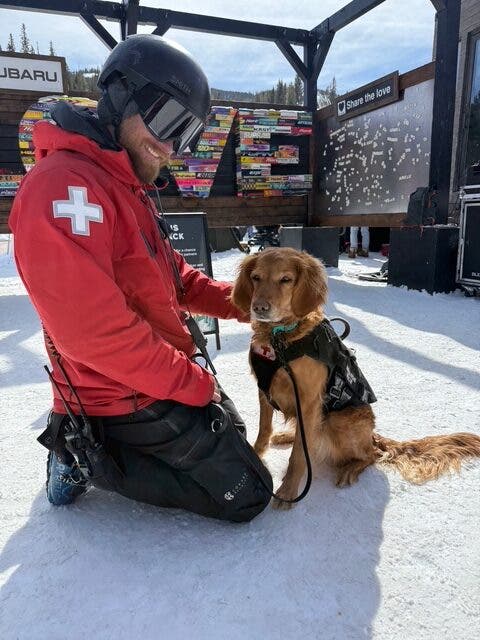
While their primary function is life-saving search and rescue, ski patrol dogs play a multifaceted role at mountain resorts, often serving as unofficial mascots. Their presence significantly boosts morale among patrollers, providing a source of levity and companionship in an often stressful and demanding environment. Beyond internal benefits, these dogs are powerful public relations assets. Events like Vail’s "Dine with the Dogs," a free, hour-long Sunday event introducing patrol dogs to guests, regularly attract crowds of 80 to 200 people. Andrea Reller notes, "The dogs are there in case something happens in resort boundaries or right outside. They also use them for advertisements. They definitely play a marketing part." Their approachable nature and photogenic appeal make them ideal ambassadors for mountain safety and resort branding.
For Copper Mountain Patroller Nick Slaton, the daily interactions with his six-year-old C-RAD-validated golden retriever, Nevé, are among the most rewarding aspects of his work. "Being able to bring my girl to work—she goes everywhere with me—that’s the best," he shares, as Nevé navigates a throng of admiring children during a Copper Patrol Dog "Meet and Greet" at Subaru Winterfest. "I can’t tell you how nice it is when I get back to the duty station and she’s just cuddled up on the couch with my coworkers. As soon as I grab the vest, she’ll be up and at it and ready to go play that game. Just that continued bond between us that keeps building all the time is rewarding." This sentiment is echoed by Chrissie Oken: "They’re so happy. Patrolling is hard. It’s draining. It’s fun to work with that energy. It brings everyone up."
The tight, almost telepathic bond between an avalanche dog and its handler is not merely a heartwarming aspect of their partnership; it is arguably the most critical component for successful searches. This synergy is built on countless hours of shared experiences, training, and mutual trust. "If we’ve done our training appropriately, the dog has already started working. They’ve started smelling, looking for scent," Reller explains. "It’s working together with purposeful movements. Some dogs have a longer range. Some want to work closer to their handler. A lot of avalanche dog searches involve reading your dog’s body language. Knowing she’s in scent, what the ears do or how the tail wags." The handler acts as an extension of the dog, interpreting subtle cues that indicate a change in scent concentration or proximity to a target, guiding the search with expert precision.
The Emotional Realities of Search and Recovery
Despite the rigorous training and advanced capabilities, the reality of avalanche rescue often involves recovery rather than live finds. Last winter, however, provided a rare moment of triumph. A search team was deployed to Vail Pass following an avalanche that buried a snowmobiler. Before the avalanche dogs could even begin their meticulous scent work, a rescuer spotted a piece of fabric protruding from the snow—the snowmobiler’s airbag. Miraculously, he was attached to it, alive, his helmet having created a crucial air pocket. "It doesn’t matter how the person was found. A live find is a cool experience for us," shares Ben Butler, who works with his black lab, Hoggle, for the Summit County Rescue Group. John Reller, after decades of body recoveries, expressed immense relief upon hearing the news.
Reller acknowledges the inherent tension between the public’s perception of "rescue" and the often grim reality. "We call them rescues, but nobody talks about what we typically are going to do," he states candidly. Yet, even in recovery missions, there is profound purpose and gratification. Providing closure for grieving loved ones is a critical service, offering a small measure of peace amidst unimaginable loss. Reller recalls one of his earliest and most deeply emotional missions with Skadee, his first avalanche dog. Dropped by helicopter into a half-mile slide path to search for a buried snowmobiler, he worked alongside a team of rescuers, friends, and family, including the victim’s wife. It was Reller who spotted a glove protruding from the snow, which, tragically, was attached to the buried man. "The wife came over, dropped down, understandably crying. There was something else, though. I was like, what’s that noise? It was Skadee mimicking that wailing sound. That’s why we have emotional support dogs, because they recognize that emotion." This powerful anecdote underscores the deep empathy these animals possess, offering comfort not just to survivors, but sometimes even to those mourning.
The Importance of Reward: Fueling the K9 Heroes
The relentless motivation and high spirits of avalanche dogs are not accidental; they are meticulously cultivated through a system of positive reinforcement and reward. During every search drill and test, handlers, and often the "victims" themselves, shower the dogs with enthusiastic praise and engaging playtime upon a successful find. This immediate gratification reinforces the desired behavior and keeps the dogs eager for their "game." For Baylee Rice, who leads the dog program at Copper Mountain Patrol, celebrating a job well done with her black lab, Lillie, delivers her most heartwarming moments. "After we’ve done a hard drill or worked a tough scenario, I always let her win with a toy," Rice says. "When she gets the toy, she runs around and looks so happy. When she lays down, she’ll drop the toy on her paws and look at me with a big smile. It’s like she knows she did such a good job and found what she was looking for. She’s done her job and now she’s like, ‘let’s play!’ It’s just the cutest." This emphasis on reward ensures that these highly driven dogs remain engaged, happy, and ready to deploy at a moment’s notice, their tails wagging not just for a toy, but for the inherent joy of their purpose.
As winter recreation continues to grow in popularity, placing more individuals in potential avalanche terrain, the role of these canine heroes and the organizations that train them will only become more critical. The bond between human and dog, forged in challenging training and tested in harrowing real-life scenarios, remains an indispensable element of mountain safety, a testament to the enduring power of partnership in the face of nature’s formidable challenges.
