


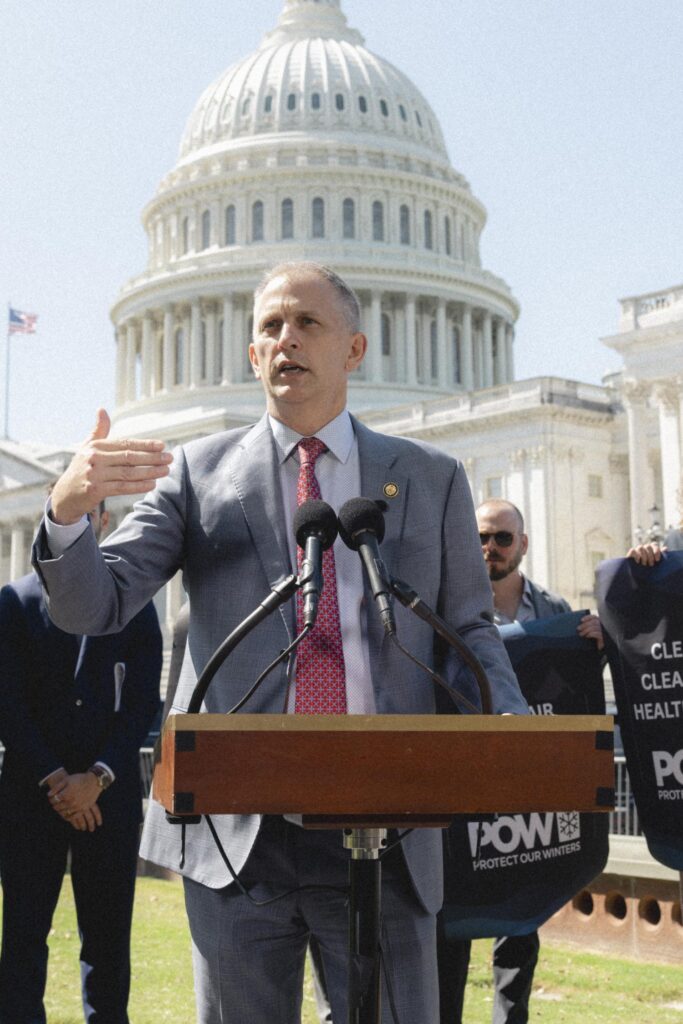
On September 16, a coalition of federal lawmakers and environmental advocates formally introduced the Environmental Health Restoration Act (EHRA), a legislative package designed to rebuild the regulatory capacity of the Environmental Protection Agency (EPA). Led by Representative Sean Casten of Illinois and Senator Sheldon Whitehouse of Rhode Island, the bill arrives at a critical juncture for American environmental policy, seeking to codify protections that have faced significant administrative and judicial challenges over the last decade. The legislation aims to restore the agency’s core mission of safeguarding public health, clean air, clean water, and climate stability by insulating scientific processes from political interference and reinforcing the legal authority of federal regulators to enforce environmental standards.
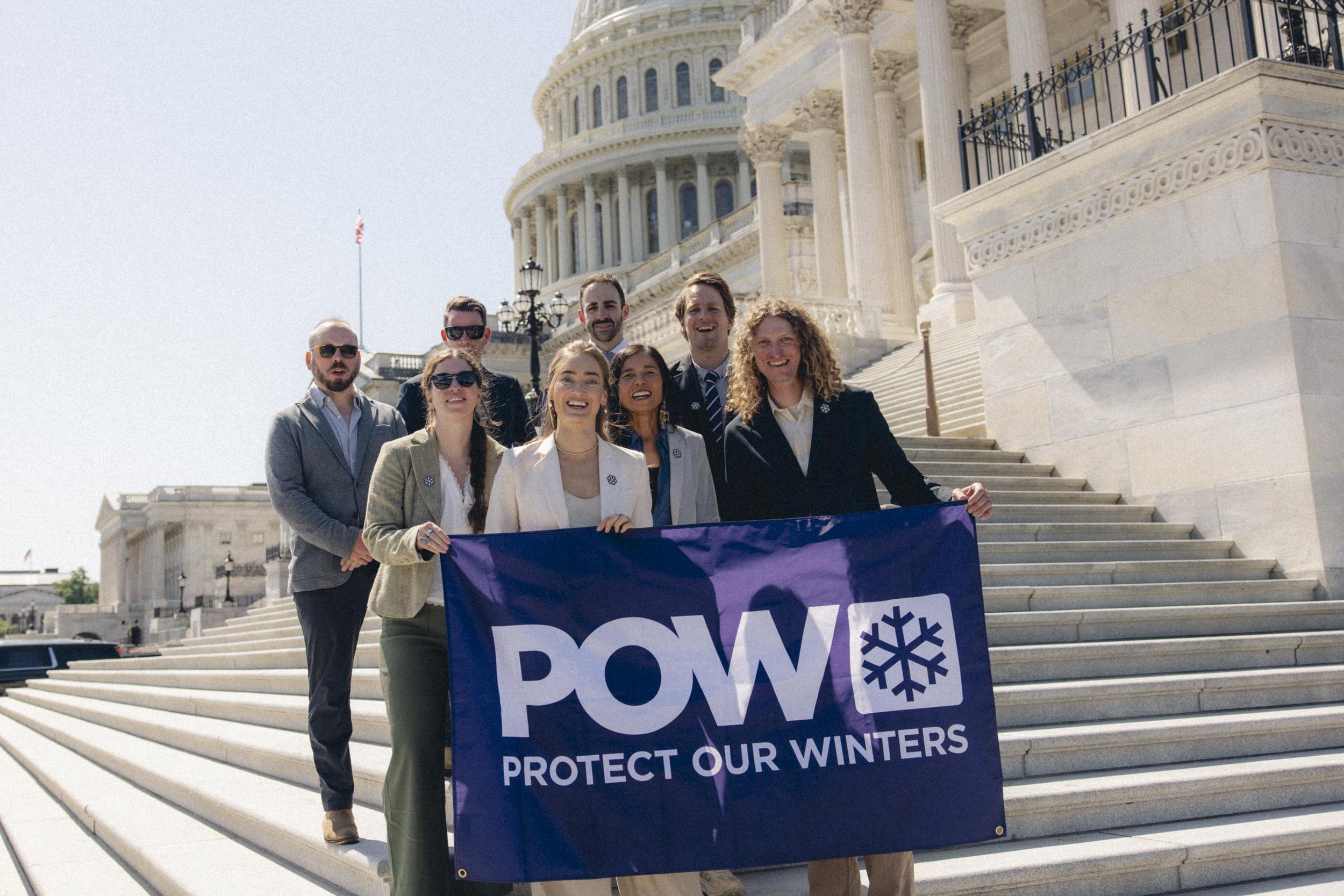
The introduction of the EHRA is a direct response to what proponents describe as a systematic "hollowing out" of the EPA. For over fifty years, the agency operated under a broad bipartisan consensus that environmental safety was a matter of national security and public welfare. However, recent years have seen a departure from this stability. The bill’s sponsors argue that the agency’s ability to function has been compromised by executive rollbacks and landmark court rulings that have limited the scope of the Clean Air Act and the Clean Water Act. By introducing this act, Congress is attempting to reassert its legislative intent and provide the EPA with a durable mandate that can withstand the shifting priorities of successive presidential administrations.
Historical Context: The Evolution and Erosion of the EPA
The Environmental Protection Agency was established in 1970 under the Nixon administration, born from a public outcry over visible pollution, such as the Cuyahoga River fire and the smog-choked skylines of major American cities. For decades, the agency enjoyed a mandate to set and enforce national standards based on the best available science. This framework led to the dramatic reduction of lead in gasoline, the recovery of the ozone layer, and a significant decrease in acid rain.
However, the legal landscape shifted dramatically in the early 21st century. The EHRA addresses a series of recent "gutting" actions, including administrative decisions that narrowed the definition of "Waters of the United States" (WOTUS) and judicial rulings such as West Virginia v. EPA (2022), which restricted the agency’s power to regulate greenhouse gas emissions from power plants. Furthermore, the 2024 Supreme Court decision in Loper Bright Enterprises v. Raimondo, which overturned the "Chevron deference" doctrine, has made it significantly easier for corporations to challenge federal regulations in court. The EHRA seeks to provide the specific statutory language necessary to navigate this new judicial reality, ensuring that the EPA does not require a specific act of Congress for every individual regulatory update.
Core Provisions of the Environmental Health Restoration Act
The Environmental Health Restoration Act is structured around three primary pillars: the restoration of regulatory authority, the reinforcement of scientific integrity, and the creation of administrative durability.

Restoring Regulatory Authority
The bill explicitly grants the EPA the power to regulate various forms of pollution that have recently fallen into legal gray areas. This includes more robust oversight of "forever chemicals" (PFAS), methane emissions from oil and gas operations, and industrial runoff that affects downstream communities. By clarifying these authorities, the EHRA intends to close the loopholes that have allowed polluters to bypass federal standards through litigation.
Reinforcing Science-Based Safeguards
A central component of the EHRA is the protection of the agency’s scientific workforce. The bill includes provisions to prevent the political suppression of data and ensures that career scientists—rather than political appointees—have the final say on technical findings related to public health risks. This is intended to prevent the "relentless attacks on science" cited by Senator Whitehouse, ensuring that policy decisions are grounded in empirical evidence regarding air quality, water safety, and climate change.
Ensuring Administrative Durability
To combat the "pendulum effect" where environmental rules are enacted by one administration and immediately repealed by the next, the EHRA introduces higher thresholds for the repeal of established protections. It mandates that any significant rollback of environmental standards must be accompanied by a comprehensive scientific justification that proves the change will not negatively impact public health or the economy.
The Economic and Environmental Stakes
The push for the EHRA is not merely an environmental concern but an economic necessity for several major American industries. The outdoor recreation economy, which contributes an estimated $1.1 trillion to the U.S. GDP annually and supports nearly 5 million jobs, is uniquely vulnerable to environmental degradation. Pollution does not respect state lines; wildfire smoke from the West affects air quality in the East, and contaminated headwaters in the Rockies can devastate agriculture and tourism in the Mississippi Delta.

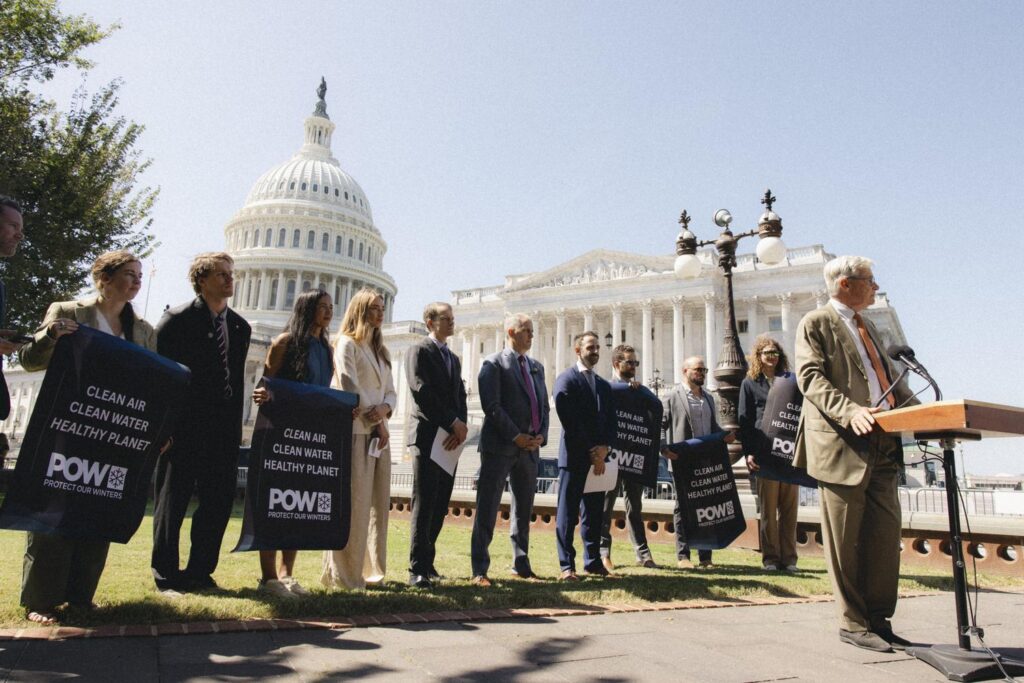
During the press conference on the Capitol lawn, professional climber and outdoor advocate Tommy Caldwell highlighted the tangible impacts of environmental decline. Drawing from years of experience in high-alpine environments, Caldwell noted that glaciers are shrinking at an accelerated pace and air quality has become increasingly volatile. These changes directly threaten the viability of mountain communities that rely on winter sports and summer tourism.
Supporting data from the National Oceanic and Atmospheric Administration (NOAA) reinforces these concerns, showing that the frequency of "billion-dollar disasters"—including floods, wildfires, and hurricanes—has increased significantly over the last decade. Proponents of the EHRA argue that a weakened EPA increases the long-term costs of disaster recovery and public health crises, far outweighing the short-term compliance costs for industrial polluters.
A Broad Coalition: The Role of Protect Our Winters and Partner Organizations
The formal introduction of the EHRA was supported by a diverse coalition of stakeholders, including the organization Protect Our Winters (POW). POW brought together a group of professional athletes, scientists, and business leaders to advocate for the bill, emphasizing that clean air and water are fundamental to the "outdoor way of life."
The coalition also includes legacy environmental groups such as the League of Conservation Voters (LCV), the Surfrider Foundation, the Natural Resources Defense Council (NRDC), and the Southern Utah Wilderness Alliance (SUWA). These organizations represent a broad spectrum of interests, from coastal protection and ocean health to the preservation of public lands in the American West. By aligning these groups, the bill’s sponsors have built a platform that addresses the interconnected nature of modern environmental challenges.

Ben Gubits, POW’s Vice President of Advocacy and Campaigns, emphasized that rolling back protections has immediate consequences for public health. "The Environmental Health Restoration Act draws a clear line: the EPA must follow science, enforce the law, and put people ahead of polluters," Gubits stated. This sentiment reflects a growing movement among advocacy groups to shift the narrative from "conservation versus the economy" to "environmental health as the foundation of economic stability."
Chronology of Advocacy and Legislative Strategy
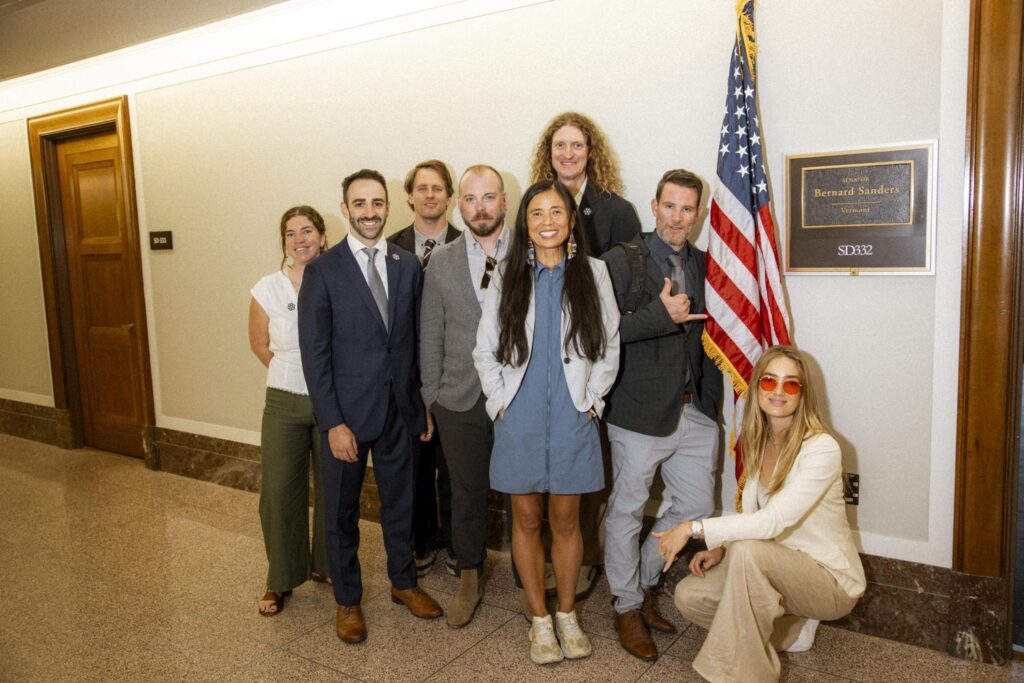
The path to the EHRA’s introduction involved months of strategic planning and direct lobbying. In the days surrounding the announcement, advocates met with five separate congressional offices to build a bipartisan foundation for the bill.

- September 15: Advocacy teams from POW and partner organizations arrived in Washington, D.C., to coordinate messaging and finalize the coalition’s demands.
- September 16 (Morning): Formal introduction of the bill by Rep. Casten and Sen. Whitehouse. A press event was held on the Capitol lawn featuring testimonials from athletes and scientific experts.
- September 16 (Afternoon): Stakeholders conducted meetings with Republican and Democratic offices, including Representatives Andrew Garbarino (R-NY) and Maxine Dexter (D-OR), and Senators Bernie Sanders (I-VT), Jeff Merkley (D-OR), and Ron Wyden (D-OR).
- The "Long Game" Approach: Acknowledging the current polarized state of Congress, organizers have stated that the EHRA is part of a multi-year strategy. While immediate passage in the current session is unlikely, the goal is to build a record of support and refine the legislation for a "weather window" of passage, potentially targeting the 120th Congress in 2029.
This strategic patience mirrors the history of major environmental legislation. The original Clean Air Act and its subsequent 1990 amendments took years of coalition-building and public education before they achieved the momentum necessary for a floor vote.
Broader Implications and Future Outlook
The introduction of the Environmental Health Restoration Act signals a new phase in the American environmental movement—one focused on institutional resilience. By attempting to codify the EPA’s mission into more specific and ironclad statutory language, Congress is looking to reclaim its role as the primary architect of environmental policy, rather than leaving the details to the discretion of executive agencies or the interpretation of the courts.

If the EHRA fails to gain traction, analysts warn of a continued "regulatory vacuum" where state-level protections create a patchwork of conflicting rules, increasing uncertainty for businesses and leaving vulnerable communities without federal recourse. Conversely, the successful passage of the act would represent the most significant expansion of environmental law in over three decades.
The next phase of the campaign will involve growing the list of co-sponsors and turning grassroots momentum into sustained political pressure. As the impacts of climate change become more pronounced in the form of diminished snowpacks and contaminated waterways, the urgency behind the EHRA is expected to grow. For the outdoor community and the millions of Americans who depend on clean air and water, the act represents a vital effort to ensure that the EPA remains a "vital institution" capable of protecting the nation’s health and natural heritage for generations to come.
