

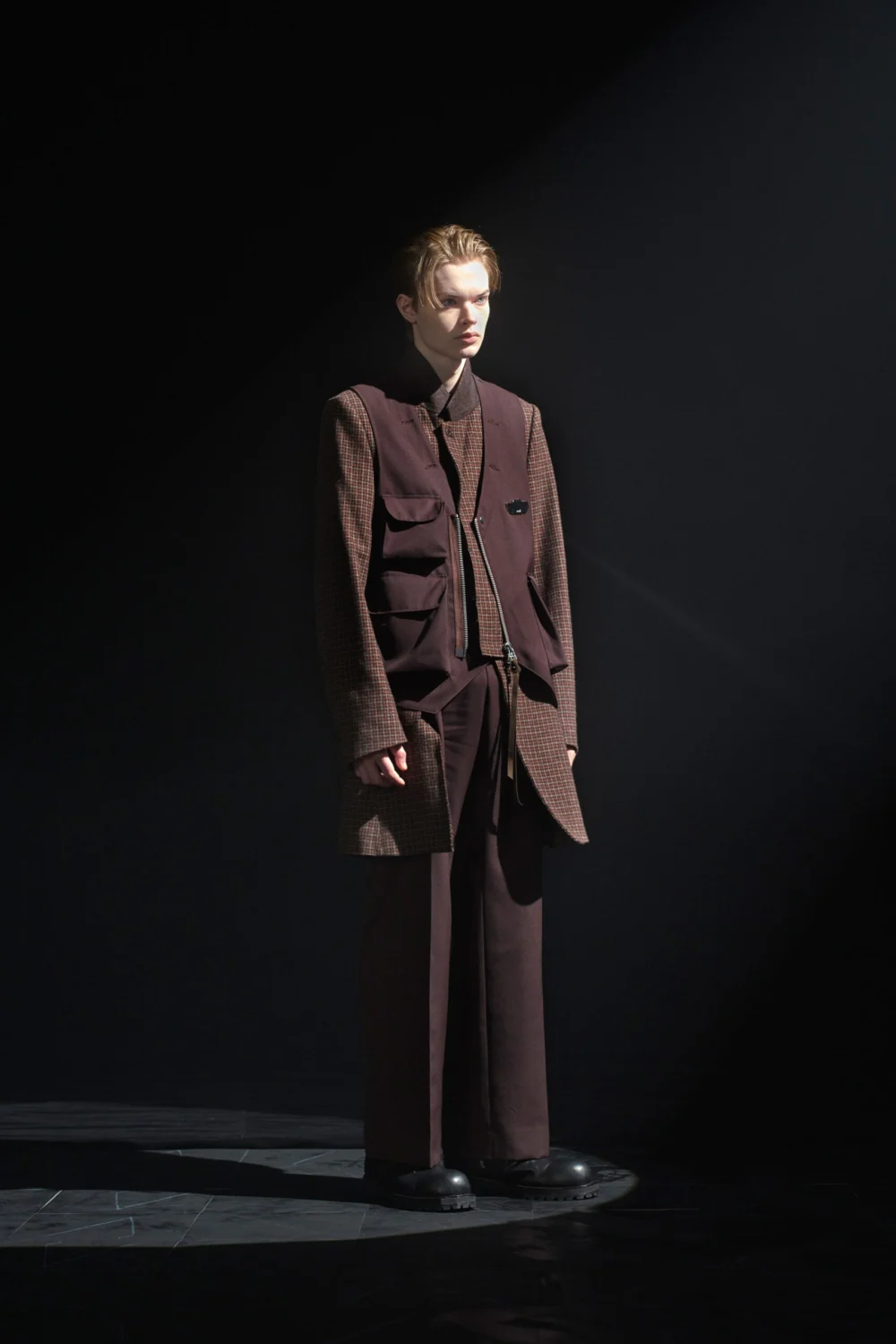
Tokyo, Japan – In a city renowned for its cutting-edge fashion and meticulous craftsmanship, Tatsuya Tamada, the creative force behind the Tamme label, presented his latest collection, a deeply personal exploration of power, discipline, and the potential for individual expression within structured garments. During a recent showroom walkthrough in Tokyo, Tamada articulated his overarching vision for this season: “The main thing I wanted to do with this collection was to give people a better understanding of the Tamme brand. Up until now, my design sources have been military and army-style items, military clothing, and formalwear. Uniforms, in other words.” This statement, delivered with a quiet intensity, underscored the thematic throughline that permeated every piece presented.
The designer’s fascination with uniforms is not a recent development but a deeply ingrained aspect of his personal history. Tamada’s childhood memories are intrinsically linked to the uniform his father wore as a policeman in Fukushima. The sight of his father, returning from his duties on the streets, with his imposing black boots and practical baby blue work shirts, sparked a profound contemplation in young Tatsuya. He was captivated by the tangible representation of discipline and authority that the uniform embodied, and how such abstract concepts could be woven into the very fabric of clothing. “His appearance represented a righteous person,” Tamada reflected. “Looking back, I think that was probably what made me think he was cool.” This early exposure to the symbolic power of uniform has clearly shaped his design ethos, imbuing his work with a sense of respect for structure while simultaneously challenging its perceived rigidity.
Tamada’s technical prowess, honed through his formative years at Sacai, a brand celebrated for its innovative deconstruction and reconstruction of garments, was on full display. He masterfully employed pattern-cutting techniques to reimagine traditional uniform elements, infusing them with a subversive edge that remained remarkably adaptable for everyday wear. The collection presented a compelling paradox: garments that evoked the authority and order of military attire were simultaneously rendered with a contemporary sensibility, inviting wearers to integrate them into their personal wardrobes.
A Fusion of Military Heritage and Modern Design
Key pieces in the collection demonstrated Tamada’s innovative approach to material and silhouette. Ribbed cricket sweaters, typically associated with collegiate athleticism, were elevated with unexpected detailing. Contrasting cable knit panels adorned the V-neck, which was further accentuated by a discreet navy zip-pull at its center, hinting at utilitarian functionality. Cargo jackets, rendered in a sophisticated greige hue, featured the vibrant safety-orange lining characteristic of iconic MA1 flight jackets, a bold juxtaposition of subdued exterior and assertive interior.
Perhaps one of the most striking examples of Tamada’s transformative design was an ensemble that, at first glance, appeared to be an indigo trench coat. Upon closer inspection, it revealed itself to be a sophisticated layering of a jacket over a skirt, meticulously constructed to achieve a wrap silhouette that was both tough and elegantly draped. This piece exemplified the collection’s ability to deconstruct and reassemble familiar forms into something entirely new.
A standout collaboration with Kids Love Gaite, a label known for its avant-garde and imaginative footwear designs, resulted in a compelling reinterpretation of Japanese police boots. These boots, distinguished by their geometric soles and striking silver front zips, offered a bold statement piece that perfectly encapsulated the collection’s blend of utilitarian inspiration and fashion-forward execution. The collaboration underscored Tamada’s willingness to push boundaries and partner with creatives who share his experimental spirit.
Reimagining Uniformity for Individual Expression
Beyond the more overt military and formalwear references, the collection also incorporated elements of casual wear, lending a broader appeal and demonstrating the versatility of Tamada’s vision. Grungy checked shirts, a staple of relaxed dressing, were paired with Tamme’s signature loose neckties, creating an intriguing contrast between casual fabrics and more formal accessories. This juxtaposition suggested a re-evaluation of traditional dress codes, where established pairings are playfully disrupted.
Tamada’s approach to tailoring further emphasized his desire to inject personality and flair into structured garments. The collection featured suits with exaggerated peak lapels, lending a dramatic and confident silhouette. Trousers were cut with a generous, billowy volume, evoking a sense of movement and a subtle nod to disco-era fashion. The overall effect was a compelling amalgam of styles and eras: “half teenage rebellion, half SWAT team swagger, by way of a party-ready salaryman.”
Tamada’s stated philosophy behind these design choices is rooted in empowerment. “By breaking down, substituting, or changing a uniform, you can create your own individuality,” he explained. “I’ve given each piece its own will, with the idea that they can be worn and used completely freely.” This ethos suggests that while uniforms may represent conformity, their deconstruction and reinterpretation can serve as a powerful tool for self-expression, allowing individuals to curate their own sartorial narratives.
Contextualizing Tamme in the Contemporary Landscape
The presentation of Tamada’s collection arrives at a particularly pertinent moment. In an era where the concept of uniform and the authority it represents are subjects of intense scrutiny and, at times, significant public apprehension, Tamada’s work offers a nuanced perspective. The global sociopolitical climate, marked by widespread discussions surrounding institutional power, societal expectations, and individual freedoms, provides a fertile ground for designers to engage with these complex themes.
The efficacy of uniform as a symbol of power, whether benevolent or oppressive, is a subject that resonates deeply in contemporary discourse. Tamada’s collection, by engaging with the visual language of uniforms but subverting their inherent meaning, invites wearers to question the established order and to find agency within the very structures that might otherwise seek to define them. His designs are not merely aesthetic statements; they are provocations that encourage a deeper consideration of how clothing influences our perception of self and society.
Looking Ahead: Expanding the Tamme Universe
While Tamada’s designs are undeniably convincing and thoughtfully executed, the broader impact and long-term implications of his work within the fashion industry and beyond remain a subject of ongoing observation. The collection demonstrates a strong foundational understanding of design principles and a clear artistic vision. However, as with any emerging designer or established brand seeking to make a significant cultural imprint, the ability to consistently translate this vision into a sustainable and influential presence is paramount.
The fashion industry, particularly in its relationship with iconic and often controversial symbols like military uniforms, operates within a complex ecosystem. Brands that successfully navigate this landscape often do so by building a comprehensive brand narrative and fostering a loyal community of supporters who resonate with their core values. Tamada’s focus on individuality and empowerment within the framework of uniform design presents a compelling avenue for growth.
The journey from a singular collection to a globally recognized fashion entity is a long and often challenging one. As Tamada continues to develop the Tamme brand, his ability to expand the universe of his designs, perhaps by exploring new thematic territories or forging deeper collaborations that extend his brand’s reach, will be crucial. The current moment, with its heightened awareness of power dynamics and the search for authentic self-expression, offers a unique opportunity for Tamme to carve out a distinct and influential niche. As any astute observer of history or contemporary events knows, while clothing can be a powerful tool, its ultimate impact is amplified by the context and the individuals who choose to wear it. The question remains how Tamada will continue to empower his audience to wield that influence.
