

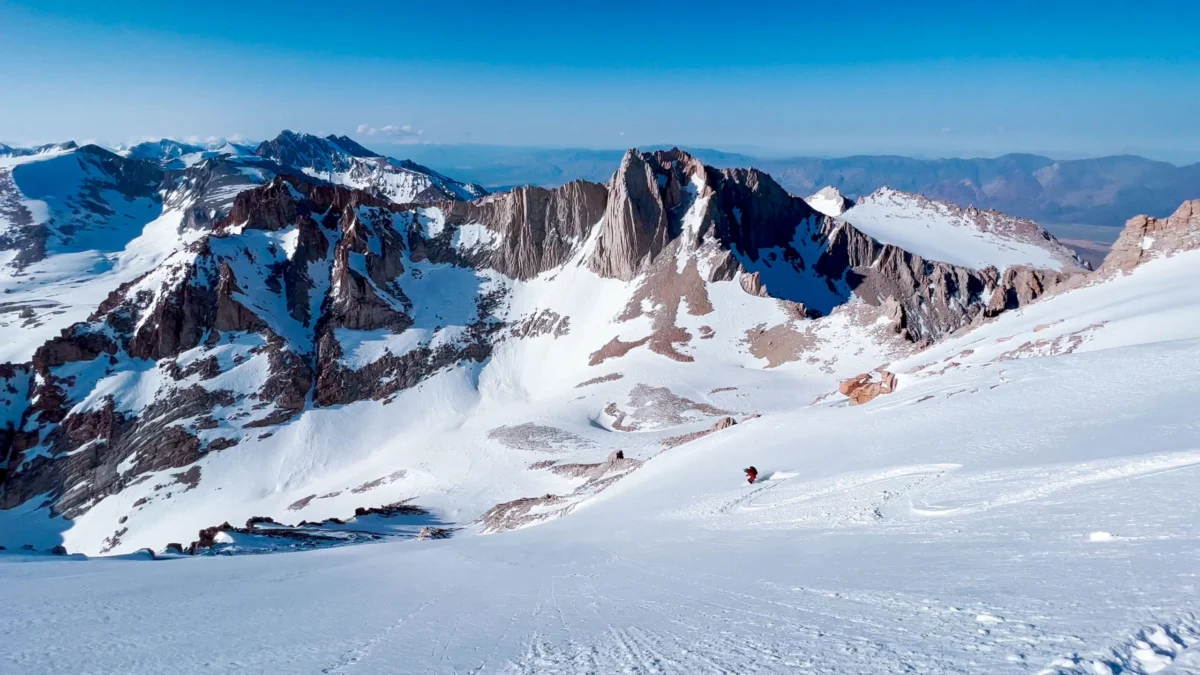
Updated March 17, 2026, the story of the Redline Traverse continues to captivate, reflecting both the timeless allure of the Sierra Nevada and the evolving nature of backcountry exploration. It was 6 p.m. on a crisp spring evening in 2023 when the unique, distilled light of the Sierra drenched the granite peaks, stretching north as far as the eye could see. Jenna Kane and Greg Cunningham, a seasoned duo, moved with practiced rhythm, alternating between rock hopping and post-holing, their packs and skis a testament to the arduous journey. Before them lay the summit of Mt. Whitney, a personal milestone for Kane whose middle name it inspired. Their arrival at the day’s high point brought a temporary reprieve, yet beneath it thrummed a familiar disquiet: "Will it go?" This question, echoing through the generations of adventurers who have contemplated the Redline, speaks not just to immediate conditions, but to the very philosophy of undertaking a traverse that exists more as an idea than a fixed route. Their 19-day expedition, along with a separate, concurrent attempt by Spencer Dillon and Matt Skorina, has reignited a critical discussion within the ski mountaineering community about tradition, interpretation, and the true spirit of high-alpine adventure in an increasingly mapped world.
The Sierra’s Mythical Redline: A Legacy Reimagined
The concept of the Redline Traverse was born from the ambitious minds of California skiers Allan Bard, Chris Cox, and Tom Carter in the early 1980s. Their vision was not merely a ski trip but a grand, high-alpine odyssey across the formidable Sierra Nevada. The route was conceived to follow the "geopolitical red line" often found on maps, delineating the Sierra Crest and, by extension, the boundary between the eastern and western watersheds, stretching from Mt. Langley in the south to Mammoth in the north. This was a traverse of immense scale, designed to connect dozens of exhilarating ski descents, cross nearly fifty passes, and summit more than twenty peaks, rarely dropping below 11,000 feet in elevation.
Between 1981 and 1983, during what were described as "historic winters" for snowpack, the trio meticulously pieced together sections of this epic journey. Their equipment, by today’s standards, was rudimentary yet robust: randonee Nordic skis, three-pin bindings, heavy leather boots, and substantial packs. This gear demanded a profound level of skill, endurance, and self-reliance, fundamentally shaping their experience. Beyond the physical route, the founders imbued the Redline with a philosophical dimension. In a 1983 Powder Magazine article, they offered intentionally vague instructions, emphasizing the spirit of the endeavor over prescriptive details. The name "Redline" also alluded to "redlining the fun meter," suggesting an experience pushed to the limits of enjoyment and challenge. This deliberate ambiguity laid the groundwork for future generations to interpret and personalize the traverse, rather than simply replicate it.
Despite its allure and the pioneering spirit of its creators, the Redline Traverse remained a rare feat. The primary reason for its elusiveness was the Sierra’s notoriously unpredictable "feast-or-famine" storm cycles. Many years simply lacked the consistent, deep snowpack required to maintain such a high line across the range on skis. This scarcity only amplified its mythical status among local skiers, transforming it into a coveted challenge for only the most opportune seasons.
A Winter of Abundance: Setting the Stage for 2023
The winter of 2022-2023 delivered a snowpack that was nothing short of historic for California. Following several years of drought, the Sierra Nevada experienced an extraordinary season, with snowfall totals reaching levels not seen in decades. According to data from the California Department of Water Resources, the statewide snowpack peaked at over 250% of its average on April 1, 2023, making it one of the largest on record, surpassing even the abundant winter of 2016-2017. This colossal snow accumulation transformed the high country into an unprecedented canvas for ski mountaineering.
For seasoned professionals like Kirkwood Mountain freeride coach Jenna Kane and ski patroller/avalanche forecaster Greg Cunningham, who are on snow daily, the unique character of that winter was unmistakable. Their intuition, honed over years of multi-day missions and smaller traverses in the Sierra, began to tingle with the possibility of something truly monumental. "We didn’t start out thinking we were going to ski the Redline. We just wanted to do something that would honor this incredible season," Cunningham recalled. The conditions aligned perfectly, creating a rare window for a high-alpine traverse that few seasons allow. For Kane, the prospect of being "completely immersed in the mountains for three weeks, skiing all day," was a dream come true, made possible by this exceptional snow year.
Jed Porter’s Continuous Vision: The 2017 Precedent
Before the remarkable winter of 2023, the 2016-2017 season offered another of those rare windows when conditions were ripe for the Redline. Bishop, California-based guide Jed Porter seized this opportunity, undertaking what would become a seminal continuous traverse. Porter, who described the Redline as having "near-mythical status" among locals, approached the route with a profound respect for its founders’ "poetry of vision rather than the prose of prescription."
Porter’s 2017 expedition was a significant evolution of the Redline concept. He became the first known individual to complete the traverse continuously, covering an impressive 125 miles and ascending over 79,000 vertical feet in just 16 days. While the original founders had completed their traverse in sections, Porter’s continuous effort set a new benchmark for endurance and commitment. He even "raised" the founders’ original 20 tagged peaks by adding 25 more, demonstrating an ambitious interpretation of the route. Notably, Porter also felt comfortable deviating from the strict crest line when better skiing opportunities presented themselves, highlighting a pragmatic approach to the aesthetic of the traverse.

His journey, undertaken mostly solo with friends joining for short segments, also showcased the advancements in ski mountaineering. Unlike the founders’ heavy, less efficient gear, Porter benefited from modern lightweight skimo equipment, digital topographic maps, and satellite communication devices. These technological leaps undeniably facilitated his continuous effort, allowing for faster travel and more precise navigation. This disparity in equipment and information led Porter to ponder what future iterations might look like, suggesting "there’s still a lot of room to grow" within the Redline’s framework. His experience solidified the idea that while the Redline had a history, its exact route was fluid, inviting interpretation and innovation from each subsequent adventurer.
The 2023 Expeditions: Two Teams, Divergent Paths
The extraordinary snowpack of 2023 beckoned not one, but two distinct parties to attempt the Redline Traverse, each setting out within days of each other in May, yet destined to draw very different lines across the range.
Jenna Kane and Greg Cunningham’s Vision of Reverence:
For Kane and Cunningham, partners both in life and in the mountains, the Redline represented an opportunity to engage deeply with the Sierra. Their commitment was not just to completing a route but to undertaking it in what they considered "good style," a concept intricately linked to reverence for the range and its history. This meant adhering closely to the sparse criteria left by the founders: traveling within a mile of the Sierra Crest, staying predominantly above 11,000 feet, and skiing the specific peaks named in the original Powder article. "I think the way you draw the line is your style," Kane articulated, emphasizing the personal yet respectful interpretation they aimed for. Cunningham, driven by a desire to "up the ante a little bit," hoped their traverse would leave its own distinct mark while honoring the past. Over 19 days, they covered 145 miles, ascended over 80,000 vertical feet, and successfully summited 15 of the 26 peaks they traversed, completing 28 ski lines from Mt. Langley to Mammoth.
Spencer Dillon and Matt Skorina’s Ambitious Extension:
Concurrently, in Salt Lake City, graduate student Spencer Dillon was meticulously planning his own Redline attempt, driven by a different set of motivations. For Dillon, who had endured an arduous academic year, the Redline was a "little carrot to make it through the school year," a self-inflicted suffering of a different kind. His ambition was to extend the traditional finish line from Mammoth to Bridgeport, an additional 40 miles north, thereby putting his unique stamp on the traverse. He enlisted Matt Skorina, a friend from guiding on Mt. Shasta, to join him. Skorina, fresh from a months-long stint on a research submarine in the Galapagos, was not in ideal conditioning for high-altitude ski touring. Dillon candidly acknowledged that Skorina joined "as a favor to me," and was more inclined to "ski the logical line for our conditions and our bodies" rather than strictly adhere to every historical tenet. Dillon, however, was "chomping at the bit" to ski the Redline "to the letter" while the rare conditions allowed, acutely aware of how climate change might diminish such opportunities in the future. Their expedition spanned 16 days, covering 160 miles, ascending 70,000 vertical feet, and tackling a dozen or so significant lines.
Technology, Beta, and the Spirit of Discovery
The information landscape for backcountry adventures has undergone a seismic shift since the Redline’s inception. In the 1980s, Bard, Carter, and Cox navigated primarily by map, compass, and intuition, leaving behind only a few film shots and sparse written descriptions. The concept of a GPX file—a digital route that can be uploaded to mapping apps like Gaia—was decades away. Their Redline was a truly raw, unmediated experience.
By 2017, when Jed Porter undertook his continuous traverse, the world of backcountry information was vastly different. A comprehensive backcountry ski guidebook for the Eastern Sierra had been published in 2009. Online blogs, social media platforms, and GPS tracking services like Strava had become common repositories for trip reports, detailed routes, and photographic evidence. This exponential increase in accessible information undeniably made pre-trip research easier, but it also, in the view of some, diminished the element of pure discovery.
Porter, mindful of the founders’ intentionally vague instructions, opted for a nuanced approach to sharing his beta. He published a detailed trip report with photos and an elevation profile on Wildsnow.com but consciously refrained from sharing the full GPX file publicly. He did, however, offer the file directly to Kane, Cunningham, and Dillon, all of whom independently chose to conduct their own planning and navigation.
This decision sparked a thoughtful debate about the role of information in adventure. Spencer Dillon passionately articulated his belief in maintaining a degree of mystery: "If you read the beta blow by blow, it takes the sparkle away," he argued. "You don’t get to have your own experience because it becomes mediated by ‘I’m not skiing the line that someone else skied.’" For Dillon, the act of figuring out the route for oneself was a powerful antidote to "the malaise of comparison in the outdoor world" and an essential component of genuine fun.
The discussion also touched upon the complex issue of "gatekeeping" in outdoor communities. Backcountry skiing, and by extension the exclusive circle of Redline finishers, remains overwhelmingly white and male; Kane is the first known woman to complete the traverse. While some argue that withholding information can perpetuate exclusivity, Dillon and Kane both contend that simply posting a GPX file won’t solve systemic inequities. True inclusivity, they believe, requires addressing root causes such as access to entry-level skiing, mentorship, and comprehensive preparation that extends far beyond a digital map. As Kane noted, being prepared for an endeavor of this magnitude demands significantly more than just a route file, and both she and Cunningham expressed willingness to share their beta with anyone who genuinely sought it. Porter echoed this sentiment, stating, "The goal is not for it to remain forever a secret. I hope our abilities and creative capacities for mountain endeavors will increase faster than information gets out there."
The Crucible of Decision: Navigational Challenges and Ethical Dilemmas
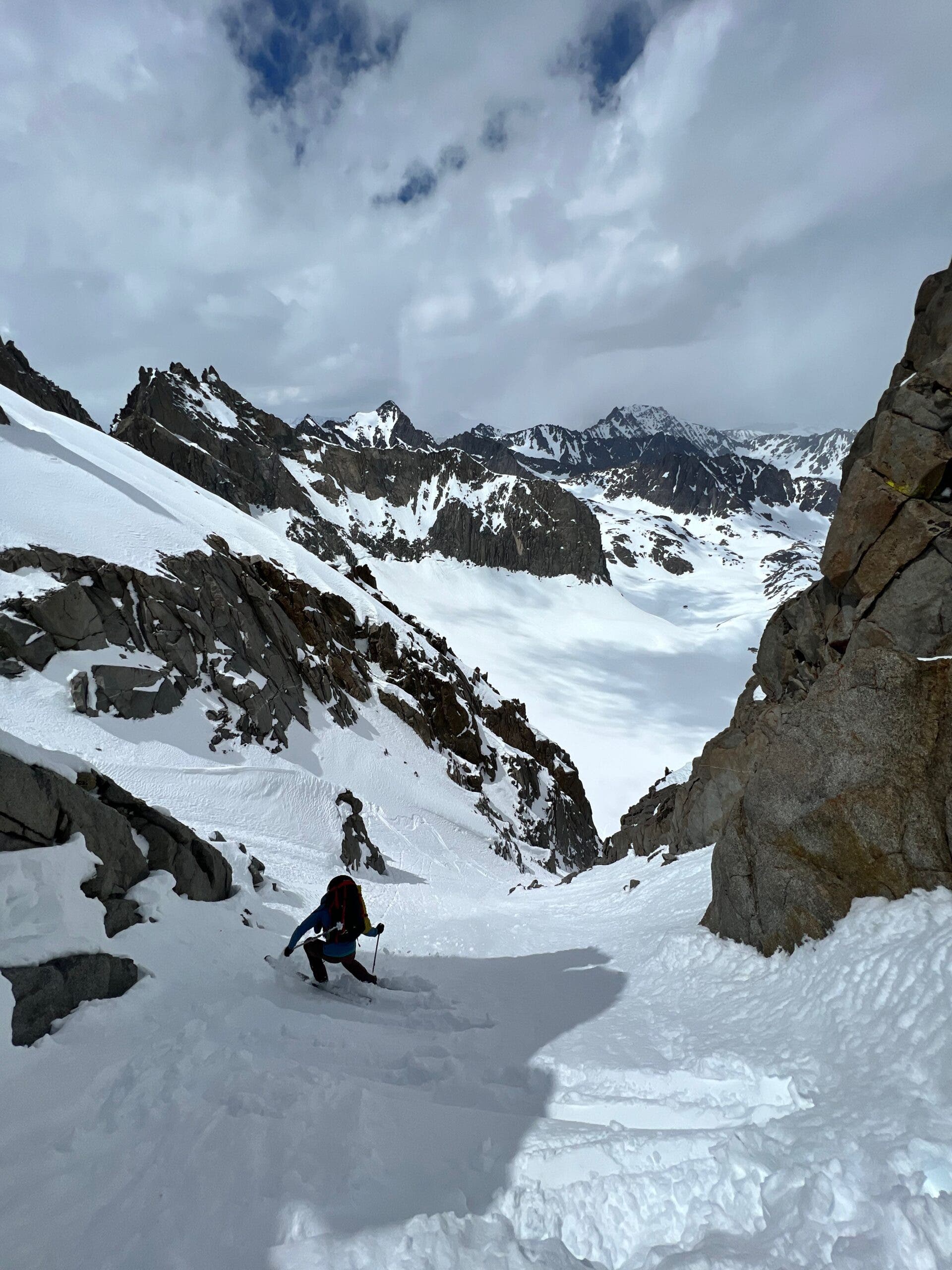
Even with meticulous planning and favorable conditions, the High Sierra presents formidable, often unpredictable, challenges. Six days into their traverse, Kane and Cunningham found themselves in a starkly different landscape than the cold, powdery slopes of Mt. Whitney. It was now mid-May, and the snowpack had become sloppier under warming temperatures. An extra peak bagged the previous day had put them behind schedule, adding to their fatigue. Post-holing up the south side of a ridge that bisected the crest, they were met with a harrowing sight: unskiable cliffs dropping precipitously below them. While a route closer to the crest might exist, the time and energy required to scout it risked increasing wet avalanche danger with every passing minute of sun exposure.
As partners in both skiing and life, Kane and Cunningham shared an unspoken understanding. The only safe and logical way forward was to descend below 11,000 feet, a direct contradiction of a core tenet of the Redline. Cunningham, typically stoic, visibly sagged under the weight of this decision, his shoulders bearing the burden of long days and a heavy pack. The deviation, though brief—only half a mile and 500 vertical feet—felt, in their eyes, like a taint on the purity of their Redline. Kane, demonstrating remarkable leadership, stepped up, breaking trail for 2,000 vertical feet up to Darwin Col, ensuring the team could continue their journey, albeit with a profound sense of compromise.
Spencer Dillon and Matt Skorina faced their own set of moral quandaries and navigational adjustments. From the outset, Dillon grappled with the "nagging guilt of deviation." After successfully starting with Mt. Langley, they chose to skip Mt. Whitney and Mt. Russell, two of the "primary pearls" explicitly named in the original Powder article. Later, Dillon recounted, "we’re way out at the JMT, and suddenly Mt. Williamson seems really far away." These detours, initially, felt devastating to Dillon, a sentiment he attributed partly to his personal struggles with dissatisfaction and the desire for maximization, and partly to the genuine scarcity of the Redline’s optimal conditions. He found himself "comparing himself in a vacuum, because we weren’t skiing the highest line, and didn’t know exactly what other folks did." However, after these initial days of disappointment, Dillon recognized he was "ruining his own experience by being grumpy," and consciously shifted his mental approach for the remainder of the expedition, finding joy in exploring "unnamed stuff to the west," which he eventually recognized as "the adventure I wanted to have."
These moments of forced compromise and self-reconciliation underscore the inherent challenges of the Redline. The John Muir Trail (JMT), a popular backpacking route, parallels the Redline at significantly lower elevations. The question then becomes: at what point does a Redline effort, through necessary deviations, transform into something else entirely?
Redefining the Redline: Fidelity vs. Fluidity
The experiences of the 2023 Redline adventurers brought into sharp focus a long-standing philosophical debate within the ski mountaineering community: what truly constitutes a "Redline"? Is it a rigid set of criteria, or a flexible concept adaptable to conditions and personal interpretation?
Intriguingly, the Redline’s founders themselves appear to advocate for flexibility. Tom Carter, one of the original pioneers, offered his perspective in Flylow’s 2023 film, The Redline Traverse: 40 Years on the Sierra’s Highest Route, remarking on Kane and Cunningham’s effort: "It’s not just about checking the boxes or making it to whatever slope. So much of it is letting the spirit of the range [inform] the plan." This suggests an emphasis on experiential quality over strict adherence to predefined metrics.
Jed Porter adopts an even more egalitarian stance, viewing the Redline as "mainly an act of creativity." He asserts, "There’s something in it for everyone—you can make it as rowdy or as mellow as you want." Porter, secure in the recognized validity of his own continuous Redline, does not distinguish between a "Redline Traverse" and a "Redline-inspired experience," believing that "there is no one Redline Traverse. There’s no record of it." This perspective champions individual expression and the democratizing potential of the idea.
However, Kane expressed reservations about such an open interpretation. For her and Cunningham, their meticulous efforts to adhere to the founders’ sparse criteria—staying within a mile of the crest, maintaining above 11,000 feet, and skiing specific peaks—were central to their experience. To allow for Redlines that disregard these boundaries, she felt, risked diluting the meaning and diminishing the gravity of their accomplishment. For them, "style" was intricately connected with a profound reverence for the Sierra, the historical legacy of the traverse, and its forebears.
Dillon, despite his early struggles with deviation, also grappled with the public perception of his traverse. While he eventually found personal satisfaction in his unique adventure, he acknowledged a "gut sense of when we’re lying to ourselves about what we’ve done." He posed a poignant question: "At a certain point you have to be honest about what the community thinks is a thing, right?" This highlights the tension between individual experience and collective understanding, especially for an endeavor that holds "mythical status."
The complexities of translating the 1980s Redline to modern versions are, as the article’s author eloquently put it, "perhaps more mystical than mathematical." Each skier, whether founders, Porter, Kane/Cunningham, or Dillon/Skorina, undertook the Redline in a way that felt most logical and fulfilling to them, and none followed the exact same route. This inherent variability underscores a fundamental truth about grand adventures: complete replication is often impossible, and perhaps, not even the point.
Broader Implications: Adventure in a Changing World
The ongoing Redline narrative transcends individual expeditions, offering profound insights into broader trends impacting outdoor recreation and our relationship with wilderness.
Climate Change and Narrowing Windows: The record-breaking winter of 2023, while a boon for ski mountaineers, also serves as a stark reminder of climate change’s influence. Long, high-alpine ski traverses like the Redline are becoming increasingly contingent on "narrow windows of snow, stability, and timing that don’t come around every year." As global temperatures rise and weather patterns become more volatile, these "historic winters" may become less frequent or more extreme, making such expeditions even rarer and more hazardous. This creates a bittersweet irony: the very conditions that enable these epic journeys are themselves threatened.
The Evolving Definition of "Adventure": With the advent of GPS, satellite communication, and detailed online beta, the "unknown" in the backcountry has shrunk significantly. While this enhances safety and accessibility for some, it fundamentally alters the nature of adventure. The Redline, an "idea with history but no fixed route," sits precisely at this intersection. It forces participants to reckon with how much of an adventure lies in fidelity to what came before, and how much in the line one chooses to draw for oneself. This internal reckoning is perhaps the most significant challenge for modern adventurers: finding personal meaning and discovery in a world that is increasingly mapped and documented.
Inclusivity and Accessibility: The demographic makeup of Redline finishers—historically white and male—highlights the broader issue of representation in backcountry sports. While technology and information can theoretically democratize access, the debate around "gatekeeping" versus "mystery" underscores deeper structural barriers. True inclusivity requires more than just shared GPX files; it demands addressing economic, social, and cultural factors that limit access to the ski world, starting at entry levels and extending through comprehensive mentorship. The Redline’s story, therefore, becomes a microcosm for discussions about equity and opportunity in the great outdoors.
The Enduring Allure: More Than Just a Line on a Map
On their last full day in the Sierra, Kane and Cunningham reached a profound state of flow. They had settled into the rhythm of navigating the peaks and passes, having mastered the intricate dance of team decision-making. The agenda for the day included two iconic lines: Red Slate Couloir and Bloody Couloir. Each would be a significant undertaking on its own, but after nearly three weeks in the mountains, they felt like a reasonable "twofer."
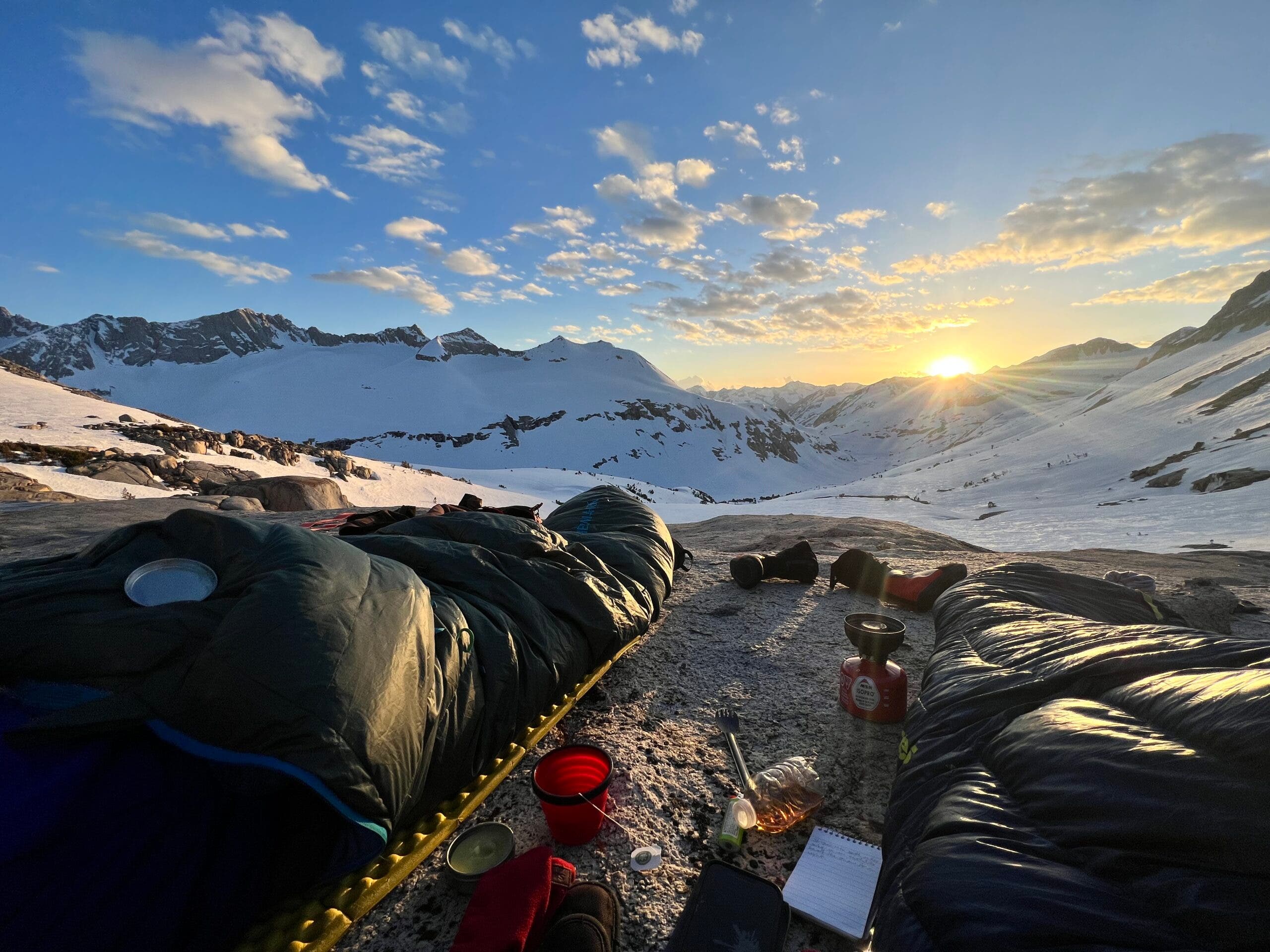
Sharing a pouch of dehydrated biscuits and gravy at camp, they waited for the sun to crest the ridge, savoring the final moments of pure immersion. This day was singular, heady—the last one where they were still completely "in it." Tomorrow, the inexorable pull of pavement awaited. Tomorrow, they would not fall asleep under the vast expanse of mountain stars. Tomorrow, it would be over.
But for now, they reveled in the blindingly blue sky above, the exquisite sensation of soft snow beneath their skis, and the quiet, profound feeling in their chests. Kane and Cunningham were not in this simply to finish; they were not ready for it to be done. They had embarked on this traverse for the experience itself, for each moment in the middle, for the cumulative effect of weeks spent in the wild. For this day, they were granted the privilege to linger, suspended between challenge and serenity.
Behind them, sprawling across the Range of Light, lay the invisible, glowing threads of Redlines past and future. Their exact contours are known only to those who dared to make them. It is, as original Redline pioneer Tom Carter once told them, about an intimacy and enchantment that transcends any map or measurement: "If you go there, you get that intimacy, that enchantment of just being in the mountains covered in snow. All those shadows, all that texture. Don’t cut yourself off from that experience. It’ll knock you out." The Redline, in its myriad interpretations, remains an invitation to seek that profound, transformative connection with the wilderness, a testament to the enduring human spirit of exploration and personal discovery.
